Expert Care & Cleaning for Double Huggie Hoop Earrings
Learn expert cleaning and maintenance tips for double huggie hoop earrings. Protect your gold, silver, and gemstone stacked hoops from tarnish.

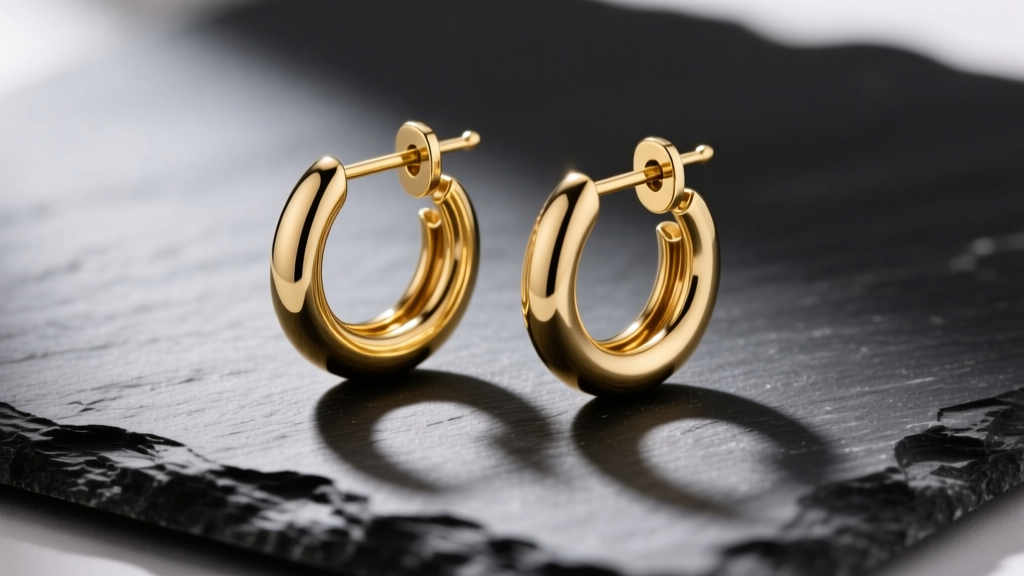
The Unique Anatomy of Double Huggie Hoops
Double huggie hoop earrings represent a masterclass in compact jewelry engineering. Whether designed as a single post featuring two concentric hoops or curated as a tightly stacked pair on a standard lobe piercing, their defining characteristic is proximity. Unlike traditional dangles or large hoops, huggies are engineered to 'hug' the earlobe, typically featuring an inner diameter of just 10mm to 15mm. This close-fitting architecture, while aesthetically striking, creates a micro-environment that traps sebum, dead skin cells, and cosmetic residues far more aggressively than open-back jewelry.
Furthermore, the hardware required to secure these pieces is highly specialized. Most high-quality double huggies utilize an 18-gauge (1.0mm) or 16-gauge (1.2mm) post for structural integrity, terminating in either a tension-based clicker hinge or a friction-fit latch back. The hinge barrels on these mechanisms are incredibly small, often measuring less than 2mm in width, making them highly susceptible to clogging and mechanical stiffness if not maintained with precision. Understanding this anatomy is the first step in preserving the brilliance and mechanical function of your investment.
Daily Wear and Tear: Identifying the Enemies
Before diving into cleaning protocols, it is crucial to understand what degrades your earrings on a daily basis. The close proximity of double huggies to the skin means they are constantly exposed to the body's natural oils and sweat, which have a slightly acidic pH (typically between 4.5 and 6.2). Over time, this acidity can dull the polish of precious metals and accelerate the oxidation of sterling silver.
Chemical Exposure and Plating Degradation
Many double huggie hoop earrings feature a rhodium flash over white gold or silver to enhance brilliance. This plating is exceptionally thin, usually ranging from 0.75 to 1.0 microns. Exposure to chlorinated pool water, harsh sulfates in shampoos, and the alcohol bases found in perfumes can strip this plating prematurely. Once the rhodium wears away, the underlying alloy is exposed to oxygen and moisture, leading to rapid tarnishing.
Friction and Micro-Scratches
Because double huggies sit tightly against the ear, the posterior ends of the posts and the outer edges of the hoops experience constant friction against the skin and hair. While gold and silver are relatively soft metals (pure 24k gold has a Vickers hardness of just 25 HV), the alloys used in 14k and 18k jewelry are harder but still prone to micro-scratches. These microscopic abrasions create tiny grooves where dirt and bacteria can anchor themselves, making superficial wiping ineffective.
Step-by-Step Cleaning Protocols by Material
There is no universal cleaning solution for all jewelry. The metallurgical composition and gemstone settings of your double huggie hoop earrings dictate the exact protocol you must follow to avoid catastrophic damage.
14K and 18K Solid Gold
Solid gold is highly resistant to tarnish but easily accumulates oily films that obscure its luster. The safest and most effective cleaning method involves a pH-neutral surfactant. Mix three drops of a mild, phosphate-free dish soap (such as Dawn) into a bowl of lukewarm water (approximately 95°F or 35°C). Submerge the earrings for 15 to 20 minutes to loosen debris. Using a soft-bristled baby toothbrush, gently agitate the hinge barrels and the interior curve of the hoops. Rinse thoroughly under distilled water to prevent hard water spots, and pat dry with a lint-free microfiber cloth.
Sterling Silver and Rhodium Plating
Sterling silver (925) is prone to silver sulfide tarnish when exposed to sulfur compounds in the air. For light tarnish, the warm soapy water method used for gold is sufficient. However, for heavier oxidation, avoid abrasive silver polishes, which will strip the rhodium plating and scratch the metal. Instead, utilize a chemical reduction bath: line a glass bowl with aluminum foil (shiny side up), add a tablespoon of baking soda, and pour in boiling water. Submerge the silver huggies for exactly 60 seconds. The electrochemical reaction transfers the sulfur from the silver to the aluminum. Remove with wooden tongs, rinse, and dry immediately.
Pave Diamonds and Gemstone Inlays
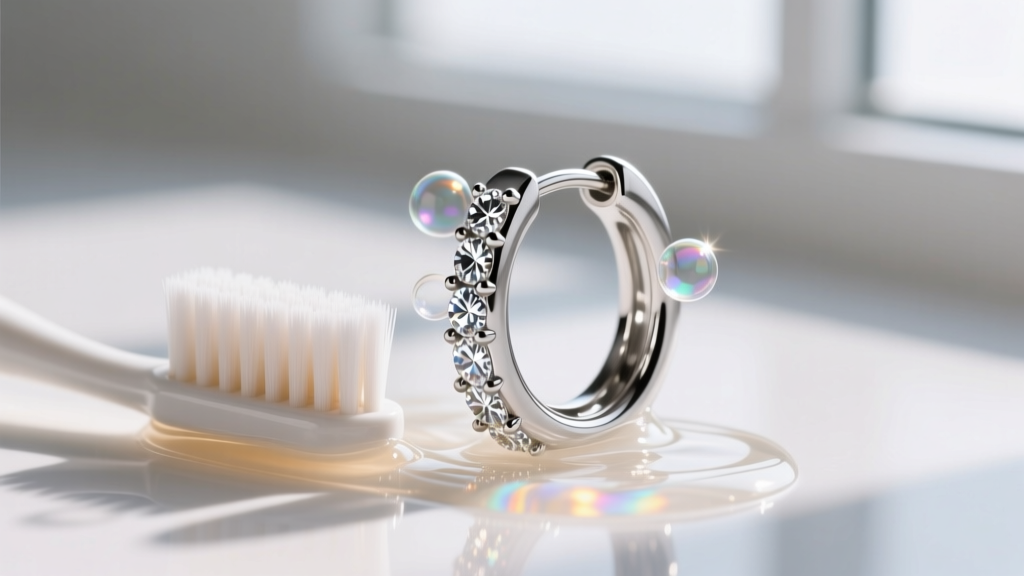
Many double huggies feature intricate pave settings, where dozens of microscopic diamonds are held in place by tiny metal beads. Never use ultrasonic cleaners on pave jewelry. Ultrasonic machines operate at high frequencies (typically 40kHz), creating cavitation bubbles that implode with enough localized force to shake loose the delicate prongs holding pave stones. Instead, rely on the soapy water soak and use a specialized jewelry cleaning brush with ultra-fine bristles to gently dislodge dirt from beneath the gemstone girdles, ensuring maximum light return.
Cleaning Agents Matrix: What to Use vs. What to Avoid
To prevent irreversible damage, consult this quick-reference matrix before applying any chemical agent to your double huggie hoop earrings.
| Cleaning Agent | Safe For | Danger / Risk |
|---|---|---|
| Mild Dish Soap & Warm Water | All metals, diamonds, sapphires | None; the gold standard for daily care. |
| Ultrasonic Cleaners | Platinum, solid gold without stones | Shatters emeralds/opals; loosens pave settings. |
| Thiourea-based Silver Dips | Heavy tarnish on solid silver only | Strips rhodium plating; toxic residue if unrinsed. |
| Baking Soda & Aluminum Foil | Sterling silver (no gemstones) | Can dull the polish on oxidized silver details. |
| Toothpaste | Nothing | Contains silica abrasives that scratch precious metals. |
Mechanical Maintenance: Hinges, Clasps, and Gauges
Cleaning is only half the battle; mechanical maintenance ensures your earrings remain secure. The hinge and clasp are the most critical failure points on any huggie earring.
The 'Snap' Test: For clicker-style double huggies, the closure relies on a tiny metal tongue snapping into a groove. Over time, this tongue can compress, leading to a weak closure that may open during sleep or when pulling off a sweater. Once a month, perform the 'snap' test. Open and close the earring near your ear; you should hear a crisp, audible click. If the closure feels mushy or slides shut without a snap, the tension needs to be adjusted by a professional jeweler using specialized pliers.
Hinge Barrel Lubrication: If your latch-back huggies become stiff, do not use household oils like WD-40, which will attract dust and gum up the mechanism. Instead, apply a microscopic drop of synthetic watchmaker's oil to the hinge pin using a toothpick, then work the hinge back and forth to distribute the lubricant evenly.
Post Gauge Integrity: Because huggies are subjected to rotational torque when touched or adjusted, 18g and 16g posts can slowly bend or warp. Always open latch-back huggies by pulling the post vertically away from the catch, never by twisting it sideways, which will permanently distort the metal and prevent the clasp from aligning correctly.
Proper Storage Solutions for Stacked Hoops
How you store your double huggie hoop earrings when they are not on your ear is just as important as how you clean them. Tossing them into a communal jewelry box is a recipe for disaster. The Vickers hardness of 14k gold is roughly 135 HV, meaning it can easily be scratched by harder materials like quartz dust (700 HV) or other jewelry pieces made of steel or platinum.
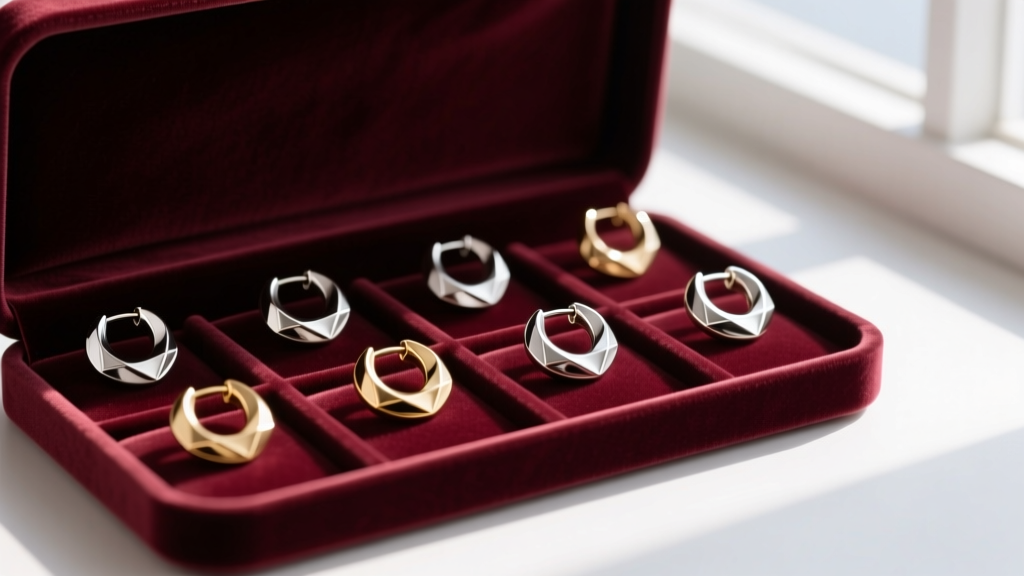
Store each pair in an individual, airtight polyethylene ziplock bag with the air squeezed out to minimize oxygen exposure. For added protection against silver tarnish, include a 3M anti-tarnish strip in the bag, which absorbs sulfur compounds from the ambient air. If you prefer a jewelry box, ensure it features a soft, tarnish-resistant flannel lining and individual compartments to prevent the hoops from tangling or pressing against one another.
Expert Troubleshooting: When to See a Jeweler
While routine maintenance can be handled at home, certain issues require the expertise of a professional bench jeweler. According to the Gemological Institute of America (GIA), attempting DIY repairs on complex jewelry mechanisms often results in irreversible structural damage.
- Missing Pave Stones: If you notice a tiny gap in your diamond huggie, stop wearing them immediately. The adjacent prongs are likely compromised, and further wear will result in cascading stone loss. A jeweler can perform a 'prong re-tipping' using a laser welder to secure the remaining stones.
- Stripped Hinge Threads: If a threaded post or clicker mechanism refuses to stay closed, the internal threads or tension grooves may be stripped. A jeweler can re-cut the threads or replace the entire hinge barrel.
- Deep Scratches: While micro-scratches add a natural patina, deep gouges require professional polishing. Be aware that polishing removes a microscopic layer of metal; therefore, it should only be done once or twice a year to preserve the structural integrity and weight of the hoops.
By adhering to these meticulous care protocols, your double huggie hoop earrings will maintain their structural security and brilliant finish for decades. For further guidance on maintaining fine jewelry investments, consult resources like Brilliant Earth's jewelry care guidelines to ensure your specific pieces receive the exact treatment they require.


