Where Did Kim Kardashian Lose Her Earring? Travel Guide
Discover where Kim Kardashian lost her famous diamond earring in Bora Bora and learn our step-by-step guide to securing high-value travel jewelry.

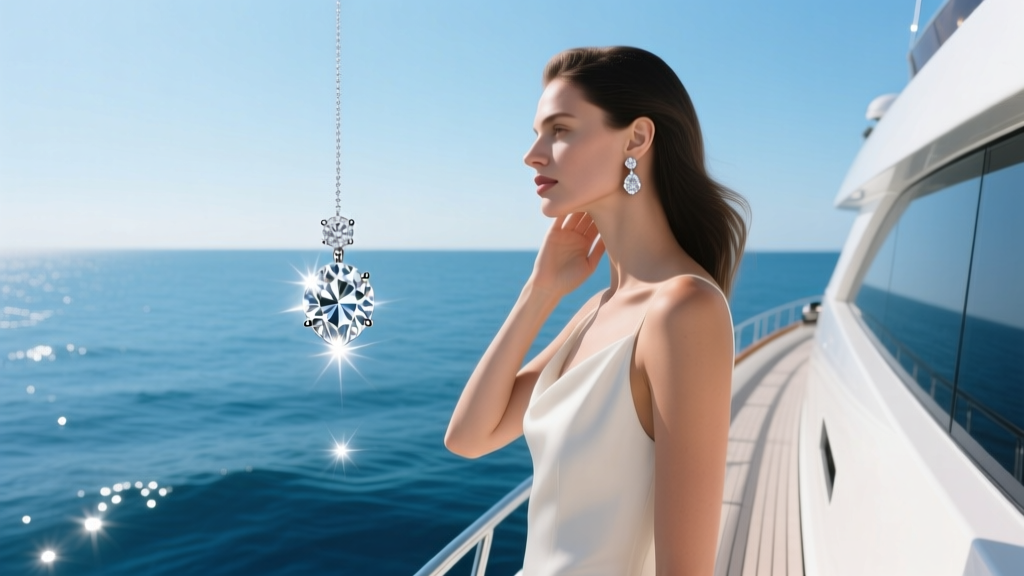
When pop culture and high jewelry collide, the resulting moments often become legendary. If you have ever found yourself searching the internet asking where did kim kardashian lose her earring, you are tapping into one of the most famous jewelry mishaps in reality television history. During a 2010 trip to Bora Bora, filmed for Keeping Up with the Kardashians, Kim lost a staggering $75,000 Lorraine Schwartz diamond drop earring in the ocean. The incident sparked a frantic search and a now-iconic confrontation with Kris Jenner, but more importantly, it highlighted a critical vulnerability in how we wear and secure high-value jewelry while traveling.
As a senior jewelry stylist, I see travelers make the same mistakes every year. Beaches, yachts, and resort pools are notorious graveyards for fine jewelry. This step-by-step guide breaks down the mechanics of the Bora Bora incident and provides an actionable, expert-level protocol for securing your own high-value earrings before you board your next flight.
The Bora Bora Incident: A Case Study in Kinetic Jewelry Loss
To understand how to prevent jewelry loss, we must first analyze the mechanics of the failure. The earring in question was a custom Lorraine Schwartz diamond drop. Drop earrings and dangles are inherently bottom-heavy. When worn, they act as pendulums. Every step, head turn, or sudden movement—like jumping off a yacht into the ocean—generates kinetic energy that travels up the earring post.
Standard earring backs, commonly known as friction backs or butterfly clutches, rely entirely on the tension of two small metal loops gripping the post. When exposed to water, the coefficient of friction between the metal post and the clutch drops dramatically. Saltwater, in particular, acts as a temporary lubricant. Combined with the downward kinetic pull of a heavy diamond drop, the water compromises the clutch's grip, allowing the $75,000 piece to slide silently off the earlobe and into the Pacific.
The Physics of the Pendulum: Why Drop Earrings Fail
High-carat diamond drops require specialized engineering. A standard 20-gauge (0.81mm) earring post is entirely insufficient for supporting a heavy briolette or pear-cut diamond. The weight of the stone causes the thin post to bend slightly downward. This bending alters the angle of the post relative to the earlobe, creating a gap that pushes the friction back outward with every movement.
"The structural integrity of an earring is only as strong as its weakest mechanical joint. For heavy drops, the backing mechanism must counteract both gravity and kinetic pendulum forces." — Principles of Jewelry Mechanics
According to the Gemological Institute of America (GIA), regular wear and tear can also loosen the prongs holding the diamond itself. If the primary setting fails before the backing does, you risk losing the stone even if the earring back remains securely on your ear.
Step-by-Step Guide to Securing High-Value Earrings
Do not rely on standard push-backs for any earring valued over $1,000, and never wear them in aquatic environments. Follow this three-step protocol to upgrade your earring security.
Step 1: Upgrade to Mechanical Locking Backs
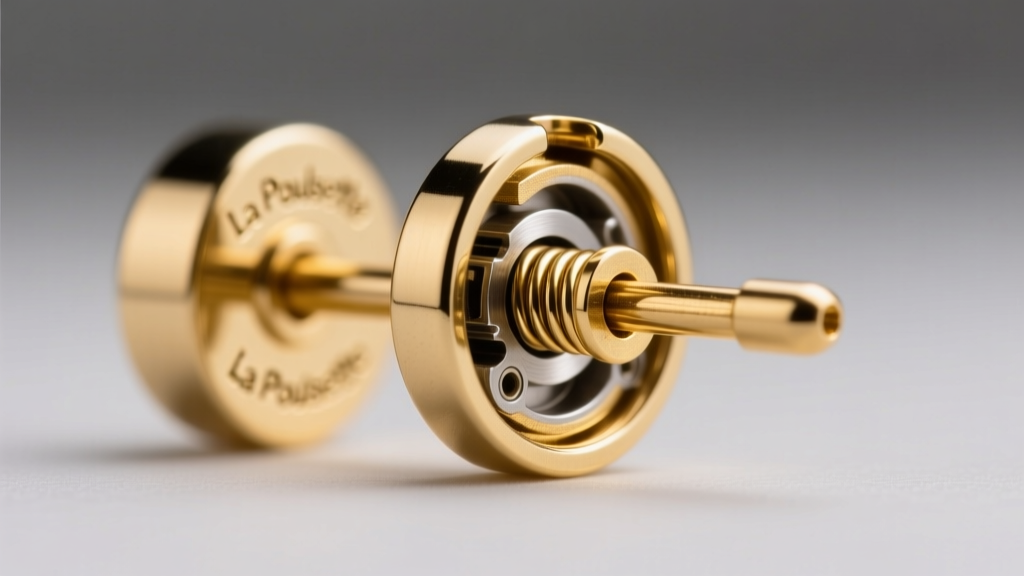
Replace all friction backs on high-value drops with La Pousette backs or mechanical screw-backs. La Pousette clutches feature a dual-spring mechanism that snaps into a grooved post, requiring a deliberate pinch to release. Screw-backs feature a threaded post (usually 0.9mm or 1.0mm) that physically prevents the back from sliding off, even when submerged in water or subjected to extreme kinetic force.
Step 2: Verify the Post Gauge and Setting
Ensure your jeweler has fitted the drop earring with at least an 18-gauge (1.02mm) or 16-gauge (1.29mm) post. Thicker posts resist bending, maintaining the 90-degree angle necessary to keep the backing flush against the earlobe. Additionally, have the prongs inspected. Platinum prongs are highly recommended over 18k yellow gold for heavy drops, as platinum's tensile strength and durability resist lifting and snagging.
Step 3: The Tension and Tug Test
Before traveling, perform a manual stress test. Secure the backing, hold the earring post firmly between your thumb and forefinger, and apply moderate outward pressure to the backing. If there is any micro-movement or slipping, the clutch is fatigued and must be replaced immediately.
Security Matrix: Earring Backs Compared
Not all earring backs are created equal. Use this comparison chart to select the appropriate hardware for your jewelry collection.
| Backing Type | Security Level | Best Application | Primary Failure Point |
|---|---|---|---|
| Friction (Butterfly) | Low | Lightweight daily studs | Tension loss when wet or snagged |
| Silicone Stoppers | Medium | Active wear, temporary security | Material degradation and tearing |
| Screw-Back | High | High-value studs, water exposure | Cross-threading or stripped grooves |
| La Pousette (Locking) | Very High | Heavy drops, dangles, travel | Spring mechanism failure over time |
| Leverback (French Wire) | Medium-High | Dangles without post modifications | Snagging on hair or clothing |
Step-by-Step Recovery Protocol: What to Do If You Lose an Earring
If the worst happens and your earring falls into sand or shallow water, panic is your enemy. The Bora Bora search was chaotic because the search area was not immediately contained. Follow these recovery steps to maximize your chances of retrieval.
Step 1: Freeze and Isolate the Grid
Stop moving immediately. Every footstep drives a small earring deeper into the sand or kicks it into the surf. Mark the exact spot where you believe the loss occurred using a towel, a shoe, or a GPS pin on your phone. Establish a 10-foot radius grid around the epicenter.
Step 2: Utilize Polarized Optics
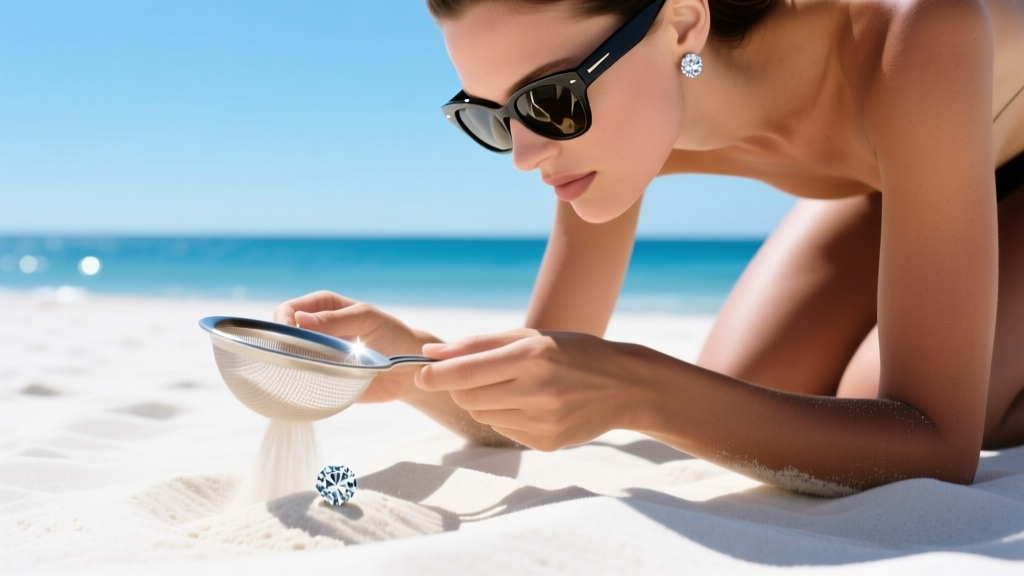
Diamonds and precious metals do not emit light; they reflect and refract it. Standard sunglasses will obscure your vision. You need high-quality polarized sunglasses. Polarization cuts through the surface glare of the water and wet sand, allowing the sharp, geometric facets of a diamond or the distinct gleam of a gold post to stand out against the organic, matte background of the beach.
Step 3: Deploy Sand Sifting and Metal Detection
If the earring is buried, visual searching is useless. Use a mesh sand sifter to process the top two inches of sand within your grid. Note that standard metal detectors are highly effective for finding the gold or platinum setting, but they will not detect the diamond itself. If the stone popped out of its setting, you are relying entirely on the sifter and polarized optics.
Insurance, Appraisals, and the Paper Trail
If recovery fails, your financial protection relies entirely on the documentation you prepared before the trip. According to Jewelers of America, a standard homeowner's or renter's insurance policy often has strict sub-limits for jewelry (frequently capped at $1,500 to $2,500 per item), which will not cover a $75,000 Lorraine Schwartz drop.
To ensure full coverage, you must secure a scheduled personal property floater. This requires a formal, up-to-date appraisal from a certified gemologist. The appraisal must detail the exact carat weight, color, clarity, cut, and metal composition of the piece. Furthermore, ensure your policy includes "mysterious disappearance" and "loss in water" clauses, as some basic policies deny claims if the item was lost in the ocean due to negligence or lack of a specific peril.
Expert Tips for Beach and Resort Jewelry Wear
The ultimate step-by-step guide to avoiding jewelry loss is environmental awareness. Saltwater is highly corrosive to certain alloys and can degrade the rhodium plating on white gold. Chlorine in resort pools can actually dissolve the copper and zinc alloys in 14k and 18k gold, leading to catastrophic prong failure.
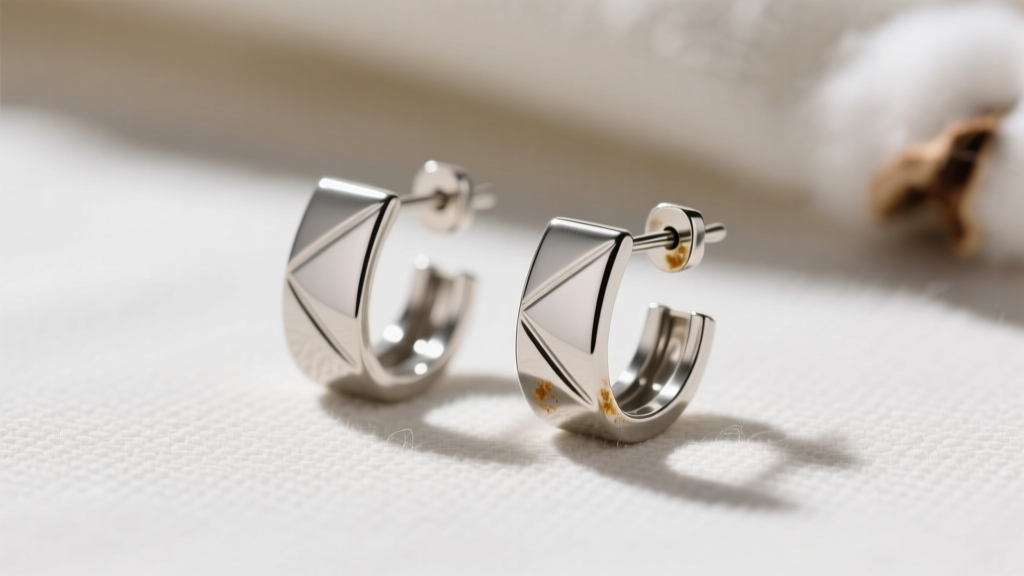
For beach vacations, leave the high-carat heirloom drops in the hotel safe. Instead, opt for secure, low-profile alternatives such as 14k solid gold huggie hoops with clicker closures, or bezel-set lab-grown diamond studs with screw-backs. Bezel settings completely encircle the diamond in metal, eliminating the risk of prongs catching on towels or swimwear, ensuring your vacation remains relaxing and your jewelry stays exactly where it belongs.