Earring Discharge Explained: Material Science and Healing Protocols
Discover the science behind earring discharge. Learn how metal alloys, gauge friction, and sebum buildup cause irritation, plus expert cleaning protocols.
The Biology of Earring Discharge: Sebum vs. Exudate
In the professional piercing and dermatology communities, the term earring discharge is frequently misunderstood by the general public. To effectively troubleshoot and eliminate unwanted moisture, odor, or crusting around a piercing site, we must first differentiate between the three distinct biological processes that cause it. Not all discharge is created equal, and treating sebum buildup with antimicrobial protocols designed for bacterial infections will only exacerbate tissue damage.
The first and most common form of earring discharge is a combination of sebum (the natural oil produced by sebaceous glands) and dead keratinocytes (skin cells). Because a piercing creates a permanent fistula (a tube of healed skin), the inside of this tube continuously sheds dead skin and produces oils. When trapped against the earring post, this mixture oxidizes and thickens into a greyish-white paste. This is entirely normal, non-infectious, and simply a byproduct of human anatomy interacting with foreign jewelry.
The second type is serous fluid or serous exudate. This is a clear, slightly yellowish, watery discharge that occurs when the body is reacting to an irritant. In the context of earrings, this is almost always a symptom of allergic contact dermatitis (usually to nickel) or mechanical micro-trauma. The body weeps this plasma-rich fluid to protect damaged tissue and flush out perceived toxins.
The third, and most concerning, is purulent exudate (pus). This thick, opaque, yellow, green, or brown discharge is accompanied by heat, swelling, and throbbing pain. This indicates an active bacterial infection, often involving Staphylococcus aureus or Pseudomonas aeruginosa, requiring immediate medical intervention rather than simple jewelry adjustments.
The Chemistry of Odor: Why Does It Smell?
One of the most frequent complaints associated with earring discharge is the distinct, foul odor often colloquially referred to as "ear cheese." This smell is not an indicator of poor hygiene; rather, it is a fascinating biochemical reaction. The sebaceous glands in the earlobe secrete lipids (fats). When these lipids mix with dead skin cells and the naturally occurring bacteria on your skin (such as Corynebacterium), the bacteria break down the fats into smaller volatile compounds.
The primary culprit behind the odor is isovaleric acid, the exact same compound responsible for the smell of certain pungent cheeses and human sweat. Because the fistula of a piercing provides a dark, warm, and slightly damp environment, it acts as an ideal incubator for this localized bacterial breakdown. Understanding this chemical process is crucial: you cannot permanently "cure" the odor without removing the jewelry, but you can manage it through proper material selection and mechanical cleaning.
Material Science: Which Alloys Trigger Weeping?
If your earring discharge is serous (clear and weeping) rather than sebaceous (thick and odorous), the primary suspect is your jewelry material. The jewelry industry is rife with misleading terminology, particularly surrounding "surgical steel." Understanding metallurgical standards is non-negotiable for resolving chronic irritation.
| Material Grade | Nickel Content | Surface Porosity | Discharge Risk Profile |
|---|---|---|---|
| 316L Surgical Steel | 10% - 14% | Micro-pitted | High: Nickel leaching causes chronic serous weeping in sensitized individuals. |
| ASTM F136 Titanium | 0% (Trace) | Non-porous (Mirror) | Minimal: Biocompatible, inert, and the gold standard for reactive tissue. |
| Niobium (99.99%) | 0% | Non-porous | Minimal: Highly biocompatible, excellent for those with extreme metal sensitivities. |
| Sterling Silver (925) | 0% (Typically) | High (Tarnishes) | Moderate to High: Silver sulfide tarnish causes localized tissue staining and irritation. |
| 14k/18k Solid Gold | Varies by Alloy | Non-porous | Low: Safe ONLY if explicitly alloyed without nickel (e.g., palladium or silver alloys). |
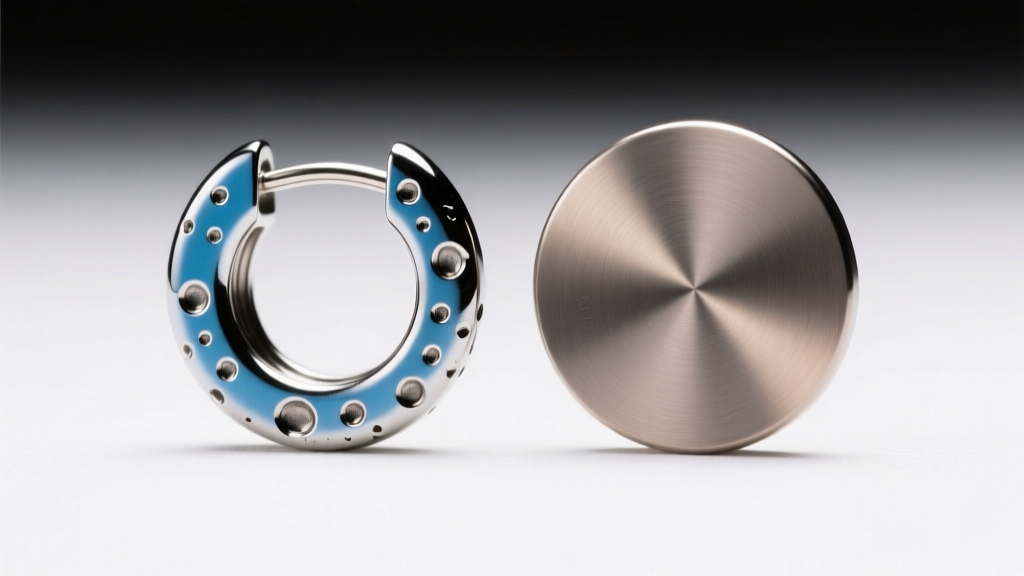
According to the Association of Professional Piercers (APP), 316L stainless steel contains enough nickel to trigger allergic contact dermatitis in a significant portion of the population. When the skin's immune system detects nickel ions leaching from the micro-pits of a polished steel post, it initiates an inflammatory cascade. This results in the continuous weeping of serous fluid, which dries into crusty, yellowish scabs around the earring back. Upgrading to implant-grade titanium (ASTM F136) eliminates the allergen, allowing the fistula to dry and heal.
Mechanical Friction and Gauge Mismatches
Material is only half the equation; the physical dimensions of the earring post play a massive role in earring discharge. Standard commercial earrings are often manufactured at 22-gauge (0.64mm) or 20-gauge (0.81mm) to save on precious metal costs. However, a standard healed lobe piercing naturally rests between 18-gauge (1.02mm) and 16-gauge (1.29mm).
When you insert a thin 22-gauge post into an 18-gauge fistula, the jewelry acts like a cheese wire. The excessive movement and lack of structural support cause the thin metal to saw back and forth against the delicate epithelial lining of the piercing channel. This mechanical friction creates micro-tears in the tissue. The body responds to these micro-tears by producing serous discharge to protect the wound. If you are experiencing chronic clear discharge and have already ruled out nickel allergies, measure your earring posts with digital calipers. Stepping up to a thicker 18-gauge or 16-gauge post will stabilize the jewelry, eliminate the friction, and stop the weeping within 48 to 72 hours.
Cartilage vs. Lobe: Anatomical Discharge Differences
The anatomical location of the piercing drastically alters the nature and timeline of earring discharge. Earlobes are highly vascularized, consisting of adipose (fat) tissue and a robust blood supply. They heal rapidly (typically 6 to 8 weeks) and are primarily prone to the sebum/keratin buildup mentioned earlier.
Cartilage, on the other hand, is avascular. It receives nutrients and immune cells through slow diffusion from the surrounding perichondrium (the connective tissue sheath). Because of this poor blood supply, cartilage piercings (like the helix, tragus, or conch) can remain in a state of active healing and intermittent serous discharge for 9 to 12 months. It is entirely normal for a cartilage piercing to weep clear fluid intermittently during this period, especially if subjected to pressure from sleeping or over-cleaning. However, cartilage is also highly susceptible to hypertrophic scarring—raised, irritated bumps that frequently leak a sticky, clear fluid. These bumps are almost always caused by improper jewelry angles or excessive pressure, not infection.
The Danger of Cytotoxic Cleaning Agents
When faced with earring discharge, the instinctive reaction is to aggressively sanitize the area. This is a critical error. The American Academy of Dermatology (AAD) warns against using harsh chemicals on compromised skin barriers. Products like rubbing alcohol, hydrogen peroxide, and tea tree oil are highly cytotoxic. They do not just kill bacteria; they destroy the fragile fibroblasts and epithelial cells your body is using to rebuild the piercing channel. By stripping the tissue of its natural moisture barrier, these chemicals induce chemical burns, triggering even more serous weeping and creating a vicious cycle of discharge and aggressive cleaning.
Expert Protocols for Eradicating Earring Discharge
To resolve earring discharge effectively, you must implement a protocol that addresses both the biological buildup and the mechanical environment of the fistula. Follow this clinical-grade maintenance routine:
- Step 1: Material Audit. Remove all 316L steel, sterling silver, and mystery-metal jewelry. Replace them exclusively with ASTM F136 implant-grade titanium or certified nickel-free 14k/18k gold.
- Step 2: Gauge Correction. Ensure your posts are at least 18-gauge (1.02mm) for lobes and 16-gauge (1.29mm) for cartilage to prevent mechanical micro-trauma.
- Step 3: Sterile Saline Irrigation. Spray the piercing twice daily with a sterile, 0.9% sodium chloride wound wash (ensure the only ingredients are water and salt). This gently softens sebum crusts without damaging cellular tissue.
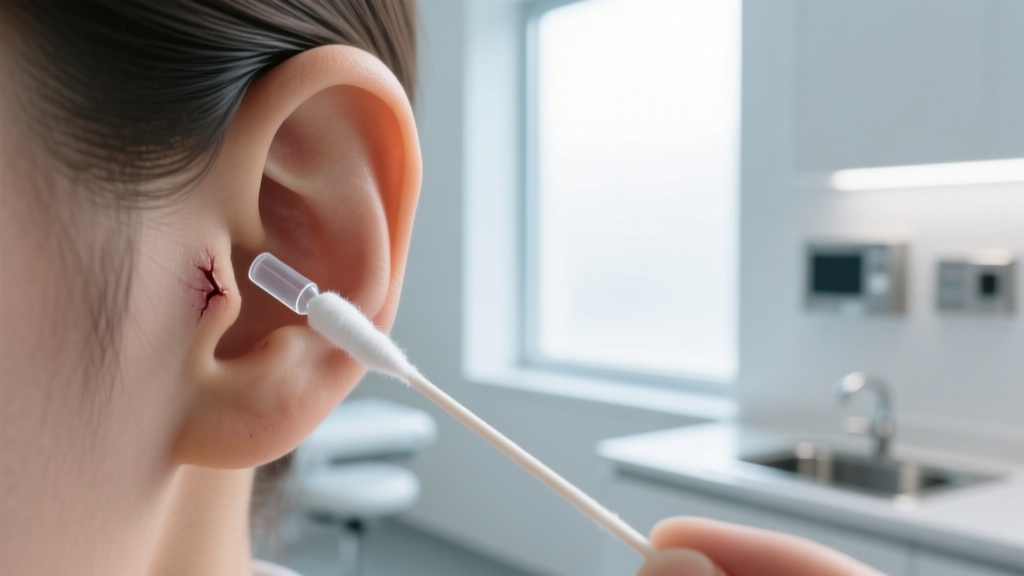
- Step 4: Mechanical Removal. After softening the crusts with saline, use a non-woven gauze pad to gently wipe away the discharge. Avoid cotton swabs, as they leave microscopic fibers trapped inside the fistula, which can act as irritants and prolong discharge.
- Step 5: Thorough Drying. Moisture breeds bacteria and macerates the skin. After cleaning, use a hairdryer on the "cool" setting to completely dry the earring and the surrounding tissue.
When to Consult a Medical Professional
While the vast majority of earring discharge cases are rooted in material allergies, mechanical friction, or normal sebum production, it is vital to recognize the signs of a true medical emergency. If your discharge transitions from clear or white to thick, opaque yellow or green, and is accompanied by radiating heat, severe swelling, or a fever, you are likely dealing with a localized bacterial infection or an abscess.
Do not remove the jewelry if you suspect an infection. Removing the earring allows the surface of the piercing hole to close, trapping the infection inside the tissue and potentially leading to a severe abscess that requires surgical drainage. Instead, leave the jewelry in place to maintain a drainage pathway and consult a dermatologist or physician immediately for a targeted course of oral or topical antibiotics. By understanding the precise biological and metallurgical causes of earring discharge, you can transform a frustrating, chronic irritation into a comfortable, lifelong accessory experience.


