Materials & Properties of Authentic Earrings of the 50s
Explore the material science of earrings of the 50s, from Aurora Borealis rhinestones to Lucite and gold-filled alloys, with expert identification tips.

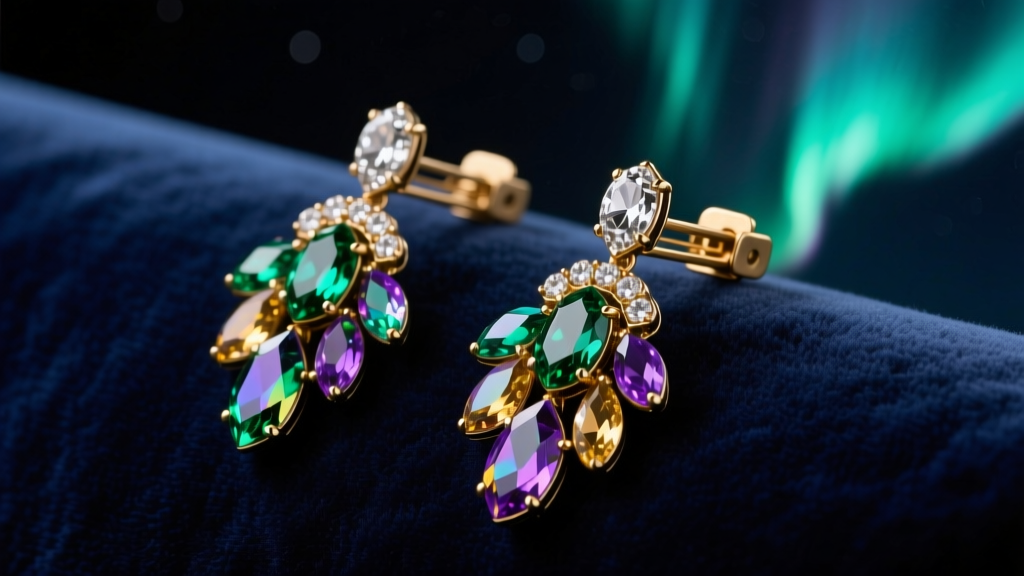
As vintage jewelry markets surge in 2026, collectors and stylists are increasingly drawn to the mid-century aesthetic. However, appreciating the earrings of the 50s requires looking beyond their glamorous silhouettes to understand the revolutionary material science that defined the era. The post-World War II economic boom sparked an unprecedented period of experimentation in metallurgy, polymer chemistry, and glassmaking. For modern collectors, distinguishing between authentic 1950s materials and contemporary reproductions demands a deep understanding of these specific physical properties, failure modes, and historical manufacturing techniques.
The Post-War Material Boom: Defining Earrings of the 50s
The 1950s marked a distinct departure from the utilitarian, metal-conserving designs of the 1940s. With the end of wartime rationing, jewelers had access to a renewed supply of base metals, synthetic polymers, and innovative glass treatments. Crucially, mainstream Western culture in the 1950s largely frowned upon ear piercing, associating it with bohemian or non-Western subcultures. Consequently, the vast majority of earrings of the 50s were engineered as clip-ons, screw-backs, or magnetic styles. This structural requirement heavily influenced the materials used; findings had to be crafted from resilient, spring-tempered alloys capable of maintaining tension against the earlobe without warping or causing excessive fatigue to the base metal.
Rhinestones & Glass: The Aurora Borealis Revolution
No material is more synonymous with the decade than the Aurora Borealis (AB) rhinestone. Introduced in 1955 through a collaboration between Manfred Swarovski and Christian Dior, the AB finish revolutionized costume jewelry. Unlike earlier rhinestones that relied on simple silver foil backing, AB stones were treated using a vacuum-sputtering process. An ultra-thin layer of vaporized metal was bonded to the underside of the cut glass, creating a permanent, iridescent rainbow refraction.
When evaluating vintage AB earrings today, the material properties of the glass and the coating are paramount. Authentic 1950s AB rhinestones are made of high-leaded glass, giving them a specific gravity and thermal conductivity that modern acrylic or resin imitations cannot replicate. Furthermore, the vacuum-sputtered metallic coating on genuine mid-century stones is incredibly durable but vulnerable to alkaline substances. In contrast, modern 2026 reproductions often use surface-painted acrylics where the iridescent layer sits on top of the facets, making it highly susceptible to flaking and scratching. To authenticate, examine the stone under a 10x jeweler's loupe: genuine 1950s AB stones will show the metallic coating only on the pavilion (underside) facets, leaving the crown (top) facets as clear, uncoated glass.
Plastics & Polymers: Bakelite vs. Lucite Properties
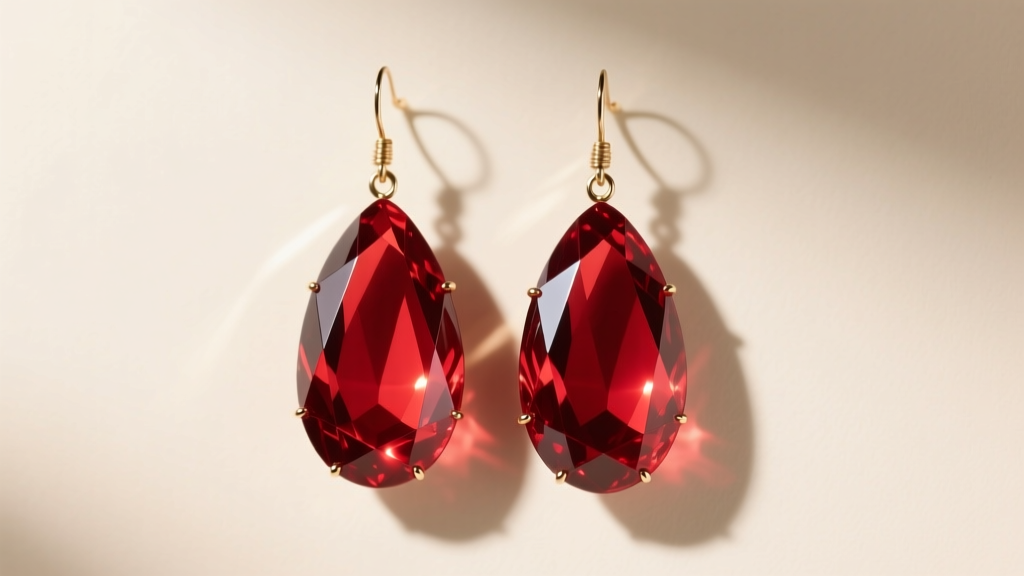
The 1950s was a golden age for polymer jewelry, with two distinct materials dominating the market: Bakelite and Lucite. While both are often colloquially grouped as "vintage plastic," their chemical structures and physical properties are vastly different.
Bakelite (Polyoxybenzylmethylenglycolanhydride)
Bakelite is a thermosetting phenol-formaldehyde resin. Once heated and molded, it cannot be remelted. Earrings of the 50s crafted from Bakelite are notably dense and heavy, producing a distinct, deep "clink" when two pieces are tapped together. The material is highly resistant to heat and solvents but is prone to micro-crazing (a network of fine cracks) if exposed to prolonged UV light or extreme dryness. A definitive, non-destructive test for authentic 1950s Bakelite involves rubbing a cotton swab dipped in Simichrome metal polish on an inconspicuous area; the chemical reaction with the phenolic resin will turn the swab a vibrant, mustard yellow. Warning: Never use the "hot pin" test. It permanently damages the piece, releases toxic formaldehyde fumes, and poses a severe fire hazard if the material is actually early celluloid.
Lucite (Polymethyl Methacrylate / PMMA)
Lucite is a thermoplastic acrylic that became wildly popular in the mid-to-late 1950s. It is significantly lighter than Bakelite and possesses superior optical clarity. Jewelers favored Lucite for its ability to be deeply carved, reverse-carved, and embedded with glitter, seashells, or metallic flakes. Unlike Bakelite, Lucite does not react to Simichrome polish. However, it is highly susceptible to solvent damage; exposing 1950s Lucite earrings to acetone, harsh perfumes, or alcohol-based cleaners will cause the surface to cloud, craze, and permanently lose its high-gloss polish.
Base Metals & Plating: Rhodium, Gold-Filled, and Verdigris Risks
The structural integrity of 1950s costume earrings relies heavily on the relationship between the base metal and its protective plating. Understanding these metallurgical pairings is critical for assessing the longevity of a vintage piece.
| Base Material | Plating Type | Durability & Wear Profile | Common Failure Mode |
|---|---|---|---|
| Pot Metal (Zinc Alloy) | Rhodium or Gold Wash | Low; highly porous and brittle over decades. | Pitting, structural snapping, severe verdigris. |
| Brass | Gold-Filled (1/20 12K or 14K) | High; thick mechanical bond withstands polishing. | Edge wear exposing brass, leading to mild tarnish. |
| Copper Alloy | Silver-Tone Nickel Flash | Medium; prone to moisture trapping in settings. | Green copper acetate (verdigris) near prongs. |
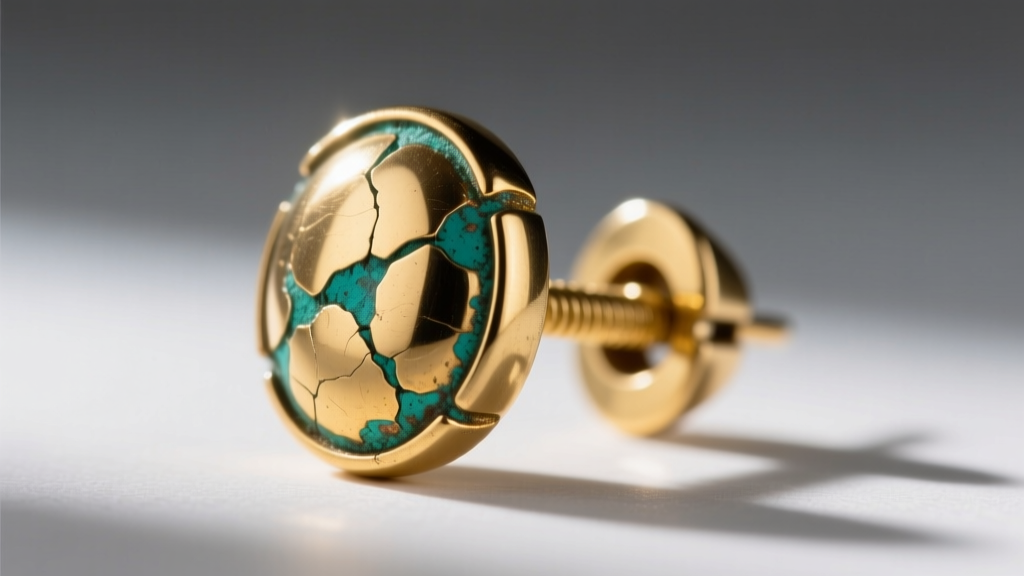
Verdigris—the toxic, crusty green copper carbonate and acetate buildup—is the most common plague affecting base metal earrings of the 50s. It occurs when the copper content in brass or pot metal reacts with moisture, skin oils, and airborne acids. According to conservation guidelines from the Victoria and Albert Museum, verdigris should be carefully removed with a dry, soft-bristle brush and a wooden pick, avoiding liquid cleaners that can accelerate the corrosive cycle if trapped in the microscopic pores of pot metal.
Fine Jewelry Alloys: 14K Rose Gold and Palladium White Gold
While costume jewelry dominated the decade, fine jewelry earrings of the 50s showcase fascinating shifts in alloy composition. During World War II, platinum was declared a strategic military metal, forcing jewelers to pivot to palladium to create white gold alloys. By the 1950s, palladium-white gold remained highly prevalent in high-end earrings before the industry eventually shifted toward cheaper, nickel-based white gold alloys in the 1960s. Palladium-white gold from the 50s is denser, more hypoallergenic, and possesses a naturally whiter hue that requires less frequent rhodium re-plating than modern nickel-white gold.
Additionally, 14K rose gold experienced a massive resurgence in the 1950s, driven by retro-futuristic design trends and a desire for warmer skin-tone complements. Authentic 1950s 14K rose gold typically features a precise alloy ratio of approximately 77.75% gold, 20% copper, and 2.25% silver. This specific copper-heavy formulation yields a deeper, more reddish-pink hue compared to the paler, peach-toned rose gold alloys commonly manufactured today.
Sourcing & Preservation: Identifying Authentic 1950s Materials
Preserving the material integrity of mid-century earrings requires abandoning modern jewelry cleaning habits. The Gemological Institute of America (GIA) frequently warns against using ultrasonic cleaners on vintage costume jewelry. For earrings of the 50s featuring foil-backed rhinestones, ultrasonic vibrations and liquid immersion will inevitably cause water to seep behind the glass, turning the delicate silver foil black and ruining the stone's brilliance permanently.
When sourcing authentic pieces, always inspect the findings. The paddle-back clip-on and the spring-ring screw-back are hallmarks of 1950s engineering. The tension springs in these mechanisms were often made of carbon steel; if you see uniform, deep rust on the spring mechanism but pristine plating on the earring face, it is a strong indicator of original mid-century hardware. By respecting the specific chemical and physical properties of these post-war materials, collectors can ensure that the glamorous legacy of 1950s jewelry survives for generations to come.


