Pearl Gold Hoop Earrings: 2026 Trend Analysis & Style Guide
Discover 2026 trends for pearl gold hoop earrings. Explore styling tips, gold karat comparisons, pearl grading, and face-shape guides for this classic hybrid.

The 2026 Renaissance: Why Pearl Gold Hoop Earrings Are Dominating
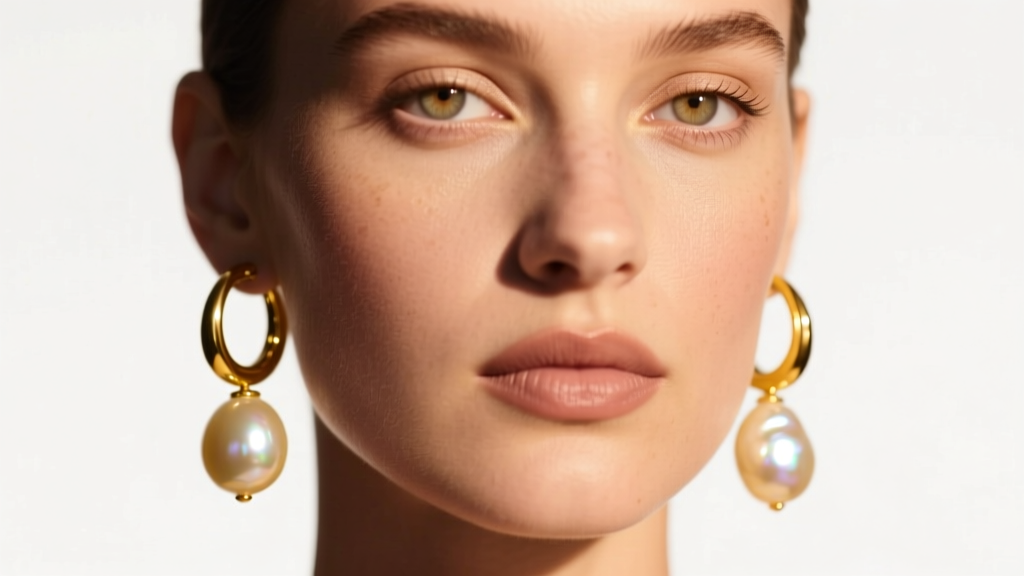
As we navigate the jewelry landscape of 2026, the minimalist dominance of the early 2020s has fully surrendered to what industry insiders are calling 'Romantic Avant-Garde.' At the absolute epicenter of this movement are pearl gold hoop earrings. No longer confined to the traditional, perfectly spherical studs of previous decades, today's hoops integrate organic textures, mixed-metal accents, and architectural asymmetry. The fusion of gold's enduring metallic warmth with the organic, light-diffusing nacre of pearls creates a dynamic contrast that flatters virtually every skin undertone.
According to trend forecasts from leading fashion houses, the demand for hybrid jewelry—pieces that marry structural metalwork with organic gemstones—has surged by over 40% year-over-year. Pearl gold hoop earrings perfectly encapsulate this shift. They offer the effortless, face-framing geometry of a classic hoop while introducing the soft, luminous complexity of pearls. Whether you are examining high-carat vintage revivals or contemporary baroque interpretations, understanding the nuances of this trend requires a deep dive into material science, structural mechanics, and facial geometry.
Material Deep Dive: Gold Purity and Pearl Grading
The longevity and aesthetic success of your earrings depend entirely on the interplay between the gold alloy and the pearl variety. Choosing the wrong combination can lead to structural failure or rapid nacre degradation.
14K vs. 18K Gold: The Structural Reality
When selecting the metal foundation for your hoops, you are primarily choosing between 14-karat (58.5% pure gold) and 18-karat (75% pure gold). While 18K gold offers a richer, more saturated yellow hue that beautifully complements the warm overtones of cream or golden pearls, it is inherently softer. For large, heavy hoops (50mm+ diameter) or designs featuring dense pearl clusters, 18K gold wire must be forged at a thicker gauge (typically 14G or 12G) to prevent warping. Conversely, 14K gold provides superior tensile strength, making it the ideal choice for delicate, thin-wire continuous hoops or huggies that require a rigid snap-back clasp mechanism.
For those preferring white gold, remember that 14K and 18K white gold are alloyed with nickel or palladium and plated with rhodium. The bright, icy finish of rhodium creates a striking, high-contrast backdrop for the warm, creamy overtones of South Sea pearls, though the plating will require re-dipping every 12 to 18 months depending on friction and skin acidity.
Pearl Varieties: Luster, Nacre, and Weight
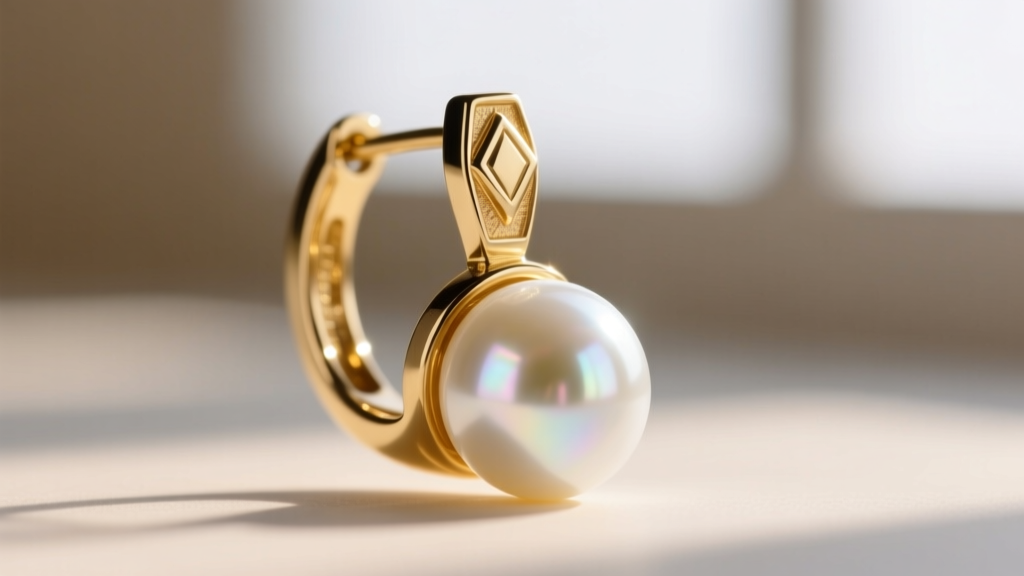
The Gemological Institute of America (GIA) evaluates pearls based on seven critical value factors, with luster and nacre thickness being paramount for earrings that catch ambient light [1]. In 2026, the trend has bifurcated: consumers are either seeking the flawless, mirror-like luster of Japanese Akoya pearls or the rebellious, asymmetrical shapes of Baroque freshwater pearls.
| Pearl Type | Average Size | Luster Profile | Best Hoop Style | Price Range (Per Pair) |
|---|---|---|---|---|
| Akoya | 6mm - 9mm | Mirror-like, high contrast | Classic medium hoops (30mm) | $250 - $800 |
| Freshwater Baroque | 8mm - 14mm | Soft, satiny, diffused | Asymmetric huggies & drops | $80 - $300 |
| White South Sea | 10mm - 15mm | Satin, luxurious glow | Statement thick-wire hoops | $1,200 - $4,500+ |
| Tahitian (Dark) | 9mm - 13mm | Metallic, peacock overtones | Mixed-metal (gold/black) hoops | $600 - $2,500 |
The Face Shape Styling Framework
Styling pearl gold hoop earrings is not a one-size-fits-all endeavor. The diameter of the hoop, combined with the placement and volume of the pearls, can dramatically alter facial proportions. Here is a precise framework for optimizing your selection based on bone structure.
- Round Faces: Avoid perfectly circular, small-diameter hoops that echo the face's natural curves. Instead, opt for elongated drop-hoops (45mm to 60mm in length) featuring a single, heavy pearl dangle at the bottom. This creates a vertical line that visually lengthens the face and sharpens the jawline.
- Square Faces: The goal is to soften a strong, angular jaw. Medium-sized circular hoops (35mm to 45mm) adorned with clustered, irregular Baroque pearls along the lower half add organic curvature and draw the eye inward, balancing the width of the cheekbones.
- Heart-Shaped Faces: With a broader forehead and a narrow chin, heart-shaped faces benefit from added volume at the jawline. Huggie-style pearl gold hoop earrings (15mm to 20mm) that sit tightly against the earlobe, featuring dense pearl pavé or multiple small pearl drops, provide the necessary visual weight to the lower half of the face.
- Oval Faces: The most versatile proportions. You can experiment with the season's most avant-garde trends, such as ear-cuff attachments that connect to the primary lobe hoop, or oversized 70mm architectural hoops with asymmetric pearl placements.
Cartilage vs. Lobe: Gauge Sizing and Weight Distribution
A critical, often overlooked aspect of buying pearl gold hoop earrings is the wire gauge relative to the piercing placement. Standard earlobe piercings are typically done at 20-gauge (0.81mm) or 18-gauge (1.02mm). However, when you introduce the weight of genuine pearls—especially dense saltwater varieties like South Sea or Tahitian—the physics of the earring change drastically.
If a heavy pearl is mounted on a thin 20-gauge gold wire, the downward force creates a 'cheese-cutter effect.' Over time, the thin wire will slowly slice through the earlobe tissue, causing irreversible stretching and eventual tearing. To mitigate this, any pearl hoop exceeding 8 grams in total weight must utilize a minimum 16-gauge (1.29mm) or 14-gauge (1.63mm) wire at the point of piercing contact. For cartilage piercings (such as the helix or tragus), where the tissue is denser and less prone to stretching but more sensitive to pressure, a standard 18-gauge or 16-gauge huggie hoop with lightweight freshwater pearls is the safest, most comfortable configuration.
The closure mechanism is equally vital. Hinged snap-backs offer security for heavy pearls but can accumulate debris in the hinge. Continuous 'endless' hoops provide a seamless aesthetic but require careful bending to insert, which risks snapping the wire if the gold karat is too high and the gauge too thin. Latch-back closures remain the gold standard for medium-to-large pearl hoops, offering a secure lock without the mechanical fragility of a micro-hinge.
Preserving the Nacre: Advanced Care Protocols
Pearls are organic gemstones composed primarily of calcium carbonate and conchiolin. They rank a mere 2.5 to 4.5 on the Mohs hardness scale, making them exceptionally vulnerable to the very chemicals we use to clean our metallic jewelry. While the gold hoops can withstand ultrasonic cleaners and harsh polishing compounds, applying these to your pearls will instantly strip the nacre, leaving a dull, chalky bead.
'The golden rule of organic gemstone maintenance is always last on, first off. Pearls should never be exposed to the acidic pH of perfumes, the alcohol in hairsprays, or the chlorine in tap water, all of which cause microscopic pitting in the nacre layers.' — GIA Pearl Care Guidelines [2]
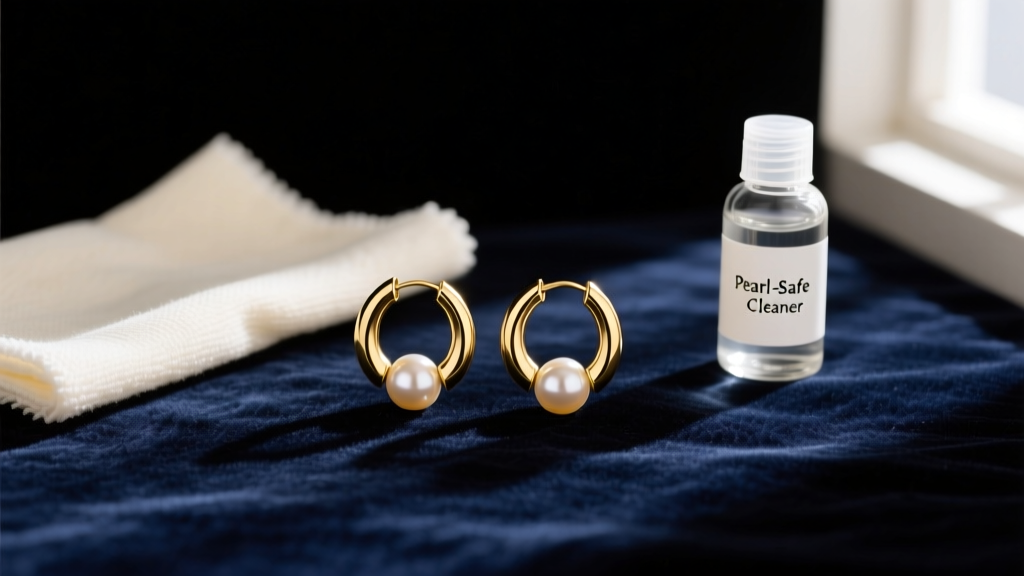
To maintain the structural integrity and optical brilliance of your pearl gold hoop earrings, wipe the pearls gently with a damp, lint-free microfiber cloth after every wear to remove sebum and environmental acids. Store them in a breathable silk pouch rather than an airtight plastic bag; pearls require ambient moisture to prevent the conchiolin from drying out and cracking. Furthermore, always check the epoxy bonding on the pearl posts or drill holes every six months, as temperature fluctuations can cause the adhesive to become brittle, risking the loss of your precious gemstone.
Final Thoughts on the 2026 Market
Pearl gold hoop earrings have transcended their status as a mere classic staple to become a canvas for contemporary jewelry design. By understanding the metallurgical limits of gold karats, the gemological nuances of pearl luster, and the biomechanics of ear piercings, you can invest in pieces that are not only visually stunning but structurally enduring. Whether you gravitate toward the flawless symmetry of Akoya drops or the rebellious charm of Baroque huggies, this hybrid silhouette remains the undisputed anchor of the 2026 jewelry wardrobe.