Troubleshooting India Earrings: Weight, Tarnish & Allergies
Fix common issues with India earrings. Learn how to support heavy jhumkas, prevent oxidized silver tarnish, and solve alloy allergy problems.
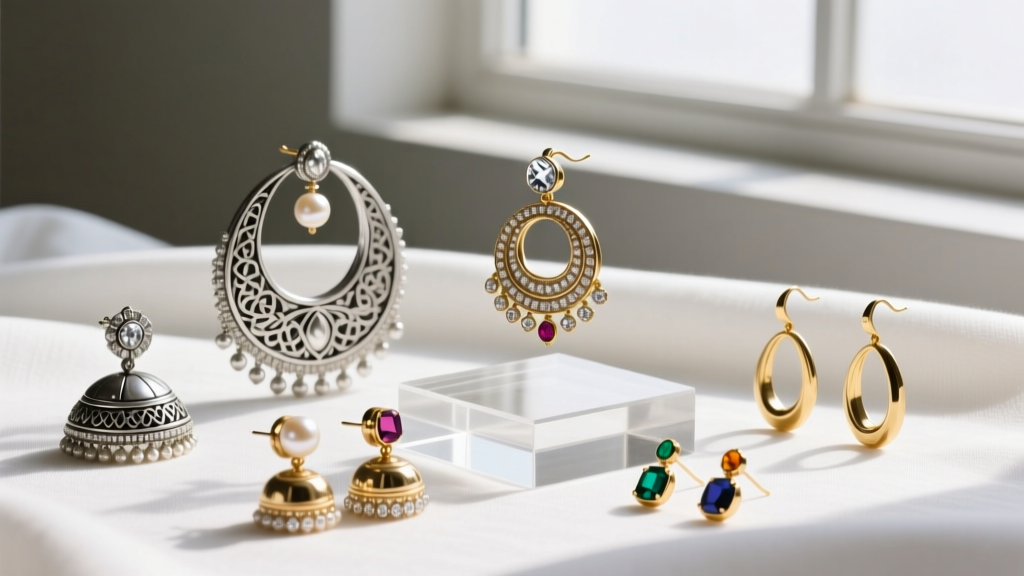
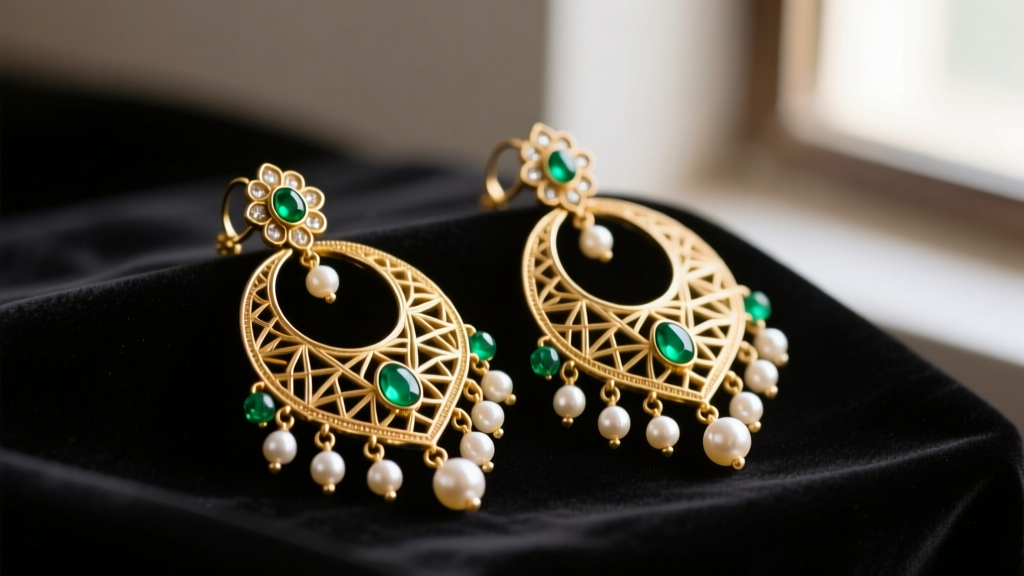
The Unique Challenges of Traditional and Contemporary India Earrings
India earrings are globally celebrated for their breathtaking craftsmanship, intricate detailing, and rich cultural heritage. From the sweeping grandeur of bridal Jhumkas and Chandbalis to the earthy appeal of oxidized tribal silver, these pieces are wearable art. However, their unique construction methods and traditional materials often present specific wearability challenges. Whether you are dealing with earlobe strain from a 30-gram bridal piece, sudden allergic reactions to festive alloys, or the rapid tarnishing of heritage metals, troubleshooting requires a deep understanding of jewelry metallurgy and structural mechanics.
In this comprehensive guide, we will dissect the most common failure modes associated with India earrings and provide expert-level, actionable solutions to restore their comfort, safety, and brilliance.
The Weight Dilemma: Supporting Heavy Jhumkas and Chandbalis
The human earlobe is not naturally designed to bear heavy loads. While a standard everyday stud weighs between 1 and 3 grams, traditional Indian bridal earrings—particularly solid 22k gold Jhumkas or heavily enameled Meenakari Chandbalis—can easily weigh between 15 and 45 grams per ear. Over a few hours, this gravitational pull causes the piercing hole to stretch, leading to pain, micro-tears, and eventually permanent lobe elongation.
Structural Solutions for Heavy Lobes
If you refuse to compromise on the grandeur of heavy India earrings, you must redistribute the mechanical load. Relying solely on the piercing hole is a recipe for tissue damage.
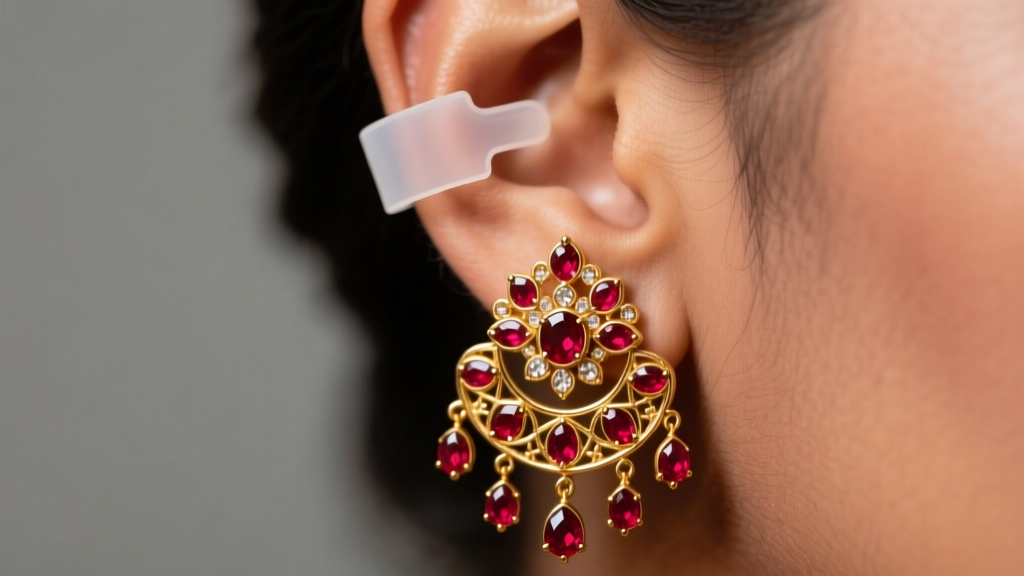
- Silicone Earlobe Support Patches: Products like Lobe Wonder are medical-grade, adhesive silicone patches that sit behind the earlobe. They feature a reinforced slit that aligns with your piercing, spreading the earring's weight across a 1.5-inch surface area of the ear's back. This reduces point-load pressure by up to 80%.
- Sahara (Support) Chains: A traditional and highly effective Indian jewelry innovation. A delicate gold or rhodium-plated chain attaches to the top loop of the heavy earring and hooks discreetly into your hair over the ear. This completely bypasses the earlobe, transferring the 30+ gram weight to your hair.
- French Wire to Post Converters: Many heavy Jhumkas use thick S-hooks (French wires) which slide around and pull on the bottom of the piercing. Using a silicone converter sleeve that adapts the hook into a straight, secure post with a locking back stabilizes the center of gravity.
Tarnish Troubleshooting: Oxidized Silver and Kundan Foil
The materials used in regional India earrings require highly specific environmental controls and cleaning protocols. Using standard commercial jewelry dips will instantly ruin heritage pieces.
The Chemistry of 'Oxidized' Silver
What the market commonly refers to as 'oxidized silver' or 'German silver' in Indian street markets is rarely pure silver. It is typically a copper-nickel-zinc alloy (nickel silver) that has been chemically darkened using potassium sulfide to create an antique, tribal patina. When this alloy reacts with the sulfur and acids in human sweat, the copper content leaches, leaving a stubborn green residue on the skin and degrading the dark finish.
The Fix: Never use liquid silver polishes or ultrasonic cleaners on these pieces; they will strip the intentional oxidation, leaving you with a patchy, bright brass-colored earring. Instead, seal the earring posts and backings with a thin coat of clear polyurethane nail enamel to create a barrier against sweat. To clean the decorative face, use only a dry, untreated microfiber cloth to gently buff away skin oils without disturbing the darkened crevices.
Protecting the Delicate Foil of Kundan and Polki
Authentic Kundan and Polki India earrings rely on a centuries-old setting technique. Uncut diamonds or glass are set into gold using 'lac' (a natural tree resin), and the back is sealed with 24k gold foil to reflect light. If moisture breaches the lac seal, the foil oxidizes and turns black, causing the stone to look cloudy and dead.
Expert Warning: Never wear Kundan or Polki earrings in high humidity, rain, or while applying alcohol-based perfumes. If a stone becomes cloudy due to moisture trapping, do not attempt to clean it yourself. A master jeweler must carefully remove the stone, replace the degraded lac, and apply fresh gold foil (a process known as 're-foiling').
Material Care Matrix for India Earrings
| Earring Style | Core Material | Primary Failure Mode | Expert Troubleshooting Fix |
|---|---|---|---|
| Oxidized Jhumkas | Copper-Nickel Alloy | Green skin / Lost patina | Coat post with clear enamel; wipe with dry microfiber only. |
| Kundan Chandbalis | Gold Foil over Lac | Cloudy stones / Foil peeling | Never use liquid cleaners; store with silica gel packets. |
| Polki Drops | Uncut Diamond on Foil | Moisture trapping / Dulling | Have a jeweler re-foil if moisture breaches the backing. |
| 22k Plated Brass | Brass base | Flaking / Allergic reaction | Re-plate with rhodium or upgrade to solid 14k/18k gold posts. |
Solving Contact Dermatitis from Mixed Alloys
One of the most frequent complaints regarding mass-market or souvenir India earrings is the sudden onset of itchy, red, and weeping earlobes. According to the American Academy of Dermatology, nickel is the leading cause of contact dermatitis in jewelry. Many affordable Indian festive earrings use a brass or nickel-heavy base metal that is flash-plated with a microscopic layer of gold. Once sweat wears through this thin plating, the nickel contacts the skin, triggering an immune response.
Upgrading the Hardware
Throwing away beautiful earrings due to allergies is unnecessary. You can troubleshoot this by modifying the hardware that actually penetrates the skin.
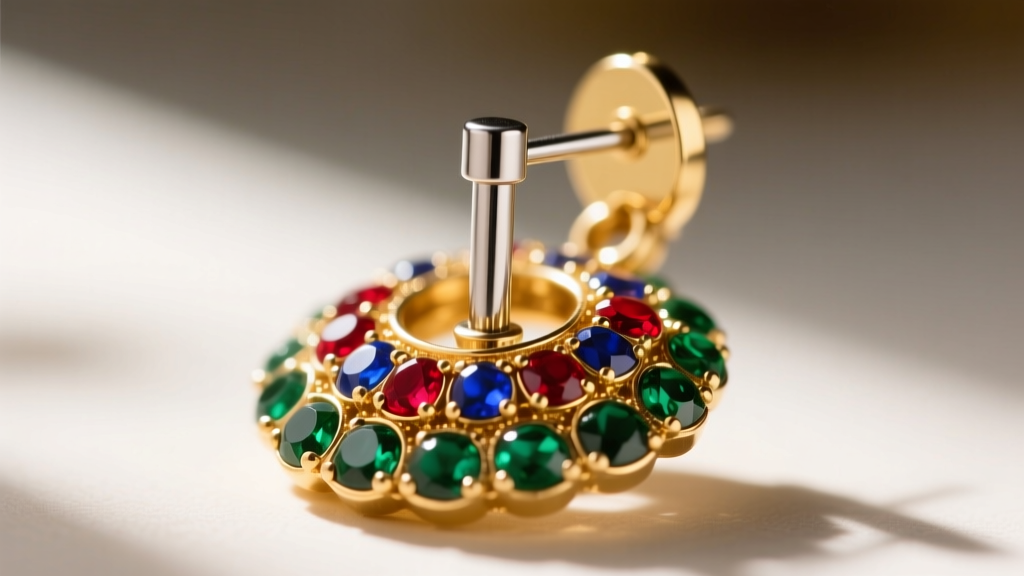
- Post Replacement: Take your earrings to a local bench jeweler and have them laser-weld or solder the decorative front onto an implant-grade titanium (ASTM F136) or 14k/18k solid gold post. Titanium is completely biologically inert and will never trigger a nickel allergy.
- The 20-Gauge vs. 18-Gauge Issue: Traditional Indian jewelry often uses thicker 18-gauge (1.0mm) wires, while modern standard piercings are often 20-gauge (0.8mm). Forcing a thick, reactive alloy wire into a tight piercing causes micro-abrasions, which accelerates allergic reactions and invites infection. Always ensure the post is the correct gauge and polished to a mirror finish.
- Barrier Coatings (Temporary): In a pinch, coating the earring wire with a specialized jewelry shield paint or clear nail polish provides a 12-to-24-hour barrier. However, this is a temporary event fix, not a permanent solution, as the coating will quickly wear off against the friction of the piercing channel.
Fixing Broken Backings on Heavy Bridal Pieces
The standard 'butterfly' push-back is entirely inadequate for India earrings weighing more than 10 grams. The friction grip fails, and the earring slides out, risking loss or damage. Furthermore, heavy pieces often use screw-backs, but the soft 22k gold threads strip easily under the torque of a heavy dangling Jhumka.
The Fix: Discard standard push-backs and replace them with locking la-backs or jumbo silicone bullet clutches. Locking la-backs feature a mechanical tab that snaps securely into a groove on the earring post, making it physically impossible for the earring to slide off without manual release. For screw-backs that have stripped threads, a jeweler can re-tap the threads using a slightly thicker steel die, upgrading the earring to a more durable 16-gauge threaded post.
Quick Reference: India Earring Maintenance Checklist
To ensure your collection remains pristine and wearable for generations, follow these strict storage and handling protocols recommended by conservation experts at Jewelers of America:
- Storage: Store Kundan and Polki pieces in airtight ziplock bags with anti-tarnish strips and silica gel packets to control ambient humidity.
- Order of Dressing: Always put your India earrings on after applying makeup, hairspray, and perfume. The alcohol and aerosols will permanently cloud Meenakari enamel and degrade resin settings.
- Detangling: Intricate Jali (filigree) work easily snags on silk sarees and hair. Never pull the earring free; use a fine sewing needle to gently work the fabric thread backward out of the gold lattice.
- Annual Check-ups: Have a professional jeweler inspect the prongs and lac settings of your heavy bridal pieces annually to prevent catastrophic stone loss during wear.
By understanding the specific metallurgical and structural realities of India earrings, you can transition from fighting with your jewelry to confidently wearing these magnificent pieces with absolute comfort and security.


