Beginner's Guide to Choosing Green Pageant Earrings
Discover how to choose the perfect green pageant earrings. Learn about gemstone sparkle, secure closures, and stage lighting dynamics.

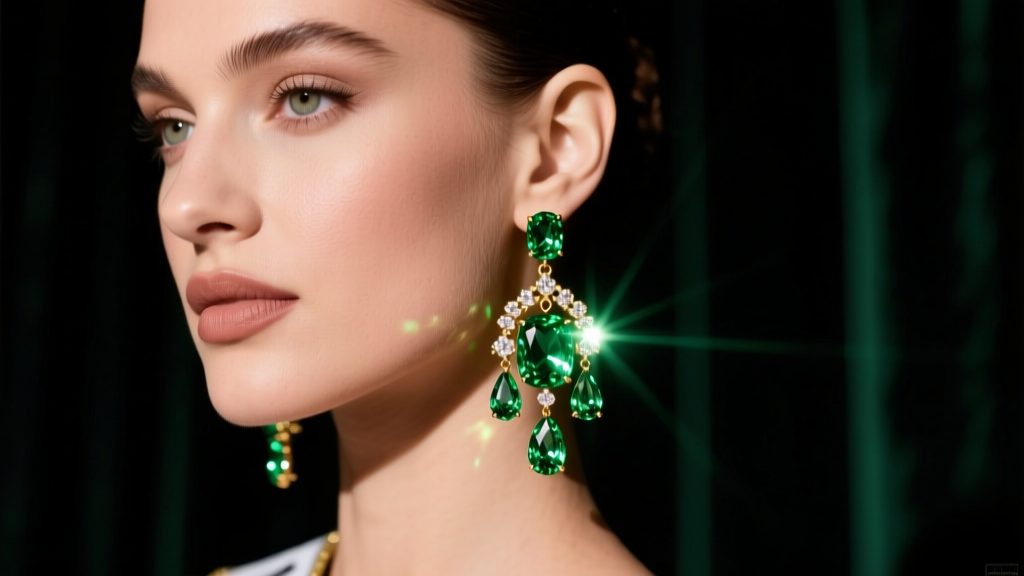
Stepping onto the pageant stage requires more than just a stunning gown and a confident walk; it demands meticulous attention to every accessory. For contestants wearing emerald, sage, or forest green gowns, finding the perfect green pageant earrings is a critical component of their overall score. The right pair frames the face, catches the judges' eyes, and harmonizes with the gown's undertones. However, beginners often make the mistake of selecting earrings based solely on how they look in a jewelry store, completely ignoring the harsh realities of stage lighting and the physical demands of a competition day.
This comprehensive guide will walk you through the exact specifications, materials, and optical properties you need to consider when selecting green earrings for pageantry, ensuring you make a professional-grade choice.
The 2026 Lighting Shift: How Stage LEDs Affect Green Gemstones
As pageant stage lighting in 2026 shifts heavily toward high-CRI (Color Rendering Index) LED arrays, the way green gemstones reflect light has fundamentally changed. Older halogen lights emitted a warm, yellow cast that naturally enriched olive and forest greens. Modern LED stages, however, are intensely bright and lean slightly cool. If you choose a dark green stone with poor light return, it will absorb the LED beams and appear as a black void on stage.
According to the Gemological Institute of America (GIA), a gemstone's refractive index (RI) and cut quality dictate its brilliance. For pageantry, you need stones with high dispersion and excellent light return. Let's break down the most common green stones used in pageant jewelry.
Gemstone Comparison Chart for Stage Performance
| Gemstone | Refractive Index | Stage Performance (LED) | Avg. Price Range (Sterling Base) |
|---|---|---|---|
| Natural Emerald | 1.57 - 1.58 | Moderate (Can look dark if heavily included) | $400 - $2,500+ |
| Peridot | 1.65 - 1.69 | Excellent (Double refraction creates high sparkle) | $80 - $250 |
| Green Cubic Zirconia | 2.15 - 2.18 | Superior (Flawless clarity, maximum light return) | $40 - $120 |
| Green Onyx (Dyed) | 1.53 - 1.54 | Poor (Opaque, relies on surface polish only) | $30 - $90 |
Expert Tip: For beginners on a budget, Green Cubic Zirconia (CZ) or Peridot are the undisputed champions of the stage. Peridot offers a natural, vibrant yellow-green hue that pops beautifully against cool LED lighting, while high-grade CZ provides a flawless, diamond-like sparkle that reaches the back row of the auditorium.
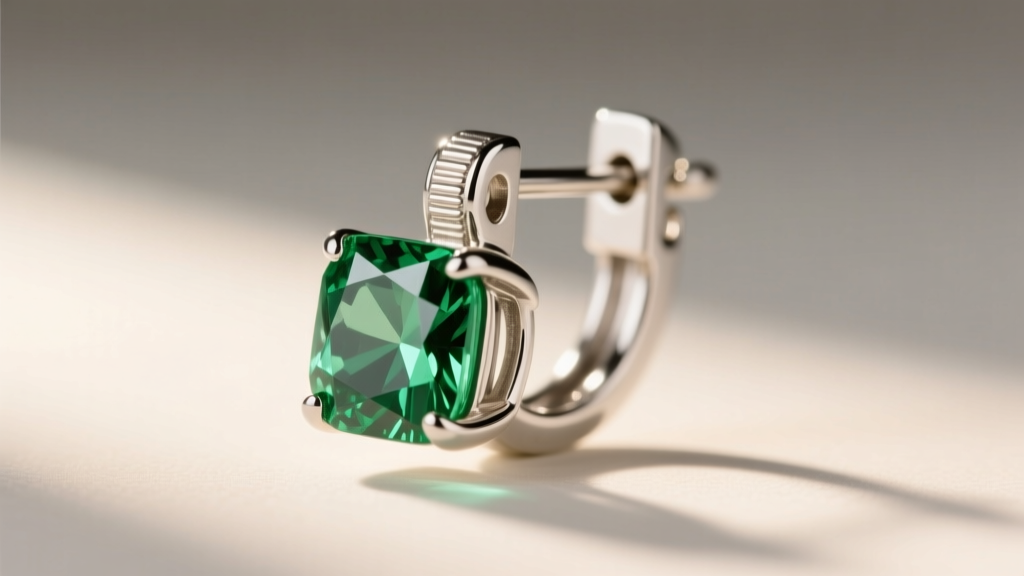
The Hardware: Metal Grades and Gauge Sizing
Pageant days are notoriously long, often lasting 12 to 16 hours from preliminary rehearsals to the final crown walk. Sweating under hot lights while wearing heavy earrings is a recipe for contact dermatitis. The American Academy of Dermatology (AAD) notes that nickel is the most common culprit for jewelry-induced allergic reactions, which can cause red, weeping earlobes right before you step on stage.
Choosing the Right Metal
- 316L Surgical Stainless Steel: The gold standard for hypoallergenic pageant jewelry. It contains virtually no free nickel, resists tarnish from sweat, and is highly durable.
- Nickel-Free Sterling Silver (925): A great option, but ensure it is explicitly stamped 'nickel-free.' Standard silver alloys sometimes use nickel or copper as hardening agents, which can trigger reactions.
- Gold Vermeil: If your gown requires gold-toned hardware, look for vermeil (a thick layer of 14k or 18k gold over a sterling silver base) rather than gold-plated brass, which will quickly wear down to the allergenic base metal during a long competition weekend.
Understanding Gauge Sizes
The 'gauge' refers to the thickness of the earring post that passes through your piercing. Standard lobe piercings are typically done at 20G (0.81mm) or 18G (1.02mm). If you are buying heavy chandelier or drop green pageant earrings, you must ensure the post is thick enough to support the weight without bending. A 20G post on a heavy 3-inch drop earring will easily warp under the weight, causing the earring to sit crookedly on your ear. For any drop earring exceeding 10 grams, seek out an 18G or even 16G (1.29mm) post for structural integrity.
Closures That Survive the Stage
Losing an earring during your evening gown walk is a pageant contestant's worst nightmare. The standard 'butterfly' friction back is entirely inadequate for the stage. The friction grooves wear down over time, and the sweeping motions of pageant hair styling can easily snag and pull them off.
When shopping for green pageant earrings, prioritize these professional closures:
- La Pousette (Secure Lock) Backs: These feature a spring-loaded mechanism that clicks securely into a groove on the post. They are the industry standard for high-value jewelry and will not budge, even if your hair gets tangled in the earring.
- Screw-Backs: The backing physically threads onto a grooved post. While slightly tedious to put on, they are virtually impossible to lose.
- Leverbacks: Ideal for dangle and drop earrings. The wire loops through the ear and clicks shut via a tiny hinge. Ensure the leverback has a small rubber o-ring or a secondary safety catch for maximum security.
Pairing Earring Silhouettes with Gown Necklines
The silhouette of your green pageant earrings must complement, not compete with, your gown's neckline. The goal is to create a continuous, flattering visual line from your jaw to your collarbone.
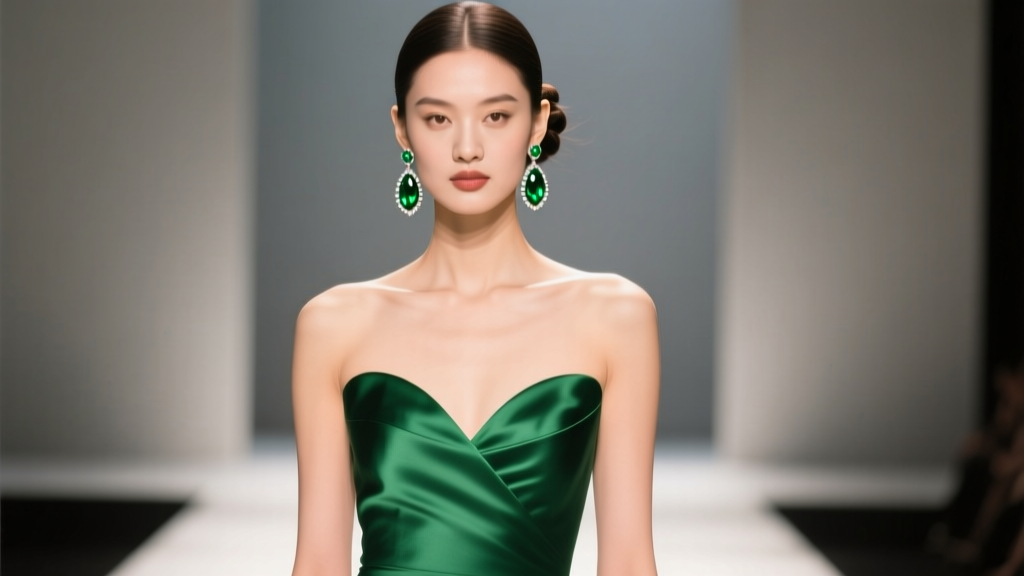
The Sweetheart Neckline
A sweetheart neckline opens up the chest and draws attention to the collarbones. Avoid long, sweeping chandeliers that will visually clash with the curved bodice. Instead, opt for medium-sized drop earrings (1.5 to 2 inches) or cluster studs. A teardrop-shaped green peridot drop earring mimics the romantic curve of the sweetheart bodice beautifully.
The Halter Neckline
Halter gowns draw the eye upward toward the neck and shoulders. Because the fabric sits high and close to the face, long dangling earrings will tangle with the gown's straps. Stick to voluminous studs or short huggies adorned with green CZ pavé. You want width and sparkle, not length.
The V-Neckline
A deep V-neck creates a strong vertical line. You can safely wear long, linear chandelier earrings (2.5 to 4 inches) that mirror the V-shape of the dress. Ensure the earrings taper to a point at the bottom to elongate the neck and face.
Day-Of Maintenance and Emergency Kits
Even the highest quality green pageant earrings require day-of maintenance to ensure they perform flawlessly under the lights. Hairspray, makeup setting powders, and natural skin oils will quickly coat gemstones, reducing their refractive index and making them look dull and cloudy on stage.
Pro-Tip: Always put your earrings in after your hair and makeup are 100% complete. If you must touch up hairspray, cover your ears with a clean, lint-free towel to protect the stones from aerosol buildup.
Build a small pageant emergency kit specifically for your jewelry. This should include:
- A soft, untreated jeweler's polishing cloth to wipe down the metal bases right before stepping on stage.
- A gentle, ammonia-free gemstone cleaning pen (safe for CZ, peridot, and onyx) to remove any last-minute makeup smudges.
- Spare silicone earring backs (if using friction posts as a backup pair).
- A small tube of clear nail polish or jewelry guard to coat the posts if you experience sudden skin sensitivity.
Final Thoughts for the Aspiring Titleholder
Selecting the right green pageant earrings is an exercise in balancing optics, ergonomics, and style. By understanding how modern LED lighting interacts with specific gemstones like peridot and CZ, prioritizing hypoallergenic metals like 316L steel, and insisting on secure locking closures, you eliminate the risk of wardrobe malfunctions and dull accessories. Approach your jewelry selection with the same strategic mindset you apply to your interview prep and stage walk, and your accessories will elevate your entire presentation from amateur to crown-ready.


