How Do You Clean Your Earrings? A Material-Specific Guide
Learn exactly how to clean your earrings based on their material. Expert tips for solid gold, sterling silver, titanium, and porous gemstones.

Why 'One Size Fits All' Cleaning Ruins Jewelry
When clients and readers ask me, "how do you clean your earrings without ruining the finish?", my first question is always about the base metal and gemstone composition. The internet is flooded with generic jewelry cleaning hacks—many of which are actively destructive. Dipping a porous opal into an ultrasonic cleaner will cause it to craze and fracture, while scrubbing gold vermeil with a baking soda paste will strip its microscopic gold layer right off the sterling silver base.
Proper earring maintenance isn't just about aesthetics; it is critical for skin health, especially for those with sensitive ears or healing cartilage piercings. Accumulated sebum, dead skin cells, and cosmetic residue create a breeding ground for bacteria, leading to contact dermatitis or localized infections. In this comprehensive guide, we break down the exact chemical and mechanical protocols for cleaning every type of earring in your collection, from everyday 14k gold studs to intricate, gemstone-encrusted chandeliers.
The Golden Rule: Identifying Your Core Material
Before you mix any cleaning solutions, you must identify your earring's material grade. The cleaning agents that safely restore solid gold will permanently damage plated alternatives.
Solid Gold (14K & 18K) and Platinum
Solid gold earrings are alloyed with metals like copper, silver, and zinc to increase durability. 14k gold (58.5% pure gold) is harder and more resistant to scratching, while 18k gold (75% pure gold) is softer and boasts a richer color. Platinum is naturally white and highly durable but develops a patina over time.
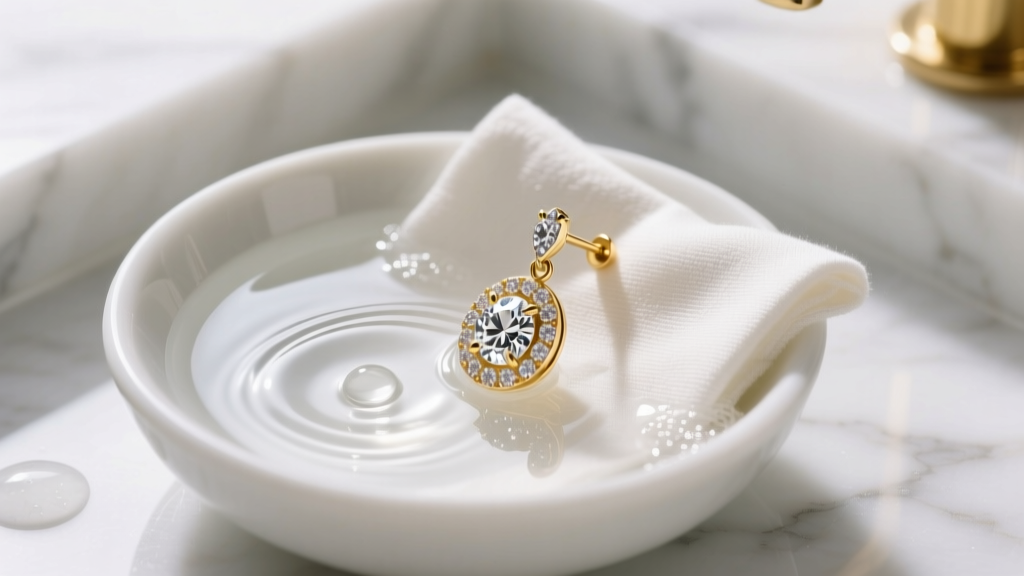
- The Safe Wash: Mix a few drops of mild, phosphate-free dish soap (like Dawn) into a bowl of lukewarm water. Soak solid gold and platinum earrings for 15-20 minutes to loosen sebum and lotion buildup.
- The Agitation: Use a soft-bristle baby toothbrush to gently sweep behind the earring post and around the prongs. Never use stiff bristles, as they can bend delicate prongs holding your gemstones.
- The Rinse & Dry: Rinse thoroughly under lukewarm water and pat dry with a lint-free microfiber cloth. Air drying leaves hard water spots, especially on high-polish platinum.
Sterling Silver and the Redox Reaction
Sterling silver (92.5% silver, 7.5% copper) is notorious for tarnishing. Tarnish is not dirt; it is silver sulfide, a chemical reaction between the silver and sulfur compounds in the air. Polishing with a cloth removes a microscopic layer of silver every time. Instead, use an electrochemical redox reaction to reverse the tarnish without removing any metal.
- Line a glass bowl with aluminum foil (shiny side up).
- Place your tarnished silver earrings on the foil, ensuring they touch the metal.
- Sprinkle a tablespoon of baking soda over the earrings.
- Pour boiling water into the bowl. You will see bubbles and smell a faint rotten egg odor (hydrogen sulfide gas releasing).
- After 3 minutes, remove the earrings with wooden tongs, rinse, and buff dry.
Warning: Never use this method on oxidized (intentionally blackened) silver details or silver earrings set with glued-in gemstones, as the boiling water will melt the adhesive.
How Do You Clean Your Earrings With Porous Gemstones?
Gemstones require entirely different protocols based on their Mohs hardness scale rating and internal structure. While diamonds (Mohs 10) and sapphires (Mohs 9) can withstand rigorous cleaning, organic and porous stones are incredibly fragile.
The 'No-Soak' Protocol for Organics
Pearls, coral, and amber are organic materials. They are highly sensitive to acids, alkalis, and even the mild chemicals found in tap water. Submerging pearls can cause the silk thread to stretch and rot, while chemicals will strip their delicate nacre luster.
- Pearls & Amber: Wipe gently with a damp, soft cloth after every wear to remove skin oils. Never use ultrasonic cleaners or steam.
- Opals: Opals contain up to 20% water. Sudden temperature changes or ultrasonic vibrations will cause 'crazing' (internal cracking). Clean only with a dry, soft brush.
- Emeralds: Most commercial emeralds are fracture-filled with cedar oil or synthetic resins to improve clarity. Ultrasonic cleaners and harsh solvents will dissolve this filler, leaving the stone looking cloudy and heavily included.
The Cartilage & Healing Piercing Protocol
If you are asking how to clean earrings that are currently sitting in a fresh or healing piercing, the rules of jewelry care are superseded by the rules of wound care. According to the Association of Professional Piercers (APP), fresh piercings require an entirely different approach to prevent hypertrophic scarring and infection.
"For healing piercings, the jewelry should ideally be implant-grade titanium (ASTM F136). Cleaning the jewelry itself is secondary to cleaning the piercing site. Avoid all harsh chemicals, alcohol, and hydrogen peroxide, which destroy the delicate new tissue cells forming the fistula."
The Healing Routine:
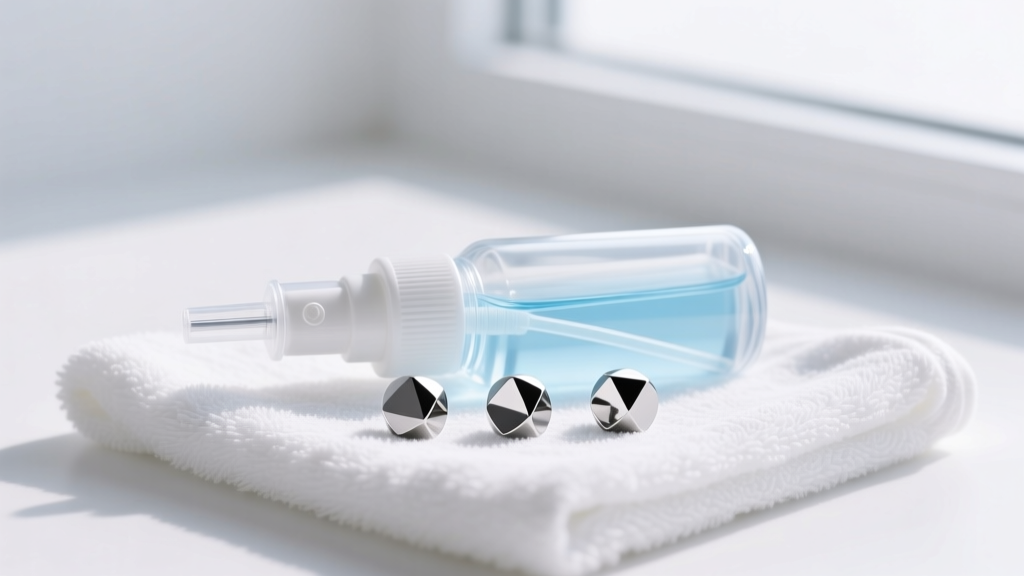
- Spray sterile, 0.9% sodium chloride wound wash (with no additives) directly onto the front and back of the earring and piercing site.
- Allow the saline to soften any dried lymphatic fluid (crusties) for 3-5 minutes.
- Gently wipe away the softened debris with a piece of non-woven gauze. Avoid cotton swabs, as they leave microscopic fibers that can become embedded in the healing wound.
- Never twist or rotate the earring post. This tears the fragile healing tissue and introduces bacteria into the fistula.
The Ultimate Earring Cleaning Matrix
Use this quick-reference table to determine the safest cleaning method for your specific earring type. When in doubt, consult a professional jeweler, especially for high-value antique pieces.
| Material / Stone | Base Composition | Safe Cleaning Agent | Tool | Ultrasonic Safe? |
|---|---|---|---|---|
| Solid 14k/18k Gold | Gold, Copper, Zinc | Mild Dish Soap + Warm Water | Soft Baby Toothbrush | Yes (if no fragile stones) |
| Sterling Silver (925) | Silver, Copper | Baking Soda + Aluminum Foil | Microfiber Cloth | No (causes pitting) |
| Gold Vermeil | 2.5µm Gold over Silver | Damp Microfiber Cloth Only | Polishing Cloth (Untreated) | No (strips plating) |
| Diamonds / Sapphires | Carbon / Corundum | Ammonia-based Cleaner | Soft Brush | Yes |
| Pearls / Opals | Organic Nacre / Hydrated Silica | Dry or Slightly Damp Cloth | Soft Brush | Absolutely Not |
| Implant-Grade Titanium | ASTM F136 Ti-6Al-4V | 0.9% Sterile Saline | Non-woven Gauze | N/A (usually in-piercing) |
Common Cleaning Mistakes That Cause Irreversible Damage
Even well-intentioned cleaning routines can destroy fine jewelry if you rely on outdated myths. The Gemological Institute of America (GIA) frequently warns against the following household hazards:
1. The Toothpaste Myth
Toothpaste is highly abrasive. On the Mohs scale, the silica used in toothpaste ranks around a 3 or 4. While this won't scratch a diamond, it will easily scratch 14k gold, platinum, and definitely sterling silver, leaving a dull, matte finish filled with micro-scratches that trap future dirt.
2. Chlorine and Stress Corrosion Cracking
Never wear or clean your karat gold earrings in a swimming pool or hot tub. Chlorine reacts violently with the copper and zinc alloys in 14k and 18k gold. This causes 'stress corrosion cracking,' a phenomenon where the metal becomes brittle and eventually snaps, often right at the solder joint of the earring post or prong.
3. Ultrasonic Cleaners and Fracture-Filled Stones
Ultrasonic cleaners operate at high frequencies (typically 42,000 Hz), creating microscopic cavitation bubbles that implode and blast dirt away. While excellent for plain diamond studs, this violent vibration will shatter tanzanite, crack emeralds, and rattle glued-in gemstones right out of their settings.
Frequently Asked Questions
How often should I clean my everyday stud earrings?
For everyday wearers, a quick wipe with a dry microfiber cloth at the end of the day removes skin oils and lotions. A deep soak in warm soapy water should be done every two weeks to prevent the buildup of dead skin cells behind the earring back, which is a primary cause of 'earring cheese' (the odor caused by bacteria breaking down sebum).
Can I use rubbing alcohol to sanitize my earrings?
Isopropyl alcohol (70% or higher) is excellent for sanitizing the metal posts of solid gold, platinum, and titanium earrings before inserting them into a healed piercing. However, alcohol will dry out and crack porous gemstones like opals and pearls, and it can degrade the rhodium plating on white gold over time.
Why is my white gold earring turning yellow?
White gold is naturally a pale yellow alloy. It is plated with a microscopic layer of rhodium to give it a bright, silvery-white finish. Cleaning it too aggressively, or exposing it to friction and skin acids, wears the rhodium away, revealing the yellowish base metal. The solution isn't cleaning; it is taking the earrings to a jeweler for a professional rhodium re-plating.


