Acorn Earrings Value Guide 2026: Budget vs Luxury
Discover the true value of acorn earrings in 2026. Compare budget vs. luxury pricing, material grades, enamel types, and gauge sizes for smart buying.

The True Cost of Acorn Earrings: Beyond the Price Tag
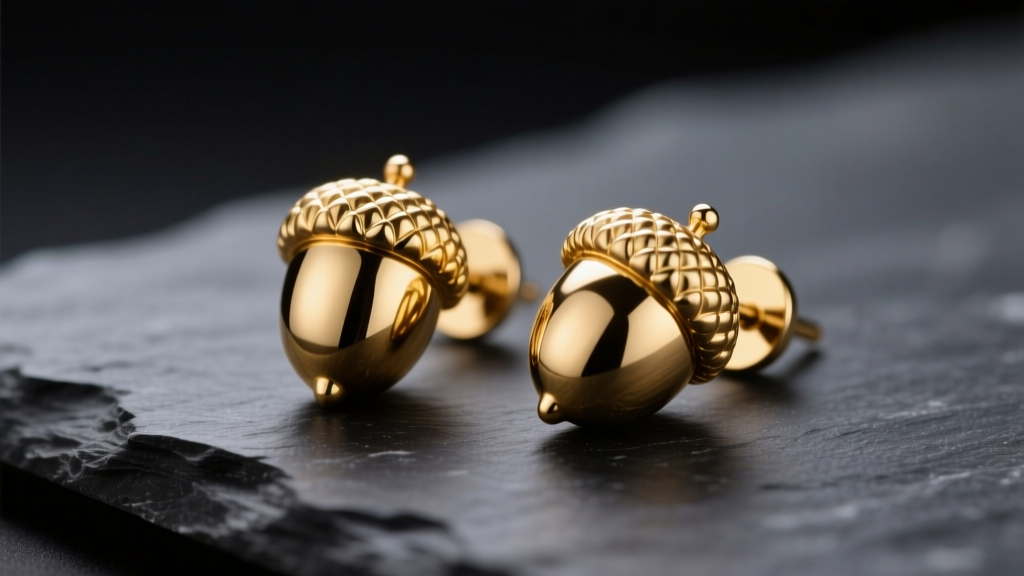
Nature-inspired jewelry remains a perennial staple in the accessory market, but the acorn motif presents unique manufacturing and material challenges that directly impact its long-term value. When shopping for acorn earrings, consumers are often confronted with a massive price disparity—ranging from $15 novelty pieces to $800 fine jewelry investments. As a buyer in 2026, understanding the anatomy of an acorn earring is crucial. The design inherently requires a two-part construction: the 'nut' (the smooth, rounded bottom) and the 'cap' (the textured or enameled top). This junction is the primary point of structural failure in poorly made pieces and the hallmark of master craftsmanship in luxury tiers.
To accurately assess the budget and value of acorn earrings, we must look past the aesthetic appeal and evaluate the metallurgical integrity, the enamel firing process, and the hardware engineering. A cheaply cast acorn cap will lose its cross-hatched texture within a year of daily wear, while a hand-finished solid gold or vitreous enamel piece will become a multi-generational heirloom. This guide breaks down the exact metrics you need to evaluate before making a purchase.
Material Breakdown & Expected Lifespan
The base metal and the method used to detail the acorn cap dictate the earring's lifespan. According to the Federal Trade Commission Jewelry Guidelines, terms like 'gold tone' or 'gold plated' have specific legal thresholds, but many fast-fashion brands exploit loopholes by using microscopic flash plating over porous brass bases. Below is a structural comparison of what you are actually paying for across different market tiers.
| Value Tier | Base Metal | Cap Detailing Method | Plating / Finish | Expected Lifespan | 2026 Price Range |
|---|---|---|---|---|---|
| Budget | Brass or Zinc Alloy | Thin Sheet Stamping | Flash Gold Plating (<0.5 microns) | 3 - 6 Months | $15 - $45 |
| Mid-Range | Solid 925 Sterling Silver | Lost-Wax Casting | Gold Vermeil (2.5+ microns) | 3 - 5 Years | $60 - $150 |
| Luxury | Solid 14k or 18k Gold | Hand-Carved / Pavé | Solid Alloy / Rhodium | Generational | $350 - $950+ |
The Acorn Cap Conundrum: Enamel vs. Textured Metal
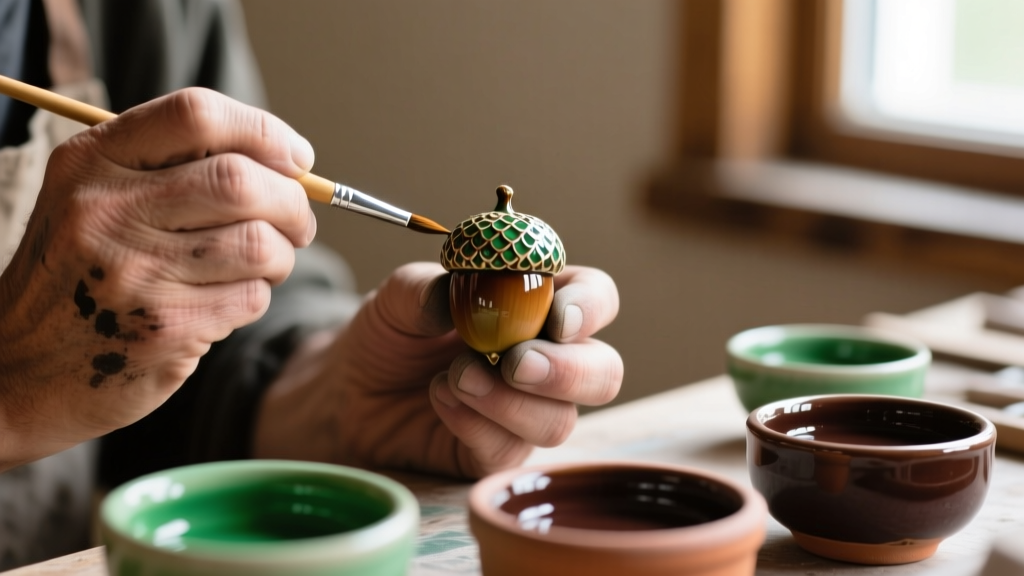
The most critical value assessment in acorn earrings lies in the cap. Budget manufacturers use 'cold enamel'—a dyed epoxy resin that cures at room temperature. While initially vibrant, cold enamel is highly susceptible to UV degradation and will yellow or chip when exposed to cosmetics and sunlight. Conversely, luxury and heritage brands utilize vitreous enamel, a powdered glass fused to the metal at temperatures exceeding 1400°F. Vitreous enamel is virtually impervious to moisture and UV light. Furthermore, the Gemological Institute of America (GIA) notes that porous base metals trapped beneath cheap resin caps are a leading cause of localized contact dermatitis, making solid metals or properly sealed vitreous enamel a necessity for sensitive lobes.
2026 Pricing Tiers: What Should You Actually Pay?
Navigating the current market requires a strict adherence to value-based pricing. Here is what you should expect to pay, and more importantly, what you should demand in return for your money in 2026.
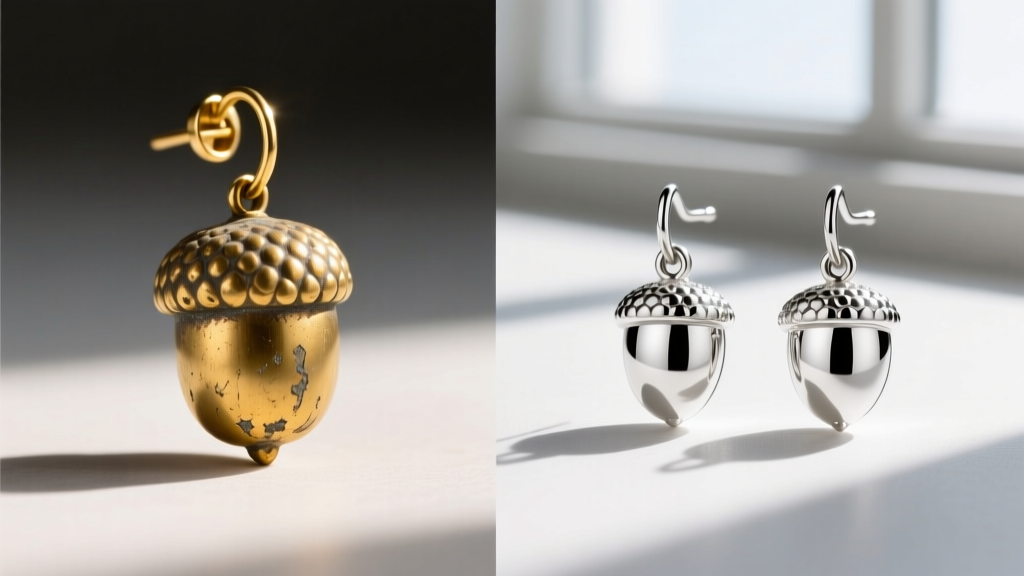
- The Budget Tier ($15 - $45): At this price, you are purchasing costume jewelry. Expect 20-gauge hollow posts and stamped brass caps. Value Verdict: Only acceptable for seasonal or trend-based wear. Do not expect these to survive daily use without the gold plating rubbing off onto the acorn nut.
- The Accessible Fine Tier ($60 - $150): This is the sweet spot for everyday wear. You should demand solid 925 sterling silver with a minimum of 2.5 microns of gold vermeil. The acorn cap should feature deep, lost-wax casted cross-hatching that won't smooth out from friction. Value Verdict: High value. Brands in this tier often use secure friction backs or threaded posts.
- The Investment Tier ($350 - $950+): Solid 14k or 18k gold is mandatory here. The value is elevated by advanced detailing, such as a pavé diamond acorn nut or a cap carved from a single piece of raw turquoise or jade. Value Verdict: Excellent heirloom value, provided the hardware is proportionate to the weight of the precious metals.
Sizing, Gauge, and Comfort Metrics
A frequently overlooked aspect of earring value is the hardware engineering, specifically the post gauge relative to the earring's weight. An acorn is a naturally bottom-heavy design. A solid 925 silver acorn dangle measuring 18mm in length can easily weigh between 3.5 and 5 grams per earring.
If a manufacturer uses a standard 20-gauge (0.81mm) wire for a 5-gram dangle, the post will inevitably bend when taking the earring in and out of the lobe, or worse, snap under the dynamic stress of walking. For any acorn earring (stud or dangle) weighing over 2.5 grams, a minimum of 19-gauge (0.91mm) or 18-gauge (1.02mm) wire is a non-negotiable indicator of quality engineering. Furthermore, heavy acorn studs should utilize screw-backs or jumbo silicone friction backs to prevent the earring from drooping and stretching the earlobe piercing over time.
How to Spot Overpriced Costume Jewelry
Many mid-tier brands mark up cheaply manufactured acorn earrings to the $80-$120 range by relying on brand recognition rather than material quality. Use this rapid assessment checklist before purchasing:
- Inspect the Bail or Solder Point: On dangle acorn earrings, look at where the cap connects to the hook or chain. High-value pieces use a thick, smoothly filed soldered loop. Cheap pieces use thin, pinched wire that snaps easily.
- The 'Scratch' Test on Enamel: If the acorn cap features green or brown accents, gently run your fingernail over the surface. If it feels raised or slightly soft, it is cold epoxy resin. True vitreous enamel will feel completely smooth and glass-like, flush with the metal borders.
- Check the Hallmarks: Look for '925', '14k', or '585' stamped on the post or the back of the acorn nut. If the only stamp is a brand logo or '18k HGE' (Heavy Gold Electroplate), you are looking at a brass core that will eventually oxidize and turn your skin green.
Final Verdict: Maximizing Your Acorn Earring Investment
'True value in nature-motif jewelry is not found in the novelty of the shape, but in the metallurgical integrity and the precision of the micro-details that bring the motif to life.'
When budgeting for acorn earrings in 2026, bypass the $20-$40 costume tier entirely unless you are buying for a fleeting trend. The optimal return on investment lies in the $80-$150 range, targeting independent jewelers who utilize solid sterling silver bases, thick gold vermeil, and structurally sound 18-gauge posts. By prioritizing lost-wax casting over sheet stamping, and demanding vitreous enamel over epoxy resins, you ensure that your acorn earrings remain a vibrant, structurally sound staple in your jewelry rotation for decades.


