Alexander Wang Earrings: 2026 Hardware & Material Deep Dive
Explore the technical construction, base metals, and weight distribution of Alexander Wang earrings in our 2026 expert hardware and material deep dive.

The Industrial Ethos: Beyond the Runway Aesthetic
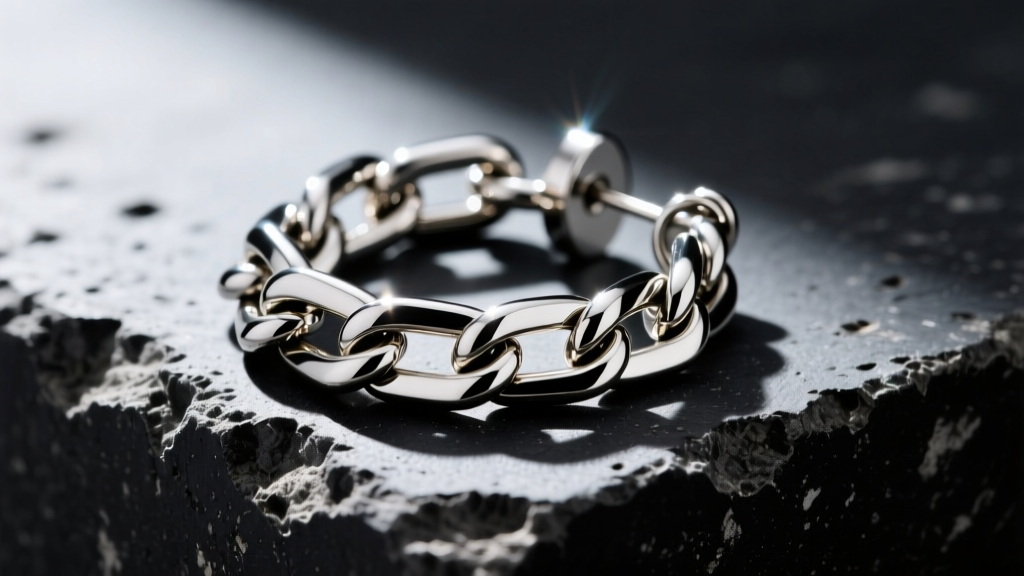
Alexander Wang has long been synonymous with a gritty, utilitarian, and brutalist approach to fashion, and this ethos extends deeply into the brand's jewelry archives. As we analyze the trajectory of designer fashion jewelry in 2026, Alexander Wang earrings remain a masterclass in industrial hardware translation. Unlike traditional fine jewelry that prioritizes gemstone refraction and precious metal purity, Wang’s ear adornments prioritize structural integrity, architectural weight, and subversive hardware motifs. From oversized padlock drops to safety pin clusters and heavy-gauge chain links, these pieces are not merely accessories; they are wearable structural engineering projects. For the serious collector and the jewelry technician alike, understanding the material composition and biomechanical realities of these heavy-hitting pieces is essential for both preservation and comfortable wear.
Metallurgy and Plating: What Lies Beneath the Rhodium
The signature 'white metal' look of Alexander Wang earrings is rarely solid white gold or platinum. Instead, the brand heavily relies on high-grade brass alloys—typically CZ121 (CW614N), a free-machining brass composed of roughly 58% copper, 39% zinc, and 3% lead. This specific alloy is chosen for its exceptional tensile strength and ability to be cast into intricate, sharp-edged industrial shapes without porosity. However, raw brass oxidizes rapidly when exposed to the sulfur and moisture present in human skin.
To achieve the brand's signature gunmetal or bright silver finish, the brass base undergoes a rigorous electroplating process. According to metallurgical standards documented by Ganoksin, fashion jewelry of this caliber typically requires a multi-stage plating sequence. First, the brass is polished and subjected to a nickel or palladium 'strike' layer. This barrier coat prevents the copper and zinc atoms from migrating to the surface, a phenomenon known as galvanic corrosion. Finally, a topcoat of rhodium—a platinum group metal with a Vickers hardness of roughly 800 HV—is applied. While fine jewelry might boast 2.0 to 5.0 microns of rhodium, fashion hardware usually operates in the 0.5 to 1.5-micron range. This provides the brilliant, tarnish-resistant luster seen on the runway, but it means the underlying brass will eventually reveal itself at high-friction contact points, such as the post and the friction back.
Lobe Biomechanics: Managing Heavy Hardware
The most critical technical challenge posed by Alexander Wang earrings is their sheer mass. Signature chain-link and padlock drop styles frequently exceed 35 to 50 grams per ear. To put this in perspective, a standard gold hoop earring weighs between 4 and 8 grams. The human earlobe fistula (the healed piercing tunnel) is not naturally equipped to support half the weight of a standard smartphone on a single, localized vector point.
When a heavy earring is suspended from a standard 20-gauge (0.8mm) or 18-gauge (1.0mm) post, gravity creates a severe pendulum effect during ambulation. According to dermatological studies on earlobe clefts and migration published in the Journal of the American Academy of Dermatology, prolonged stress from heavy jewelry causes micro-tears in the collagen matrix of the fistula. Over time, this leads to 'cheese-cutter' migration, where the post slowly slices downward through the lobe tissue, resulting in permanent elongation or complete lobe splitting.
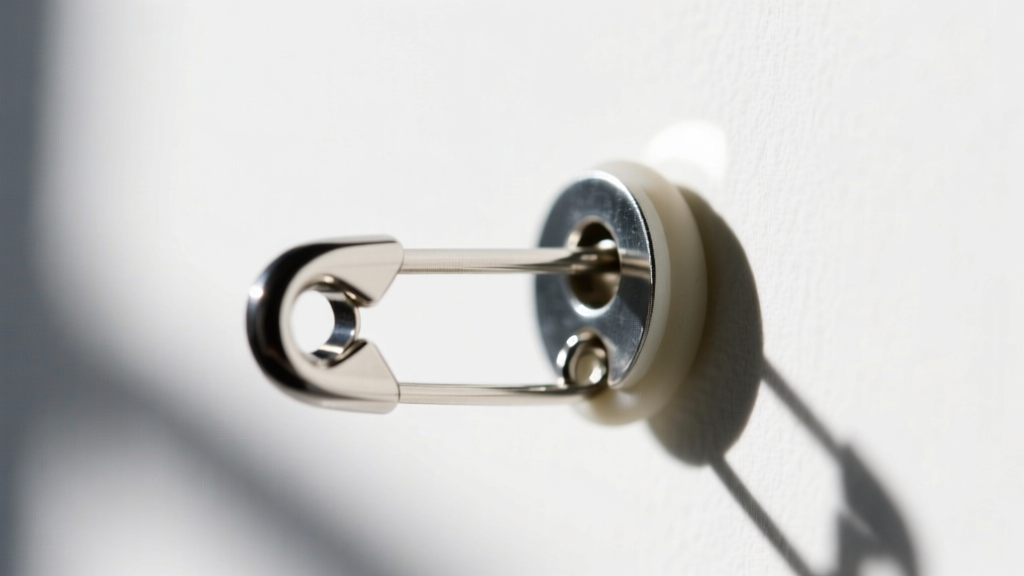
To mitigate this biomechanical failure, wearers of heavy Wang hardware must employ load-distribution strategies. Upgrading to custom silicone o-ring backs (like EarStax or specialized Japanese resin discs) increases the surface area bearing the weight from a mere 4 square millimeters to over 40 square millimeters. Furthermore, when purchasing replacement posts or modifying vintage Wang pieces, opting for a thicker 16-gauge (1.2mm) or 14-gauge (1.6mm) titanium post drastically reduces the sheer force applied to the anterior lobe tissue.
Hardware Mechanics and Clasp Engineering
Alexander Wang’s design team frequently repurposes actual industrial hardware, which introduces unique mechanical stress points. The jump rings connecting heavy chain links to the main earring body are critical failure points. In standard jewelry, split rings are used, but Wang’s heavier pieces utilize laser-welded closed jump rings to prevent the links from pulling apart under the 50g dynamic load.
For pieces featuring functional clasps—such as the iconic dog-clip or oversized lobster clasps—the internal spring tension is calibrated differently than fine jewelry. The springs are often housed in a larger, reinforced casing to prevent the internal steel spring from snapping when subjected to the lateral torque of a swinging chain. However, because these external casings are plated brass and the internal springs are often stainless steel, exposure to humidity can cause the internal spring to rust, seizing the clasp mechanism entirely. Regular application of micro-crystalline wax to the clasp hinge is a necessary maintenance protocol to prevent galvanic corrosion between the dissimilar metals.
Signature Lines and Technical Specifications
Below is a technical breakdown of the most prominent Alexander Wang earring silhouettes, detailing their approximate weight, base materials, and structural vulnerabilities as of the 2026 archival market.
| Signature Motif | Base Material | Avg. Weight (Pair) | Post Gauge | Primary Failure Mode |
|---|---|---|---|---|
| Padlock Chain Drop | CZ121 Brass / Rhodium | 65g - 80g | 18G (1.0mm) | Lobe migration; jump ring weld fracture |
| Safety Pin Cluster | Brass / Silver Tone | 25g - 30g | 20G (0.8mm) | Pin hinge pin shear; clasp spring seizure |
| Industrial Barbell | Stainless Steel / PVD | 40g - 45g | 14G (1.6mm) | Thread stripping on internal screw caps |
| Logo Hardware Stud | Brass / Enamel | 12g - 15g | 20G (0.8mm) | Enamel chipping at bezel edge |
Patina Management and Maintenance Protocols
Because the rhodium or silver-toned plating on Alexander Wang earrings is a surface-level treatment over a reactive brass core, maintenance requires a delicate touch. Many collectors mistakenly use commercial silver dip cleaners (which contain harsh thiourea and sulfuric acid compounds) to brighten their tarnished Wang pieces. This is a catastrophic error. These chemical dips will strip the rhodium flash in seconds and aggressively attack the underlying brass, leaving the earring with a porous, matte, and permanently discolored surface.
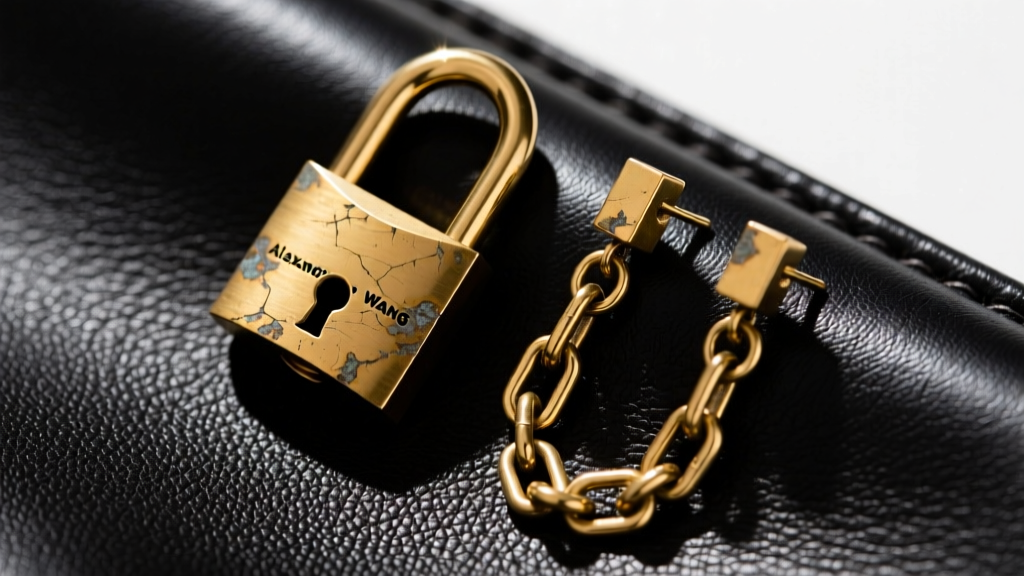
Instead, the recommended protocol for cleaning heavy hardware earrings involves a mild, non-ionic surfactant bath. Submerge the earrings in a solution of distilled water and a few drops of conservation-grade detergent (such as Orvus WA Paste) for no more than five minutes. Use a soft-bristled goat hair brush to gently agitate the crevices of the chain links and padlock mechanisms, ensuring no sebum or cosmetic buildup remains in the mechanical hinges. Dry immediately with compressed air to prevent water spots from forming on the rhodium. For pieces where the brass has already broken through the plating, embrace the patina. The oxidized, grungy brass aesthetic aligns perfectly with Wang’s original downtown New York design philosophy, turning material degradation into a badge of authentic wear.
'Fashion jewelry is not meant to be kept in a sterile vault. The interaction between the brass alloy, the rhodium flash, and the wearer's unique skin chemistry creates a living, evolving patina that tells the story of the piece.' — Archival Jewelry Conservation Notes, 2025.
Understanding the metallurgy, weight distribution, and mechanical realities of Alexander Wang earrings elevates the wearing experience from a simple fashion choice to an exercise in structural appreciation. By respecting the gauge limitations of the human earlobe and employing proper conservation techniques, collectors can ensure these heavy-hitting industrial masterpieces remain intact and impactful for decades to come.


