Amethyst Square Earrings: 2026 Trend & Style Guide
Discover why amethyst square earrings are dominating 2026 jewelry trends. Explore cuts, color grades, metal pairings, and expert styling tips.

The 2026 Shift: Geometric Revival & Moody Maximalism
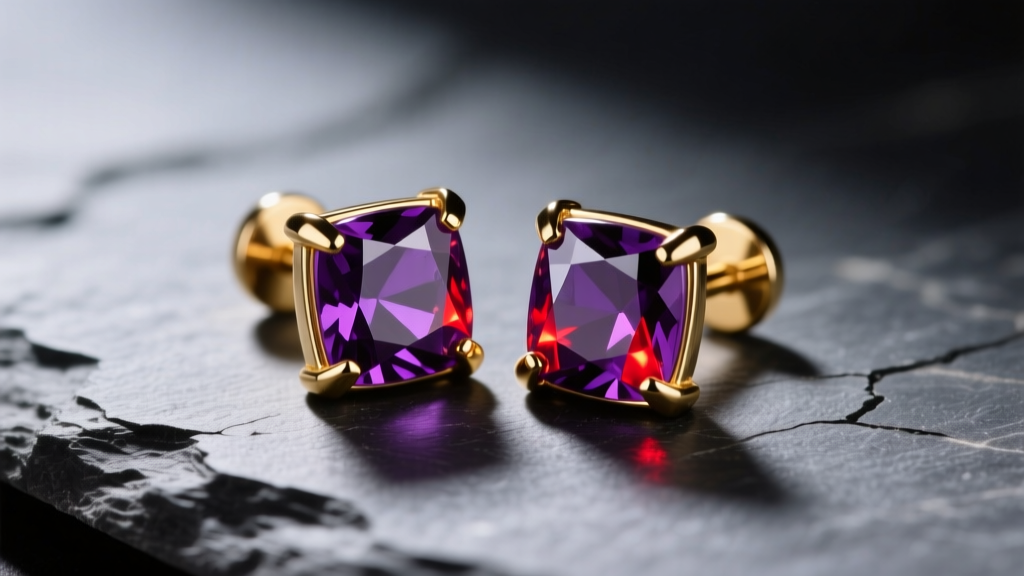
As we navigate the jewelry landscape of 2026, the industry is witnessing a definitive pivot from the ultra-minimalist 'quiet luxury' trend toward 'moody maximalism.' At the forefront of this shift are amethyst square earrings, which perfectly bridge the gap between structured geometry and deep, emotional color. Unlike the ubiquitous round brilliant cuts that dominated the early 2020s, square silhouettes—ranging from sharp princess cuts to vintage-inspired Asschers—offer an architectural edge that appeals to modern collectors and everyday wearers alike.
The appeal of amethyst in 2026 lies in its versatility. It provides the regal saturation of blue sapphire or the moody depth of black onyx, but with a distinct violet warmth that flatters a wider array of skin undertones. When cut into square proportions, the stone's natural color zoning is often highlighted, creating mesmerizing light return and depth. According to the Gemological Institute of America (GIA), amethyst remains the most highly valued quartz variety, and its geometric manifestations are currently seeing a 40% year-over-year increase in bespoke jewelry requests.
Decoding the Square Cut: Princess, Asscher, and Cushion
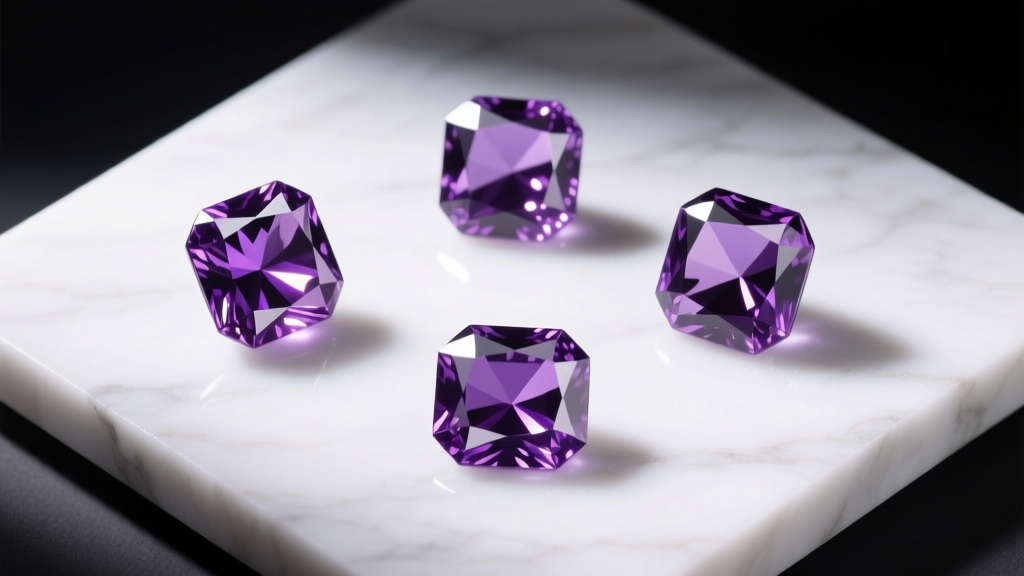
Not all square cuts are created equal. The facet arrangement drastically alters how the purple hue is perceived and how the stone interacts with light. When shopping for amethyst square earrings, understanding these three primary silhouettes is critical for making an informed purchase.
1. The Princess Cut
The princess cut features a brilliant-style facet pattern (typically 50 to 58 facets) with sharp, uncut 90-degree corners. This cut maximizes brilliance and scintillation, making the amethyst appear lighter and more vibrant. Because of its complex facet structure, the princess cut is excellent at masking natural inclusions, allowing buyers to prioritize color over flawless clarity.
2. The Asscher Cut
A step-cut with concentric square patterns and cropped corners. The Asscher cut creates a 'hall of mirrors' effect. Because step cuts do not scatter light as aggressively as brilliant cuts, they demand higher clarity grades. Any internal fractures or 'tiger stripe' inclusions common in natural amethyst will be highly visible. However, an eye-clean Asscher amethyst offers an unparalleled, icy elegance.
3. The Square Cushion Cut
Technically a square with rounded corners, the cushion cut bridges the gap between geometric and romantic. The softened corners make this cut significantly more durable for everyday wear, as sharp 90-degree corners on a Mohs 7 stone are vulnerable to chipping if struck against a hard surface.
Amethyst Color Grades: Sourcing the Perfect Purple
The value and aesthetic impact of amethyst square earrings are heavily dictated by color saturation and origin. The GIA's quality factor guidelines emphasize that the most prized amethyst exhibits a strong reddish-purple hue without visible color zoning. Below is a breakdown of the primary grades you will encounter in the 2026 market.
| Grade / Origin | Color Profile | Clarity Expectation | Est. Retail Price (per carat) |
|---|---|---|---|
| Siberian (Natural) | Deep purple with distinct red and blue secondary flashes | Eye-clean to slightly included | $25 - $55+ |
| Uruguayan (Natural) | Dark, inky violet, high saturation, minimal red flash | Eye-clean | $15 - $35 |
| Rose de France (Natural) | Pale lilac, soft pastel, highly transparent | High clarity (Loupe clean) | $5 - $15 |
| Hydrothermal (Lab-Created) | Uniform vivid purple, lacks natural color zoning | Flawless (VVS) | $8 - $20 |
Expert Insight: True 'Siberian' amethyst is largely depleted from its original Russian mines. Today, the term is used as a trade descriptor for any amethyst—often sourced from Zambia or Madagascar—that exhibits the highly coveted deep purple body color with red flashes under incandescent lighting. Always request a spectroscopic origin report if a vendor claims 'Russian Origin' for stones over 3 carats.
Metal Synergies: Framing the Violet Stone
The metal setting acts as the frame for your gemstone, fundamentally altering its perceived temperature. In 2026, we are seeing a departure from standard white gold prong settings toward more intentional, protective metalwork.
- 14k & 18k Yellow Gold: Yellow gold provides a complementary contrast to the purple spectrum. It specifically amplifies the rare red flashes found in high-grade Siberian amethyst, creating a warm, vintage-inspired aesthetic that pairs beautifully with the Asscher cut.
- Platinum & White Gold: Cool-toned metals enhance the icy, blueish undertones of Uruguayan amethyst. This pairing is ideal for sharp princess cuts, yielding a modern, architectural look.
- The Bezel Setting Trend: Because amethyst ranks at a 7 on the Mohs hardness scale, the sharp corners of square cuts are prone to chipping. The 2026 trend heavily favors full or half-bezel settings in 14k solid gold. This not only protects the vulnerable points but also provides a sleek, continuous metal border that emphasizes the stone's geometry.
Face Shape Geometry & Piercing Placement
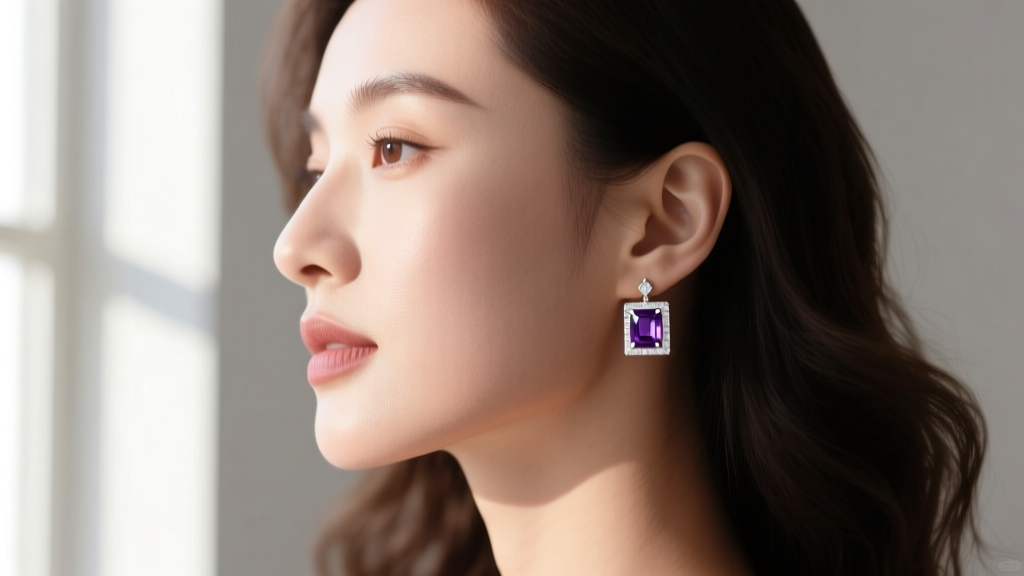
Styling amethyst square earrings requires an understanding of facial geometry and ear anatomy. The angular nature of square stones can either balance or exacerbate your natural features.
Styling by Face Shape
Round Faces: Opt for elongated square drops or sharp princess-cut studs. The harsh angles and vertical lines help to elongate the face and add structural definition to soft features.
Square/Angular Faces: Avoid sharp princess cuts, which will mirror and exaggerate a strong jawline. Instead, choose square cushion cuts or Asscher drops. The softened corners and stepped facets provide geometric interest without adding visual harshness.
Oval Faces: You have the versatility to pull off any square cut. A bold, chunky square cushion stud in yellow gold will serve as a perfect statement piece.
Cartilage vs. Lobe Placements
While square studs are traditional for standard lobe piercings (typically 20G or 18G), they are increasingly popular for flat and helix cartilage piercings. If placing a square amethyst in a cartilage piercing, ensure the post is 16G or 18G for stability, and mandate a low-profile bezel setting. Prong settings in cartilage piercings are notorious for catching on hair and clothing, which can lead to trauma bumps or torn jewelry.
Durability & Care: Protecting Your Investment
Amethyst requires specific care protocols that differ from harder stones like diamonds or sapphires. Its Mohs 7 rating means it is susceptible to scratching from everyday dust, which contains microscopic quartz particles (also Mohs 7).
The Golden Rule of Amethyst Care: Never wipe a dusty amethyst square earring dry with a cloth. This will drag quartz particles across the surface, creating micro-scratches that dull the stone's polish over time. Always rinse with lukewarm water and mild dish soap first, then pat dry with a clean microfiber cloth.
Furthermore, amethyst is photosensitive. Prolonged exposure to direct ultraviolet (UV) sunlight can cause the purple color centers to degrade, resulting in a faded, grayish-brown stone. Store your earrings in a dark, velvet-lined jewelry box when not in use, and avoid wearing them during extended outdoor activities like beach days or hiking.
Final Verdict: The 2026 Investment
Amethyst square earrings represent a masterclass in accessible luxury. By focusing on precise cut proportions, demanding accurate color grading, and selecting protective, trend-aligned metal settings, you can secure a piece that feels both historically grounded and fiercely modern. Whether you opt for the icy brilliance of a white gold princess cut or the moody warmth of a yellow gold Asscher, the geometric amethyst is undeniably the silhouette defining 2026's ear curation.


