Amina Muaddi Earrings: A Technical Deep Dive Into Design & Materials
Explore the technical craftsmanship of Amina Muaddi earrings. We analyze material grades, weight distribution, closures, and lobe health mechanics.

The Architectural DNA: Beyond Footwear
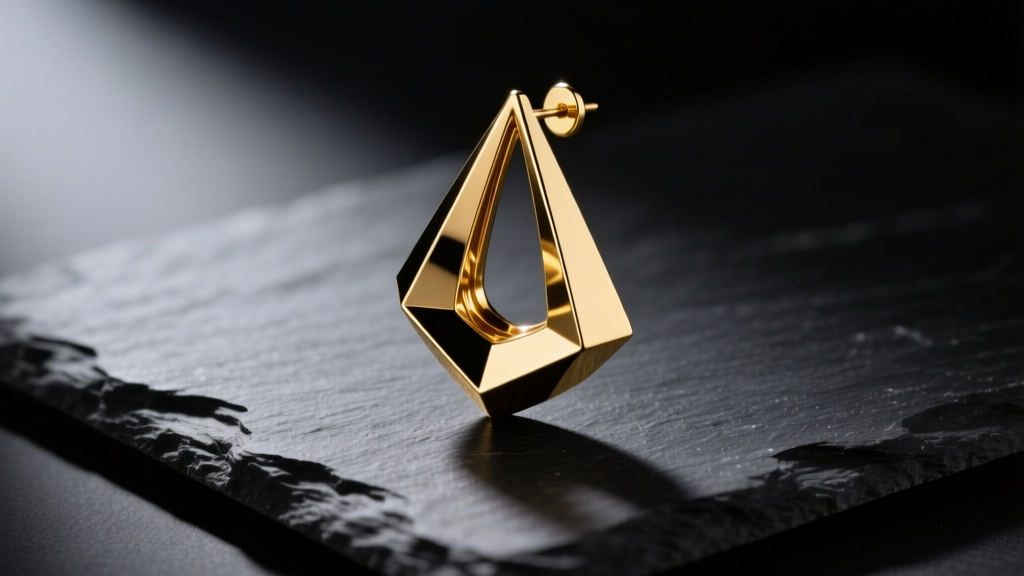
When analyzing the trajectory of contemporary luxury accessories, Amina Muaddi earrings represent a fascinating case study in sculptural translation. While the Romanian-Jordanian designer initially disrupted the market with her iconic martini-glass and pyramid heels, her expansion into fine fashion jewelry has applied the same rigorous architectural principles to the ear. As we navigate the 2026 luxury accessory market, statement earrings are no longer mere afterthoughts; they are primary focal points. Muaddi’s designs are characterized by bold geometric volumes, fluid metallic sweeps, and unapologetic weight. However, the true mastery of these pieces lies not just in their visual impact, but in the underlying structural engineering required to make oversized silhouettes wearable.
According to industry analyses by The Business of Fashion, the brand's strategic pivot into accessories was driven by a demand for entry-level luxury items that retain high-impact visual branding. This article bypasses the standard style guides to offer a metallurgical and biomechanical deep dive into how Amina Muaddi earrings are constructed, how they manage weight distribution, and what collectors need to know about material longevity.
Metallurgy and Plating Standards
Base Metals and Micron Thickness
The foundation of most Amina Muaddi fashion jewelry is high-grade brass. Brass—an alloy of copper and zinc—is favored in luxury fashion jewelry for its excellent malleability, which allows for the casting of complex, fluid 3D shapes without the porosity issues sometimes found in cheaper zinc alloys. However, raw brass oxidizes rapidly and can cause skin discoloration. To combat this, the brand utilizes a thick gold electroplating process.
Standard commercial fashion jewelry typically features 'flash plating' at roughly 0.1 to 0.5 microns of gold. In contrast, high-end designer pieces like Muaddi's generally employ a heavier plating process, often ranging between 1.5 and 2.5 microns. This thickness is critical for creating a durable barrier that resists the acidic nature of human skin oils and environmental humidity. For the silver-toned variations, a rhodium or high-grade silver flash over brass is utilized, providing a cool, reflective surface that mimics white gold or platinum without the prohibitive weight and cost of solid precious metals.
Structural Engineering: Managing Statement Weight
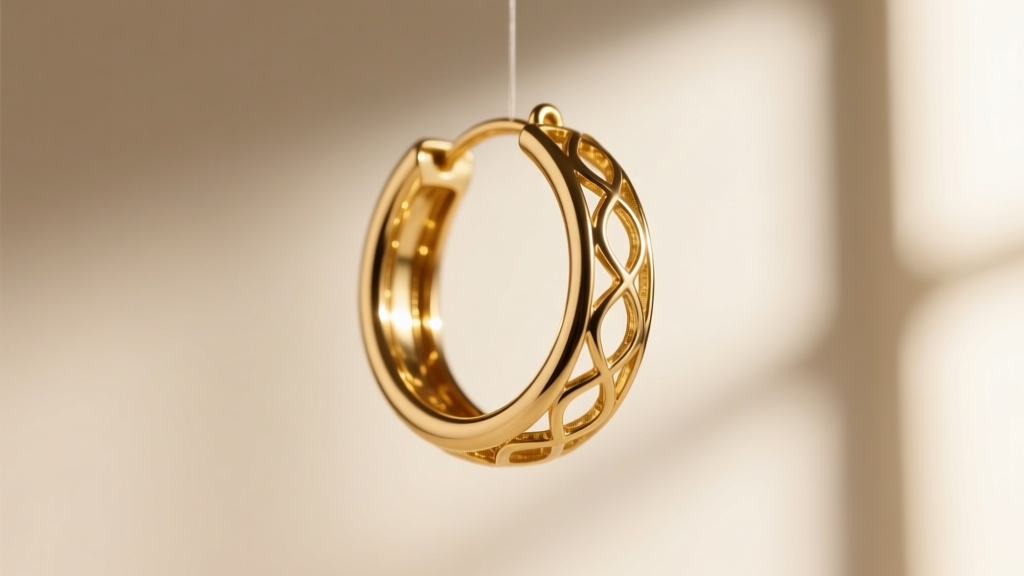
The most frequent critique of oversized designer earrings is the physical toll they take on the earlobe. Some of Muaddi’s most iconic sculptural drops and crystal-embellished hoops can weigh anywhere from 18 to 30 grams per ear. For context, a standard lobe piercing comfortably supports about 7 to 10 grams before tissue elongation begins. To solve this physics problem, the brand relies heavily on specialized closure mechanisms.
The Physics of the Omega Back
For her heavier drop styles, Amina Muaddi frequently employs the omega back closure. Unlike a standard post-and-butterfly clutch—which concentrates the entire gravitational load of the earring onto a single 1mm puncture point—an omega back features a hinged, curved wire that snaps against a flattened, often textured, grip pad. This design distributes the earring's weight across a much larger surface area on the posterior side of the earlobe. The friction generated by the curved wire pressing against the back of the ear provides secondary support, significantly reducing the downward shear force on the actual piercing hole.
Signature Silhouettes: Technical Specifications
To understand the variance in wearability across the brand's catalog, we must look at the specific dimensions and hardware configurations of their core design archetypes. Below is a technical breakdown of common silhouettes found within the Amina Muaddi earrings ecosystem.
| Silhouette Archetype | Avg. Weight (per ear) | Primary Closure | Material Composition | Best For Face Shape |
|---|---|---|---|---|
| Sculptural Geometric Drop | 22g - 28g | Omega Clip / Hinge | Brass, 2-micron Gold Plate | Round / Oval |
| Crystal Pavé Chandelier | 15g - 20g | Reinforced Post & Clutch | Brass, Swarovski Zirconia | Square / Heart |
| Chunky Chain Hoop | 12g - 16g | Hinged Saddleback | Hollow-cast Brass | Long / Diamond |
| Asymmetric Resin Stud | 4g - 7g | Standard Post & Clutch | Acetate / Enamel over Brass | All Shapes |
Lobe Health and Wearability Mechanics
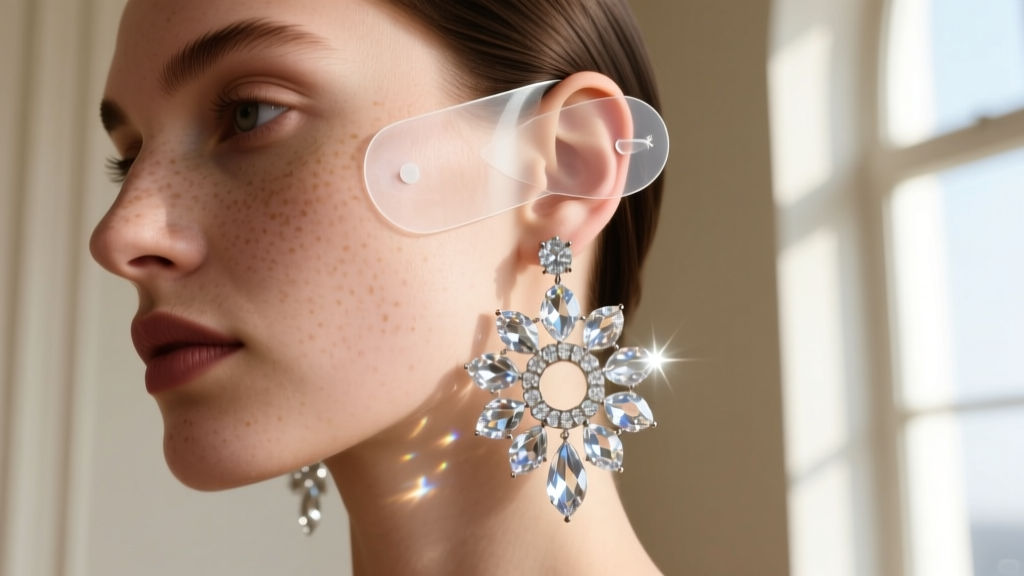
Wearing heavy statement jewelry requires proactive tissue management. As highlighted in dermatological guidelines regarding ear piercing care, continuous traction on the lobule can lead to permanent stretching or even tearing (acquired cleft earlobe). When wearing the heavier spectrum of Amina Muaddi earrings for extended periods, relying solely on the hardware is insufficient.
Preventing Tissue Elongation
- Use Invisible Support Patches: Adhesive earlobe support patches (often made of medical-grade silicone or hydrocolloid) feature a reinforced slit that the post passes through. This transfers the weight of the earring from the fragile puncture tract to the broader surface of the lobe.
- Rotate Heavy Pieces: Avoid wearing the 25g+ sculptural drops for more than 6 to 8 hours consecutively. Alternate with lightweight studs or huggies to allow the collagen matrix of the earlobe to recover.
- Check Post Gauge: Ensure that the earring post is at least 18-gauge (1.0mm) or 16-gauge (1.2mm). Thinner 20-gauge posts acting as a fulcrum for heavy drops act like a wire cheese slicer against the ear tissue.
Authentication and Hardware Markings
Given the brand's immense popularity and the proliferation of counterfeits in the secondary market, verifying the authenticity of Amina Muaddi earrings requires a close inspection of the hardware. Genuine pieces feature precise, laser-engraved branding on the interior of the omega clip or the flat back of the post clutch. The engraving should be crisp, with uniform depth and clean sans-serif typography. Counterfeit molds often result in shallow, blurred, or misaligned stamps.
Furthermore, authentic pieces exhibit a distinct lack of seam lines. High-end brass casting utilizes the lost-wax method, followed by meticulous hand-polishing. If you can feel a distinct ridge or seam running along the edge of a sculptural drop where the two halves of the mold met, the piece is likely a cheap die-cast replica. For comprehensive runway context and seasonal releases, collectors frequently reference Vogue Runway to verify the exact hardware and finish of specific seasonal drops.
Care and Maintenance of High-Micron Plating
Even with a robust 2-micron gold plate, brass-based jewelry requires specific environmental controls to maintain its luster. The copper content in brass is highly reactive to sulfur and chlorine. Avoid wearing these earrings in chlorinated pools or hot springs. After wear, gently wipe the pieces with a dry, lint-free microfiber cloth to remove sebum and cosmetic residues. Store them individually in anti-tarnish flannel pouches; allowing heavy sculptural pieces to tumble together in a standard jewelry box will result in micro-abrasions that wear through the gold plating down to the brass core.
Final Verdict: Investment and Longevity
Amina Muaddi earrings occupy a unique space in the modern jewelry landscape. They are not fine jewelry in the traditional sense of solid 18k gold or precious gemstones, but they transcend standard fashion jewelry through superior structural engineering, substantial weight, and high-micron plating standards. For the collector who views accessories as wearable sculpture, the technical execution of these pieces justifies their luxury price point, provided the wearer respects the biomechanical limits of their own anatomy and adheres to strict maintenance protocols.


