Michael Jordan Earrings: The Technical Guide to His Iconic Gold Hoops
Discover the exact specifications, gold karat weights, gauge sizes, and clasp types behind Michael Jordan earrings in this expert technical deep dive.

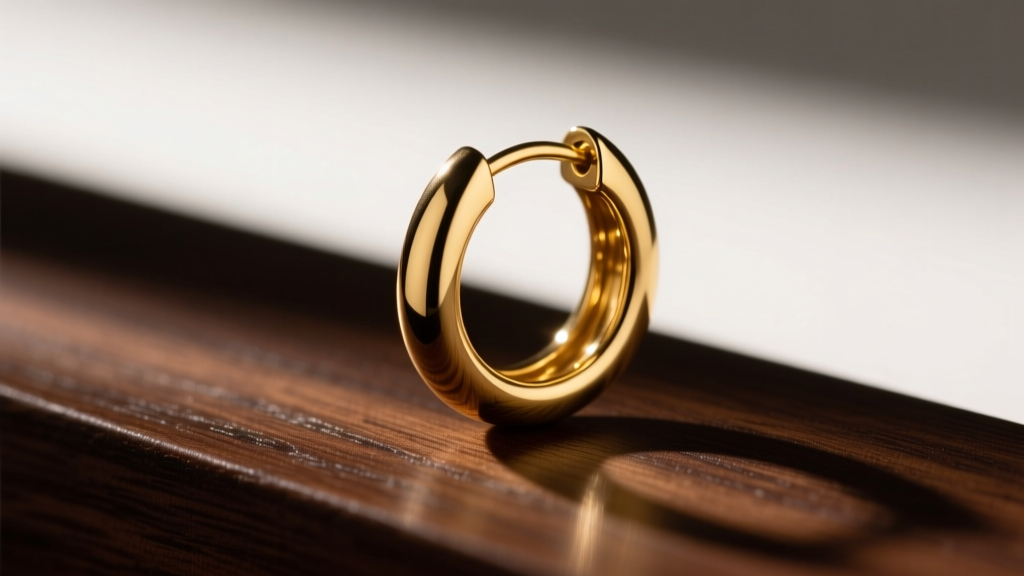
When analyzing the intersection of sports history and men's jewelry, few accessories carry the cultural and aesthetic weight of michael jordan earrings. Throughout his tenure with the Chicago Bulls and his subsequent evolution into a global icon, Jordan’s choice of ear adornment was remarkably consistent: a simple, unadorned yellow gold hoop. While it may appear to be a basic accessory to the untrained eye, the specific metallurgical and dimensional choices behind these hoops reveal a masterclass in practical, high-impact jewelry design. In this expert deep dive, we deconstruct the exact technical specifications, alloy compositions, and structural mechanics that define the iconic Jordan hoop, providing a definitive blueprint for collectors, jewelers, and enthusiasts looking to replicate this legendary look.
The Metallurgy of the Court: 14K vs. 18K Gold Alloys
The most critical decision in crafting an authentic sports-grade hoop is the gold purity. While high-end luxury jewelry often defaults to 18K or 22K gold, the physical demands of professional basketball necessitate a different approach. Pure gold (24K) is far too malleable; it possesses a Vickers hardness (HV) of roughly 25, meaning it would bend or snap under the sheer force of a rebound or an accidental elbow.
Jordan’s iconic hoops were predominantly crafted in 14K yellow gold. According to the Gemological Institute of America (GIA), 14K gold consists of 58.5% pure gold, alloyed with a precise mixture of copper and silver (typically around 20-25% copper and 15-20% silver) to achieve the warm yellow hue while drastically increasing structural integrity. This specific alloy mix raises the Vickers hardness to approximately 120-130 HV. This hardness is the absolute sweet spot for athletes: it is rigid enough to resist deformation during physical contact, yet retains enough tensile flexibility to absorb shock without snapping and tearing the earlobe.
Dimensional Anatomy: Gauge, Diameter, and Weight
The visual signature of the Jordan earring relies heavily on its proportions. It is neither a massive, oversized statement piece nor a barely-there wire. It sits precisely in the medium-weight category, designed to frame the face without distracting from the athlete's profile.
The 12mm to 15mm Diameter Sweet Spot
Historical photographic analysis from his rookie year in 1984 through his second three-peat in the late 1990s shows Jordan wearing hoops with an outer diameter ranging strictly between 12mm and 15mm. A 15mm hoop rests just below the earlobe, providing visibility from the upper deck of a stadium without swinging excessively during rapid head movements.
Gauge Thickness and Gram Weight
The thickness of the wire, measured in gauge, is what gives the earring its premium, substantial appearance. Jordan’s hoops typically featured a 12-gauge (2.05mm) or 10-gauge (2.58mm) wire diameter. Thinner wires (like 18G or 20G) look flimsy and are prone to kinking. A solid 12-gauge, 15mm hoop weighs approximately 1.8 to 2.2 grams. This weight is crucial; it provides enough downward momentum to keep the hoop hanging perfectly vertical, resisting the static cling and flipping that plagues lighter, hollow-manufactured hoops.
The Diamond Stud Interlude: A Technical Alternative
While the gold hoop is his signature, Jordan occasionally transitioned to diamond studs during the late 1990s and his Washington Wizards era. For those looking to replicate this secondary phase of michael jordan earrings, the technical specifications shift from metallurgy to gemology.
- Carat Weight: Typically 1.00 to 1.50 Carats Total Weight (0.50ct to 0.75ct per ear).
- Clarity and Color: VS1-VS2 clarity and G-H color. On the court, under harsh arena halogens, flawless (FL) or D-color diamonds offer no visible return on investment; VS/G-H provides maximum brilliance without the premium.
- Setting Style: A low-profile 4-prong martini setting or a bezel setting. High-basket settings were avoided as they could easily catch on jerseys or towels.
Clasp Mechanics and Shear Force Survival
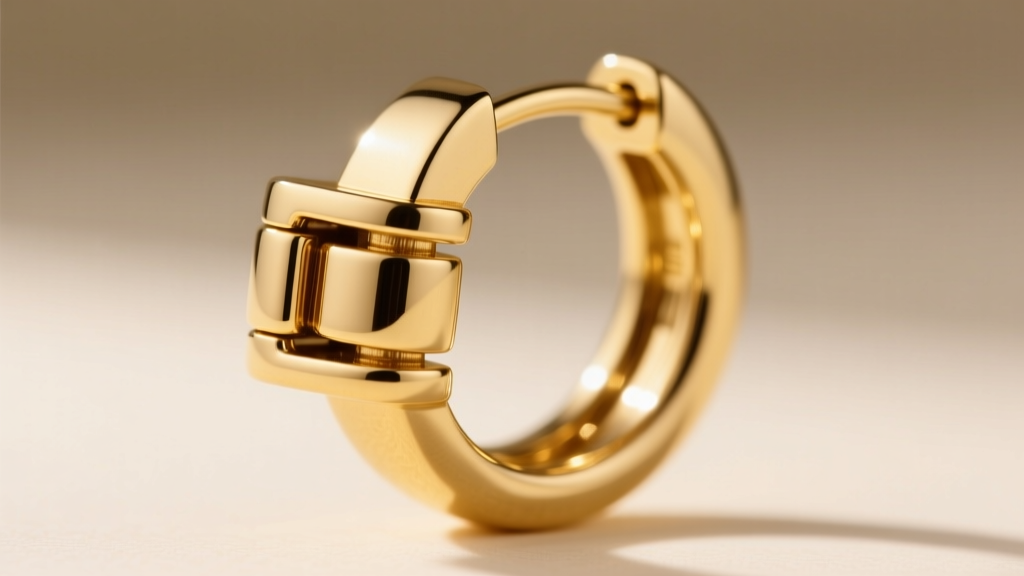
The clasp is the most common point of failure in men's athletic earrings. A snagged hoop can generate over 15 pounds of shear force on the earlobe. The evolution of Jordan's clasps mirrors the broader jewelry industry's shift toward secure, low-profile mechanisms.
| Clasp Type | Mechanism | Security Rating | Athletic Viability |
|---|---|---|---|
| Friction Post (Butterfly) | Push-back friction clutch | Low | Poor (high loss rate during sweat/contact) |
| Continuous (Endless) | Wire slides into hollow tube | Medium | Moderate (can pull out if snagged) |
| Hinged Snap (Clicker) | Spring-loaded pin into groove | High | Excellent (secure, low profile) |
| Screw Thread | Threaded post and nut | Maximum | Excellent but difficult to remove quickly |
For an authentic, functional replication of the classic Jordan hoop, the hinged snap clasp (often called a clicker) is the superior choice. It maintains the visual continuity of a continuous hoop while providing a mechanical lock that requires intentional lateral pressure to open, virtually eliminating accidental loss on the hardwood.
Sourcing and Authentic Replication in 2026
If you are commissioning a custom jeweler or sourcing vintage pieces to capture the exact essence of michael jordan earrings, you must demand specific manufacturing standards. Mass-market jewelry stores often sell hollow-core or electroformed hoops to keep gold weights (and prices) down. You must explicitly request solid cast or solid drawn wire.
As noted by sports historians tracking NBA fashion, the unassuming gold hoop was a rebellion against the flashy, oversized chains of the era, proving that true status in men's jewelry often relies on perfect proportions and material purity rather than sheer volume. (Source: Basketball Reference Historical Archives)
When evaluating a piece, use a digital caliper to verify the 12G/10G wire thickness and a precise digital scale to ensure the gram weight aligns with solid 14K gold density (12.9 g/cm³). A 15mm hoop that weighs less than 1.5 grams is likely hollow or a lower-karat alloy plated in gold.
Maintenance and Tarnish Prevention for High-Karat Hoops
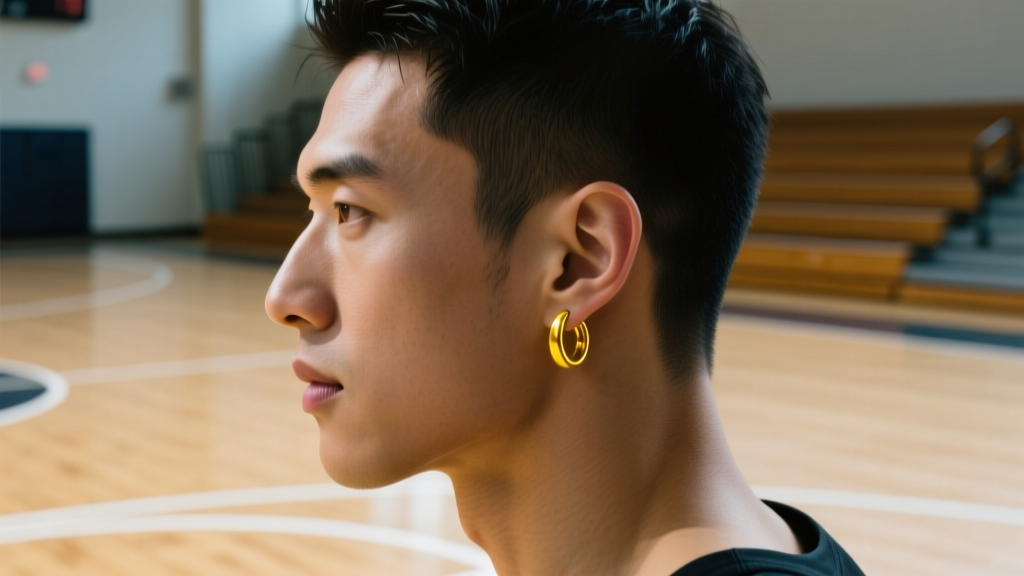
Even highly alloyed 14K gold is susceptible to environmental degradation, particularly when exposed to the highly acidic, saline environment of human sweat during a 48-minute basketball game. The copper in the 14K alloy can oxidize, leading to a dull, reddish-brown film on the surface of the hoop.
To maintain the mirror-like lumen seen on Jordan during the 1996 Finals, a strict maintenance protocol is required:
- Post-Game Ultrasonic Cleaning: Use a mild, non-ammonia ultrasonic solution to dislodge microscopic dead skin cells and salts from the clasp hinge.
- Polishing Protocol: Avoid aggressive rouge compounds that remove gold layers. Instead, use a treated microfiber polishing cloth infused with jeweler's rouge once a month to restore the specular reflection of the metal.
- Hinge Lubrication: For hinged snap clasps, a microscopic drop of synthetic watch oil applied to the hinge pin with a needle will prevent the squeaking and stiffness caused by sweat crystallization.
Conclusion
The legacy of michael jordan earrings extends far beyond mere celebrity endorsement. It represents a highly specific, technically sound approach to men's jewelry that prioritizes structural integrity, optimal metallurgical hardness, and timeless proportions. By understanding the exact gauge, alloy composition, and clasp mechanics that defined his career, enthusiasts and jewelers can accurately recreate a piece of sports history that is as durable as it is iconic.


