Eliou Earrings: A Technical Deep Dive Into Freshwater Pearl Styling
An expert technical analysis of Eliou earrings, covering 14k gold vermeil thickness, freshwater pearl grading, gauge sizes, and care protocols.

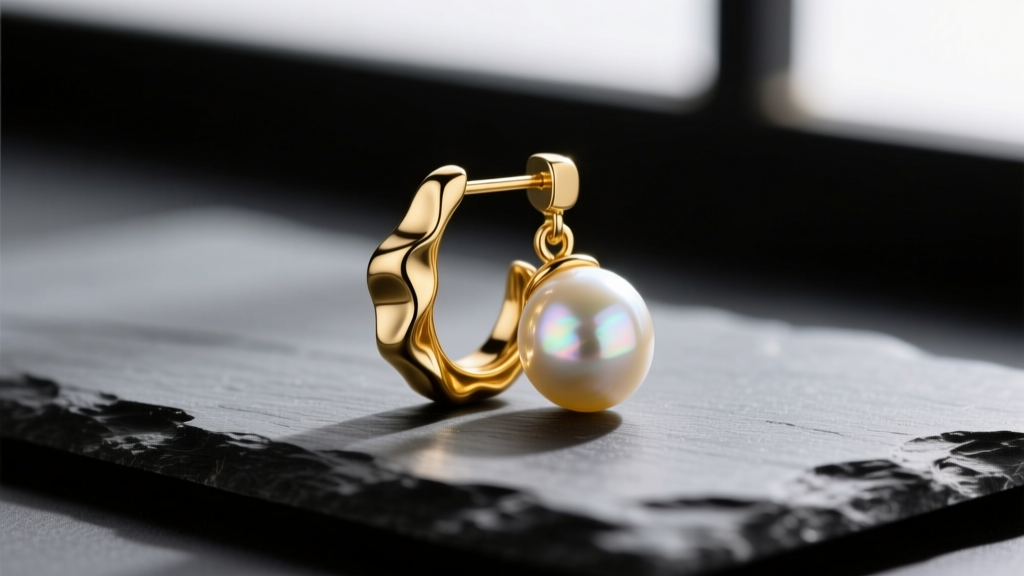
Contemporary jewelry has seen a massive shift toward playful, organic aesthetics, and Eliou earrings sit at the absolute center of this movement. Known for their vibrant, eclectic mix of colorful freshwater pearls, enamel accents, and gold-toned metals, these pieces are highly sought after for their unique styling. However, beneath the whimsical exterior lies a complex framework of metallurgy, gemology, and structural engineering. As we navigate the jewelry market in 2026, consumers and collectors alike must look past the surface-level aesthetics to understand the material science that dictates the longevity, wearability, and true value of these accessories.
This expert deep dive bypasses standard style guides to examine the technical specifications of Eliou earrings. We will dissect the micron thickness of their gold vermeil, analyze the nucleation processes of their freshwater pearls, evaluate the tensile strength of their earring posts, and outline precise maintenance protocols to prevent material degradation.
The Metallurgy of 14k Gold Vermeil
The foundation of most Eliou earrings is 14k gold vermeil. It is critical to distinguish true vermeil from standard gold plating or gold-filled materials. According to the Federal Trade Commission (FTC) Jewelry Guides, for a piece to be legally marketed as vermeil in the United States, it must feature a base of sterling silver (925 purity) and be plated with gold of at least 10k fineness, with a minimum thickness of 2.5 microns. While some contemporary fashion brands skirt this definition by using brass bases or thinner 1.0-micron flash plating, high-quality vermeil relies on the 2.5-micron threshold to ensure the gold layer does not wear through to the silver base within months of friction.
Eliou typically utilizes 14k gold for its vermeil finish rather than 18k or 24k. From a metallurgical standpoint, this is a highly practical choice for earrings. Pure 24k gold is exceptionally soft (measuring roughly 25 on the Vickers hardness scale), making it unsuitable for earring posts that must endure repeated bending and pressure. By alloying 58.5% pure gold with copper, silver, and zinc to create 14k gold, the resulting material achieves a Vickers hardness of approximately 120-140. This increased tensile strength ensures that the earring posts maintain their structural integrity and that the huggie hinges resist warping under daily mechanical stress.
Freshwater Pearl Grading and Nacre Structure
The defining characteristic of Eliou earrings is their extensive use of cultured freshwater pearls. Unlike saltwater Akoya or Tahitian pearls, which are typically bead-nucleated (meaning a round shell bead is implanted into the oyster to dictate the final shape), modern freshwater pearls are predominantly tissue-nucleated. A tiny piece of mantle tissue is inserted into the host mussel, resulting in a pearl that is solid nacre all the way through. This structural difference profoundly impacts both the durability and the optical properties of the pearls used in Eliou designs.
Because they are solid nacre, freshwater pearls are highly resistant to chipping and peeling, a common failure mode in thin-nacre bead-nucleated pearls. However, tissue nucleation rarely produces perfect spheres. This is why Eliou heavily features baroque, coin, and keshi pearl shapes, leveraging their organic irregularities for a modern, asymmetrical aesthetic.
| Pearl Type | Nucleation Method | Nacre Thickness | Optical Properties (Orient & Luster) | Common Application in Eliou Designs |
|---|---|---|---|---|
| Baroque Freshwater | Tissue | 100% Solid Nacre | High orient, irregular light reflection | Statement drops, asymmetrical studs |
| Seed / Rice Pearl | Tissue | 100% Solid Nacre | Moderate luster, uniform color | Clustered hoops, beaded wire-wraps |
| Dyed Coin Pearl | Tissue / Flat Nucleus | Thick, flat nacre layers | Mirror-like luster on flat planes | Geometric dangles, colorful huggies |
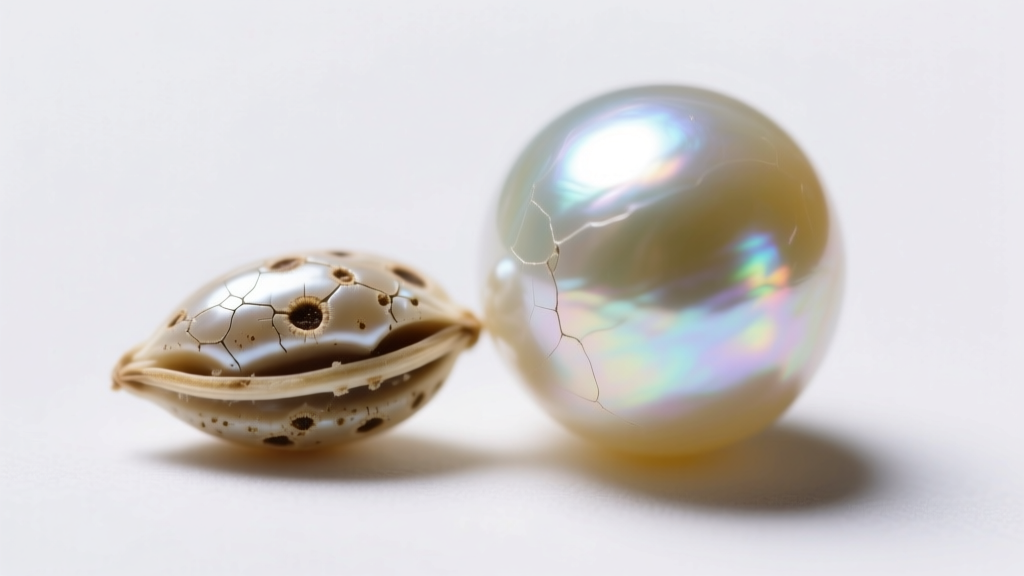
When evaluating the luster of these pearls, gemologists look for the sharpness of light reflections on the surface. The Gemological Institute of America (GIA) notes that freshwater pearls often exhibit a softer, more satiny luster compared to the glass-like finish of Akoya pearls. However, high-grade freshwater pearls with tightly packed aragonite platelets can achieve exceptional luster. Eliou's use of multicolored, dyed, and naturally tinted pearls requires careful inspection under magnification to ensure that dye concentrations have not pooled in surface blemishes or drill holes, which can indicate lower-grade sorting.
Structural Engineering: Posts, Hinges, and Adhesives
The physical construction of Eliou earrings involves several micro-engineering decisions that directly impact comfort and lifespan. The standard post gauge for their stud and drop earrings is 20-gauge (0.81mm in diameter). This is the industry standard for lobe piercings, providing a balance between structural rigidity and comfort. For heavier, oversized hoop styles or pieces featuring dense clusters of baroque pearls, an 18-gauge (1.02mm) post is sometimes required to prevent the metal from bending under the pendant's weight, which can cause the butterfly clutch to slip off.
Adhesive Failure Modes in Pearl Settings
One of the most critical technical vulnerabilities in any pearl jewelry, including Eliou earrings, is the adhesive used to secure pearls to metal caps or within bezel settings. Manufacturers typically use either cyanoacrylate (super glue) or two-part jeweler's epoxy. Cyanoacrylate cures quickly but becomes brittle over time and is highly susceptible to degradation when exposed to the alkaline environment of human sweat, cosmetics, and UV radiation. Two-part epoxy offers superior shear strength and flexibility, accommodating the different thermal expansion rates of organic nacre and metallic gold vermeil. If a pearl becomes loose in its setting, it is almost always due to the microscopic breakdown of the adhesive bond caused by chemical exposure from perfumes or hairsprays, rather than mechanical failure of the metal prongs.
Huggie Hinge Mechanics
For Eliou's huggie and clicker hoop styles, the hinge mechanism is a primary stress point. A poorly machined clicker hinge will fail to snap shut securely, leading to lost earrings. High-quality clickers utilize a tension-based snap closure where the male post clicks into a female receptacle with an audible snap. Over time, the repeated friction can wear down the 14k vermeil plating at the exact point of contact, exposing the sterling silver base. This is a normal wear pattern and does not indicate a manufacturing defect, provided the structural integrity of the hinge remains intact.
Preventative Maintenance and Failure Mitigation
Maintaining the optical brilliance of freshwater pearls and the micron-layer of gold vermeil requires a strict, chemically informed care protocol. Organic gems are highly porous and sensitive to acids, while gold vermeil is vulnerable to abrasive friction and chemical stripping.
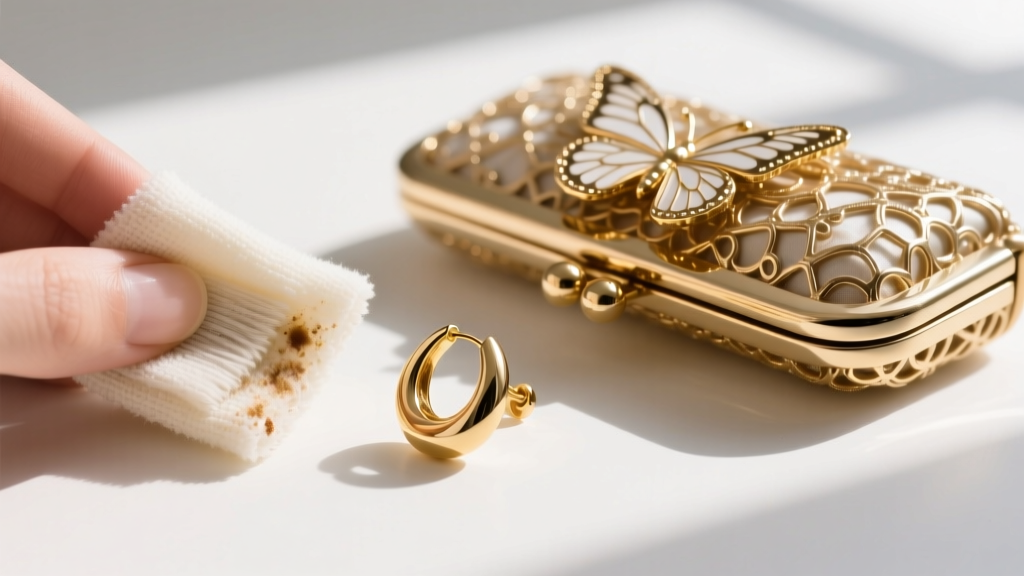
- The 'Last On, First Off' Rule: Always apply perfumes, lotions, and hairsprays before putting on Eliou earrings. The alcohol and volatile organic compounds (VOCs) in cosmetics can dissolve the protective oils on a pearl's surface, leading to a dull, chalky appearance over time.
- Friction Management: Never use jewelry polishing cloths treated with rouge or chemical abrasives on gold vermeil. These cloths are designed for solid gold and will strip the 2.5-micron gold layer right off the sterling silver base. Use only a clean, dry, untreated microfiber cloth to gently wipe the metal components.
- Pearl Hydration: Pearls require a minimal amount of ambient moisture to prevent the nacre layers from cracking. Storing them in airtight plastic bags or in extremely dry environments (like a safety deposit box) can cause the organic conchiolin protein within the pearl to dry out and fracture. Store them in a breathable fabric pouch.
- Clutch and Post Cleaning: Dead skin cells, sebum, and cosmetic residue accumulate heavily on the 20-gauge posts and inside the butterfly clutches. Clean these specific areas weekly using a cotton swab lightly dampened with isopropyl alcohol, taking extreme care not to let the alcohol touch the freshwater pearls or the epoxy adhesive.
Proportional Scaling: Face Shape and Drop Length
From a stylistic and geometric perspective, the technical dimensions of Eliou earrings must be matched to the wearer's facial architecture. The brand offers a wide variance in drop lengths, typically ranging from compact 15mm studs to elaborate 60mm chandelier drops.
For individuals with angular or square face shapes, characterized by a strong, wide jawline, elongated drop earrings (40mm to 60mm) featuring rounded baroque pearls are technically optimal. The vertical length and organic curves of the pearls create an optical illusion that softens the mandibular angle and elongates the neck. Conversely, those with long or oblong face shapes should opt for Eliou's wider, horizontally oriented designs, such as their clustered pearl hoops or wide ear cuffs, which add necessary lateral volume and balance the facial proportions. Understanding these geometric interactions elevates the wearing experience from mere decoration to intentional, structural styling.
Expert Insight: When investing in contemporary vermeil and pearl jewelry, always inspect the drill holes of the pearls under a jeweler's loupe. Clean, sharp drill holes indicate high-precision manufacturing and reduce the risk of the silk or wire wrapping fraying over time, ensuring the structural longevity of your favorite Eliou pieces.


