Anne Klein Women's Knot Stud Earrings: Technical Review
An expert technical review of the Anne Klein women's knot stud earrings, covering metallurgy, gauge sizes, plating longevity, and allergy safety.

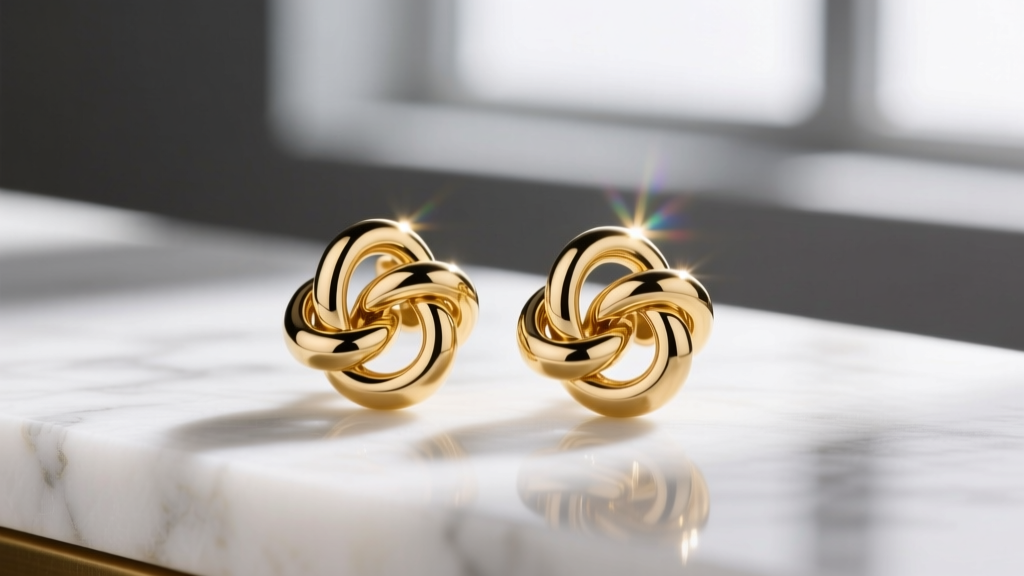
The Anatomy of a Fashion Staple: The Love Knot Motif
The interlocking love knot has been a pervasive symbol in jewelry design since the Roman Empire, representing eternity and unbreakable bonds. In the modern fashion jewelry landscape, the Anne Klein women's knot stud earrings serve as an accessible, mass-market interpretation of this classic motif. However, as jewelry specialists, we must look past the aesthetic appeal and examine the structural integrity, metallurgical composition, and biomechanical realities of wearing fashion-grade accessories daily.
This deep dive dissects the technical specifications of the Anne Klein knot studs, evaluating their base metal alloys, electroplating thickness, post gauge, and the mechanical limitations of their friction backs. Whether you are a casual wearer or a jewelry collector assessing longevity, understanding these micro-details is crucial for managing expectations and preventing contact dermatitis.
Metallurgical Breakdown: Base Metals and Plating
Unlike fine jewelry, which relies on solid precious metals, the Anne Klein women's knot stud earrings are classified as fashion or "costume" jewelry. The structural core of these earrings is typically a brass alloy. Brass, primarily a mixture of copper (Cu) and zinc (Zn), is favored in fashion manufacturing for its excellent malleability, low melting point, and ability to take a high-polish finish before plating.
The Reality of "Gold-Tone" Electroplating
The rich, golden hue of these earrings is achieved through electroplating—a process where a thin layer of gold or gold-alloy is deposited onto the brass base via an electrical current. It is vital to understand the terminology regulated by the Federal Trade Commission (FTC) Jewelry Guides. The term "gold-tone" explicitly means the item has a gold-like color, but it does not guarantee a specific thickness or karat weight of the gold layer.
| Plating Category | Typical Thickness | Expected Daily Lifespan | Common Applications |
|---|---|---|---|
| Flash Plating | < 0.1 microns | 1 - 3 Months | Ultra-fast fashion, seasonal trends |
| Standard Electroplate | 0.1 - 0.5 microns | 6 - 12 Months | Mid-tier fashion jewelry (e.g., Anne Klein) |
| Heavy Gold Electroplate | 1.0 - 2.5 microns | 1 - 3 Years | Premium fashion, bridge jewelry |
| Gold Vermeil | ≥ 2.5 microns (over Sterling Silver) | 3 - 5+ Years | Fine jewelry, demi-fine collections |
The Anne Klein knot studs generally fall into the Standard Electroplate category. With a thickness hovering around 0.2 to 0.3 microns, the plating is sufficient for intermittent wear but will inevitably succumb to friction, skin acidity, and environmental exposure if worn continuously.
Post Gauge, Tension, and the Butterfly Clutch
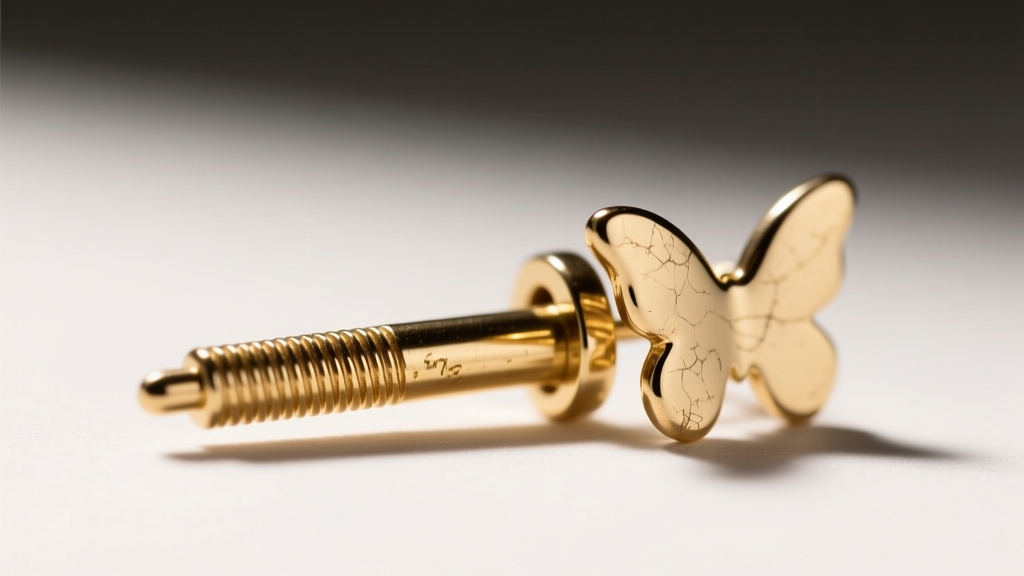
The structural point of failure for most stud earrings is not the decorative face, but the post and backing system. The Anne Klein women's knot stud earrings utilize a standard straight post paired with a butterfly friction clutch (commonly known as a push-back).
Gauge Specifications
The post diameter on these earrings measures approximately 20-gauge (0.81mm). This is the industry standard for lightweight fashion studs, designed to fit comfortably through standard lobe piercings (which are typically pierced at 20G or 18G). While 20G is perfectly adequate for the lightweight knot motif, it lacks the sheer structural rigidity of a 16G or 14G post, meaning the post can bend if subjected to lateral pressure while sleeping.
Mechanics of the Friction Back
The butterfly clutch relies on two sheet-metal tines that fold inward to grip the grooved notch on the earring post. Over time, the repeated compression and expansion of these tines cause metal fatigue, leading to a loss of tension. When the clutch loses its grip, the earring becomes prone to falling out.
Expert Troubleshooting: If your butterfly clutches feel loose, do not discard them. Using a pair of smooth-jawed chain-nose pliers, gently squeeze the two side loops of the clutch toward the center. This restores the inward tension on the tines and re-establishes a secure grip on the 20-gauge post.
Dermatological Realities: Nickel and Contact Dermatitis
One of the most critical technical considerations for any fashion jewelry purchase is allergen exposure. Brass alloys and the solder used to attach the post to the earring face can contain trace amounts of nickel, a highly reactive metal.
Furthermore, while some fashion brands utilize "surgical steel" for the earring post to mitigate surface allergies, it is a common misconception that surgical steel is hypoallergenic. According to the American Academy of Dermatology (AAD), surgical stainless steel (such as 316L) still contains between 8% and 12% nickel. For individuals with a diagnosed nickel allergy, prolonged contact with surgical steel posts can trigger allergic contact dermatitis, characterized by erythema, pruritus, and localized swelling.
Mitigation Strategies for Sensitive Skin
If you have mild metal sensitivities but wish to wear the Anne Klein knot studs, consider the following technical workarounds:
- Barrier Coatings: Apply a micro-thin layer of cyanoacrylate (medical-grade skin glue) or clear polyurethane nail polish to the post. This creates a physical barrier between the metal and the stratum corneum of your earlobe.
- Post Sleeves: Utilize hypoallergenic PTFE (Teflon) or silicone post sleeves, which slide over the 20G metal post, completely isolating it from the piercing fistula.
- Wear Time Limits: Restrict wear to 4-6 hours. Contact dermatitis is a dose-dependent reaction; limiting the duration of exposure reduces the likelihood of an immune response.
Longevity and Care Protocol
To maximize the lifespan of the 0.2-micron gold plating and prevent the underlying brass from oxidizing (which results in a greenish-black tarnish that can transfer to the skin), a strict maintenance protocol is required. Never use ultrasonic cleaners, silver dips, or alcohol-based solutions on fashion-plated jewelry, as these will strip the electroplated layer instantly.
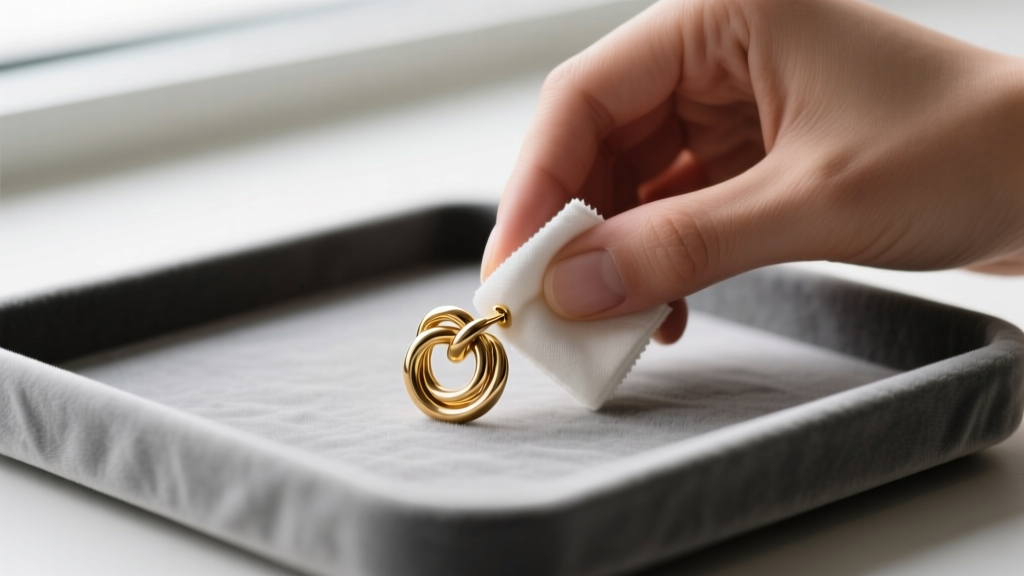
- Post-Wear Wipe Down: After removing the earrings, gently wipe the knot motif and the post with a dry, lint-free microfiber cloth to remove sebum, sweat, and cosmetic residues.
- Desiccant Storage: Store the earrings in an airtight polyethylene ziplock bag alongside a silica gel desiccant packet. Controlling ambient humidity is the most effective way to halt brass oxidation.
- Chemical Avoidance: Always apply perfumes, hairsprays, and lotions before putting on the earrings. The solvents in cosmetics actively degrade thin gold-tone plating.
Final Verdict: Value and Application
The Anne Klein women's knot stud earrings represent a solid value proposition within the fashion jewelry tier. They offer a sophisticated, timeless silhouette with a high-polish finish that mimics fine jewelry at a fraction of the cost. However, from a metallurgical and biomechanical standpoint, they are not designed for 24/7 wear, aquatic exposure, or individuals with severe nickel allergies.
Treat these earrings as a rotational accessory rather than a permanent fixture. By understanding the limitations of standard electroplating and 20-gauge friction posts, and by employing proper barrier methods and storage protocols, you can significantly extend the functional lifespan and aesthetic brilliance of this classic knot design.


