Earrings Jumbo Back vs Pushback: Fix Drooping and Lost Studs
Solve drooping lobes and lost studs. We compare earrings jumbo back vs pushback friction clasps to help you choose the right security.

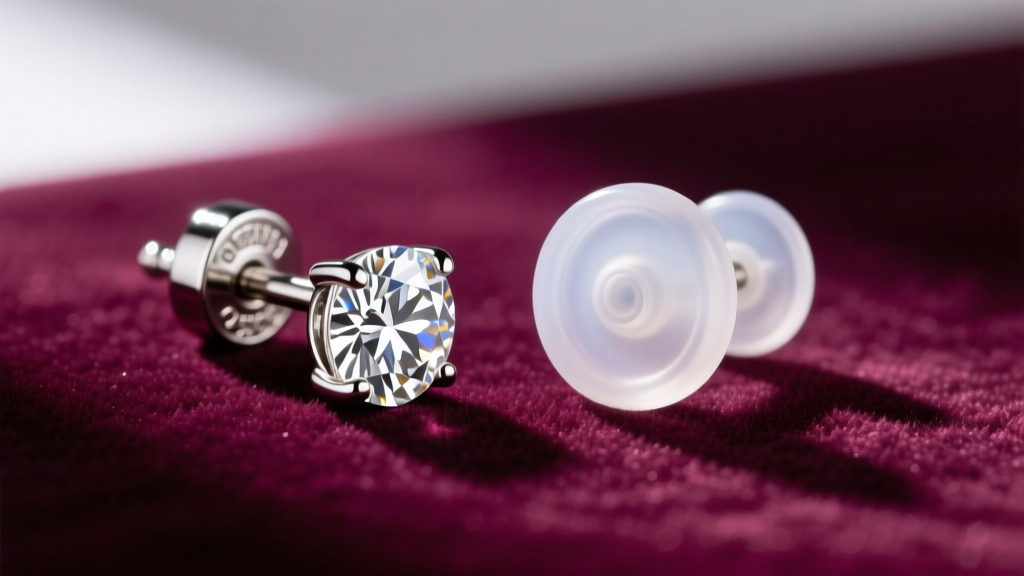
There are few jewelry frustrations more universal than reaching up to touch your earlobe, only to realize your favorite diamond or gemstone stud is missing. Even more annoying is the persistent forward droop of a heavy earring that refuses to sit flush against the skin. When troubleshooting these everyday wearability issues, the debate of earrings jumbo back vs pushback clasps becomes highly relevant. While most fine jewelry comes pre-assembled with standard friction backs, they are not always the optimal engineering solution for every earlobe thickness, post gauge, or gemstone weight.
In this comprehensive troubleshooting guide, we break down the exact mechanical failures of traditional butterfly clasps, explore the material science behind jumbo silicone and metal discs, and provide a definitive framework for securing your studs. Whether you are dealing with 20-gauge wire fatigue or nickel-induced contact dermatitis, understanding the physics of earring backs will save your jewelry and your earlobes.
The Anatomy of Earring Security: Why Studs Fail
To solve the problem of lost or drooping earrings, we must first understand the mechanical forces at play. An earring post is essentially a cantilever beam. When a gemstone or metal casting sits on the front of the earlobe, gravity pulls it downward, creating a pivot point at the piercing hole. The earring back must provide enough counter-pressure and surface area distribution to resist this rotational force.
Standard earring posts typically range from 0.81mm (20-gauge) to 1.02mm (18-gauge) in thickness. According to the Association of Professional Piercers, the gauge of the post directly dictates the type of backing that can safely be applied without bending the metal or causing tissue trauma. When the backing fails to distribute the weight of the front-facing element, the earring tilts forward, the post slides through the piercing channel, and the friction grip is compromised.
Pushback (Butterfly) Clasps: The Classic Standard and Its Flaws
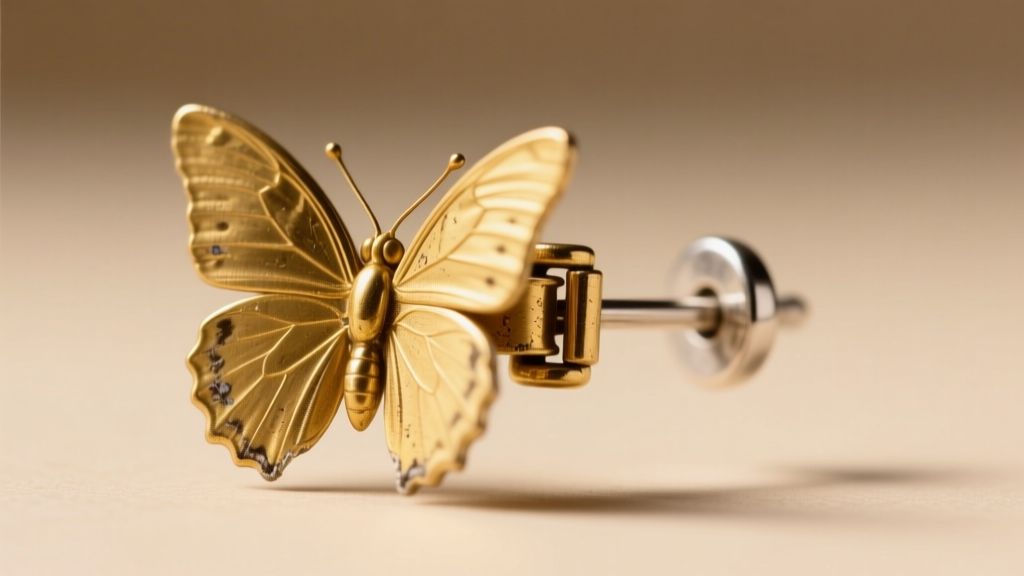
The pushback, commonly known as a butterfly or friction back, relies on two rolled metal tabs that grip the notched groove on the earring post. They are the industry standard for fine jewelry because they are low-profile, relatively inexpensive to manufacture, and easy to mass-produce in 14k gold or platinum.
When Pushbacks Fail: Tension Loss and Gauge Mismatches
Despite their ubiquity, pushbacks suffer from severe mechanical fatigue. Every time you push and pull the clasp over the notched post, the metal tabs stretch microscopically. Over six to twelve months of daily wear, the tension degrades. Once the tabs lose their inward spring force, the clasp slides off the post with minimal friction, resulting in a lost earring.
Furthermore, pushbacks offer a very small surface area (typically around 4mm x 6mm). If you are wearing a 1.5-carat diamond stud or a dense brass fashion earring, this tiny footprint concentrates all the downward leverage onto a single, small point on the back of your earlobe. This causes the earring to droop forward and can lead to tissue thinning or piercing migration over time.
Jumbo Backs: The Heavy-Duty Solution for Drooping Lobes
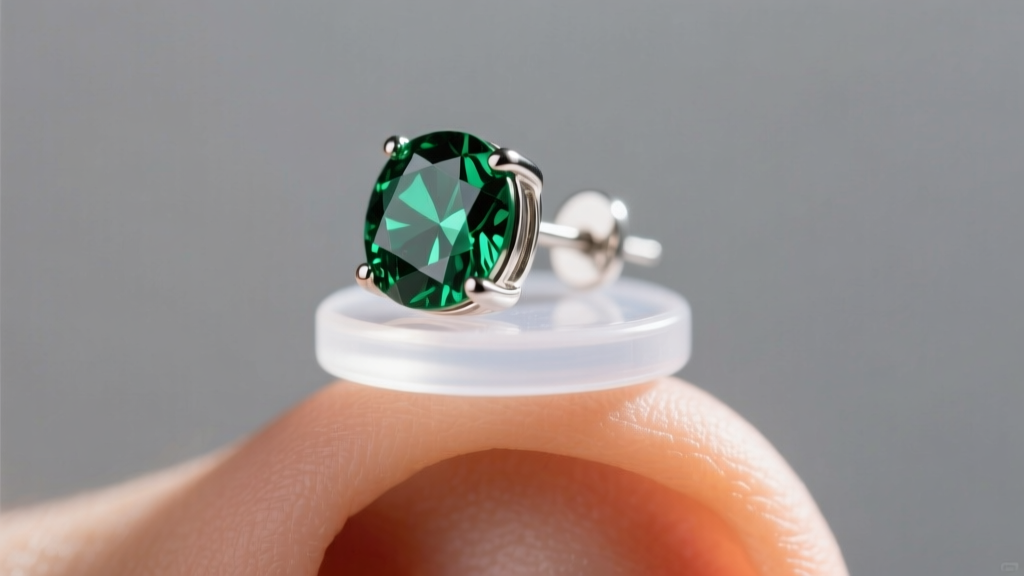
Jumbo backs solve the surface area deficit. Ranging from 8mm to 12mm in diameter, these wide discs distribute the weight of heavy studs across a broader area of the earlobe, completely neutralizing the forward pivot effect. They are available in two primary materials: medical-grade silicone and rigid metals.
Silicone vs. Metal Jumbo Discs: Material Breakdown
Silicone Jumbo Backs: These are typically made from medical-grade, hypoallergenic elastomers with a Shore A durometer rating between 40 and 50. This specific hardness provides an aggressive friction grip on the post without requiring metal notches. Because silicone molds slightly to the shape of the earlobe, it offers superior comfort for sleepers and active wearers. However, cheap silicone can degrade and become tacky when exposed to hairspray, perfumes, and natural sebum over time.
Metal Jumbo Backs: Often crafted from implant-grade titanium (ASTM F136) or surgical steel, these rigid discs sometimes feature a threaded screw mechanism or a specialized internal silicone O-ring. They are virtually indestructible and offer the highest level of security for priceless heirloom studs, though they can feel bulky behind the ear if the post is too long.
Head-to-Head Comparison: Earrings Jumbo Back vs Pushback
When deciding which clasp system to deploy, reference this structural comparison matrix to match the backing to your specific jewelry profile and lifestyle needs.
| Feature | Standard Pushback (Butterfly) | Jumbo Back (Silicone/Metal) |
|---|---|---|
| Surface Area | ~4mm x 6mm | 8mm to 12mm diameter |
| Weight Capacity | Low (Best for under 1.0g studs) | High (Supports 3.0g+ heavy gems) |
| Post Compatibility | Requires notched 20G or 18G posts | Works on smooth or notched posts |
| Droop Prevention | Poor (Concentrates leverage) | Excellent (Distributes weight) |
| Longevity | 6-12 months before tension loss | Years (Silicone) / Lifetime (Metal) |
| Average Price Range | $15 - $45 per pair (Precious Metal) | $6 - $25 per pair (Silicone/Titanium) |
Troubleshooting Common Earring Back Problems
Even with the right backing, improper sizing and material mismatches can cause wearability issues. Use this expert troubleshooting framework to diagnose and fix your earring mechanics.
Expert Insight: The most common cause of a drooping earring isn't actually the weight of the gemstone; it is an improperly matched post length. If an 8mm post is used on a thin 4mm earlobe, the excess 4mm of metal acts as a lever arm, forcing the stud to tilt forward regardless of the backing used.
- Problem: The earring points downward, even with a jumbo back.
Solution: Your earring post is too long for your lobe thickness. Take the earring to a bench jeweler and have the post cut down to 6mm or 5mm. Alternatively, stack two standard pushbacks to take up the excess space, though this is a temporary aesthetic compromise. - Problem: The silicone jumbo back is too tight and bends the 20-gauge post.
Solution: 20-gauge (0.81mm) wire is highly malleable. If you are using high-durometer silicone discs, you must upgrade your earring posts to 18-gauge (1.02mm) or 16-gauge (1.29mm) to withstand the insertion pressure. Never force a tight silicone back onto a thin gold post. - Problem: Itchy, flaking skin behind the earlobe.
Solution: You are likely experiencing allergic contact dermatitis from nickel alloys commonly found in cheap white gold or brass pushbacks. The American Academy of Dermatology identifies nickel as the leading cause of jewelry allergies. Immediately switch to medical-grade silicone jumbo backs or solid 14k yellow gold/platinum friction backs to eliminate the allergen. - Problem: The pushback keeps sliding past the safety notch.
Solution: The internal tension tabs have fatigued. Do not try to squeeze them back together with pliers, as this work-hardens the metal and will cause it to snap. Replace the pushback entirely, or switch to a silicone jumbo back which relies on material compression rather than metal tension.
Maintenance and Hygiene Protocols
The longevity of any earring backing relies heavily on maintenance. Silicone jumbo backs are porous at a microscopic level and will trap dead skin cells, sebum, and hair products. This buildup creates a slippery barrier that reduces friction and can lead to localized piercing infections. To maintain optimal grip, soak silicone backs in a solution of warm water and antibacterial soap once a week, using a soft-bristled brush to clear the internal channel.
For metal pushbacks, ultrasonic cleaners are highly effective at removing debris from the tight crevices of the butterfly tabs. However, if your pushbacks feature internal plastic or silicone O-rings for added grip, avoid ultrasonic heat and harsh chemical dips, which will degrade the elastomers and ruin the friction seal. According to gemological care guidelines from the Gemological Institute of America, separating your jewelry and cleaning the mechanical components independently of the gemstones ensures both the stone's brilliance and the clasp's structural integrity.
Expert Verdict: Which Clasp Should You Choose?
The choice in the earrings jumbo back vs pushback debate ultimately comes down to the specific geometry of your jewelry and your lifestyle. If you are wearing lightweight, low-profile diamond studs (under 0.50 carats) on standard 18-gauge posts, traditional precious metal pushbacks remain the most elegant and unobtrusive choice, provided you replace them annually to prevent tension failure.
However, if you are troubleshooting heavy gemstone droop, dealing with stretched piercing holes, or suffering from metal allergies, jumbo backs are the superior engineering solution. A 10mm medical-grade silicone jumbo back will instantly correct forward drooping, secure the earring against accidental snags, and provide a hypoallergenic barrier for sensitive skin. For high-value heirloom pieces, investing in threaded metal jumbo backs guarantees that your jewelry remains safely anchored to your earlobe, no matter how active your day becomes.


