The Ultimate Beginner Guide to Moon and Sun Earrings
Discover how to choose, style, and care for moon and sun earrings. Our beginner guide covers face shapes, hypoallergenic metals, and celestial pairings.

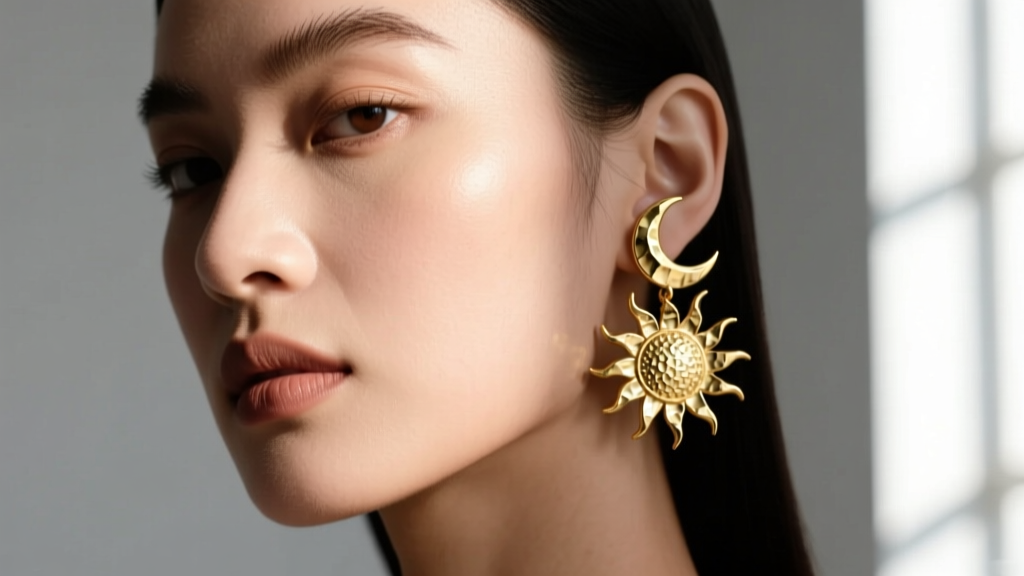
The Allure of Celestial Jewelry: Why Sun and Moon?
Celestial jewelry has transcended fleeting seasonal trends to become a permanent staple in modern accessorizing. Specifically, moon and sun earrings offer a remarkably versatile way to express personality, balance, and individuality. The sun universally symbolizes vitality, strength, and outward energy, while the moon represents intuition, mystery, and the subconscious. When combined in your jewelry box, these motifs provide a complete toolkit for self-expression.
For beginners, navigating the vast market of celestial earrings can feel overwhelming. From delicate 5mm crescent studs to dramatic 50mm sunburst dangles, the variations are endless. This comprehensive guide will walk you through the exact specifications, material grades, and styling frameworks you need to confidently select and wear moon and sun earrings for any occasion.
Decoding the Styles: Studs, Dangles, and Cuffs
Before purchasing, it is crucial to understand how different structural styles of celestial earrings behave on the ear. The weight, drop length, and post thickness will dictate both comfort and visual impact.
Sun Motifs: Studs and Dangles
Sun designs typically feature radial symmetry, making them visually 'heavy' even at small sizes. A standard sunburst stud usually measures between 6mm and 10mm in diameter. Because of the intricate detailing required for the sun's rays, these studs are often cast in solid metal rather than stamped, giving them a substantial weight. If you opt for sun dangles, look for designs ranging from 25mm to 40mm in length. Anything exceeding 45mm can cause lobe fatigue over an 8-hour wear period unless the earring is crafted from lightweight materials like hollow-stamped gold or anodized titanium.
Moon Phases and Crescents
Moon earrings thrive on asymmetry and curved lines. Crescent moon studs (typically 8mm to 12mm) are ideal for secondary lobe piercings or upper cartilage placements like the helix. Full moon phase dangles, which depict the lunar cycle from new moon to full moon, often require a longer drop (40mm to 60mm) to properly display the sequence. When selecting moon phase earrings, ensure the connecting jump rings are soldered shut; unsoldered rings will easily catch on hair and pull the delicate chain apart.
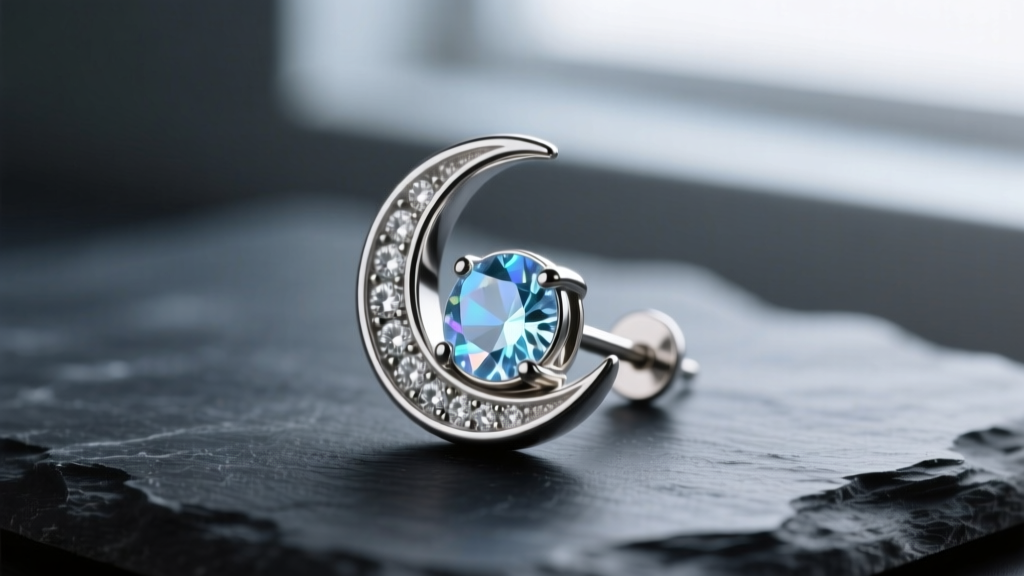
Material Matters: Navigating Metal Allergies
The most common mistake beginners make is prioritizing design over metallurgy. Celestial motifs often feature intricate crevices where cheap alloys can trap moisture and bacteria, leading to contact dermatitis. According to the Association of Professional Piercers (APP), nickel is the most prevalent allergen in commercial jewelry, often hidden in sterling silver alloys or low-karat gold solders.
| Metal Type | Composition & Grade | Pros | Cons | Price Range |
|---|---|---|---|---|
| Implant-Grade Titanium | ASTM F136 (Nickel-Free) | Hypoallergenic, ultra-lightweight, highly durable | Limited color options (mostly silver/grey unless anodized) | $25 - $60 |
| Sterling Silver | 925 (92.5% Silver, 7.5% Copper) | Bright finish, affordable, classic look | Tarnishes easily, copper alloy can cause green skin | $20 - $50 |
| Gold Vermeil | Sterling Silver base + 2.5µm 14k/18k Gold | Luxurious appearance, more affordable than solid gold | Gold layer will eventually wear off with daily friction | $45 - $95 |
| Solid 14k Gold | 58.5% Pure Gold alloyed with zinc/silver | Tarnish-resistant, holds intricate celestial details perfectly | High initial investment, softer than titanium | $120 - $350+ |
Gauge Size Warning: Most commercial moon and sun earrings are crafted with 20-gauge (0.81mm) or 18-gauge (1.02mm) posts, which fit standard lobe piercings perfectly. If you plan to wear a moon stud in a cartilage piercing (like a helix or conch), verify the post thickness. Cartilage piercings often require a thicker 16-gauge (1.29mm) post to prevent the 'cheese-cutter effect,' where a thin wire slowly migrates through the tissue due to the weight of the earring.
Face Shape Framework: Matching Celestial Proportions
The geometry of your chosen earrings can dramatically alter the perceived proportions of your face. Use this framework to match celestial silhouettes to your natural bone structure.
- Round Faces: Avoid circular full-moon hoops or wide, short sunburst studs, which will emphasize facial width. Instead, opt for elongated sunburst dangles (40mm+) or vertical moon phase drops. The sharp, linear rays of a sunburst dangle draw the eye downward, creating an illusion of length.
- Square Faces: Soften a strong jawline with curved, organic shapes. Crescent moon hoops (20mm to 25mm in diameter) or fluid, melting-moon ear cuffs introduce necessary curvature. Avoid geometric, sharp-edged sun designs.
- Oval Faces: This balanced face shape can carry almost any celestial design. Symmetrical sun studs (8mm) or mismatched moon-and-sun huggies work exceptionally well. You can experiment with extreme proportions, such as oversized 50mm celestial shields.
- Heart-Shaped Faces: Balance a narrower chin with bottom-heavy designs. Teardrop-shaped moonstones set in a sunburst halo or crescent moons that curve upward at the ends will add visual weight to the lower half of the face.
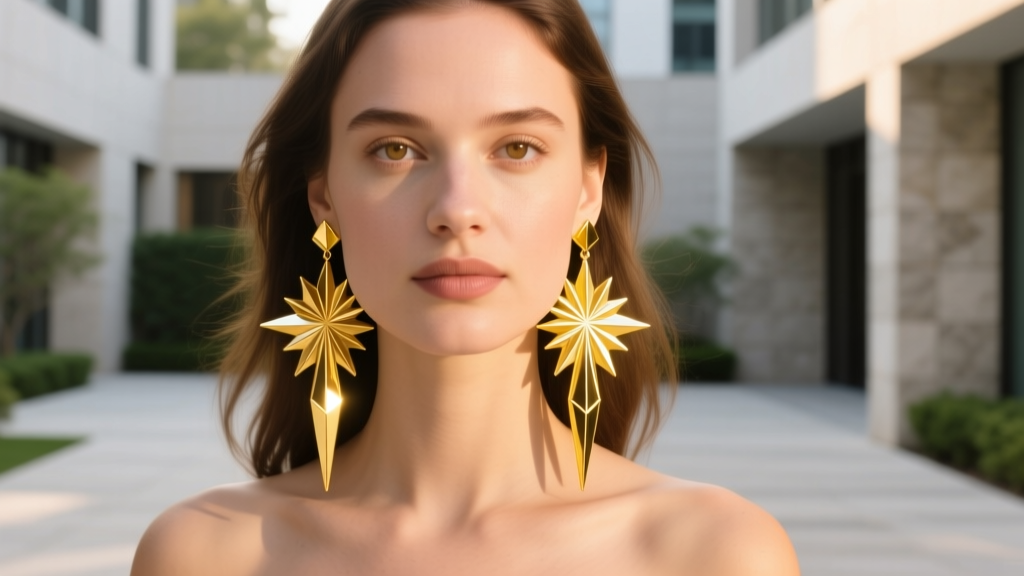
Asymmetry and Mismatched Pairings: A Step-by-Step Guide
The 'mismatched' earring trend was practically invented for celestial jewelry. Wearing a sun in one ear and a moon in the other represents the duality of nature. However, executing this look requires a deliberate approach to visual weight.
Expert Styling Tip: Never mix a heavy, solid-cast sun stud with a delicate, hollow-moon dangle. The visual imbalance will look accidental rather than intentional. If your left ear features a 10mm solid gold sun stud, balance it with a right-ear moon dangle that has a similar visual density, such as a thick crescent moon huggie with a 6mm charm drop.
When curating a mismatched celestial stack, anchor the look with a shared element. If your sun earring features a bezel-set labradorite gemstone, ensure your moon earring also incorporates labradorite. This shared material ties the two distinct motifs together into a cohesive narrative.
Caring for Intricate Celestial Details and Gemstones
Moon and sun earrings often feature deep textural elements—like the craters on a moon or the ridges on sun rays—that trap skin oils, lotions, and environmental dust. Furthermore, celestial jewelry frequently incorporates thematic gemstones like moonstone, labradorite, or opal.
According to the Gemological Institute of America (GIA), moonstone ranks between 6 and 6.5 on the Mohs hardness scale. This makes it relatively soft and highly susceptible to scratching and thermal shock. Never use an ultrasonic jewelry cleaner on moon and sun earrings featuring moonstone, opal, or lapis lazuli. The high-frequency vibrations can fracture internal inclusions, and the heat can destroy the stone's adularescence (the signature glowing effect).
The Safe Cleaning Protocol:
- Mix a few drops of mild, phosphate-free dish soap into a bowl of lukewarm (not hot) water.
- Submerge the metal portions of the earrings for 3 to 5 minutes to loosen debris.
- Using a baby-soft toothbrush, gently brush the crevices of the sun rays or moon craters. Avoid scrubbing the gemstones directly.
- Rinse under a gentle stream of lukewarm water, ensuring the drain is plugged.
- Pat dry with a lint-free microfiber cloth. Allow the earrings to air-dry completely before storing them in an anti-tarnish pouch to prevent oxidation of the metal alloys.
By understanding the structural nuances, metallurgical requirements, and styling geometry of celestial jewelry, you can build a curated collection of moon and sun earrings that not only elevates your daily wardrobe but remains comfortable and tarnish-free for years to come.


