Boho Feather Earrings: Material Grades, Sizing & Care Guide
An expert guide to boho feather earrings, covering ASTM titanium grades, ethical feather sourcing, gauge sizing, and weight distribution for lobe health.

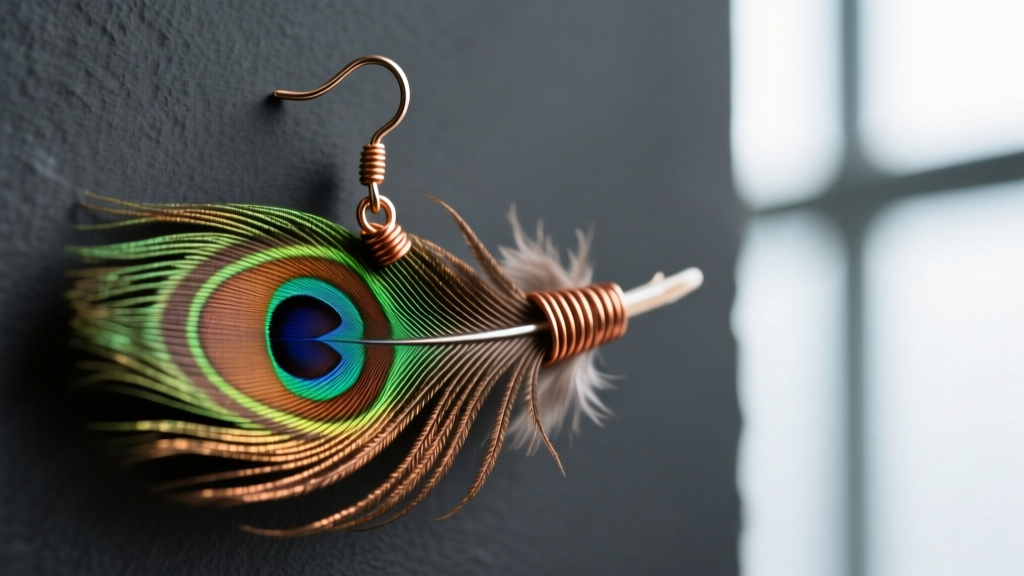
The modern boho feather earring has evolved far beyond the mass-produced, glued-together festival accessories of the early 2010s. Today, artisan jewelers and metallurgists approach these statement pieces with a rigorous focus on material science, ethical sourcing, and biomechanical comfort. Whether you are designing, purchasing, or curating a collection, understanding the technical specifications of boho feather earrings is essential for ensuring longevity, skin safety, and structural integrity.
The Anatomy of Artisan Boho Feather Earrings
A high-quality boho dangle is an exercise in micro-engineering. Unlike solid metal studs, feather earrings rely on a chain of delicate connections that must withstand kinetic movement, humidity, and varying gravitational loads. The standard anatomy includes four critical components:
- The Ear Wire (Hook): The primary load-bearing element that interacts directly with the fistula (piercing channel).
- The Jump Ring or Link: Connects the ear wire to the decorative body. Soldered jump rings are mandatory for heavy dangles to prevent the ring from pulling apart under stress.
- The Binding Mechanism: Artisans typically use either a micro-crimp bead (stainless steel or copper) or a hand-wrapped wire cage (usually 24G to 26G dead-soft wire) to secure the feather's calamus (the hollow base of the shaft).
- The Rachis and Barbs: The central shaft (rachis) and the hair-like branches (barbs) that dictate the earring's aerodynamic profile and weight.
Metallurgy & Hypoallergenic Standards
The most common failure point in boho jewelry is not the feather, but the metallurgy of the ear wire. The term 'hypoallergenic' is largely unregulated and often misleading in the jewelry industry. According to dermatological data published by the National Institutes of Health (NIH), nickel contact dermatitis remains one of the most prevalent allergic reactions globally, frequently triggered by cheap base metals disguised as 'Tibetan Silver' or 'Alpaca'.
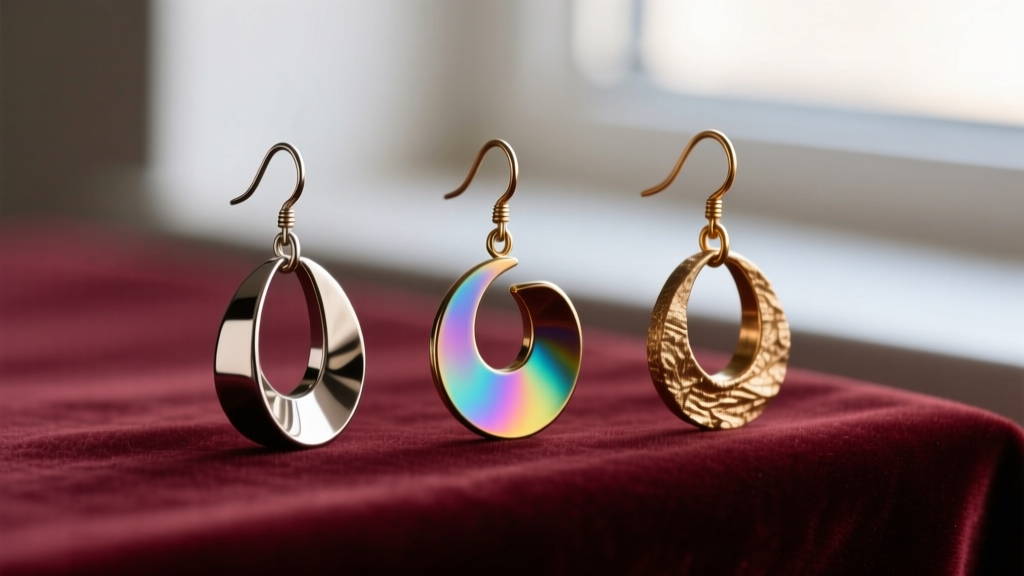
Approved Metals for Sensitive Piercings
For 2026 and beyond, reputable artisans are moving away from surgical steel (which contains up to 10% nickel) and adopting implant-grade materials:
- ASTM F136 Titanium: The gold standard for body jewelry. It contains zero nickel, is highly resistant to galvanic corrosion from skin oils, and is lightweight, making it ideal for supporting heavy boho dangles without adding unnecessary gram weight to the lobe.
- Niobium (Nb): A highly malleable, nickel-free elemental metal. Niobium ear wires can be anodized using electricity to produce vibrant, permanent colors (like deep purples or teals) that perfectly complement natural feather patterns without the use of toxic paints or platings.
- 14k/18k Solid Gold or Vermeil: While solid gold is safe, gold vermeil (a thick layer of gold over a sterling silver base) is preferred over gold-plated brass. Brass cores oxidize rapidly when exposed to the acidity of the skin, leading to structural brittleness and the dreaded 'green skin' effect.
Expert Warning: Avoid 'antiqued' or 'oxidized' base-metal hooks commonly found in fast-fashion boho styles. The darkening agents used to create these finishes often contain sulfur compounds and heavy metals like lead or cadmium, which can cause severe localized toxicity and piercing rejection.
Feather Sourcing, Sanitization, and Ethics
The ethical procurement of feathers is a complex legal and moral landscape. In the United States, the U.S. Fish and Wildlife Service strictly enforces the Migratory Bird Treaty Act (MBTA). It is a federal offense to possess, sell, or use feathers from native migratory birds—including eagles, hawks, owls, and robins—unless you are an enrolled member of a federally recognized Native American tribe.
Legal and Ethical Alternatives
Artisan jewelers source feathers from domestic or non-migratory species. The most technically sound and ethically viable options include:
- Ring-Necked Pheasant: Widely farmed; feathers are collected during natural molting cycles (cruelty-free).
- Guinea Fowl: Provides striking, naturally polka-dotted barbs that require no artificial dyeing.
- Indian Peafowl (Peacock): The 'eyes' of the tail coverts are naturally shed annually. High-end artisans only purchase from certified cruelty-free sanctuaries or farms.
Post-harvest, raw feathers carry a high bioload, including mites, bacteria, and avian dander. Professional studios utilize UV-C light chambers or ozone gas treatments to sanitize the barbs without degrading the keratin structure. Boiling or chemical bleaching destroys the microscopic hooklets that hold the feather's shape together, resulting in a frayed, degraded product.
Weight Distribution & Gauge Sizing for Lobe Health
One of the most overlooked aspects of boho feather earrings is the physics of the dangle. A long feather acts as a lever. Even if the feather itself is light, the distance from the piercing hole to the feather's center of mass creates a 'moment of inertia' that pulls downward and outward on the fistula. Over time, this causes the 'cheese-cutter effect,' where the earring wire slowly migrates through the lobe tissue, permanently stretching the piercing.
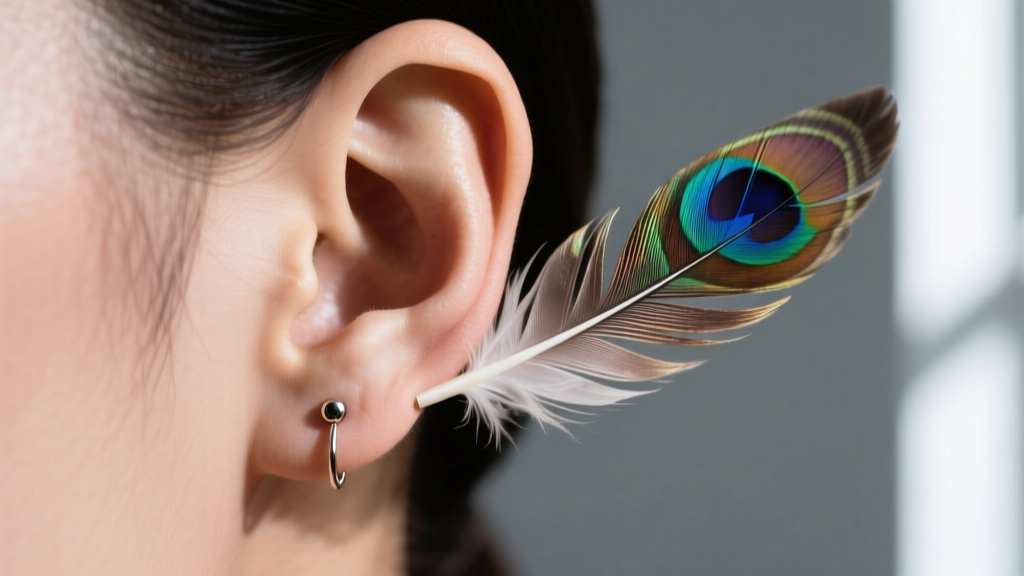
To mitigate tissue damage, the gauge (thickness) of the ear wire must be scaled to the total weight and length of the earring. Below is a technical framework for matching wire gauge to feather types:
| Gauge (AWG) | Diameter (mm) | Max Safe Weight | Ideal Feather Type & Length |
|---|---|---|---|
| 20G | 0.81mm | 8 - 12 grams | Small guinea fowl, dyed goose (Under 2 inches) |
| 18G | 1.02mm | 15 - 20 grams | Standard pheasant, macaw (2 to 4 inches) |
| 16G | 1.29mm | 25 - 30 grams | Peacock coverts, large turkey (4 to 6 inches) |
| 14G | 1.60mm | 40+ grams | Heavy clustered boho dangles, multi-layered wire wraps |
Note: If you are designing an 18G earring that exceeds 20 grams, you must incorporate a secondary support mechanism, such as an ear chain that loops over the helix (cartilage) to distribute the vertical load across the entire ear structure.
Maintenance and Structural Failure Points
Boho feather earrings require specialized maintenance protocols that differ vastly from solid metal jewelry. The primary structural failure point is the binding mechanism. Micro-crimp beads, while visually discreet, can slowly loosen due to the kinetic vibration of walking and talking. Wire-wrapping (using 26G dead-soft copper or argentium silver) is mechanically superior because the artisan can work-harden the wire after wrapping, locking the calamus firmly in place.
Cleaning Protocols
Never submerge boho feather earrings in ultrasonic cleaners or liquid jewelry dips. The high-frequency cavitation will shatter the fragile barbules, and the chemicals will strip the natural oils from the keratin, making the feather brittle.
- Sanitizing the Metal: Use a 70% isopropyl alcohol wipe strictly on the titanium or niobium ear wire. Avoid touching the feather binding with the alcohol.
- Reviving the Barbs: If the feather becomes crushed or matted, hold it over a gentle stream of steam from a garment steamer or kettle for 3 to 5 seconds. The moisture and heat will cause the keratin to relax and the microscopic hooklets to re-engage, allowing you to gently stroke the barbs back into their natural alignment with your fingertips.
- Storage: Store dangles vertically in a shadow box or hang them from a jewelry tree. Storing them flat in a drawer will permanently warp the rachis and cause irreversible structural memory damage.
By prioritizing implant-grade metallurgy, adhering to ethical sourcing laws, and respecting the biomechanical limits of the human earlobe, you elevate the boho feather earring from a fleeting trend into a masterclass of wearable, sustainable art.


