Anthurium Earrings: Budget & Value Assessment Guide
Discover the true value of anthurium earrings in our 2026 buyer's guide. Compare materials, pricing tiers, and structural flaws before you buy.

The Botanical Jewelry Market: Decoding Anthurium Earrings
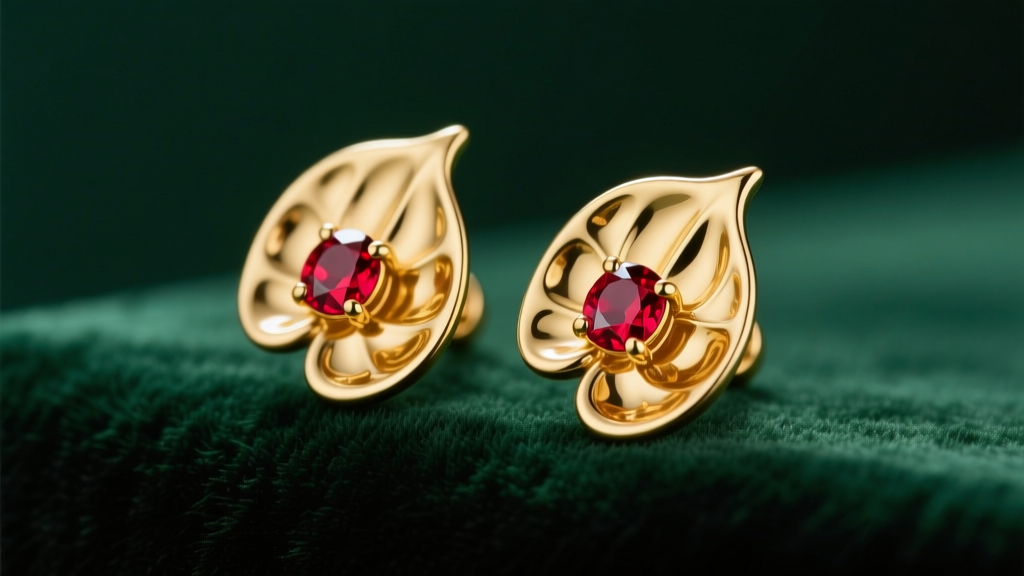
As we navigate the 2026 jewelry market, botanical motifs continue to dominate fine and fashion accessories. Among these, anthurium earrings have carved out a highly specific niche. Recognized by their glossy, heart-shaped spathe and protruding spadix, anthuriums offer a striking, sculptural silhouette that translates beautifully into ear adornments. However, the surge in popularity has led to a flooded market, leaving consumers confused about what constitutes a fair price. A quick search reveals pricing that ranges from $18 for fast-fashion drops to over $800 for fine jewelry interpretations. This massive discrepancy begs the question: what are you actually paying for when you buy anthurium earrings?
Assessing the true value of botanical jewelry requires looking past the aesthetic and diving deep into metallurgy, structural engineering, and material longevity. The unique anatomy of the anthurium flower—specifically the broad, sweeping curves of the spathe and the delicate, textured spike of the spadix—presents distinct manufacturing challenges. In this comprehensive budget and value assessment, we will break down the pricing tiers, expose common structural failure modes, and help you identify the sweet spot for your next botanical jewelry investment.
Material Tiers & True Value Assessment
The price of anthurium earrings is almost entirely dictated by the base metal, the plating thickness, and the method used to achieve the flower's signature vibrant colors (often red, pink, or deep green). Let us dissect the three primary market tiers.
Tier 1: Budget Alloys and Cold Enamel (Under $60)
In the sub-$60 category, anthurium earrings are typically cast from zinc alloys or brass and finished with "cold enamel" (which is actually a pigmented epoxy resin, not true glass enamel). While these pieces offer an accessible entry point into the botanical trend, their long-term value is exceptionally poor. Brass and zinc alloys are highly reactive. When exposed to the natural pH of human skin, they oxidize rapidly, leaving a green or black residue on the earlobe. Furthermore, cold enamel is prone to micro-chipping and yellowing when exposed to UV light and cosmetics. From a value perspective, these are disposable accessories, not investments. Additionally, cheap alloys frequently contain nickel, a common sensitizer that can trigger severe contact dermatitis, as documented by the National Center for Biotechnology Information.
Tier 2: Gold Vermeil and Vitreous Enamel ($75 - $180)
This is the undisputed sweet spot for value-conscious buyers who want durability without the fine jewelry markup. True gold vermeil requires a sterling silver base plated with at least 2.5 microns of 14k or 18k gold, a standard strictly regulated by the Federal Trade Commission. When paired with vitreous (kiln-fired) enamel, the result is an anthurium earring that boasts the rich, glassy luster of fine jewelry at a fraction of the cost. Vitreous enamel is fused to the metal at temperatures exceeding 1,400°F, making it highly resistant to chipping and completely impervious to UV fading. At the $120 mark, a well-constructed vermeil and vitreous enamel anthurium stud offers a decade of reliable wear, representing the highest cost-per-wear value on the market.
Tier 3: Solid Gold and Gemstone Accents ($300+)
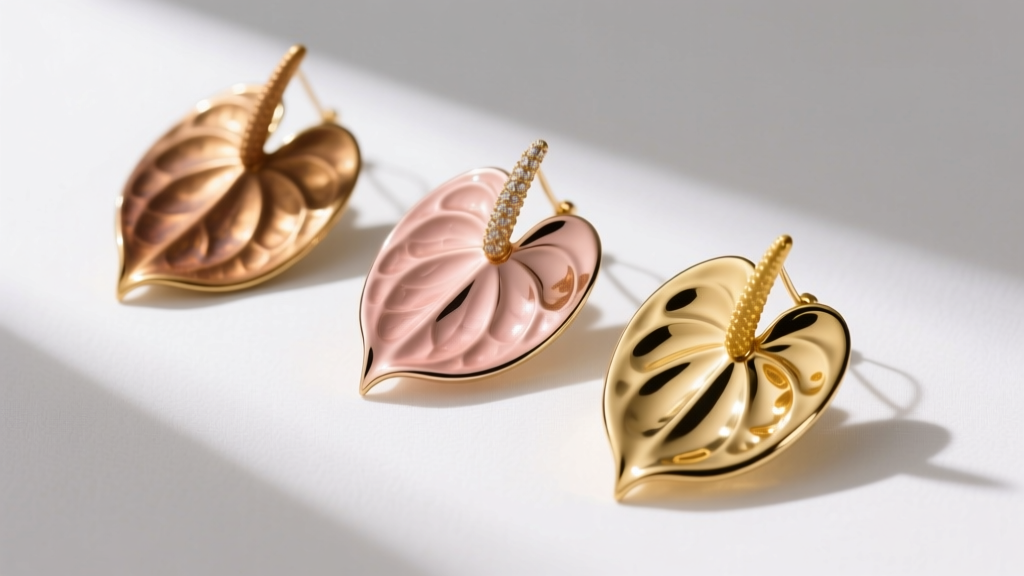
For heirloom-quality pieces, jewelers cast the anthurium spathe in solid 14k or 18k gold, often utilizing the natural color variations of rose, yellow, and white gold to mimic the flower's organic gradients. The spadix is frequently accentuated with pave-set diamonds, or a single bezel-set sapphire or ruby at the tip. While undeniably beautiful and immune to tarnish, the value proposition here shifts from practicality to luxury and artistry. You are paying a premium for the raw commodity value of the gold and the intensive labor required for stone setting. If you are buying in this tier, ensure the brand provides a CAD (Computer-Aided Design) weight breakdown so you know exactly how much of the $500 price tag is attributed to gold weight versus brand markup.
Value Assessment Matrix
| Market Tier | Primary Materials | Average Retail Price | Expected Lifespan | Primary Failure Mode |
|---|---|---|---|---|
| Budget | Brass/Zinc Alloy, Cold Enamel | $18 - $55 | 3 - 6 Months | Alloy oxidation, resin yellowing, post snapping |
| Mid-Range (Value) | Sterling Silver, 2.5µ Gold Vermeil, Vitreous Enamel | $75 - $180 | 5 - 10+ Years | Vermeil wear on high-friction edges |
| Fine Jewelry | Solid 14k/18k Gold, Diamonds/Sapphires | $350 - $850+ | Generational | Prong wear, earlobe stretching due to weight |
Structural Integrity & Hidden Failure Modes
The anthurium's broad, asymmetrical shape creates unique structural challenges that cheap manufacturers routinely ignore. When evaluating the budget and value of anthurium earrings, you must inspect the hardware and weight distribution.
The Gauge Size Dilemma
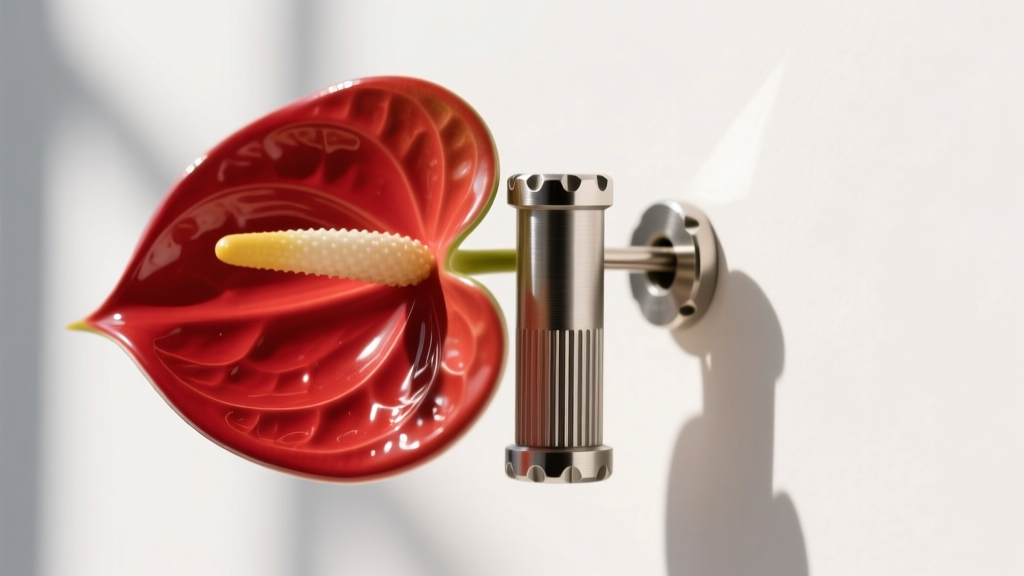
A standard earring post is 20-gauge (0.81mm). However, an 18mm wide solid gold or heavy enamel anthurium spathe carries significant lateral weight. If a manufacturer uses a thin 20-gauge or 22-gauge post to save on gold weight or because they are using cheap stamping dies, the post will inevitably bend under the leverage of the heavy floral face. For any anthurium stud larger than 12mm, an 18-gauge (1.02mm) post is the minimum requirement for structural integrity. If the product description does not specify the gauge size, assume it is a flimsy 20-gauge wire and downgrade your value assessment accordingly.
Jump Ring and Soldering Weaknesses
For anthurium drop or dangle earrings, the connection point between the ear wire and the floral body is a critical stress point. Budget brands use open jump rings (a simple loop with a slit) that easily pull apart when the heavy anthurium catches on hair or clothing. High-value pieces will feature a fully soldered closed jump ring or a custom-cast integrated hinge. Always inspect the connection point; an unsoldered jump ring on a heavy botanical drop is a guaranteed failure point waiting to happen.
Red Flags: How to Spot Overpriced Botanical Jewelry
Not all expensive earrings offer good value. Some brands leverage the "botanical luxury" aesthetic to mark up subpar materials. Watch out for these deceptive marketing tactics:
- "Gold Plated" Without Micron Specifications: If a brand charges over $100 but only says "18k gold plated" without specifying the base metal (which could be brass) or the plating thickness (which could be a microscopic 0.1 microns), you are overpaying for a flash-plated accessory that will tarnish in weeks.
- "Enamel" Ambiguity: Many mid-tier brands use the word "enamel" to describe painted resin. True value lies in vitreous or guilloché enamel. If the surface looks slightly plasticky or has visible brush strokes under a macro lens, it is resin, and the price should reflect that.
- Hollow-Back Castings: To reduce the cost of solid gold anthurium earrings, some manufacturers cast the spathe with a deeply scooped, hollow back. While this saves gold weight, it traps moisture, sweat, and perfume against the earlobe, leading to skin irritation and a muted, tinny sound when the earring is tapped.
Final Verdict: Where is the Sweet Spot?
When assessing the budget and value of anthurium earrings in 2026, the ultimate sweet spot lies in the $90 to $150 range. At this price point, you should demand a sterling silver base, a minimum of 2.5 microns of gold vermeil, and kiln-fired vitreous enamel. This combination provides the visual impact and weight of fine jewelry while respecting a realistic budget. If you are stepping up to the $400+ solid gold tier, ensure you are paying for robust 18-gauge structural hardware and precision gemstone setting, rather than just a designer logo. By scrutinizing the metallurgy and engineering behind the botanical beauty, you can confidently invest in anthurium earrings that will bloom in your jewelry box for years to come.


