Types of Clip On Earrings: A Material & Tension Guide
Compare the best types of clip on earrings by analyzing base metals, tension mechanisms, and padding materials for pain-free, allergy-safe wear.

The Engineering of Comfort: Why Clip-On Materials Matter
For non-pierced jewelry enthusiasts, the search for the perfect pair of earrings often ends in frustration. The discomfort associated with non-pierced jewelry is rarely a design flaw; rather, it is a failure of material science and mechanical engineering. When evaluating the various types of clip on earrings, most buyers focus solely on the aesthetic front. However, the true determinant of wearability lies in the metallurgical properties of the hinge, the elasticity of the tension spring, and the durometer hardness of the contact padding.
In 2026, advancements in hypoallergenic alloys and medical-grade polymers have revolutionized non-pierced jewelry. Yet, the market remains flooded with poorly engineered pieces that rely on excessive clamping force to compensate for inferior grip materials. To achieve all-day comfort, one must understand how different base metals interact with human skin and how specific mechanical mechanisms distribute pressure across the delicate vascular network of the earlobe.
Breakdown of Clip-On Mechanisms and Base Metals
The mechanism dictates the baseline tension, while the base metal dictates the longevity and skin safety. Here is a deep dive into the material properties of the most common clip-on architectures.
Spring-Clip Hinges (Stainless Steel vs. Brass)
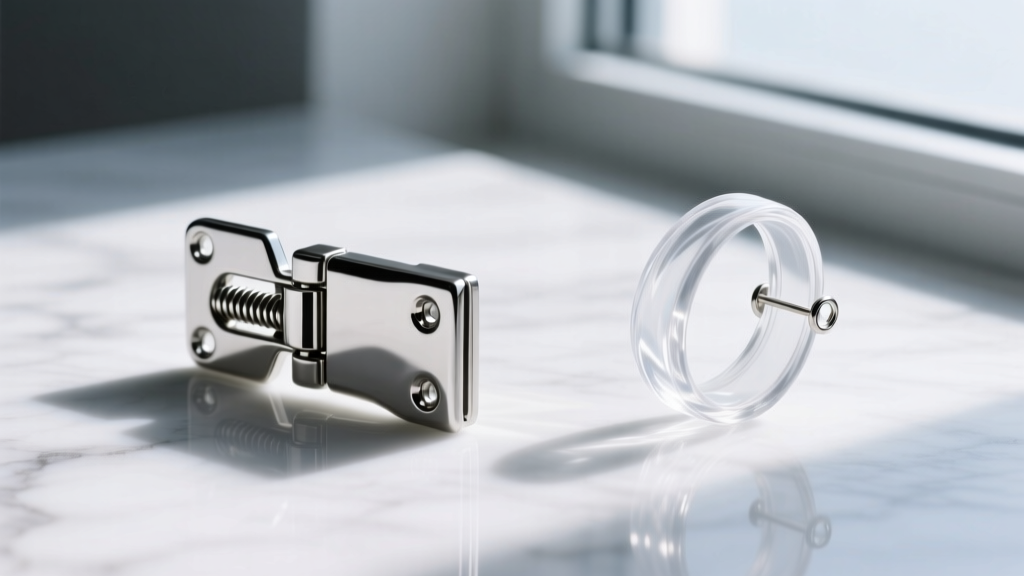
Spring-clips rely on a tiny leaf spring hidden within the hinge barrel to maintain clamping force. The ideal tension for a spring-clip is between 150gf and 250gf (grams of force). Anything exceeding 350gf will cause ischemic pain (restricted blood flow) within two hours.
- 316L Surgical Stainless Steel: The gold standard for spring mechanisms. 316L contains molybdenum, which increases resistance to pitting and crevice corrosion from sweat and skin oils. Its austenitic crystal structure traps nickel within the lattice, making it largely safe for most wearers, though highly sensitive individuals should still exercise caution.
- Stamped Brass (Cu-Zn Alloy): Frequently used in fast-fashion jewelry. Brass lacks the elastic modulus of steel, meaning the spring leaf will suffer from plastic deformation (metal fatigue) after repeated use, leading to a loose clip. Furthermore, the copper content reacts with skin acidity to form copper chloride, resulting in the dreaded 'green skin' effect.
Screw-Back Tension Pads (Sterling Silver vs. Plated Alloys)
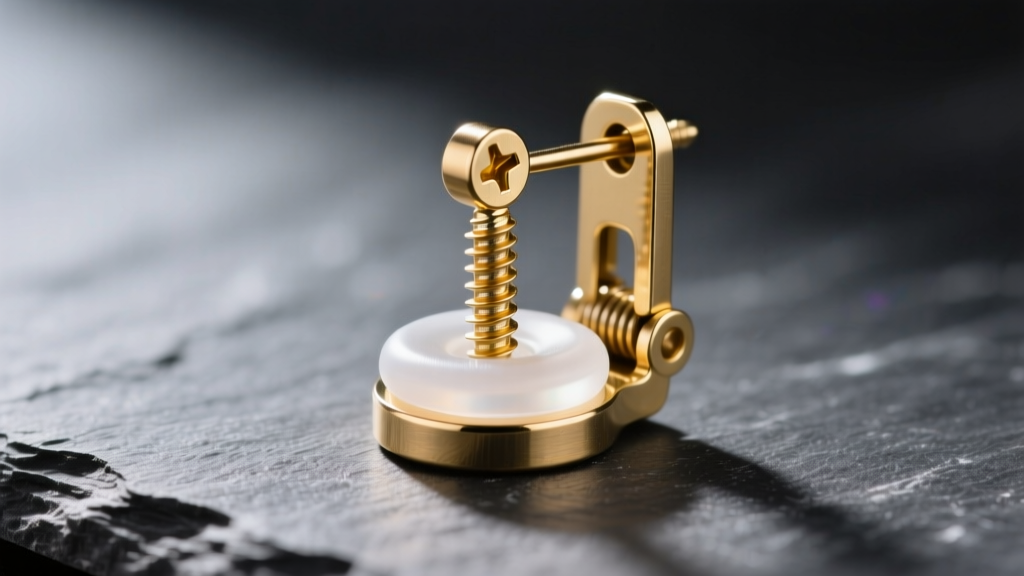
Screw-backs offer infinite micro-adjustability, making them superior for varying earlobe thicknesses. The thread pitch of the screw is critical; a standard 0.5mm to 0.8mm pitch allows for precise tensioning without stripping the threads.
- Sterling Silver (925): While excellent for the decorative front and the contact pad, pure silver or sterling is too soft to be used for the threaded post itself. High-quality screw-backs use a steel or titanium core post with a silver soldered contact plate.
- Gold-Plated Base Metals: If the underlying post is brass or white metal (a zinc-copper-nickel alloy), the friction of the screw mechanism will quickly wear away the gold plating, exposing the skin to raw, potentially allergenic base metals.
Invisible Resin & Acrylic Clips
Invisible clips wrap around the outer cartilage or hug the earlobe using the memory of the plastic. The material choice here dictates the 'memory' and snap-back force.
- Polycarbonate (PC): Highly impact-resistant with excellent flexural strength. Polycarbonate invisible clips can endure thousands of bend cycles without whitening or snapping.
- Standard Acrylic (PMMA): Brittle and susceptible to UV degradation. Acrylic clips often develop micro-fractures along the stress points, eventually snapping when the wearer attempts to open the hinge.
Magnetic Clip-Ons (Neodymium & Silicone Coatings)
Magnetic earrings utilize two opposing magnets to clamp the earlobe. The strength of the magnetic field is measured in Gauss. Most high-end magnetic clips use N52 grade neodymium magnets, which provide a strong, even hold without the pinpoint pressure of a mechanical spring. However, raw neodymium corrodes rapidly and contains high levels of nickel. Therefore, the coating material is paramount. Medical-grade liquid silicone rubber (LSR) encapsulation is the safest and most durable barrier, preventing both corrosion and direct metal-to-skin contact.
Material Comparison Matrix: Durability, Tension, and Skin Safety
The following matrix synthesizes the mechanical and dermatological profiles of the primary clip-on types available on the market today.
| Mechanism Type | Primary Base Material | Contact Padding | Avg. Tension Force | Allergy Risk Profile |
|---|---|---|---|---|
| Spring-Clip | 316L Stainless Steel | Urethane Foam | 200gf - 300gf | Low (if uncoated) |
| Screw-Back | Brass Post / Silver Pad | Silicone / Acrylic | User Defined (50gf+) | Moderate (Thread wear) |
| Invisible Resin | Polycarbonate | None (Self-contact) | 80gf - 120gf | Zero (Metal-free) |
| Magnetic | N52 Neodymium | LSR Silicone Encased | 150gf (Distributed) | Zero (If fully encased) |
Padding and Contact Materials: The Secret to Pain-Free Wear
The metal mechanism provides the force, but the padding distributes it. The durometer (hardness) of the padding material is measured on the Shore scale. Understanding this scale is crucial for evaluating comfort.
Silicone vs. Acrylic Paddings
Many vintage-style screw-backs feature hard, clear acrylic paddings. Acrylic typically registers around Shore 70D to 80D on the hardness scale, which is comparable to hard hat plastic. When pressed against the earlobe, acrylic fails to conform to the tissue, creating severe pressure points that lead to localized necrosis (pain and bruising).
Conversely, modern high-end clip-ons utilize Shore 30A to 40A silicone. This material has the hardness of a rubber band or a pencil eraser. It compresses and molds to the unique topography of the wearer's earlobe, increasing the surface area of the grip and drastically reducing the pounds-per-square-inch (PSI) exerted on the skin. According to dermatological guidelines regarding contact dermatitis and pressure injuries, medical-grade silicone is inert, non-porous, and highly recommended for prolonged skin contact (American Academy of Dermatology).
Urethane Foam Inserts
Often found on vintage spring-clips, open-cell polyurethane foam provides a soft initial grip. However, foam is highly porous. It absorbs sebum, sweat, and cosmetic products, becoming a breeding ground for bacteria over time. From a hygiene perspective, non-porous silicone is vastly superior to foam for daily wear.
Failure Modes: When Clip-On Materials Degrade
Even the best-engineered earrings are subject to material fatigue. Recognizing these failure modes can help you maintain your collection and know when to replace a mechanism.
'The most common failure in non-pierced jewelry is not the breaking of the decorative element, but the degradation of the tension mechanism due to environmental stress cracking and galvanic corrosion.' — Materials Science in Jewelry Design
- Galvanic Corrosion in Plated Hinges: If a gold-plated brass spring-clip is exposed to sweat (an electrolyte), and the plating has a micro-scratch, a galvanic cell is formed. The brass will corrode rapidly from the inside out, causing the hinge to seize or snap.
- Silicone Delamination: In cheap magnetic earrings, the silicone coating is often dip-molded rather than chemically bonded to the magnet. Over time, body heat and oils cause the silicone to peel away, exposing the highly allergenic neodymium-nickel core directly to the skin.
- Thread Stripping in Screw-Backs: If a user forces a screw-back past its natural stopping point, the soft metal of the internal nut will strip. Once stripped, the mechanism can no longer hold tension, rendering the earring unwearable.
Expert Verdict: Matching Material to Your Lifestyle
Selecting the right types of clip on earrings requires matching the material properties to your specific anatomical and lifestyle needs. If you have highly sensitive skin or a known nickel allergy, you must bypass traditional metal spring-clips entirely. Opt for polycarbonate invisible cuffs or LSR-encapsulated magnetic clips, which offer a zero-metal skin contact guarantee.
For those who prefer heavy, statement dangle earrings, the weight of the decorative front requires a mechanism with a high elastic modulus. A 316L stainless steel spring-clip with a Shore 40A silicone pad is mandatory to support the pendulum effect of a heavy drop earring without slipping off the lobe. Conversely, for lightweight studs and small hoops, a sterling silver screw-back with a fine 0.5mm thread pitch offers the most secure, customizable, and comfortable fit.
Ultimately, investing in jewelry that prioritizes advanced polymers and surgical-grade alloys over cheap stamped brass will transform your non-pierced jewelry experience from a painful endurance test into a seamless, comfortable extension of your personal style. For further reading on metal sensitivities and safe jewelry alternatives, consult the comprehensive metal guides provided by industry authorities like Rio Grande and dermatological health resources.


