Top Ear Piercing Earrings: The Ultimate Material Guide
Discover the best materials for top ear piercing earrings. Compare titanium, gold, and steel for safe, fast-healing cartilage piercings.

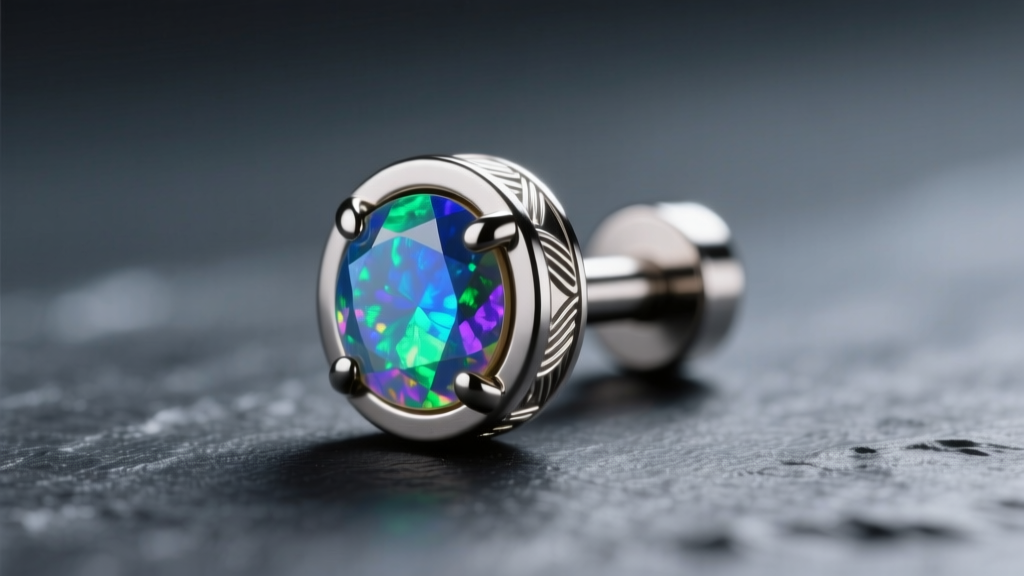
Why Cartilage Demands Specific Alloys
When curating a curated ear stack, the upper ear presents a unique set of biological challenges. The helix, forward helix, conch, tragus, and rook are all composed of cartilage, an avascular tissue that lacks a direct blood supply. Instead, cartilage relies on the perichondrium—the connective tissue surrounding it—for nutrient exchange and waste removal. Because of this limited circulation, healing times for upper ear piercings typically range from 6 to 12 months, and sometimes up to 18 months for complex placements like the rook or daith. Consequently, the selection of top ear piercing earrings is not merely an aesthetic choice; it is a critical medical decision that dictates the success or failure of the healing process.
During this prolonged healing window, the fistula (the tube of healing tissue forming around the jewelry) is highly susceptible to microscopic tearing, bacterial infiltration, and contact dermatitis. The porosity, surface finish, and elemental composition of the jewelry directly interact with the wound bed. Using substandard materials can lead to severe complications, including granulomas, localized infections, and hypertrophic scarring. To navigate this, we must evaluate the metallurgical properties of the most common alloys used in modern body jewelry.
Implant-Grade Titanium (ASTM F-136) vs. Surgical Steel
The undisputed gold standard for initial top ear piercing earrings is implant-grade titanium, specifically Ti-6Al-4V ELI (Extra Low Interstitial) certified to ASTM F-136 standards. This specific alloy is widely used in orthopedic and cardiovascular medical implants due to its exceptional biocompatibility, high strength-to-weight ratio, and complete absence of nickel. The 'ELI' designation means that interstitial elements like oxygen, nitrogen, carbon, and iron are strictly controlled, resulting in a highly pure, corrosion-resistant metal that will not react with the saline environment of a healing wound.
In stark contrast, 'surgical steel'—most commonly 316L stainless steel—is a highly misleading marketing term. While 316L is suitable for surgical tools that undergo autoclaving and brief skin contact, it contains between 8% and 10.5% nickel. The European Union's Nickel Directive strictly limits nickel release from body jewelry to 0.5 µg/cm²/week to prevent allergic contact dermatitis. However, in the acidic, exudative environment of a fresh cartilage piercing, 316L steel can easily exceed this threshold. According to the Association of Professional Piercers (APP), surgical steel should never be used for initial piercings due to the high prevalence of nickel sensitization, which can manifest as persistent itching, redness, and delayed healing.
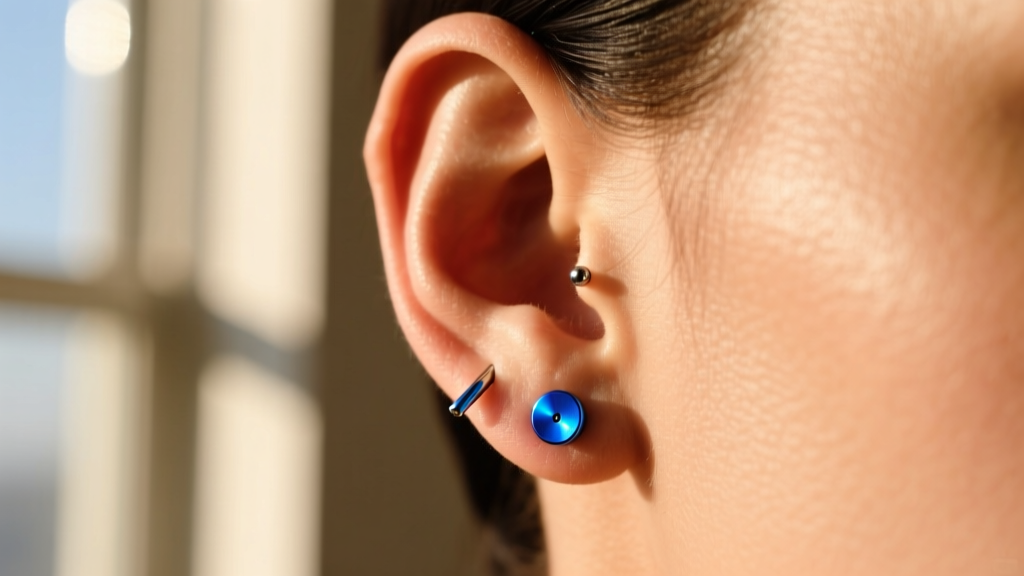
Solid Gold Standards: 14k vs. 18k for Upper Ear
For those seeking the prestige and warmth of solid gold, the karatage and alloying metals are paramount. Pure 24k gold is entirely too soft for body jewelry; it scratches easily, harboring bacteria in microscopic grooves, and can deform under the pressure of a healing cartilage piercing. Therefore, gold must be alloyed with other metals to increase its hardness and durability.
14k gold (58.5% pure gold) is often preferred by master piercers for top ear piercing earrings because the higher percentage of alloying metals provides superior structural integrity, particularly for the delicate threading on flat back labrets. However, the biocompatibility of 14k gold depends entirely on what it is alloyed with. Reputable manufacturers like BVLA and Maria Tash use palladium or silver to create white gold, and carefully balanced copper-zinc ratios for yellow and rose gold, ensuring the final product is completely nickel-free. 18k gold (75% pure gold) is also highly biocompatible and offers a richer color, but its softer nature makes it slightly more prone to surface scratching over time. Always verify that the gold is specifically formulated for body jewelry and complies with ISO 10993 biocompatibility standards.
Material Comparison Matrix for Cartilage
Understanding the nuances of different metals allows you to make informed decisions based on your budget, allergy profile, and the specific placement of your piercing. Below is a comprehensive breakdown of the most common materials used in upper ear jewelry.
| Material | Nickel-Free | Surface Porosity | Avg. Price Range | Best Application |
|---|---|---|---|---|
| Implant-Grade Titanium (ASTM F-136) | Yes | Ultra-Low (Mirror Polish) | $35 - $85 | Initial piercings, sensitive skin, all cartilage |
| Solid 14k/18k Gold (Palladium Alloyed) | Yes | Low | $120 - $450+ | Initial piercings, long-term wear, premium aesthetics |
| Niobium (Commercially Pure) | Yes | Low | $40 - $90 | Initial piercings, custom anodized colors, titanium allergies |
| 316L Surgical Steel | No (8-10.5%) | Medium | $10 - $30 | Strictly for fully healed, non-sensitive piercings only |
| Bioplast / PTFE | Yes | High (Degrades over time) | $5 - $15 | Emergency MRI removals, temporary retainers only |
Threading Mechanics: Internal vs. Threadless
Material composition is only half the battle; the mechanical design of top ear piercing earrings plays an equally vital role in tissue preservation. External threading—where the screw pattern is cut into the post that passes through the fistula—is universally condemned by professional piercers. Dragging sharp, jagged threads through a delicate healing channel causes micro-lacerations, leading to scar tissue buildup and irritation bumps.
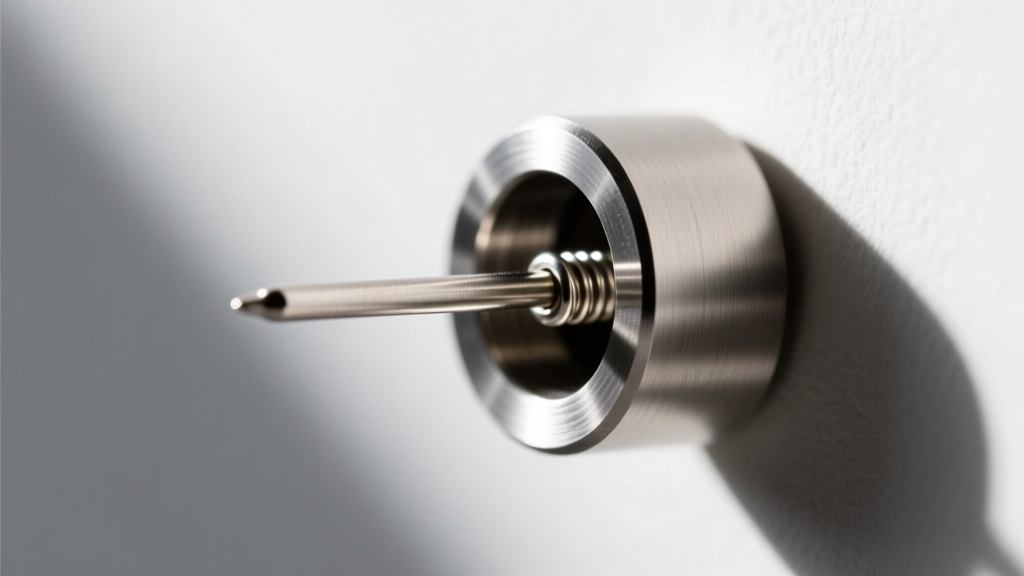
For the upper ear, threadless (push-pin) jewelry is the superior choice. As detailed in studies published by the Journal of Clinical and Aesthetic Dermatology regarding piercing complications, minimizing mechanical trauma is essential for cartilage healing. Threadless systems utilize a solid, blunt pin that is slightly bent by the piercer before insertion. This pin is then pushed into a hollow, smooth shaft, creating a secure tension fit. This design ensures that no mechanical parts pass through the tissue, and it allows for seamless, trauma-free downsizing.
Internal threading is an acceptable alternative, where the screw pattern is hidden inside the decorative end, and the post remains perfectly smooth. However, internal threading requires precise alignment when changing the jewelry, which can be incredibly frustrating for hard-to-reach areas like the forward helix or tragus. For these placements, threadless flat back labrets remain the undisputed champion.
Troubleshooting Irritation Bumps and Material Reactions
Even with perfect aftercare and high-quality top ear piercing earrings, cartilage piercings are notorious for developing localized swelling or 'irritation bumps' (hypertrophic granulomas). It is vital to differentiate between a true allergic reaction and a mechanical irritation. An allergic reaction to inferior metals typically presents as generalized redness, intense itching, weeping clear fluid, and localized heat. If you suspect a metal allergy, the jewelry must be immediately swapped to verified implant-grade titanium or niobium by a professional.
Conversely, an irritation bump usually appears as a small, localized nodule adjacent to the piercing hole, often caused by pressure, moisture buildup, or incorrect jewelry angles. Cartilage requires specific post lengths to accommodate initial swelling. A standard initial helix post is typically 1/4 inch (6.35mm) or 5/16 inch (7.9mm). If the post is too long after the swelling subsides, the jewelry will move excessively, battering the fistula. Conversely, if the post is too short, the decorative end will compress the tissue, restricting lymphatic drainage and causing the flesh to balloon around the jewelry. A crucial step in the healing process is returning to your piercer between weeks 4 and 8 to 'downsize' to a shorter post, usually 3/16 inch (4.76mm), to stabilize the jewelry and eliminate mechanical friction.
Final Sourcing Recommendations
When investing in top ear piercing earrings, bypass mass-market retailers and mall kiosks entirely. Seek out APP-certified piercing studios that stock jewelry from vetted, high-end manufacturers such as Anatometal, Industrial Strength, Neometal, and BVLA. These companies utilize CNC machining to achieve mirror finishes on their titanium and gold, ensuring a surface roughness (Ra) of less than 0.2 micrometers, which prevents bacterial adhesion and promotes rapid cellular migration during the healing phase. By prioritizing metallurgical purity and mechanical precision, you set the foundation for a healthy, lifelong ear curation.


