Drop Chain Earrings: The 2026 Trend & Style Guide
Discover how drop chain earrings dominate 2026 trends. Explore styling frameworks, material grades, and face-shape matching for this fluid, modern silhouette.

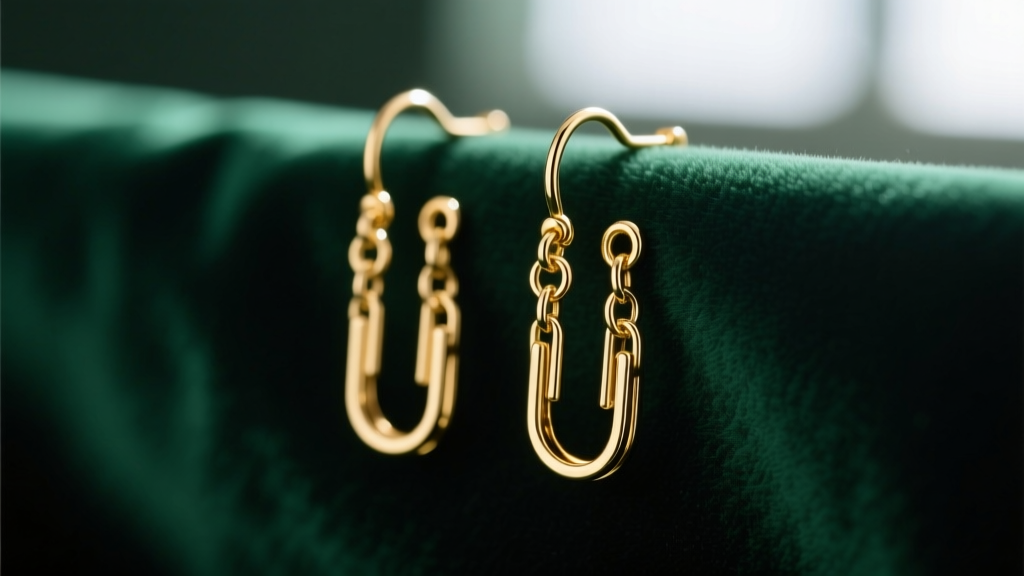
The Anatomy of the 2026 Drop Chain Revival
In the landscape of contemporary jewelry, rigid structures are giving way to kinetic fluidity. As we navigate the 2026 style landscape, drop chain earrings have emerged as the definitive silhouette for modern ear styling. Unlike traditional drop earrings that rely on fixed metal bars or solid gemstone cascades, drop chain earrings utilize the inherent articulation of interlocking links to create a "liquid metal" effect. This movement-centric design catches ambient light dynamically, transforming a simple head turn into a captivating visual event.
According to recent market analyses from Bain & Company's luxury sector insights, consumer preference in fine and demi-fine jewelry has shifted heavily toward versatile, movement-based pieces that bridge the gap between daytime minimalism and evening glamour. Drop chains fulfill this exact requirement, offering a lightweight yet visually substantial presence that adapts to the wearer's natural biomechanics.
Material Grades & Hardware: Beyond Basic Brass
When investing in drop chain earrings, the metallurgical composition is paramount. Because chains possess a high surface-area-to-volume ratio, they are highly susceptible to environmental oxidation and skin-contact tarnishing. For 2026, the industry standard for demi-fine jewelry has firmly moved away from gold-plated brass, which inevitably oxidizes green when exposed to the natural pH and sweat of the neck and jawline.
- ASTM F136 Implant-Grade Titanium: The ultimate choice for sensitive skin and newly healed piercings. Titanium is entirely nickel-free and boasts a high strength-to-weight ratio, allowing for ultra-fine chain links that will not warp under kinetic stress.
- Solid 14k and 18k Gold: 14k (58.5% pure gold) offers superior structural rigidity for delicate links, while 18k (75% pure gold) provides a richer, warmer hue but requires slightly thicker wire gauges to prevent bending.
- Heavy Gold Vermeil: For budget-conscious buyers, vermeil is acceptable only if it meets the strict 2026 standard: a minimum of 2.5 microns of 14k or 18k gold electroplated over a 925 sterling silver base. Anything less will wear through the friction points of the chain links within months.
For comprehensive grading and authenticity standards, the Gemological Institute of America (GIA) remains the definitive authority on precious metal and gemstone quality, ensuring your terminal gemstones are ethically sourced and accurately graded.
Chain Link Profiles & Drape Metrics
Not all chains behave identically. The architecture of the link dictates the fluidity, weight, and snag-risk of the earring. Below is a technical breakdown of the most common chain profiles utilized in modern drop earrings.
| Chain Style | Drape Fluidity | Hair-Snag Risk | Kinetic Weight | Best Application |
|---|---|---|---|---|
| Snake Chain | High (Liquid) | High | Medium | Evening wear, Updos |
| Cable Chain | Medium | Low | Low | Everyday, Office wear |
| Paperclip Chain | High (Bouncy) | Low | Very Low | Layering, Casual chic |
| Box Chain | Low (Stiff) | Very Low | Medium | Geometric, Edgy looks |
| Rolo Chain | Medium-Low | Medium | High | Heavy gemstone terminals |

Face Shape Architecture: Balancing the Vertical Line
Drop chain earrings inherently create a strong vertical vector. Styling them requires an understanding of facial geometry to either harmonize with or counterbalance your natural bone structure.
- Round Faces: Opt for long, ultra-fine cable or snake chains that extend at least 1.5 inches below the earlobe. The uninterrupted vertical line visually elongates the face, drawing the eye downward and creating the illusion of a sharper jawline.
- Square Faces: Soften strong mandibular angles by choosing paperclip or rolo chains that terminate in rounded, organic gemstones (like cabochon moonstones or pearls). Avoid rigid box chains or sharp geometric terminals, which will only emphasize angularity.
- Heart-Shaped Faces: Balance a wider forehead and narrower chin with medium-length drop chains that feature a slight flare or teardrop terminal at the bottom. This adds visual weight to the lower half of the face.
- Oval Faces: The universal canvas. Oval faces can carry the structural weight of heavy, multi-strand chain drops or the minimalist edge of a single, stiff box chain.
Biomechanics: Cartilage vs. Lobe Load-Bearing
A critical, often overlooked aspect of drop chain earrings is the kinetic force they exert on the piercing fistula. Unlike a static stud, a 3-inch drop chain acts as a pendulum. When you walk, turn your head, or catch a breeze, the moment of inertia multiplies the effective weight of the earring.
The Lobe Standard: Standard lobe piercings are typically done at 20-gauge (0.81mm) or 18-gauge (1.02mm). However, for drop chains exceeding 2 inches in length, wearing a 20-gauge fishhook will eventually lead to the "cheese-cutter effect," where the thin wire slowly migrates downward through the tissue due to dynamic swinging. For long drop chains, always ensure the post or hook passing through the ear is at least 18-gauge, or ideally 16-gauge (1.2mm), even if the chain itself is soldered to a thicker connector.
Cartilage Considerations: Placing long drop chains on helix or forward helix piercings is strongly discouraged. Cartilage fistulas (usually 16G or 14G) are less forgiving of leverage. The swinging weight can cause chronic irritation, hypertrophic scarring, or migration. If you desire the drop chain aesthetic on the upper ear, restrict the chain length to a maximum of 0.5 inches, acting merely as a flexible connector between two fixed studs.
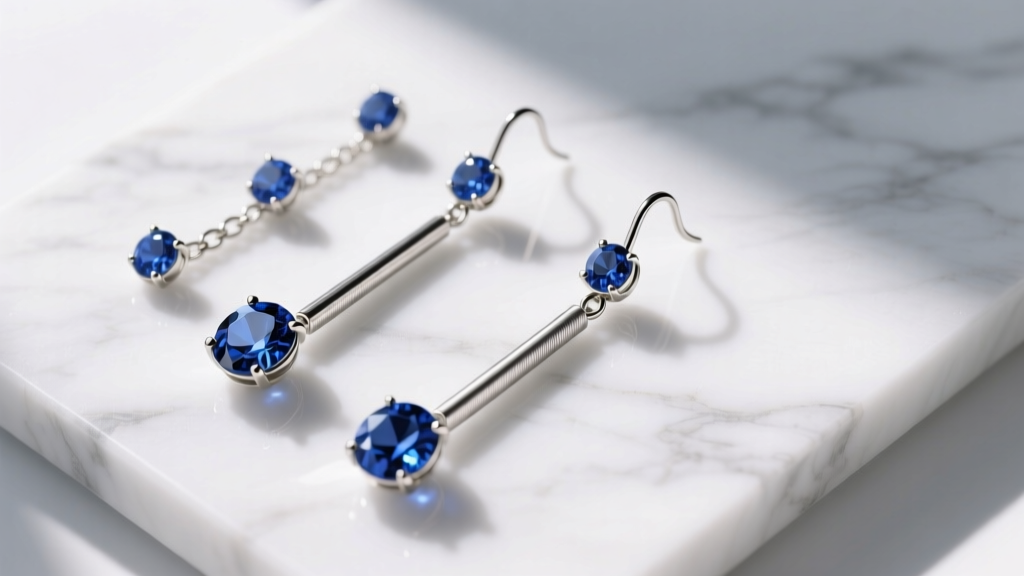
Styling Frameworks: Necklines & Hair Pairings
The fluid nature of drop chain earrings demands strategic styling to prevent visual clutter and physical snagging.
"The golden rule of kinetic jewelry is giving it room to breathe. A drop chain earring should never compete with a complex neckline; it should act as the bridge between the jaw and the collarbone." — Editorial Jewelry Styling Guidelines, Jewelers of America
- Necklines: Strapless, halter, and asymmetrical one-shoulder tops provide the perfect negative space for drop chains to swing freely. Avoid high turtlenecks or cowl necks, which create friction against the chain, leading to hair-pulling and metal fatigue.
- Hairstyles: To showcase the drape and prevent the notorious "snake chain hair snag," pair these earrings with sleek low buns, French twists, or sharply tucked behind-the-ear bobs. If wearing hair down, opt for wider paperclip or cable chains rather than tightly woven snake or box chains.
Maintenance: Preventing Chain Snags & Internal Tarnish
Because of their intricate interlocking structures, drop chain earrings require specialized maintenance. A common mistake is placing snake or box chains in ultrasonic jewelry cleaners. The high-frequency vibrations can trap microscopic moisture and cleaning solvents deep inside the tubular links. If the interior of the link is not perfectly sealed or plated, this trapped moisture leads to internal corrosion that eventually weakens and snaps the chain.
The Proper Cleaning Protocol: 1. Lay the earring flat on a microfiber cloth. 2. Apply a few drops of mild, phosphate-free dish soap diluted in warm water. 3. Use an ultra-soft, baby-hair brush to gently sweep along the grain of the chain links. 4. Rinse under a gentle stream of lukewarm water. 5. Pat dry immediately and use a hairdryer on the "cool" setting to ensure no moisture remains trapped between the links. 6. Store flat in an anti-tarnish pouch, or hang them from a jewelry stand to prevent the links from knotting upon themselves.
By understanding the material science, biomechanics, and styling geometry of drop chain earrings, you can confidently integrate this captivating 2026 trend into your permanent rotation, ensuring both aesthetic brilliance and structural longevity.


