Troubleshooting Hooker Earrings: Heavy Hoop & Drop Fixes
Learn how to safely wear bold hooker earrings. Discover troubleshooting tips for heavy hoops, lobe support hacks, and gauge sizing to prevent tearing.

The Reclamation of the Statement Hoop
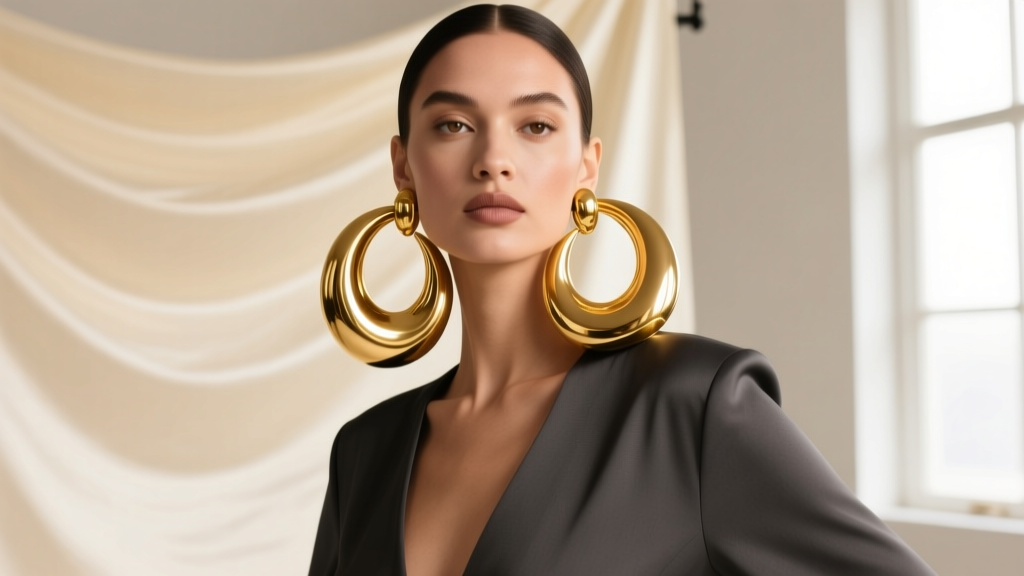
In fashion and pop culture, the colloquial term 'hooker earrings' has historically been used to describe ultra-bold, oversized, and dramatic statement hoops or heavy chandelier dangles. While the terminology is outdated and often considered pejorative, the jewelry style it represents—unapologetic, maximalist ear candy—has been fully reclaimed by high fashion, streetwear, and editorial styling alike. As we move through 2026, the trend of oversized, heavy ear modifications continues to dominate runways and red carpets. However, wearing dramatic, heavy earrings comes with a distinct set of biomechanical challenges. The human earlobe is not naturally engineered to support 20-gram brass hoops or gemstone-encrusted chandelier drops for extended periods. This comprehensive troubleshooting guide will help you solve the physical and styling challenges of wearing bold, heavy statement earrings without sacrificing your earlobe health.
The Physics of Lobe Fatigue and the 'Cheese Cutter' Effect
To troubleshoot heavy earring problems, you must first understand the anatomy of the earlobe. Unlike the upper ear, which is supported by rigid cartilage, the earlobe is composed entirely of adipose (fat) tissue, skin, and a network of delicate blood vessels. It lacks structural scaffolding. When you hang a heavy, oversized statement earring from a standard piercing, gravity exerts a constant downward force.
The most common failure mode for heavy drops is what the Association of Professional Piercers (APP) refers to as the 'cheese cutter effect.' This occurs when a thin earring wire (typically 20-gauge or 18-gauge) bears too much weight. The high pressure per square millimeter causes the wire to slowly slice through the tissue, leading to micro-tears, elongation of the piercing hole, and eventually, a completely split lobe. If your statement hoops are causing redness, a downward pointing angle, or aching after just an hour of wear, you are experiencing acute lobe fatigue.
Troubleshooting Guide: Support Hacks for Heavy Drops
You do not need to abandon your favorite dramatic earrings to save your lobes. By implementing a few structural support hacks, you can redistribute the weight and protect your tissue.
1. Polyurethane and Silicone Support Patches
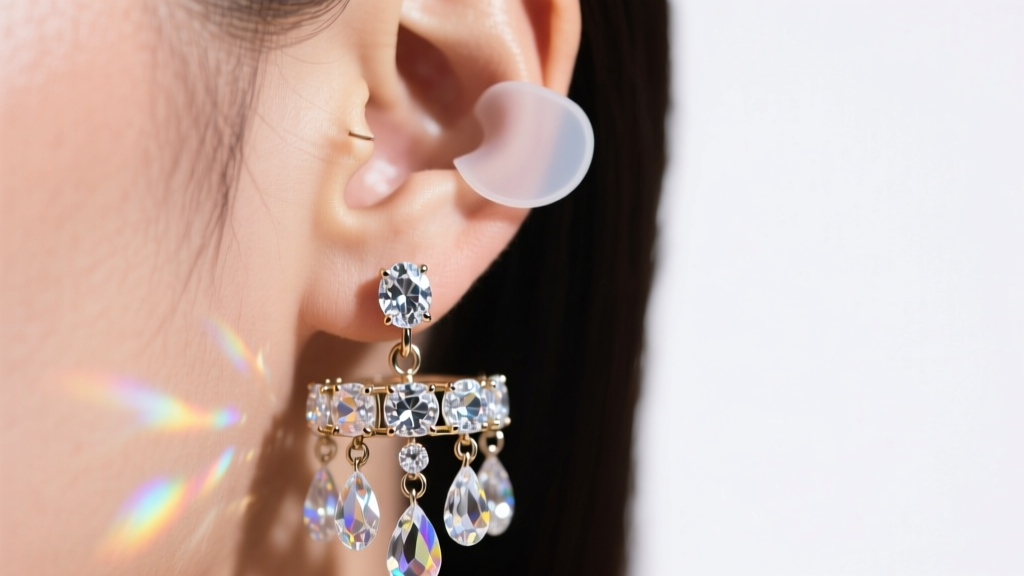
The most effective immediate fix for heavy earrings is the use of adhesive earlobe support patches (commonly known by brand names like LobeWonder or BlingDots). These are small, medical-grade polyurethane or silicone stickers with a pre-punched hole. You apply the patch to the back of your earlobe, threading the earring post or wire through both your piercing and the patch. The patch acts as a structural splint, distributing the downward force of the heavy earring across a wider surface area of the lobe's back. This completely eliminates the localized pressure on the piercing hole.
2. Upgrading to Thicker Gauge Wires
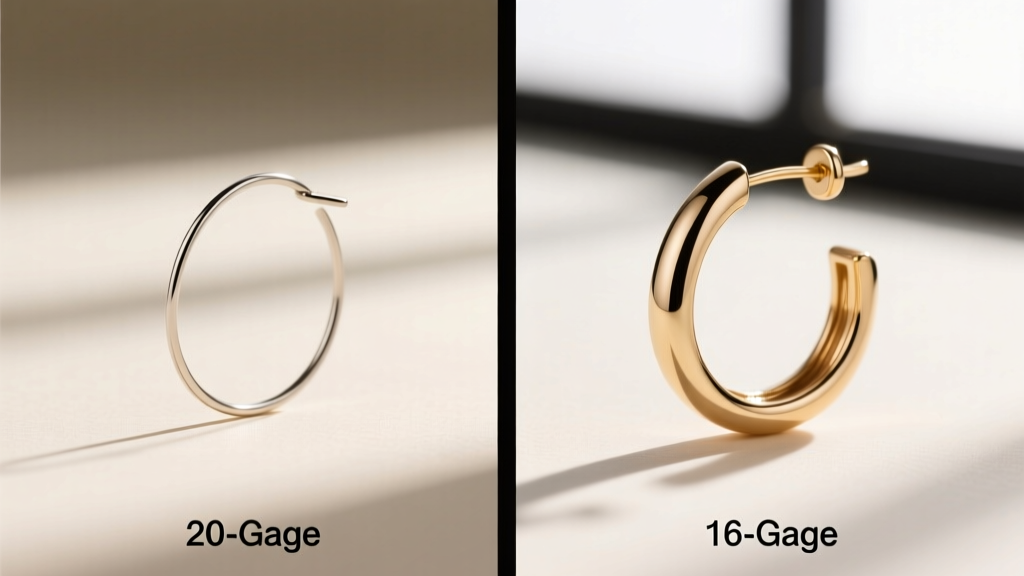
If you frequently wear heavy statement pieces, you should consult a professional piercer about gradually stretching your standard lobe piercings from a 20-gauge (0.81mm) to a 16-gauge (1.29mm) or even 14-gauge (1.63mm). A thicker wire drastically reduces the cheese cutter effect. Many high-end jewelers now offer custom wire swapping services, replacing flimsy mass-market French wires with sturdy, custom-bent 16-gauge niobium or implant-grade titanium wires that can safely support weights up to 15 grams.
3. The Silicone O-Ring Friction Lock
Heavy hoops often pull forward, causing the earring to sit at an awkward, drooping angle. To troubleshoot this, slide a small, 1mm thick silicone O-ring onto the earring wire before securing the backing. The O-ring creates friction against the back of the lobe, forcing the heavy earring to sit flush and upright against the ear, preventing the 'droopy' look that plagues heavy chandelier styles.
Material Density and Weight Specifications
Not all oversized earrings weigh the same. The material composition plays a massive role in how much stress is placed on your tissue. When shopping for bold statement pieces, use this reference table to understand the weight implications of different materials.
| Material | Density / Weight Profile | Max Recommended Continuous Wear | Best For |
|---|---|---|---|
| Hollow Brass / Base Metal | High (Heavy even when hollow) | 2-3 Hours | Short-term editorial shoots, parties |
| Sterling Silver (Solid) | Medium-High | 4-5 Hours | Dinners, evening events |
| 14k/18k Gold (Solid) | Very High (Extremely dense) | 2 Hours (unless hollowed) | Small to medium bold hoops |
| Implant-Grade Titanium | Low (45% lighter than steel) | 8+ Hours | Massive oversized hoops, all-day wear |
| Acrylic / Resin | Ultra-Low | 12+ Hours | Giant sculptural drops, festival wear |
As highlighted by dermatological guidelines from the American Academy of Dermatology (AAD), prolonged wear of heavy, nickel-containing base metals can also trigger severe contact dermatitis, compounding the physical trauma of the weight with allergic inflammation. Always opt for titanium or high-karat gold for heavy pieces that will be worn for more than a few hours.
Styling Bold Earrings Without Overdoing It
Troubleshooting heavy earrings isn't just about physical comfort; it is also about visual balance. The key to pulling off massive, dramatic hoops and drops without looking overwhelmed by the jewelry is contrast. If you are wearing shoulder-grazing chandelier drops, keep your neckline bare. A deep V-neck or an off-the-shoulder top provides the necessary negative space to let the earrings breathe. Avoid high collars, turtlenecks, or busy patterns that will visually clash with the intricate metalwork of a heavy statement piece. Furthermore, pull your hair back into a sleek updo or a tight braided style; this not only prevents hair from tangling in heavy earring clasps (a major cause of accidental lobe tearing) but also frames the face to highlight the jewelry.
When to See a Professional: Lobe Repair
If you have ignored the warning signs of lobe fatigue and your piercing has elongated into a slit, or if the tissue has completely split, it is time to stop wearing heavy earrings and seek professional help. Minor elongation can sometimes be reversed by removing all jewelry for 4 to 6 weeks and massaging the lobe daily with pure jojoba or vitamin E oil to encourage tissue elasticity and collagen remodeling. However, a fully split lobe will not heal on its own. You will need to consult a board-certified dermatologist or a plastic surgeon who specializes in earlobe reconstruction. The in-office procedure is a minor surgical repair that takes under 30 minutes under local anesthesia, but it requires a strict 3-month healing period before you can even consider re-piercing. Protect your lobes today so you can keep wearing your favorite bold, maximalist statement pieces for decades to come.


