Block Earrings 2026: The Architectural Jewelry Trend Explained
Discover the 2026 block earrings trend. Explore architectural shapes, premium materials, face-shape matching, and how to style chunky geometric drops.

The Shift to Brutalist Chic: Why Block Earrings Are Dominating
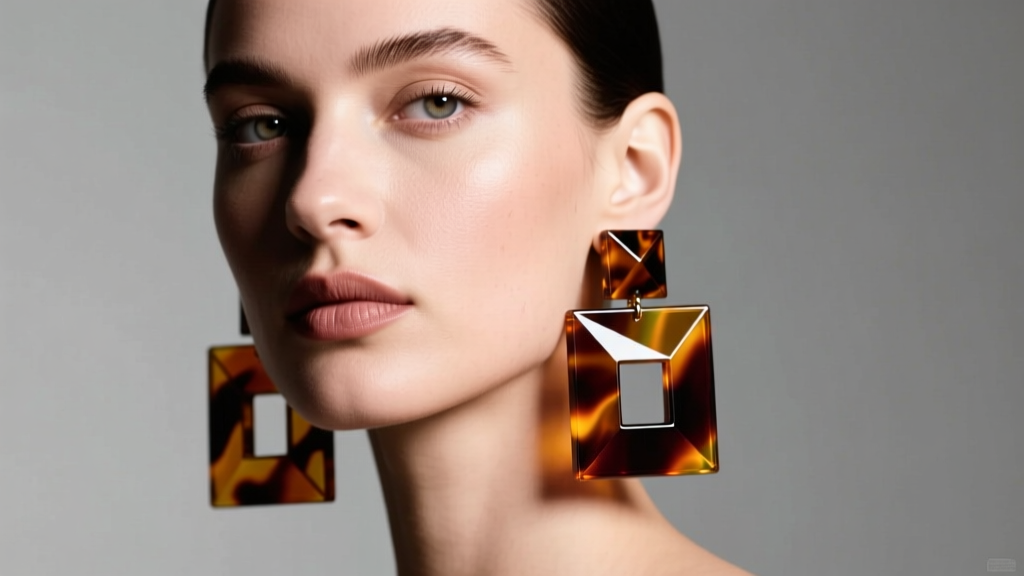
The jewelry landscape of 2026 has decisively pivoted away from the ultra-minimalist, barely-there studs of the early 2020s. In their place, structural maximalism has taken root, and at the forefront of this movement are block earrings. Characterized by their bold, geometric silhouettes, architectural lines, and unapologetic volume, block earrings are no longer just a niche avant-garde statement—they are a staple of contemporary styling. According to trend forecasters at Vogue, the modern consumer is gravitating toward 'brutalist chic,' seeking jewelry that mimics the clean lines and imposing presence of mid-century modern architecture and contemporary sculpture.
But pulling off a heavy, angular earring requires more than just a bold wardrobe. It demands an understanding of material science, weight distribution, and facial geometry. This comprehensive guide breaks down everything you need to know about selecting, wearing, and preserving your earlobes while rocking the block earring trend.
Material Science: Acetate vs. Resin vs. Cast Metals
Not all block earrings are created equal. Because the design inherently requires volume, the choice of material dictates not only the aesthetic depth of the piece but also its wearability and hypoallergenic properties.
1. Cellulose Acetate (The Premium Standard)
Derived from plant-based cellulose (often cotton or wood pulp), Italian-made cellulose acetate (such as Mazzucchelli 1849) is the gold standard for high-end block earrings. It is naturally hypoallergenic, incredibly durable, and boasts a deep, marbled translucency that cheap plastics cannot replicate. Acetate blocks are hand-polished, resulting in smooth, glass-like edges that catch the light beautifully.
2. Cast Brass and Bronze (The Heavyweights)
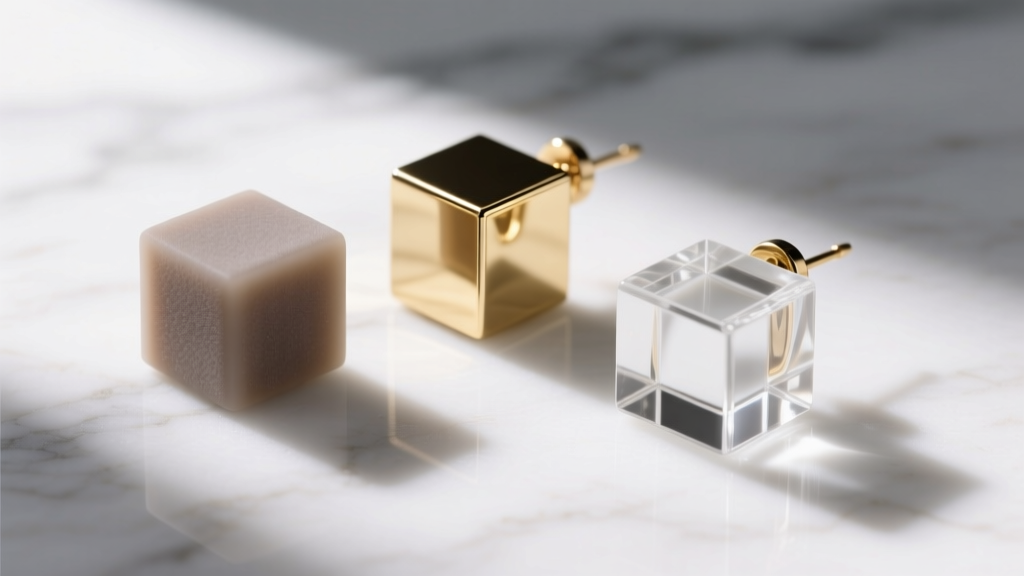
For those who prefer the cold, industrial feel of metal, cast brass offers a substantial, premium weight. However, raw brass can oxidize and cause skin discoloration. Always look for block earrings crafted from solid brass that has been heavily plated in 18k gold vermeil (a minimum of 2.5 microns of gold over sterling silver or brass) or rhodium to prevent tarnishing and contact dermatitis.
3. Epoxy Resin and Acrylic (The Budget Alternatives)
While acrylic and resin allow for hyper-vibrant, opaque colorways and embedded elements (like dried botanicals or gold leaf), they come with caveats. Acrylic is petroleum-based and can trigger allergic reactions in sensitive, freshly healed lobes. Furthermore, resin is prone to micro-scratches and UV-yellowing over time. If opting for resin, seek out UV-stabilized, jewelry-grade epoxies.
| Material | Avg. Weight (per earring) | Durability & Scratch Resistance | Hypoallergenic? | Price Range (USD) |
|---|---|---|---|---|
| Cellulose Acetate | 12g - 25g | High (Polishable) | Yes | $65 - $180 |
| Cast Brass (Plated) | 25g - 45g | Very High (Prone to tarnish if unplated) | Depends on Plating | $80 - $250 |
| Epoxy Resin | 10g - 20g | Medium (Scratches easily) | Mostly | $40 - $120 |
| Acrylic | 5g - 15g | Low (Cracks under pressure) | No (Petroleum-based) | $15 - $50 |
The Physics of the Dangle: Weight Distribution and Lobe Health
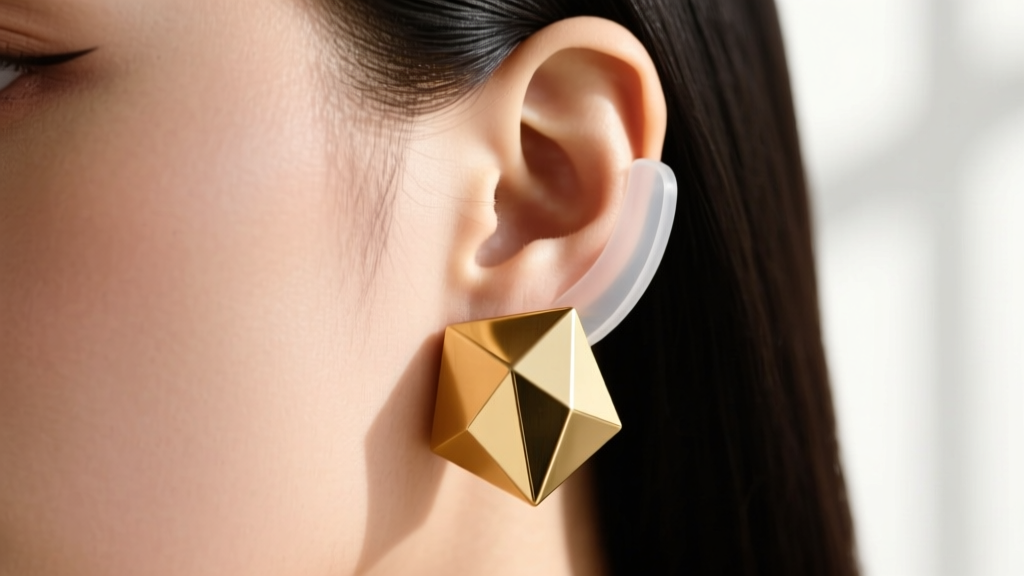
The most critical, yet frequently overlooked, aspect of wearing block earrings is the kinetic load they place on the earlobe fistula (the piercing hole). A static weight of 30 grams might feel manageable when you are sitting still. However, walking, turning your head, or dancing introduces a 'pendulum effect.' The kinetic force generated by a swinging 2-inch block earring can momentarily exert upward of 60 grams of dynamic pull on the lobe.
Preventing the 'Cheese-Wire' Effect
Over time, this repetitive stress causes the piercing to stretch, migrate downward, or even tear completely—a phenomenon colloquially known as the cheese-wire effect. Dermatologists and piercing professionals at Healthline note that chronic traction from heavy jewelry is a leading cause of acquired earlobe clefts, which often require surgical repair.
Actionable Solutions for Heavy Blocks:
- Upgrade the Wire Gauge: Standard earrings use 20-gauge (0.81mm) or 18-gauge (1.02mm) wire. For block earrings, demand a thicker post. A 16-gauge (1.29mm) wire or a sturdy, thick leverback clasp provides the structural rigidity needed to prevent the wire from bending and digging into the fistula.
- Use Silicone Support Patches: Adhesive silicone patches (like BlingDots) or thick silicone O-ring backers distribute the weight across the back of the earlobe rather than concentrating it on the piercing hole.
- Opt for a Chained Harness: For ultra-heavy architectural metal blocks, look for designs that incorporate a delicate ear-chain or cuff harness that wraps around the upper cartilage, transferring the weight away from the lobe entirely.
Facial Geometry: Matching Angularity to Your Profile
Block earrings are inherently angular, but the specific geometry of the block should be chosen to complement, rather than clash with, your natural bone structure. Here is a stylist's framework for matching block silhouettes to face shapes:
Round and Oval Faces
Round faces benefit from the sharp, elongating lines of rectangular or pillar-style block earrings. A drop measuring 2 to 3 inches in length creates a vertical illusion that slims the jawline. Oval faces possess balanced proportions and can easily pull off perfectly cubic or asymmetrical stacked blocks without overwhelming their features.
Square and Heart-Shaped Faces
If you have a strong, angular jawline, wearing sharp, 90-degree cubic blocks can make your features look overly severe. Instead, look for block earrings with chamfered (beveled) edges or rounded corners. A softened, pill-shaped block or a hexagonal geometric drop provides the architectural volume you want while harmonizing with your natural angles. Heart-shaped faces should avoid excessively wide blocks that sit right at the cheekbone, opting instead for longer, narrower drops that draw the eye downward.
Stylist Tip: When wearing statement block earrings, keep the rest of your jewelry minimal. Let the architectural drops serve as the focal point, pairing them with a simple, flush-set diamond or plain gold band in your secondary piercings.
Cartilage vs. Lobe: Can You Wear Block Earrings Up High?
Traditionally, block earrings are strictly a lobe affair due to their weight and dangling nature. However, the 2026 trend cycle has seen the emergence of the cartilage block stud—smaller, solid geometric shapes designed for the helix or flat piercing.
If you are adapting the block trend for cartilage, the mechanics change entirely. Cartilage cannot handle swinging kinetic loads. Therefore, these pieces must be rigid, threadless, or internally threaded flat-back labret posts. You will need a post thickness of 16-gauge (1.2mm) or 14-gauge (1.6mm) to prevent the jewelry from rejecting or migrating. According to the Association of Professional Piercers (APP), ensuring the post length is perfectly fitted (usually 6mm to 8mm for healed cartilage) is vital so that the flat back does not press into the tissue and cause pressure necrosis or irritation bumps.
Curating Your 2026 Block Earring Wardrobe
Investing in block earrings is about acquiring wearable art. When shopping, prioritize brands that disclose their material origins—such as specifying 'Italian cellulose acetate' or 'nickel-free cast brass.' Expect to pay between $80 and $200 for artisan-crafted, hand-polished pieces that will maintain their structural integrity and visual depth for years.
Whether you opt for a towering pillar of translucent tortoiseshell acetate for a daytime gallery opening, or a heavy, chamfered brass cube for an evening out, block earrings offer a masterclass in modern proportion. By respecting the physics of the drape, choosing hypoallergenic materials, and aligning the geometry with your facial structure, you can confidently anchor your 2026 wardrobe with the era's most defining architectural trend.


