Army Earring Policy 2026: Beginner Guide to Military Rules
Master the 2026 army earring policy with our beginner guide. Learn AR 670-1 rules, compliant materials, gauge limits, and field-safe backings.

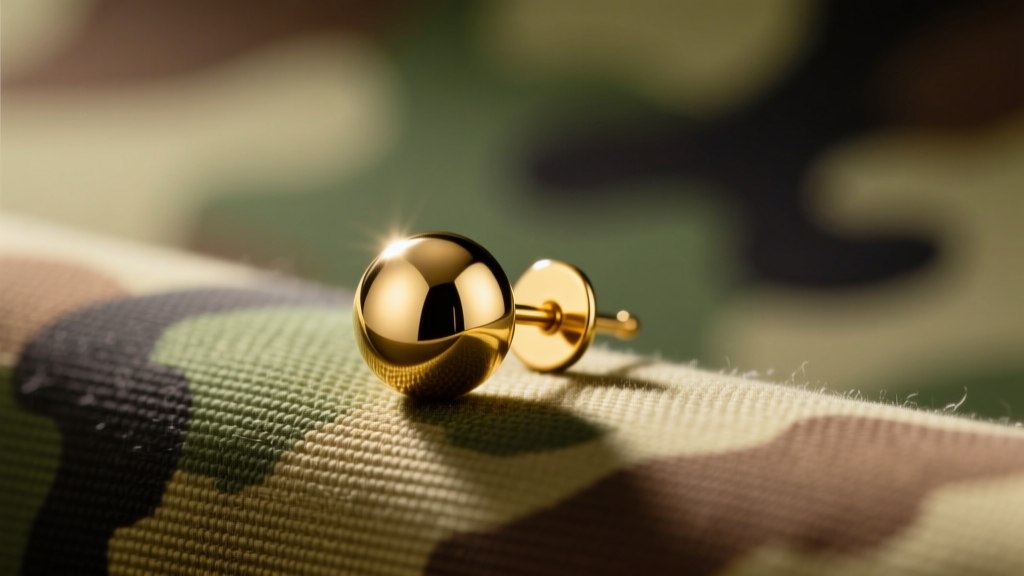
Transitioning from civilian life to military service requires a massive wardrobe overhaul, and your jewelry box is no exception. For new recruits, active-duty personnel, and reservists, navigating the army earring policy can be surprisingly complex. The rules governing what you can wear, when you can wear it, and what materials are safe for field environments are strictly outlined in Army Regulation 670-1 (Wear and Appearance of Army Uniforms and Insignia). In 2026, with updated grooming standards and a renewed focus on uniform compliance, understanding these regulations is critical to avoid disciplinary counseling or uniform violations.
This beginner-friendly explainer will decode the official military jewelry rules, break down the material science of field-safe earrings, and help you build a compliant, hypoallergenic jewelry capsule that survives everything from the barracks to the field.
Decoding AR 670-1: The Non-Negotiable Earring Rules
The foundation of the army earring policy is found in Army Regulation 670-1. The military prioritizes safety, uniformity, and professionalism. Dangling, oversized, or flashy jewelry poses snag hazards in combat environments and detracts from the standardized military appearance. Here are the absolute baseline rules for female soldiers (as male soldiers are currently prohibited from wearing earrings in any uniform):
- Size Limit: Earrings must not exceed 6 millimeters (approximately 1/4 inch) in diameter. This is roughly the size of a standard pencil eraser.
- Authorized Shapes: Only spherical (round) studs are permitted. Teardrops, cubes, hearts, and geometric shapes are strictly prohibited.
- Authorized Materials: Earrings must be gold, silver, or diamond. Clear gemstones that mimic diamonds are generally tolerated if they are conservative, but opaque colored stones (like rubies or emeralds) are unauthorized.
- Placement: Earrings must be centered on the earlobe. Cartilage piercings, tragus piercings, and helix studs are entirely unauthorized while in uniform.
- Quantity: Only one earring per ear is authorized.
Civilian vs. Army Compliant Earrings: A Quick Comparison
| Feature | Civilian Everyday Jewelry | Army Compliant Jewelry (AR 670-1) |
|---|---|---|
| Diameter | 8mm - 15mm+ (Hoops, large studs) | Maximum 6mm (1/4 inch) |
| Style | Dangles, hoops, huggies, ear cuffs | Spherical studs only |
| Placement | Lobe, cartilage, helix, tragus | Centered on the earlobe only |
| Metals | Plated brass, sterling silver, rose gold | Solid 14k/18k Gold, Platinum, Silver, Diamond |
The Mechanics of Backings: Why Friction Backs Fail in the Field
One of the most overlooked aspects of the army earring policy is the backing mechanism. While AR 670-1 mandates that earrings must have a secure backing to prevent loss, it doesn't explicitly ban specific civilian mechanisms. However, from a practical and hygienic standpoint, the standard 'butterfly' friction back is a liability for active-duty soldiers.
Friction backs rely on the tension of two small metal prongs gripping a notched post. In field environments—where you are sweating, wearing heavy Kevlar helmets, and dealing with dust and MRE grime—these prongs easily loosen. Furthermore, the crevices of a butterfly back trap dead skin, sebum, and field dirt, creating a breeding ground for bacterial infections and contact dermatitis.

The Superior Alternative: Internally Threaded Flat-Backs
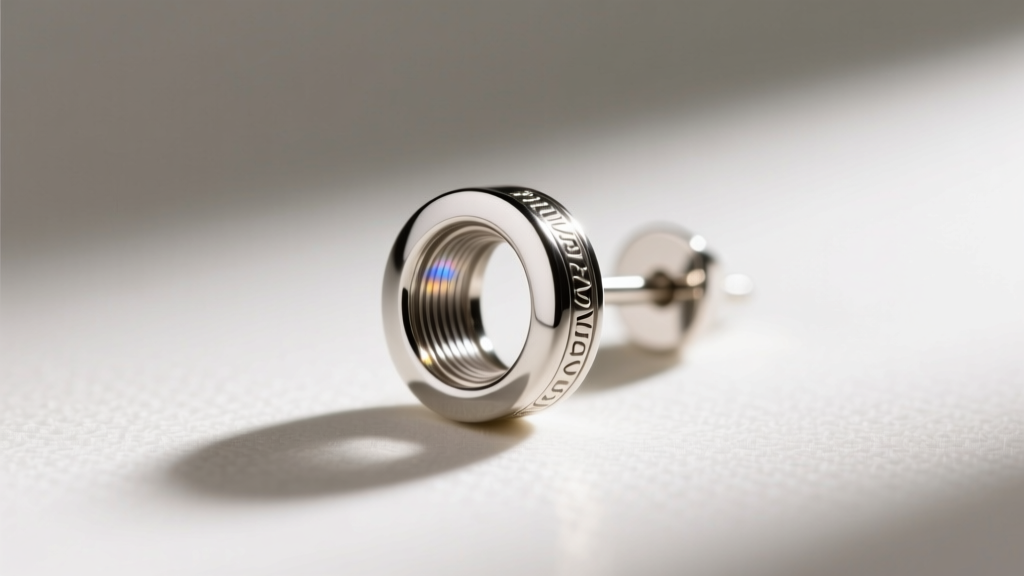
For 24/7 wear in the barracks and the field, military jewelry experts highly recommend switching to internally threaded flat-back labret studs. Unlike traditional posts that feature external threading (which tears the piercing fistula when inserted), internal threading means the screw mechanism is on the back of the post. The flat disc sits flush against the back of the earlobe, meaning it will never snag on a helmet strap, backpack, or pillow. According to Military.com uniform guidelines, maintaining a neat and snag-free appearance is paramount, making flat-backs the ultimate tactical choice.
Material Science: Surviving Sweat, Dirt, and 24/7 Wear
The army earring policy dictates 'gold or silver,' but it doesn't specify the metallurgical grade. This is where many beginners make a costly mistake. Buying cheap 'gold-plated' or 'surgical steel' earrings from mall kiosks will lead to rapid tarnishing, green skin, and severe allergic reactions when exposed to the high-sweat environment of Army Physical Training (PT).
Why 'Surgical Steel' is a Trap
The term 'surgical steel' (usually 316L stainless steel) is largely a marketing myth in the jewelry industry. 316L steel contains up to 10% nickel. When a soldier sweats during a 12-mile ruck march or a grueling PT session, the salt in their sweat breaks down the passive oxide layer on the steel, leaching nickel directly into the piercing. This causes nickel contact dermatitis, resulting in itchy, weeping, and swollen earlobes that may force you to remove your earrings entirely, risking a uniform violation.
The Gold Standard: Implant-Grade Titanium (ASTM F136)
If you have sensitive skin or want a silver-colored earring that will survive a deployment without tarnishing, you must look for ASTM F136 compliant implant-grade titanium. This specific alloy contains zero nickel, is highly resistant to saltwater and sweat corrosion, and is lightweight enough that you will forget you are wearing it. While the Army requires 'silver' colored metals to be actual silver, many commanding officers accept high-polish titanium as it visually mimics white gold or platinum while offering vastly superior biocompatibility.
If you prefer gold, opt for solid 14k or 18k gold. Avoid anything below 14k, as higher karat gold is softer, but 10k gold contains too many alloyed base metals (like copper and zinc) which will oxidize and turn your earlobes black in humid, field conditions.
Grooming, Gauges, and Disciplinary Action
A critical component of the army earring policy that frequently catches recruits off guard involves stretched earlobes, commonly known as 'gauges.' AR 670-1 explicitly prohibits any jewelry or body modifications that stretch the earlobe or create an unnatural hole.
If you enter basic training with stretched lobes (even if you remove the plugs), the visible hole can be deemed a grooming violation. Drill Sergeants and chain-of-command inspectors are trained to look for lobe elasticity and visible gaps. Soldiers with stretched lobes are often subjected to mandatory counseling, and in severe cases, may be required to undergo reconstructive lobe surgery at their own expense to remain compliant with military grooming standards. If you are considering joining the military, it is highly advised to never stretch your lobes beyond a standard 18-gauge or 16-gauge piercing size.
Building Your Military-Compliant Jewelry Capsule
To ensure you are always prepared for morning formation, dress uniform events, and field rotations, build a dedicated 'duty capsule' consisting of the following three pairs:
- The Daily Beater (Field & ACU): A pair of 6mm, high-polish ASTM F136 titanium flat-back studs with a 1.2mm (16-gauge) post. These are sweat-proof, snag-proof, and hypoallergenic.
- The Class A/B Dress Uniform Pair: A pair of 6mm solid 14k yellow gold or white gold spherical studs with secure screw-on backings. These provide the traditional, polished look required for formal military events.
- The PT Backup Pair: A pair of inexpensive 4mm clear cubic zirconia or diamond studs with friction backs, kept in your gym bag. If you lose your primary pair during a chaotic morning PT session, you have an immediate, compliant backup to avoid a uniform violation at formation.
Final Thoughts on Compliance and Care
Mastering the army earring policy is about more than just avoiding a reprimand from your squad leader; it is about adapting your personal care routine to the demanding realities of military service. By investing in high-quality, biocompatible metals and secure, tactical backings, you ensure your piercings remain healthy, closed, and perfectly compliant with AR 670-1. Remember to clean your flat-back earrings weekly with a sterile saline solution to prevent the buildup of field dust and sebum, ensuring your jewelry remains as disciplined and professional as you are.


