How to Choose Art Deco Bridal Earrings: A Buyer's Guide
Discover how to choose authentic and vintage-inspired art deco bridal earrings. Learn about gem cuts, metal grades, and styling for your wedding day.

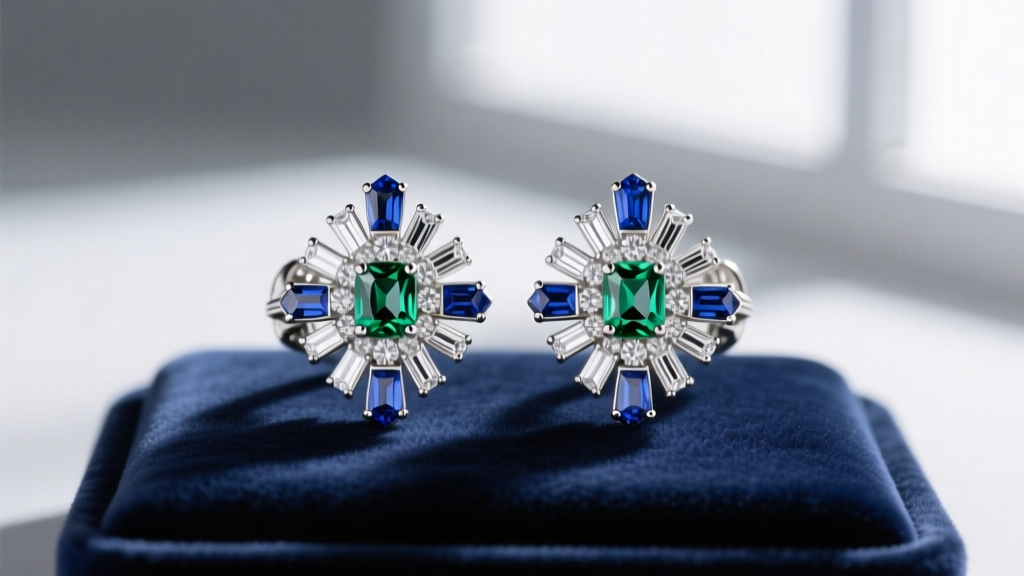
The Allure of 1920s Glamour in Modern Bridal Jewelry
When it comes to wedding day accessories, few styles command the room quite like art deco bridal earrings. Originating from the 1925 Exposition Internationale des Arts Décoratifs et Industriels Modernes in Paris, the Art Deco movement rejected the flowing, organic lines of the preceding Art Nouveau era in favor of sharp geometry, bold symmetry, and high-contrast color palettes. For the 2026 bride, these earrings offer a perfect blend of historical romance and architectural elegance. However, navigating the market requires a discerning eye. Whether you are hunting for an authentic 1920s estate piece or a modern vintage-inspired reproduction, understanding the metallurgy, gemology, and structural mechanics of these earrings is crucial to making a sound investment.
Decoding the Design: Hallmarks of True Art Deco Earrings
Geometric Symmetry and Bold Lines
The defining characteristic of any authentic Art Deco piece is its rigid adherence to symmetry and geometric motifs. Look for stepped patterns, sunburst arrangements, and chevron shapes. Unlike later vintage styles that favored floral or abstract motifs, Deco jewelry is architectural. The metalwork often features intricate filigree—delicate, lace-like wirework that is painstakingly soldered into place. Additionally, you should examine the edges of the metal settings for milgrain detailing, a technique where tiny beads of metal are applied to the borders of the setting to create a textured, vintage halo effect around the gemstones.
Signature Gemstone Cuts and Materials
The gemology of the 1920s and 1930s was distinct. According to the Gemological Institute of America (GIA), the round brilliant cut we know today was still in its developmental infancy. Instead, authentic art deco bridal earrings heavily feature Old European Cut (OEC) diamonds, which possess a smaller table, a higher crown, and a prominent culet, giving them a chunky, romantic sparkle that differs vastly from modern stones. Furthermore, the era popularized the use of calibré-cut gemstones—custom-faceted sapphires, rubies, or emeralds cut to fit seamlessly into a specific geometric halo or channel without any gaps.
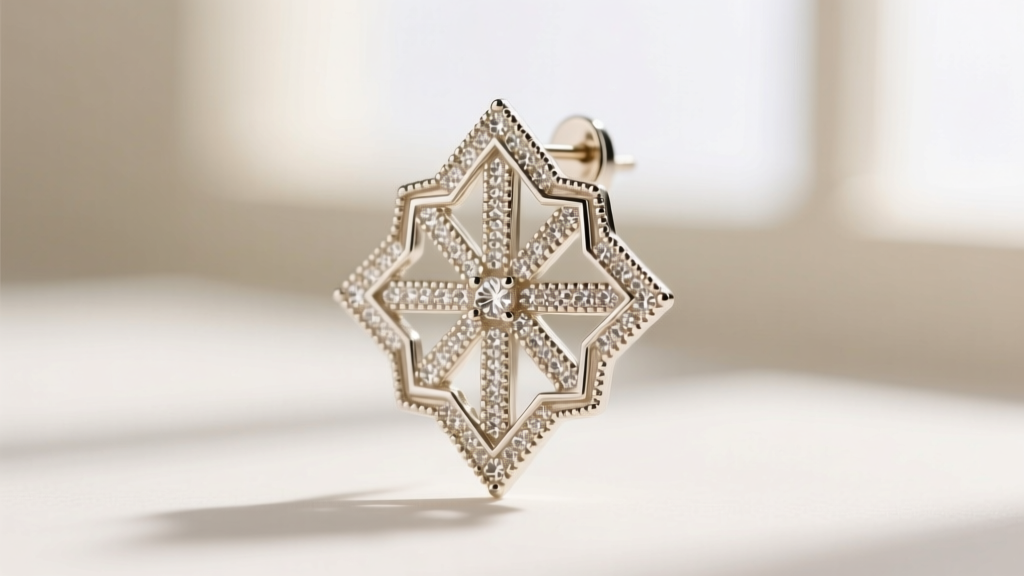
Material Matters: Metals and Gemstones to Look For
The choice of metal in Art Deco jewelry was deliberate, designed to enhance the stark white brilliance of diamonds and the deep hues of contrasting gemstones. While yellow gold was occasionally used, white metals dominated the era. Below is a breakdown of what to expect in the current market.
| Metal Type | Purity Standard | Era Authenticity | 2026 Market Price Range |
|---|---|---|---|
| Platinum | 900 or 950 Pt | High (1920s-1930s Standard) | $$$$ (Premium Estate) |
| 18k White Gold | 750 Au | Medium (Often Rhodium Plated) | $$$ (High-End Reproduction) |
| 14k White Gold | 585 Au | Low (Modern Mass-Market) | $$ (Accessible Bridal) |
In 2026, the rise of precision CNC cutting and lab-grown diamonds has made highly intricate, vintage-inspired calibré-cut halos much more accessible. Brides no longer need to pay exorbitant premiums for custom natural stone cutting to achieve the flawless geometric pavé seen in original 1930s pieces.
Authentic Vintage vs. Vintage-Inspired: What’s the Difference?
One of the most common pitfalls for bridal shoppers is confusing a modern reproduction with an authentic antique. As detailed by Antique Jewelry University, true vintage pieces will show specific signs of age and historical manufacturing techniques. Hand-fabricated platinum settings from the 1920s will have microscopic tool marks and slightly asymmetrical filigree on the reverse side, proving they were carved in wax or soldered by hand rather than cast from a modern 3D-printed mold.
Conversely, vintage-inspired pieces offer structural benefits. Antique earrings often feature thin, fragile posts and outdated shepherd-hook clasps that can easily slip out. Modern reproductions maintain the visual grandeur of the Deco era but utilize secure, laser-welded leverbacks and thicker posts, ensuring your earrings survive the dancing portion of your wedding reception without incident.
Practical Fit: Weight, Gauges, and Backings
Art Deco chandelier and drop earrings are notoriously heavy. A fully pavéed platinum geometric drop can easily weigh between 12 and 18 grams per earring. This weight introduces specific structural challenges that you must address before purchasing.
- Post Gauge Thickness: Standard modern earrings use a 20-gauge (0.81mm) post. However, for a 15-gram Deco drop, a 20-gauge wire will bend under the dynamic weight of movement. Look for vintage-inspired pieces that utilize an 18-gauge (1.02mm) or even a 16-gauge (1.29mm) post to ensure the metal does not warp over time.
- Omega Backs: For heavy chandelier styles, standard friction push-backs (butterfly backs) will fail, causing the earring to droop or fall out. High-quality Deco reproductions use Omega backs, which feature a hinged, curved wire that snaps securely into a V-shaped catch, distributing the weight across the earlobe rather than relying solely on the pierced hole.
- Earlobe Support: If you fall in love with an authentic, heavy antique pair with a fragile post, consider having a jeweler retrofit them with a modern French wire, or wear them as clip-ons over a pierced ear to provide structural reinforcement.
Styling Art Deco Earrings with Your Wedding Day Look
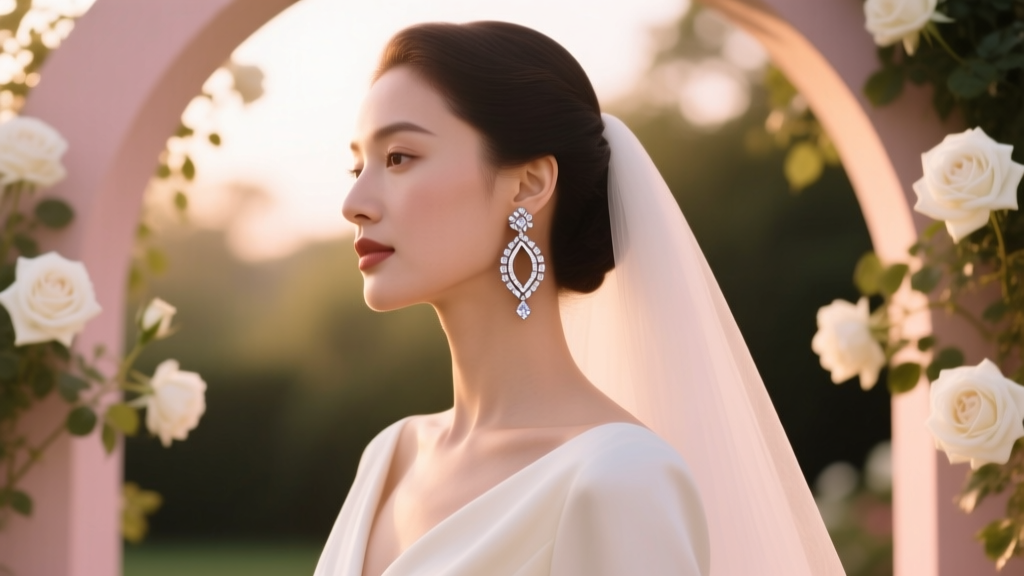
Because Art Deco earrings are visually loud and structurally elongated, they require strategic styling to avoid overwhelming your bridal silhouette. The sharp, downward-pointing geometry of Deco drops is exceptionally flattering for brides with round or square face shapes, as the vertical lines help elongate the facial profile.
When it comes to necklines, these earrings pair best with strapless, sweetheart, or deep-V gowns that leave the décolletage and neck exposed. If you are wearing a high-neck halter or a heavily beaded illusion neckline, opt for smaller Art Deco stud clusters or geometric huggies rather than long chandeliers to prevent your look from becoming visually cluttered. Finally, an elegant, swept-up chignon or a sleek, low-slung Hollywood wave is mandatory; wearing your hair down risks tangling the intricate filigree of the earrings and hiding the exquisite milgrain detailing from your wedding photographer.
Final Checklist Before You Buy
Before finalizing your purchase, run your prospective earrings through this expert checklist to ensure they meet both aesthetic and functional standards:
1. Verify the Metal: Look for hallmarks such as 'PT950' or '18K'. If buying antique platinum, ensure it is not heavily worn down at the post.
2. Inspect the Prongs: Vintage prongs can become brittle. Ensure the gemstones do not rattle when gently tapped.
3. Check the Clasp Mechanics: Test the tension on leverbacks and Omega clasps. They should snap shut with a firm, audible click.
4. Assess the Weight: Hold the earrings against your own earlobes in the store to ensure the weight is tolerable for an 8-hour wear.
By prioritizing structural integrity alongside historical aesthetics, you will secure a pair of art deco bridal earrings that not only honor the glamour of the Jazz Age but also perform flawlessly on your modern wedding day.


