Brushed Silver Earrings: A Technical Guide to Finishes & Grades
Discover the metallurgy behind brushed silver earrings. Explore sterling grades, satin finishing techniques, gauge specs, and expert tarnish prevention.

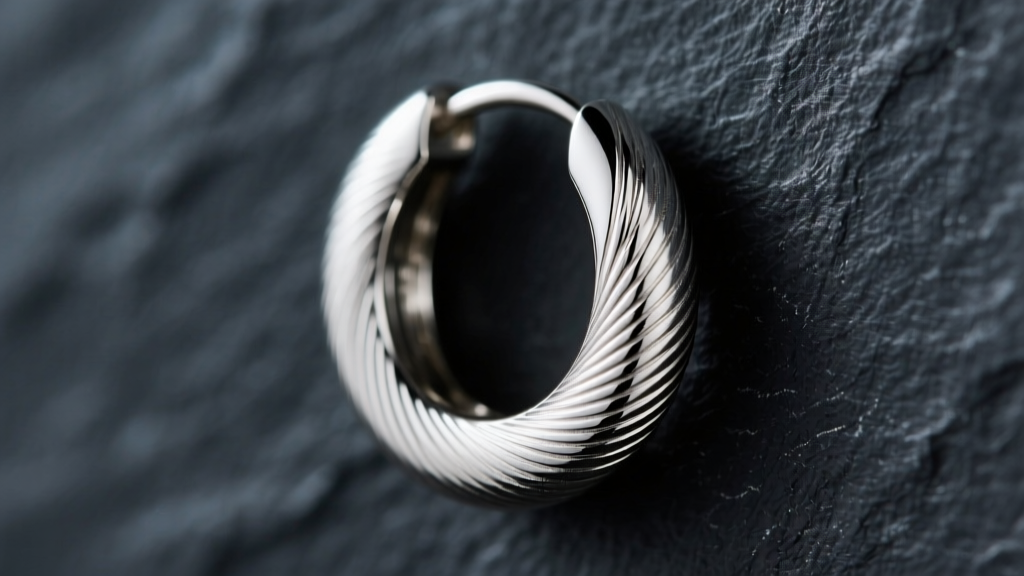
When evaluating fine jewelry, the surface finish of a metal is just as critical as its underlying alloy composition. Brushed silver earrings represent a unique intersection of metallurgy and aesthetic engineering. Unlike high-polish finishes that rely on specular reflection to create brilliance, a brushed or satin finish manipulates surface topology to diffuse light, resulting in a sophisticated, understated matte appearance. However, this physical alteration of the metal's surface introduces specific mechanical and chemical considerations that every discerning collector and jewelry professional must understand.
In this expert deep dive, we will deconstruct the technical specifications of brushed silver finishes, analyze the metallurgical differences between standard sterling and modern Argentium alloys, and provide precise gauge and maintenance frameworks for long-term wear.
The Science of the Satin Finish: Surface Topology and Abrasives
A brushed finish is not merely a visual effect; it is a controlled series of microscopic scratches applied to the metal's surface. By dragging hard abrasives across the silver in a uniform direction, jewelers create parallel grooves that scatter incoming light rays. This diffusion eliminates the mirror-like glare of polished silver, replacing it with a soft, luminous sheen that excels at concealing minor wear-and-tear scratches acquired during daily use.
According to technical guidelines from Rio Grande Jewelry Supply, the exact grit size of the abrasive dictates the coarseness and depth of the brush lines. The industry standard for premium brushed silver earrings typically falls between 120-grit and 400-grit.
- 120 to 180 Grit (Heavy Satin): Produces deeper, more visible striations. Often used for rugged, industrial, or masculine earring designs. The deeper grooves increase the surface area significantly.
- 220 to 320 Grit (Standard Brushed): The sweet spot for most commercial and artisan fine jewelry. It provides a distinct directional grain while maintaining a relatively smooth tactile feel against the skin.
- 400+ Grit (Fine Matte/Satin): Creates a velvety, almost frosted appearance. The micro-grooves are so shallow that they diffuse light evenly without visible linear patterns to the naked eye.
Jewelers achieve these finishes using various tools, from traditional brass wire brushes and Scotch-Brite radial bristle discs to advanced sandblasting cabinets that use aluminum oxide media for a non-directional, randomized matte texture.
Metallurgical Realities: 925 Sterling vs. 935 Argentium
The physical grooves created by brushing profoundly impact how the silver interacts with its environment. To understand this, we must examine the alloy itself. Pure silver (Ag) is too soft for structural jewelry, necessitating the addition of alloying metals. The Gemological Institute of America (GIA) notes that traditional Sterling Silver (925) consists of 92.5% pure silver and 7.5% copper. While copper provides necessary tensile strength, it is highly reactive to sulfur and moisture, leading to silver sulfide tarnish.
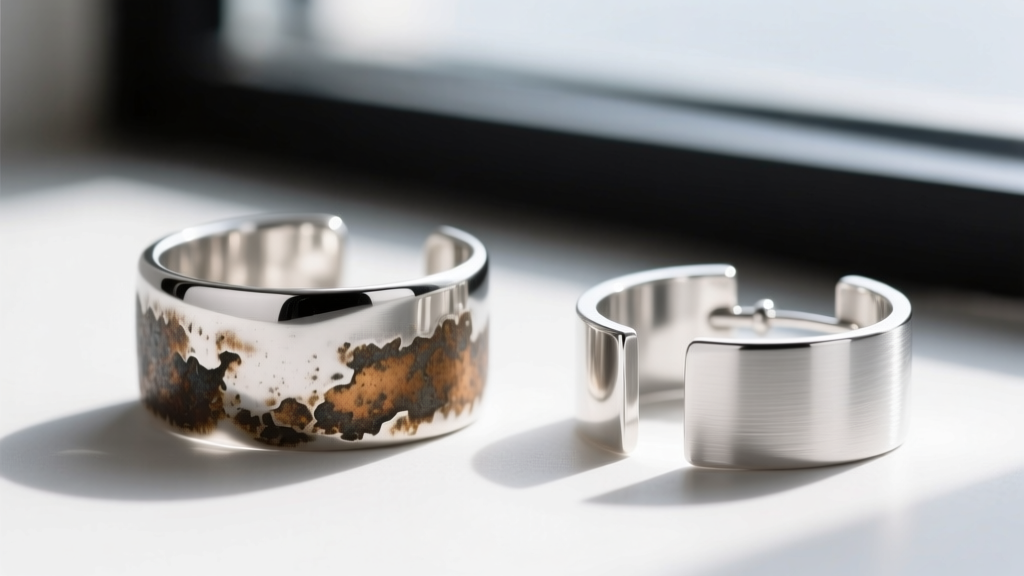
Because a brushed finish inherently increases the total surface area of the earring by creating microscopic valleys and peaks, traditional 925 sterling silver is more susceptible to localized tarnishing in the grooves where sulfur compounds can accumulate. This is where modern metallurgy offers a superior alternative for brushed styles: Argentium Silver.
| Alloy Grade | Composition | Surface Topology Impact | Tarnish Resistance |
|---|---|---|---|
| 925 Sterling | 92.5% Ag, 7.5% Cu | Grooves trap sulfur/moisture | Low (Requires frequent maintenance) |
| 935 Argentium | 93.5% Ag, Cu, Germanium | Germanium oxide layer protects grooves | High (Highly resistant to Ag2S) |
| 950 Platinum/Silver | 95% Ag, 5% Pd/Pt | Extremely stable in micro-grooves | Very High (Premium tier) |
Argentium replaces a portion of the copper with germanium. When exposed to oxygen, germanium forms a transparent, self-replenishing oxide layer on the surface of the metal. In brushed silver earrings, this protective layer coats the microscopic peaks and valleys of the brush lines, drastically reducing the galvanic reactions that cause traditional sterling to turn black.
Technical Specifications: Gauge, Weight, and Piercing Compatibility
The structural integrity of brushed silver earrings is heavily dependent on wire gauge and the work-hardening process. Silver naturally work-hardens when bent or manipulated. A jeweler creating a brushed seamless hoop must anneal (heat and soften) the metal to shape it, then apply the brushed finish, and finally tumble or lightly work-harden the piece to ensure it retains its circular tension.
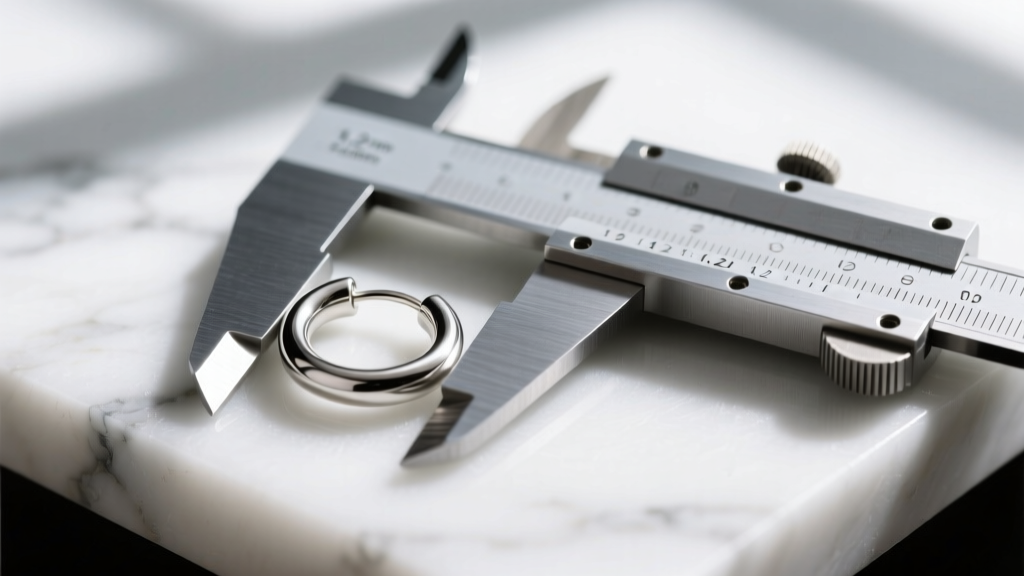
Standard Gauge Chart for Brushed Styles
Selecting the correct gauge is critical for both the visual proportion of the brushed texture and the biomechanical health of the piercing fistula.
- 20 Gauge (0.81mm): Primarily used for lightweight, delicate brushed threadless ends or friction-back studs. The surface area is too narrow for heavy directional brushing, often resulting in a sandblasted or fine matte finish instead.
- 18 Gauge (1.02mm): The standard for most commercial brushed huggies and small cartilage hoops. Provides enough surface width to display distinct, unidirectional brush lines.
- 16 Gauge (1.29mm): The gold standard for high-end brushed cartilage jewelry, seamless clickers, and daith earrings. The 1.29mm thickness allows jewelers to use 220-grit abrasives without compromising the structural core of the wire.
- 14 Gauge (1.63mm): Reserved for heavy statement pieces, industrial barbells, or stretched lobe jewelry. The wide surface area accommodates complex cross-hatched brushing patterns and deep satin textures.
Expert Note: When purchasing brushed silver clicker hoops for cartilage, always verify the internal diameter (ID) and hinge mechanism. A poorly machined hinge on a 16-gauge brushed clicker can create a microscopic burr that will irritate the piercing channel, regardless of how flawless the external satin finish appears.
Maintenance: Preserving the Matte Texture Without Ruining the Topology
The most common mistake consumers make with brushed silver earrings is attempting to clean them using methods designed for high-polish jewelry. Using a traditional silver polishing cloth (which contains mild abrasive compounds like jeweler's rouge) on a brushed surface will gradually burnish the microscopic peaks, effectively polishing out the brush lines and leaving the earring with an uneven, patchy shine.
The Golden Rule of Matte Maintenance: Never use abrasive polishing cloths or liquid chemical silver dips on brushed jewelry. Chemical dips can leave microscopic crystalline residues trapped in the brush grooves, accelerating future tarnish and dulling the finish.
The Professional Cleaning Protocol
To safely clean brushed silver earrings and remove sebum, dead skin cells, and environmental sulfur without altering the surface topology, follow this technical protocol:
- Ultrasonic Cavitation: Use an ultrasonic cleaner operating at 40kHz to 45kHz. Fill the tank with distilled water and a few drops of mild, ammonia-free surfactant (such as basic dish soap). The high-frequency cavitation bubbles will implode inside the microscopic brush grooves, physically lifting debris without abrading the metal.
- Thermal Rinsing: Rinse the earrings under warm (not boiling) distilled water to prevent hard water calcium deposits from settling into the matte texture.
- Agitation (If necessary): For stubborn buildup in heavy 120-grit satin finishes, use a clean, ultra-soft horsehair detailing brush to gently agitate the grooves in the same direction as the brush lines.
- Drying: Use compressed air or a lint-free microfiber cloth to pat dry. Never rub in a circular motion.
Conclusion: Investing in Engineered Elegance
Brushed silver earrings are far more than a fleeting trend; they are a testament to precise surface engineering and metallurgical science. By understanding the grit depths, opting for advanced alloys like 935 Argentium, respecting gauge tolerances, and employing non-abrasive cleaning protocols, you ensure that the sophisticated, light-diffusing matte texture of your jewelry remains pristine for decades. Whether you are selecting a pair of 16-gauge seamless hoops for a healed cartilage piercing or a heavy 14-gauge industrial bar, the technical details dictate the longevity and beauty of the piece.


