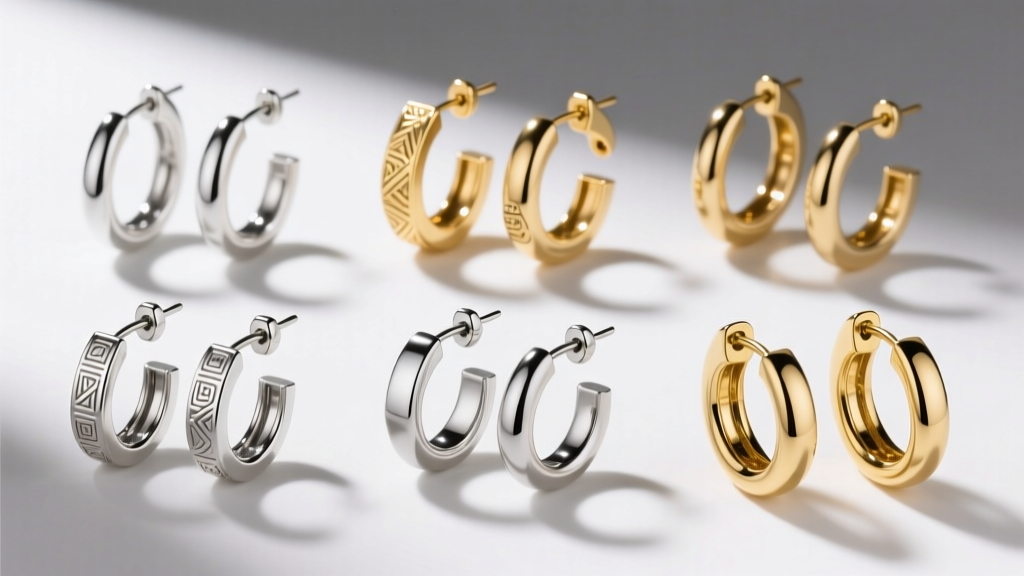
The Ultimate Earring Types List: A Material Properties Guide
Explore our comprehensive earring types list through the lens of material properties, hypoallergenic grades, and durability for sensitive ears.

Introduction: Beyond the Basic Earring Types List
When most jewelry enthusiasts search for an earring types list, they are typically met with a breakdown of silhouettes: studs, hoops, huggies, dangles, and ear cuffs. While understanding the visual architecture of your jewelry is essential for styling, it completely ignores the most critical factor in wearable comfort and longevity: metallurgy. A beautiful 18K gold dangle earring is useless if the post is made of a high-nickel alloy that triggers contact dermatitis. In 2026, with body modification and curated ear projects more popular than ever, understanding the material properties behind your jewelry is non-negotiable.
This guide redefines the traditional earring types list by categorizing options through the lens of material science, biocompatibility, and structural integrity. Whether you are selecting a 14-gauge cartilage hoop or a delicate 20-gauge lobe stud, the metal grade dictates the success of your wear.
Decoding Metal Alloys: What Your Earring Types List Won't Tell You
The term "hypoallergenic" is largely a marketing myth. According to the American Academy of Dermatology (AAD), nickel allergy remains the leading cause of allergic contact dermatitis, affecting nearly 18% of the population. To build a truly safe earring types list, we must look at standardized metallurgical grades rather than vague retail buzzwords.
Implant-Grade Titanium (ASTM F136) vs. Commercial Titanium
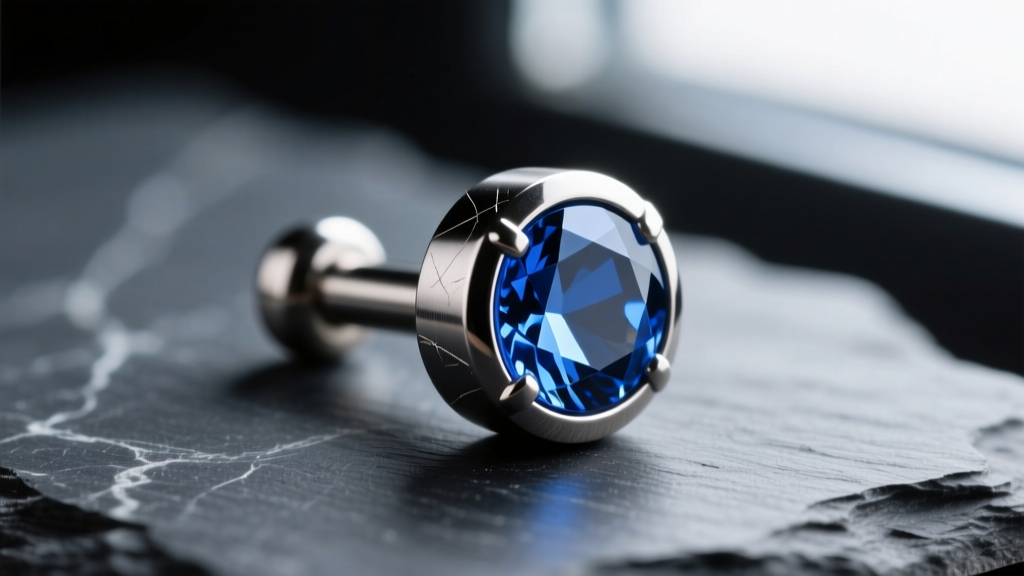
Not all titanium is created equal. Commercial pure titanium (ASTM F67) is softer and more prone to micro-scratches, which can harbor bacteria in healing piercings. The gold standard for any earring touching a fresh or sensitive piercing is Ti6Al4V ELI (ASTM F136). This specific alloy contains aluminum and vanadium for enhanced tensile strength, but its ELI (Extra Low Interstitial) designation means it has tightly controlled limits on oxygen, nitrogen, carbon, and iron. This results in a highly polished, mirror-finish surface that is completely nickel-free and biocompatible. If an earring types list recommends titanium for cartilage or daith piercings, ensure the manufacturer explicitly states ASTM F136 compliance.
The Truth About "Surgical Steel" (316L vs. 316LVM)
"Surgical steel" is a catch-all term that often masks inferior alloys. True body-safe steel is either 316L or 316LVM. Both contain between 8% and 10.5% nickel. However, the nickel is bound within the chromium-oxide passivation layer. The Association of Professional Piercers (APP) notes that 316LVM (Vacuum Melted) is superior because the vacuum melting process removes atmospheric inclusions and impurities, resulting in a more uniform grain structure. While safe for healed lobes, 316LVM can still cause reactions in highly sensitized individuals if the passivation layer is compromised by acidic sweat or harsh chemical cleaners.
Precious Metals: Karat Purity and Nickel Sensitization
Precious metals dominate the higher tiers of any premium earring types list, but their durability and allergen profiles vary wildly based on their alloy compositions. Pure 24K gold is too soft for jewelry (ranking just 25-30 on the Vickers hardness scale), meaning it must be alloyed with other metals to withstand the mechanical stress of clasps and posts.
14K vs. 18K Gold: The Alloy Breakdown
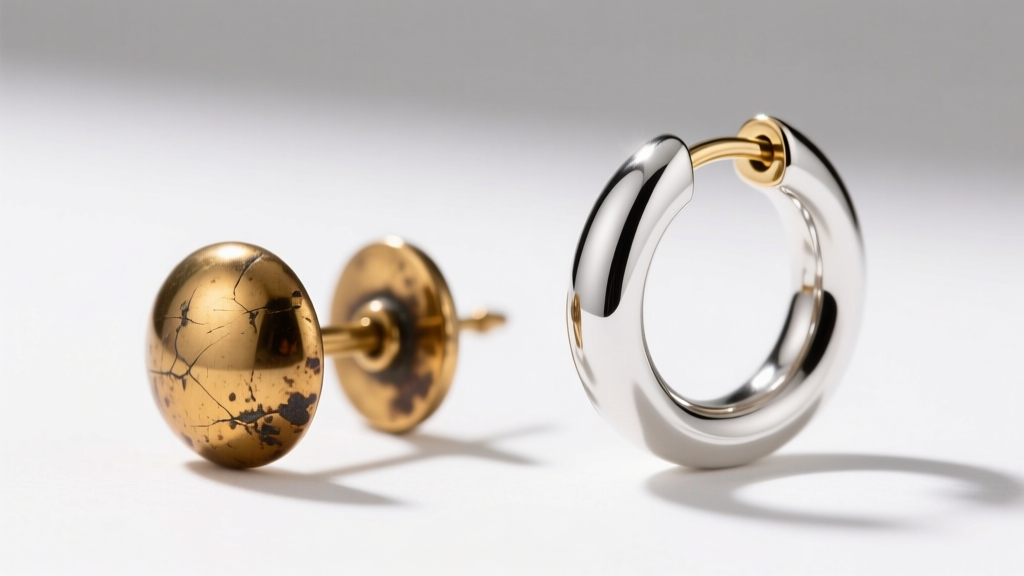
18K gold (75% pure gold) offers a richer color and higher hypoallergenic properties, but it is softer, making it less ideal for the thin posts of heavy dangle earrings or the tension clasps of huggie hoops. 14K gold (58.5% pure gold) is harder and more durable. However, the danger lies in white gold. Traditional white gold is alloyed with nickel to achieve a silver color, which is then plated with rhodium. As the rhodium plating wears away over 12 to 18 months, the nickel is exposed to the skin. For a truly safe white gold option, seek out palladium-white gold, which uses palladium instead of nickel to bleach the yellow hue of the gold, eliminating the allergy risk entirely.
Platinum and Palladium: The Heavyweight Champions
For high-value diamond studs or heirloom drop earrings, Platinum (usually 950 Pt, alloyed with 5% ruthenium or cobalt) is unmatched. It is incredibly dense, highly resistant to tarnish, and its prongs are less likely to suffer from stress corrosion cracking compared to gold. Palladium, a sister metal in the platinum group, offers similar hypoallergenic benefits at a lighter weight and lower price point, making it an excellent choice for larger, statement hoop earrings that might otherwise drag on the lobe.
Comprehensive Material Comparison Chart
To help you filter your personal earring types list, refer to this technical comparison of standard jewelry materials.
| Material | Standard / Grade | Nickel Content | Best Earring Application | Avg. Price Range |
|---|---|---|---|---|
| Titanium | ASTM F136 (Ti6Al4V ELI) | 0% | Fresh piercings, cartilage, sensitive lobes | $30 - $150 |
| Steel | 316LVM | 8-10.5% (Bound) | Healed lobes, standard hoops, huggies | $15 - $80 |
| Yellow Gold | 14K / 18K | 0% (Typically) | Everyday studs, threadless ends | $100 - $600+ |
| White Gold | 14K / 18K (Palladium alloy) | 0% | Diamond studs, fine dangles | $150 - $800+ |
| Niobium | 99.9% Pure (Reactive) | 0% | Color-anodized cartilage rings, ear cuffs | $40 - $120 |
| PTFE | Medical Grade Polytetrafluoroethylene | 0% | MRI safety, sports, temporary retainers | $10 - $30 |
Non-Metallic Alternatives in the Earring Types List
There are specific scenarios where metals, even implant-grade ones, are contraindicated. If you are undergoing an MRI, participating in high-impact contact sports, or working in environments with strict conductive material bans (like certain electrical engineering labs), your earring types list must include non-metallic polymers.
Bioplast and PTFE: When Metals Fail
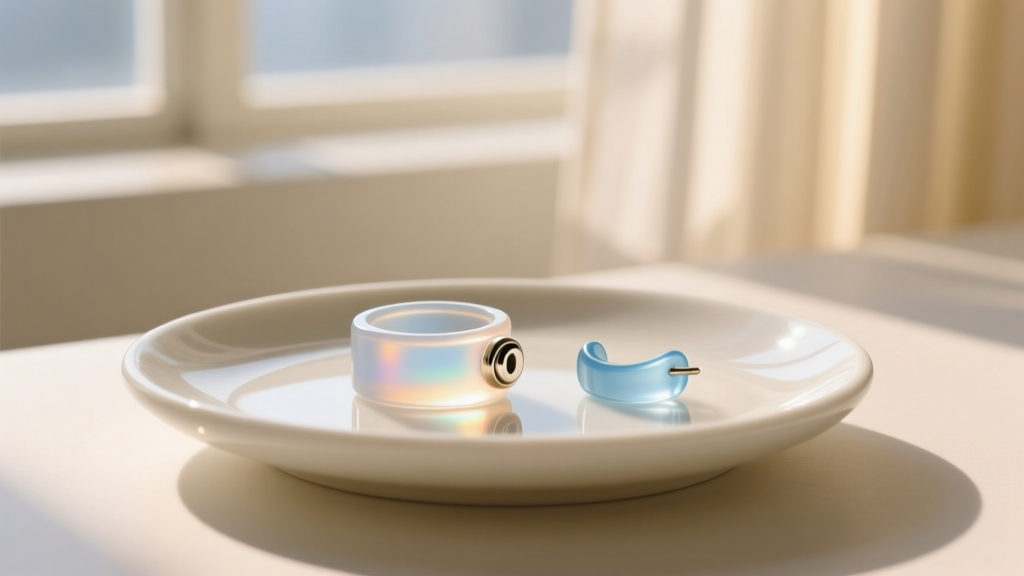
PTFE (Polytetrafluoroethylene), commonly known as Teflon, is highly flexible, biologically inert, and can withstand autoclaving temperatures up to 134°C. It is the premier choice for retainers. Bioplast, a proprietary medical-grade polymer, is slightly more rigid and can be heat-molded, making it excellent for custom-fit ear cuffs or unique cartilage shapes. However, polymers are porous compared to mirror-polished metals. They should be viewed as temporary solutions or situational tools rather than permanent, 24/7 jewelry, as micro-pores can eventually trap sebum and dead skin cells, leading to odor and localized irritation.
Matching Material to Piercing Placement and Gauge
The physical location of the piercing dictates the mechanical requirements of the material. A standard earring types list rarely addresses the biomechanics of the ear.
- Standard Earlobe (20g - 18g): The lobe is highly vascular and heals quickly. It can tolerate a wider variety of materials, including 14K gold, 316LVM steel, and even high-quality sterling silver (provided it is not worn during the initial healing phase, as silver sulfide tarnish can cause permanent skin staining known as argyria).
- Upper Lobe & Flat (16g - 14g): These areas experience more friction from hair and headphones. Threadless or internally threaded ASTM F136 titanium is recommended to prevent the microscopic tearing caused by the sharp threads of externally threaded cheap metals.
- Cartilage, Helix, & Daith (16g - 12g): Cartilage is avascular, meaning it heals slowly and is highly susceptible to hypertrophic scarring and irritation bumps. Only mirror-polished, implant-grade titanium or solid 14K/18K palladium-white gold should be used. The jewelry must have a high enough polish (minimum 800 grit) to prevent tissue adherence.
- Conch & Industrial (14g - 10g): These placements require thick, rigid bars to prevent the "cheese-cutter effect," where thin wires slowly migrate through the tissue. Titanium's high strength-to-weight ratio makes it the only logical choice for long industrial barbells to prevent sagging and subsequent angular pressure on the fistula.
Galvanic Corrosion in Curated Ear Projects
A modern styling trend is the "curated ear," featuring multiple piercings adorned with different metals. From a materials science perspective, mixing dissimilar metals in close proximity—especially when connected by conductive saline solutions (sweat or shower water)—can create a microscopic galvanic cell. This leads to galvanic corrosion, where the less noble metal (like steel or silver) degrades rapidly. To maintain the integrity of your jewelry and your skin, stick to a single metal family (e.g., all titanium or all 14K gold) across a single ear project.
Conclusion: Curating Your Personal Earring Types List
Building a functional, comfortable, and beautiful jewelry collection requires looking past the aesthetic silhouettes of studs, hoops, and dangles. By prioritizing verifiable material grades like ASTM F136 titanium, 316LVM steel, and nickel-free gold alloys, you transform a basic earring types list into a masterclass in biocompatible styling. Always demand transparency from jewelers regarding their alloy compositions, and remember that the true value of an earring lies not just in its design, but in the elemental integrity of the metal that touches your skin.