Art Deco Stud Earrings: 2026 Style & Trend Analysis
Discover how art deco stud earrings are dominating 2026 ear trends. Explore material guides, gauge specs, and expert styling tips for geometric studs.
The 2026 Resurgence: Why Geometric Vintage is Back
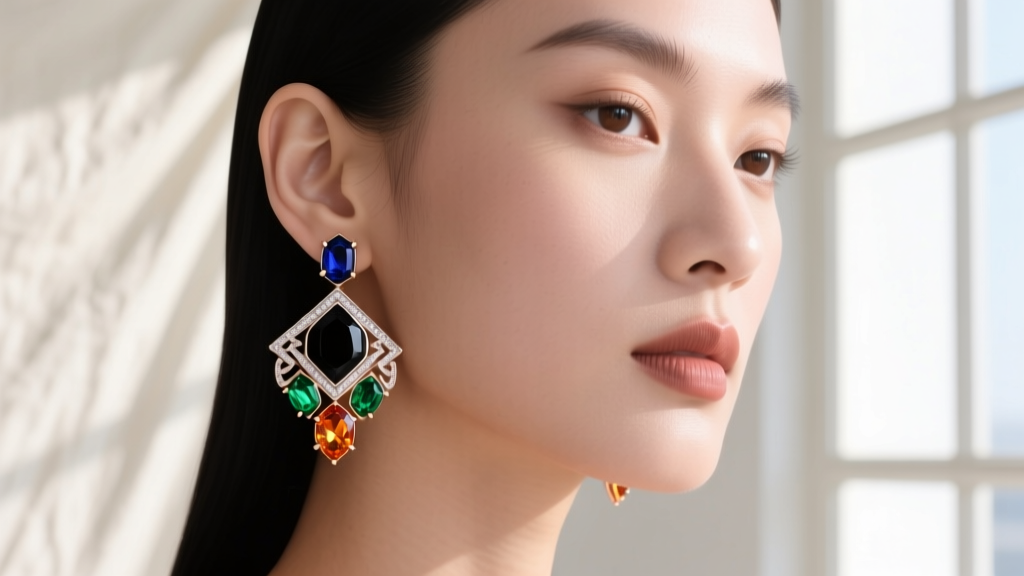
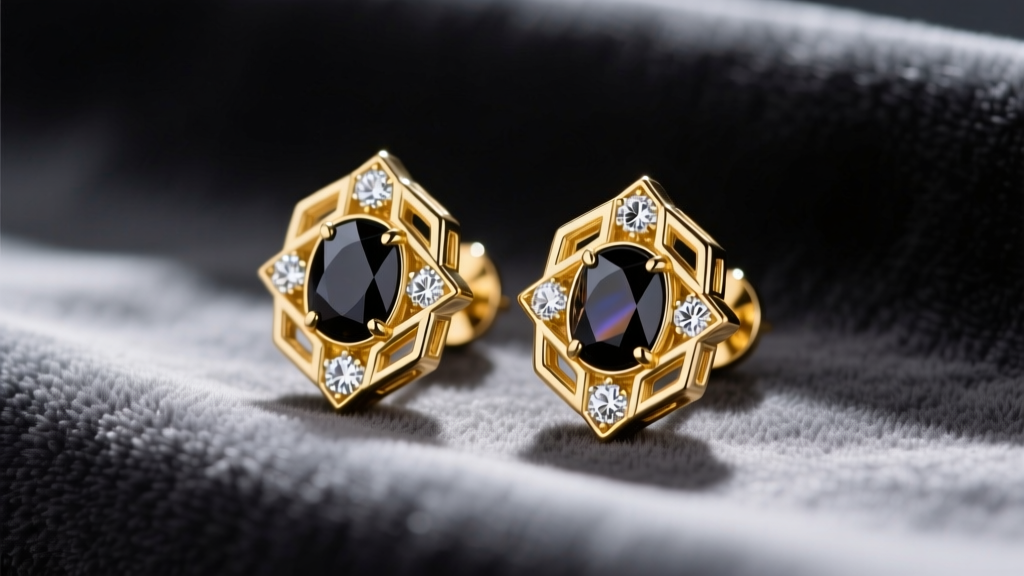
The trajectory of ear styling has undergone a massive shift as we move through 2026. After years of organic, fluid shapes and the understated 'quiet luxury' movement, the pendulum has swung decisively toward structured opulence. At the forefront of this shift are art deco stud earrings. Characterized by their bold geometric lines, stepped arches, and high-contrast material pairings, these pieces offer a masterclass in architectural jewelry design. But why are 1920s-inspired studs dominating modern ear curation today?
According to design historians at the Victoria and Albert Museum, the original Art Deco movement was born from a desire to embrace modernity, machinery, and precision after the chaos of World War I. In 2026, we are seeing a parallel cultural craving for structure and permanence. Collectors and style enthusiasts are rejecting mass-produced, asymmetrical bohemian styles in favor of the meticulous symmetry and unapologetic glamour of calibrated gemstones and sharp angles. Art deco studs provide a way to anchor an ear stack with a piece that feels both historically significant and sharply contemporary.
Material Breakdown: Authenticity vs. Modern Reproductions
The allure of art deco stud earrings lies heavily in their material contrast. The 1920s and 30s favored stark visual differences between light and dark, matte and brilliant. However, understanding the physical properties of these materials is critical for daily wear and long-term preservation.
Onyx, Marcasite, and Champlevé Enamel
Black onyx is the undisputed king of Deco contrast. As noted by the Gemological Institute of America (GIA), black onyx is a variety of chalcedony with a Mohs hardness of 7.0. While this makes it highly resistant to scratching from daily environmental dust (which is primarily quartz, at 7.0), its cleavage properties mean it can chip if the bezel setting is struck against a hard surface. Modern reproductions often use black glass or dyed agate, which lack the deep, waxy luster of genuine onyx.
Marcasite, another Deco staple, is frequently misunderstood. True marcasite is iron pyrite. It offers a beautiful, metallic, gunmetal sparkle when cut into tiny rose-cutch stones and pavé-set into silver or white gold. However, iron pyrite is highly susceptible to moisture. If worn during workouts or stored in humid environments, marcasite can literally oxidize and rust, leading to stone pop-outs and structural degradation.
Champlevé enamel—a technique where powdered glass is fused into carved recesses in the metal at extreme temperatures—provides the vivid reds, deep blues, and stark blacks seen in high-end Deco pieces. Unlike modern painted resin or cold enamel, vitreous enamel is essentially glass. It will not fade, but it is highly vulnerable to thermal shock and blunt force trauma.
| Material | Mohs Hardness | Primary Vulnerability | Price Range (Authentic Estate) |
|---|---|---|---|
| Black Onyx | 7.0 | Bezel edge chipping | $1,500 - $4,000 |
| Marcasite (Pyrite) | 6.0 - 6.5 | Moisture oxidation / Rust | $400 - $1,200 |
| Vitreous Enamel | N/A (Glass-based) | Thermal shock / Cracking | $2,000 - $8,000 |
| Calibrated Rubies | 9.0 | Prong wear over time | $5,000 - $15,000+ |
Technical Specs: Post Gauges and Backing Failures
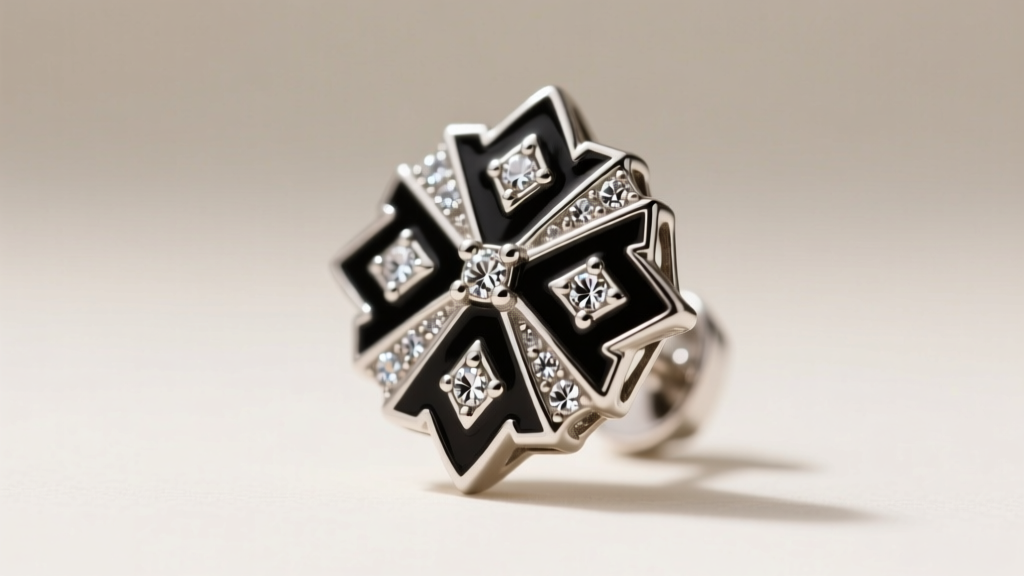
One of the most overlooked aspects of buying vintage or vintage-inspired art deco stud earrings is the technical hardware. Because Deco designs often feature elongated hexagons, top-heavy stepped arches, or wide sunburst motifs, they carry significantly more weight at the top of the earring than a standard round diamond stud.
Most modern commercial earrings use a 20-gauge (0.81mm) post paired with a standard friction butterfly back. When you put a top-heavy, 4-gram platinum and onyx Deco stud on a 20-gauge post, gravity takes over. The earring will tilt forward, causing 'earlobe droop.' Over time, the constant downward pressure and spinning motion will stretch the piercing fistula, leading to permanent lobe sagging and a compromised aesthetic.
The Expert Solution: When sourcing art deco studs, look for pieces that feature an 18-gauge (1.02mm) or 19-gauge post. The thicker wire provides the necessary rigidity to keep the geometric face perfectly upright. Furthermore, discard standard push-backs. Upgrade to La Pousette lock backs (which use a spring-loaded mechanism to grip the post groove securely) or traditional screw-backs. This ensures the heavy geometric face remains flush against the lobe without rotating, preserving both the ear tissue and the visual impact of the design.
Curation Framework: Styling Art Deco Studs in a Modern Ear Stack
Integrating highly structured, vintage-inspired pieces into a 2026 ear curation requires a deliberate approach to balance. The golden rule of styling art deco stud earrings is to respect their geometry. Mixing a sharp, stepped-arch Deco stud with organic, hammered, or bohemian-style cartilage hoops creates visual dissonance.
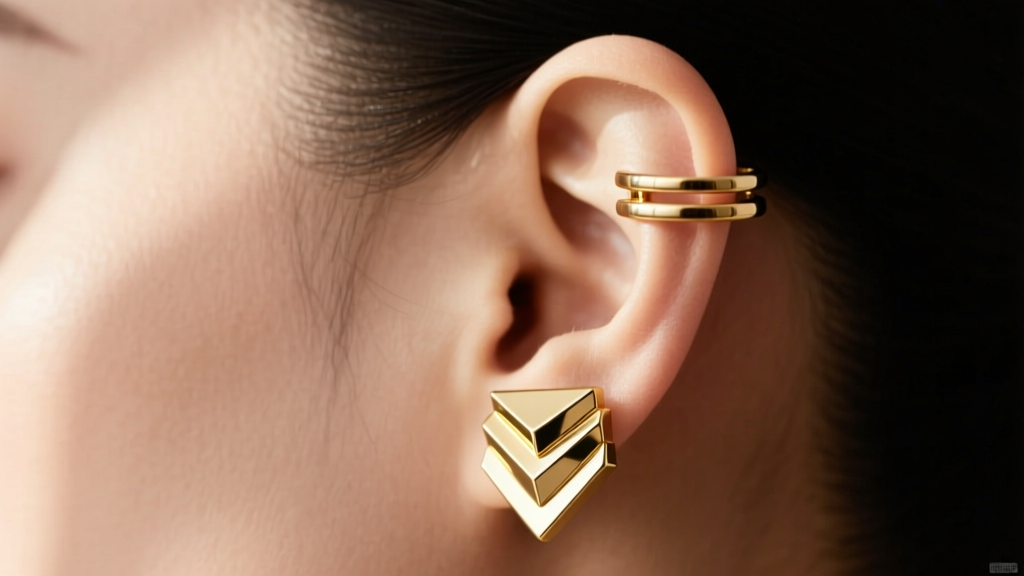
- The Lobe Anchor: Place the Deco stud in the primary lobe piercing. Its visual weight makes it the undisputed focal point of the ear.
- The Secondary Lobe: Pair it with a simple, geometric diamond or onyx solitaire stud, or a small, rigid hexagonal huggie hoop that echoes the angularity of the main piece.
- The Cartilage Stack: Move upward with minimalist, linear elements. A straight barbell, a geometric threadless end, or a sleek, unadorned flat-back hoop in the helix or conch will complement the Deco stud without competing for attention.
Symmetry and repetition are the heartbeats of Art Deco design. When curating an ear stack around a vintage geometric stud, echo its angles in your cartilage jewelry rather than introducing competing organic curves.
Investment Guide: Estate vs. Contemporary Makers
For collectors and enthusiasts, the market for art deco stud earrings is divided into genuine 1920s/1930s estate pieces and high-quality contemporary reproductions. Both have their merits, but knowing how to authenticate and price them is essential.
Estate jewelry experts at Lang Antiques emphasize the importance of reading hallmarks. Genuine French Deco pieces in 18K gold will bear the eagle's head hallmark, while platinum pieces from the era often feature the dog's head or a specific maker's mark. British pieces will have a full assay mark indicating the city, year, and metal purity. Expect to pay a premium for platinum settings with natural, unheated calibrated sapphires or old European cut diamonds, with prices frequently starting at $3,500 and scaling well past $15,000 for signed pieces by houses like Cartier, Boucheron, or Van Cleef & Arpels.
Contemporary makers offer a more accessible entry point, typically utilizing 14K gold, sterling silver, and lab-grown diamonds or synthetic spinel. While they lack the historical provenance of estate pieces, modern CAD (Computer-Aided Design) and casting techniques allow for incredibly precise geometric lines that rival the original era. Prices for high-end contemporary Deco studs generally range from $600 to $2,500. When buying modern, insist on solid gold rather than heavy gold electroplate (HGE), as the sharp edges and high-relief steps of Deco designs are the first areas to show wear on plated jewelry.
Final Verdict
Art deco stud earrings are far more than a fleeting nostalgic trend; they represent a return to intentional, architectural jewelry design. By understanding the material vulnerabilities of onyx and marcasite, upgrading your post gauges to prevent lobe damage, and styling them with complementary geometric shapes, you can seamlessly integrate these 1920s masterpieces into a modern, forward-looking 2026 aesthetic. Whether you are investing in a genuine platinum estate piece or a meticulously crafted contemporary homage, the structured opulence of the Deco era remains an unmatched anchor for any serious jewelry collection.


