The 2026 Gift Guide to Authentic Art Nouveau Earrings
Discover the perfect art nouveau earrings for every occasion in our 2026 gift guide. Learn about materials, motifs, and pricing for antique and revival pieces.

The Enduring Allure of the Belle Époque
Gifting jewelry is an exercise in storytelling, and few eras tell a more captivating tale than the Art Nouveau movement (roughly 1890–1910). Born as a rebellion against the rigid, mass-produced aesthetics of the Industrial Revolution, Art Nouveau jewelry championed organic forms, masterful craftsmanship, and a deep reverence for the natural world. When you gift a pair of art nouveau earrings, you are not merely giving an accessory; you are presenting a wearable piece of art history. According to the Victoria and Albert Museum, the movement's defining characteristic was the "whiplash" line—a dynamic, undulating curve that breathed life into metal and stone.
However, navigating the market for these exquisite pieces requires a discerning eye. The 2026 landscape is flooded with both genuine Belle Époque antiques and modern revival interpretations. This guide will equip you with the historical knowledge, technical specifications, and occasion-matching strategies needed to select the perfect pair of art nouveau earrings for your recipient.
Decoding the Motifs: What Makes Art Nouveau Unique?
Before purchasing, it is crucial to understand the visual language of the era. Authentic art nouveau earrings rarely feature the geometric symmetry of the later Art Deco period. Instead, they embrace asymmetry and themes drawn from the untamed natural world.
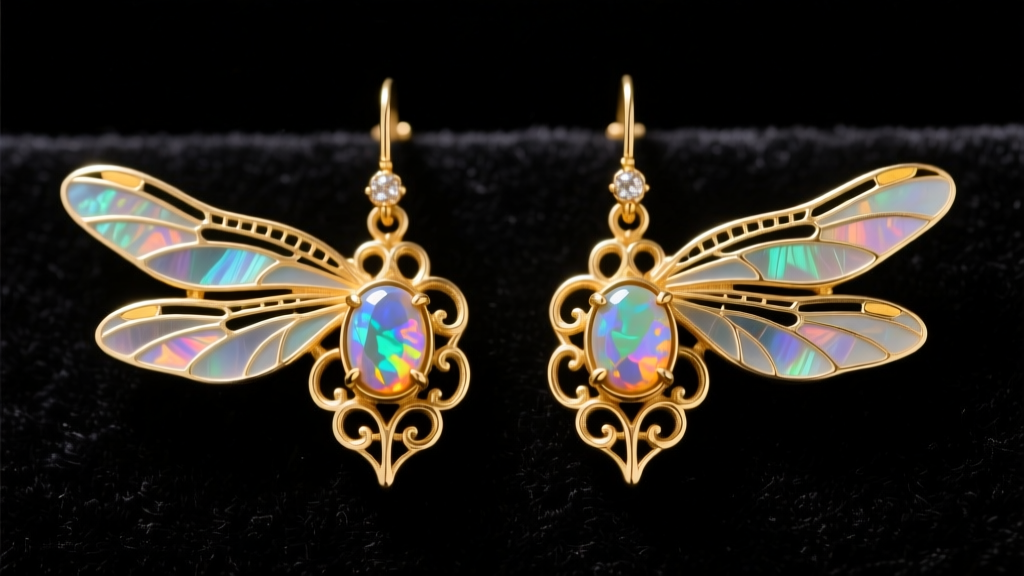
- Flora and Fauna: Dragonflies, butterflies, peacocks, and bats were highly favored, often rendered with translucent enamel wings. Orchids, lilies, and thistles were common floral motifs, chosen for their slightly exotic or melancholic undertones.
- The Femme Nouvelle: Ethereal female figures with flowing, vine-like hair were a staple of master jewelers like René Lalique. These pieces often blurred the line between human and nature, featuring nymphs or fairies intertwined with foliage.
- Subdued Gemstones: Unlike the diamond-heavy Victorian era, Art Nouveau jewelers prioritized color and optical effects over sheer carat weight. Cabochon opals, moonstones, amber, and demantoid garnets were preferred for their mystical, glowing qualities.
Occasion Matching: Who Are You Gifting These To?
Matching the specific style and era of the earrings to the recipient's lifestyle and the gifting occasion is the hallmark of a thoughtful present.
The Antique Collector (Milestones & Anniversaries)
For the serious collector or a partner celebrating a major milestone (like a 10th anniversary), seek out authentic, late-19th-century pieces. Look for earrings featuring plique-à-jour enamel—a notoriously difficult technique where enamel is suspended in a metal framework without a backing, creating a stained-glass effect. These pieces are fragile, rare, and command high respect in the antique jewelry community. They are best suited for special occasions rather than daily wear.
The Vintage-Style Romantic (Birthdays & Holidays)
If the recipient loves the aesthetic but leads an active lifestyle, authentic antiques might be too delicate. Instead, opt for high-end modern revivals crafted in the 1970s or contemporary artisan pieces made using traditional techniques. A pair of 14k or 18k gold drop earrings featuring guilloché enamel (where enamel is layered over an engraved metal base) and a central moonstone offers the romantic Art Nouveau vibe with the structural durability needed for regular wear.
The Avant-Garde Stylist (Art Exhibitions & Galas)
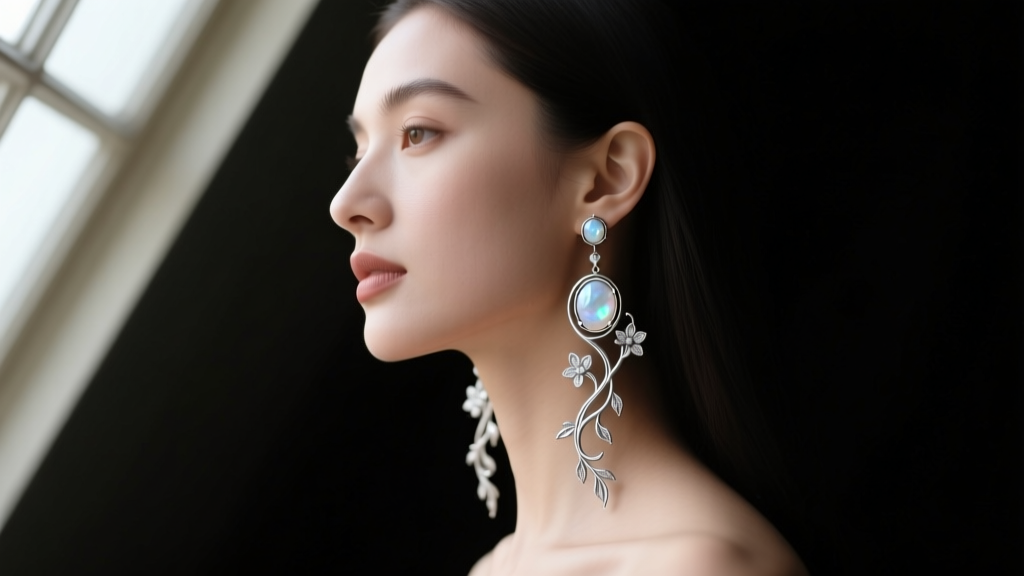
For the fashion-forward individual who frequents gallery openings, look for dramatic, elongated Art Nouveau ear cuffs or chandelier dangles. Pieces featuring oxidized silver, dark amber, and asymmetric vine motifs provide an edgy, avant-garde look that pairs beautifully with modern minimalist fashion, allowing the earrings to act as the focal point of the outfit.
Material & Craftsmanship Deep Dive
To evaluate the quality and authenticity of art nouveau earrings, you must understand the materials that defined the era. Below is a breakdown of historical materials and their modern equivalents.
| Material | Historical Use (1890-1910) | Modern Revival Equivalent | Durability & Care |
|---|---|---|---|
| Plique-à-jour Enamel | Used for insect wings and flower petals; backed by mica during firing, then dissolved. | Rarely used today due to high cost; mostly found in bespoke artisan pieces. | Extremely fragile. Shatters upon impact. Never use ultrasonic cleaners. |
| Guilloché Enamel | Applied over engine-turned silver or gold to create shimmering, translucent backgrounds. | Common in high-end revivals, though often replaced by cold enamel (resin) in cheaper pieces. | Moderate durability. Can chip if dropped on hard surfaces. |
| 18k Yellow Gold | The standard for fine French and Austrian pieces, favored for its malleability in hand-fabrication. | Still widely used in fine jewelry, though 14k is more common in the US market. | Highly durable, but soft enough to show antique patina and wear over a century. |
| Demantoid Garnet | Prized for its brilliant green color and horsetail inclusions, often used to represent leaves. | Very expensive and rare; modern pieces may substitute green tourmaline or peridot. | Moderate hardness (6.5-7 Mohs). Requires gentle cleaning to maintain brilliance. |
Technical Specs: Gauge Sizes and Ear Wires
A frequently overlooked aspect of gifting antique earrings is the technical compatibility with modern piercings. Authentic 19th-century French wire hooks were often hand-drawn to 18 or 19 gauge thickness. Modern standard lobe piercings are typically done at 20 gauge. Forcing a thick 18g antique wire through a 20g piercing can cause micro-tears, irritation, and stretching of the earlobe.
Expert Gifting Tip: If you are purchasing authentic antique dangles with thick wires, budget an extra $50–$100 to have a professional bench jeweler swap the hooks for modern 20-gauge leverbacks. Leverbacks are also vastly superior for securing heavy Art Nouveau drop earrings, as the simple C-curve of an antique French wire often fails to support the weight of elaborate enamel and stone drops, leading to lost jewelry.
Antique vs. Revival: Pricing & Authentication
Understanding the pricing tiers will protect you from overpaying for costume pieces masquerading as antiques.
"When authenticating Art Nouveau jewelry, look for the subtle imperfections of hand-fabrication. Cast revival pieces from the 1970s or modern mass-produced molds will have a uniform, slightly pitted texture under magnification, whereas genuine 1890s pieces will show file marks, hand-soldered joints, and custom-cut stone bezels." — Lang Antiques University
- Authentic Antiques (1890–1910): $1,500 to $15,000+. Prices skyrocket for signed pieces by masters like Lalique, Fouquet, or Mucha, and for intact plique-à-jour enamel.
- Fine Revivals (1960s–Present): $300 to $1,200. These are crafted from precious metals and genuine stones but lack the historical provenance. Excellent for daily wear.
- Costume / Fashion Reproductions: $40 to $150. Typically made of base metals, glass, and cold enamel (resin). Fun for costume parties, but hold no intrinsic jewelry value.
Care & Maintenance: Preserving Enamel and Soft Stones
Gifting Art Nouveau earrings also means gifting the knowledge of how to preserve them. The materials favored in this era are notoriously sensitive to modern cleaning methods.
- Ban the Ultrasonic Cleaner: Ultrasonic vibrations will instantly shatter plique-à-jour enamel and cause guilloché enamel to flake off its metal backing. They will also fracture opals and amber.
- Avoid Chemical Dips: Silver dips and commercial jewelry cleaners will strip the intentional antique patina from the metal and cloud soft stones like moonstones and pearls.
- The Safe Cleaning Method: According to the Gemological Institute of America (GIA), soft stones and enameled pieces should only be cleaned with a soft, damp microfiber cloth. If deeper cleaning is required for the metal framework, use a drop of mild, phosphate-free dish soap and a baby-soft makeup brush, taking care to avoid scrubbing the stones or enamel directly.
Final Gifting Tips
When presenting a pair of art nouveau earrings, the packaging should reflect the historical weight of the gift. Avoid modern, brightly colored velvet boxes. Instead, source a period-appropriate leather-bound jewelry case or a custom-fitted mahogany box lined with unbleached cotton. Include a handwritten note detailing the specific motifs used in the piece, the era it was crafted, and the meaning behind the stones. By bridging the gap between historical artistry and modern wearability, your gift will transcend mere ornamentation and become a cherished, wearable heirloom.


