Oil Painting Earrings: 2026 Wearable Art Trend & Style Guide
Discover the 2026 oil painting earrings trend. Explore artisan techniques, material guides, pricing tiers, and styling tips for wearable fine art.

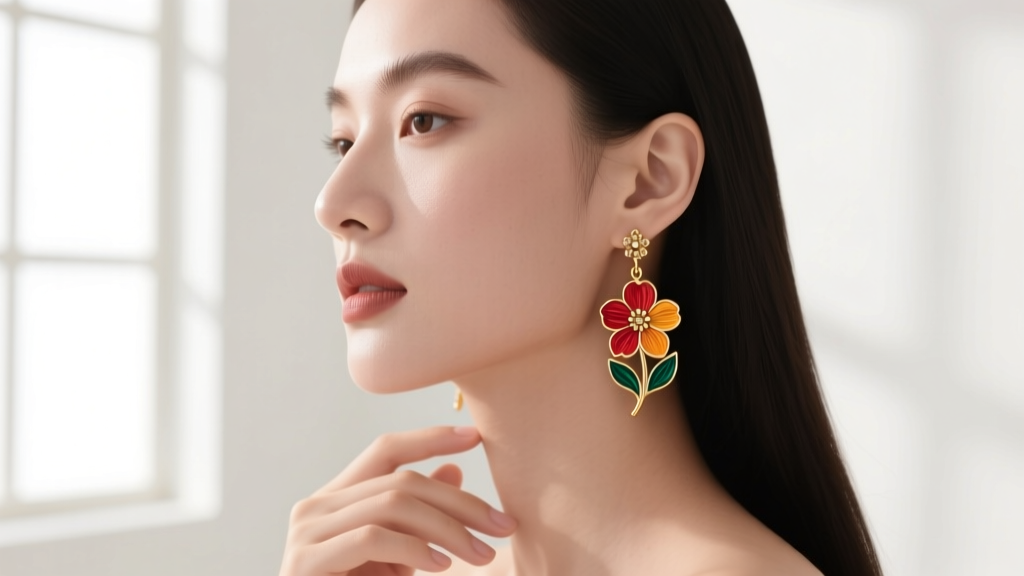
The Renaissance of Wearable Art: Why Oil Painting Earrings Are Dominating 2026
The jewelry landscape of 2026 has decisively pivoted from the ultra-minimalist gold hoops of the early 2020s toward what industry analysts call "curated individualism." At the forefront of this movement are oil painting earrings—miniature, gallery-quality masterpieces designed for the earlobe. No longer confined to mass-produced paper prints sealed under cheap glass, today's wearable art features genuine micro-painting techniques, utilizing traditional oil binders, heavy-body acrylics, and kiln-fired enamels. According to trend forecasts from Vogue Business, consumers are increasingly treating jewelry as portable art collections, seeking bespoke pieces that carry emotional resonance and narrative depth. This guide deconstructs the anatomy, ergonomics, and styling frameworks of the oil painting earring trend, providing a masterclass for collectors and jewelers alike.
Material Anatomy: The Truth Behind the Canvas
Creating a viable oil painting earring requires navigating a complex chemical minefield. True oil paints, which use linseed or walnut oil as a binder, require oxygen to cure (oxidize). If an artisan seals a wet or partially cured oil painting under an airtight epoxy or UV resin dome, the trapped solvents will inevitably cause clouding, wrinkling, or delamination over time.
The Alkyd and Acrylic Compromise
To bypass the 3-to-6-month curing time of traditional oils, master jewelry painters in 2026 predominantly rely on alkyd resins (such as Winsor & Newton's Griffin fast-drying oils) or heavily pigmented, professional-grade acrylics. These alternatives mimic the buttery impasto texture and blending capabilities of traditional oils but cure completely within 24 to 48 hours, allowing for safe encapsulation.
Base Substrates: Copper vs. Polymer
The "canvas" for these miniatures is just as critical as the paint. High-end artisans utilize 24-gauge copper blanks that have been counter-enameled (coated with a layer of vitreous enamel on the back) to prevent the metal from warping under the tension of the paint and resin layers. Budget-friendly alternatives often use baked polymer clay or shrink plastic, which, while lightweight, lack the archival permanence required for heirloom-quality jewelry. The Gemological Institute of America (GIA) frequently notes that the longevity of mixed-media jewelry relies heavily on the structural integrity of its base substrate.
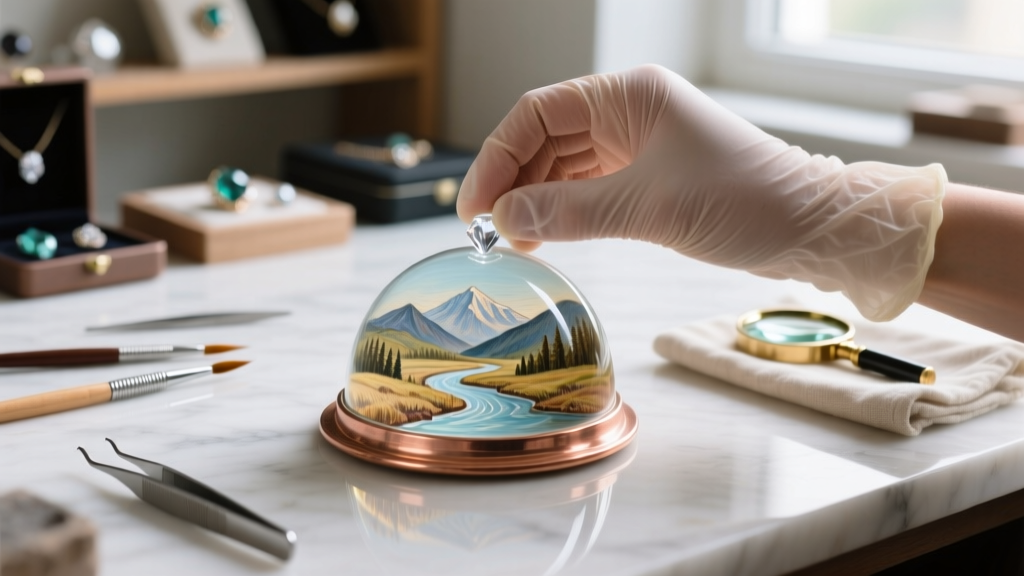
Weight, Gauge, and Ergonomics: The Hidden Challenge
Art has mass, and when translated into jewelry, that mass can wreak havoc on the earlobe. A standard 15mm resin dome encapsulating a painted copper blank can easily weigh between 4 and 7 grams per earring. While this may seem negligible, the pendulum effect of a dangle earring concentrates that weight onto a microscopic puncture wound.
The Gauge Dilemma
Most commercial earring posts are manufactured at 20-gauge (0.81mm). However, for heavy art dangles, 20-gauge wire is prone to bending, which can lead to tearing of the earlobe tissue. Reputable artisans crafting oil painting earrings in 2026 have begun upgrading to 18-gauge (1.02mm) or even 16-gauge (1.29mm) posts for pieces exceeding 8 grams.
- For Studs: 20-gauge posts are generally sufficient, provided the resin dome does not exceed 12mm in diameter.
- For Dangles: 18-gauge wire wrapped through a reinforced bezel cup is mandatory to prevent the jump ring from pulling open.
- Ergonomic Backings: Always pair heavy art earrings with silicone ear nuts or specialized "earring lifter" patches that distribute the weight across a wider surface area of the earlobe.
2026 Pricing Tiers & Artisan Market Breakdown
The market for oil painting earrings is highly stratified. Understanding the distinction between a printed decal and a hand-painted original is crucial for buyers and collectors. National Jeweler reports a massive surge in direct-to-consumer artisan sales, bypassing traditional retail markups but requiring buyers to be more educated about material sourcing.
| Market Tier | Material & Technique | Price Range (USD) | Archival Durability |
|---|---|---|---|
| Fast Fashion | Printed paper/canvas sealed in basic epoxy | $15 - $35 | Low (Prone to yellowing and water damage) |
| Indie Artisan | Hand-painted alkyd/acrylic on polymer or wood, UV resin dome | $65 - $150 | Medium (Requires UV stabilizers to prevent yellowing) |
| Master Enamelist | Hand-painted vitreous enamel on copper, kiln-fired, 18k gold bezels | $350 - $900+ | Exceptional (Museum-grade permanence) |
Styling Framework: Matching Art Motifs to Face Shapes
Oil painting earrings are inherently statement pieces. Because they draw the eye directly to the side of the face, the motif and silhouette of the earring must be strategically aligned with the wearer's bone structure.
Round Faces
For rounder face shapes, the goal is to create vertical elongation. Opt for elongated teardrop or rectangular dangles featuring vertical landscapes, such as weeping willows, cascading waterfalls, or abstract vertical brushstrokes. Avoid large, circular studs, which will only accentuate the roundness of the jawline.
Square and Angular Faces
Strong, angular jawlines benefit from softening elements. Circular or oval cabochon studs featuring soft, blended impressionist motifs—like cloudy skies, blooming peonies, or watercolor-style washes—help to visually soften the sharp angles of the face. Huggie hoops featuring tiny, dangling enamel-painted charms are also an excellent 2026 styling choice for this face shape.
Heart-Shaped Faces
Heart-shaped faces (wider forehead, narrow chin) are beautifully balanced by bottom-heavy dangles. Look for pear-shaped earrings where the oil painting features concentrated, dark, or dense brushwork at the bottom of the canvas, tapering up to a lighter, more delicate top. This draws the visual weight downward, balancing the narrower chin.
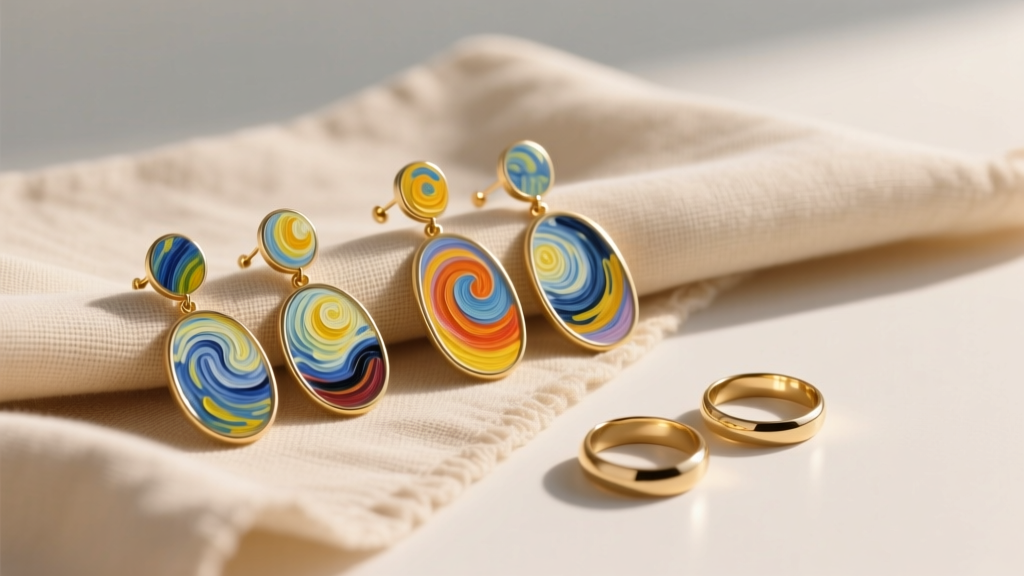
Archival Preservation: Caring for Hand-Painted Jewelry
"The greatest enemy of wearable resin art is ultraviolet light. Without proper chemical stabilization, a vibrant landscape can turn into a jaundiced amber nightmare in under a year." — Jewelry Conservation Guidelines, 2025.
If you are investing in artisan-tier oil painting earrings, you must treat them with the same care as a fine art canvas. The primary threat to these pieces is UV degradation. While high-end jewelers use resins infused with HALS (Hindered Amine Light Stabilizers), prolonged exposure to direct sunlight will eventually cause the resin dome to yellow and micro-craze.
The Cleaning Protocol
Never use ultrasonic cleaners, steamers, or chemical dips on painted jewelry. The high-frequency vibrations can shatter the bond between the paint layer and the resin dome, while alcohol-based cleaners will permanently cloud the surface of the resin.
- Dust Removal: Use a clean, dry, optical-grade microfiber cloth to gently buff the resin dome.
- Smudge Removal: If necessary, lightly dampen the cloth with distilled water and a microscopic drop of pH-neutral dish soap. Buff gently and dry immediately.
- Storage: Store in a dark, climate-controlled jewelry box. Avoid airtight plastic bags, which can trap humidity and promote mold growth on the organic binders within the paint if the seal is ever compromised.
Final Verdict: Are They Worth the Investment?
The 2026 oil painting earrings trend represents a beautiful intersection of horology-level precision and fine art expression. While fast-fashion iterations offer a fleeting taste of the aesthetic, the true value lies in the indie artisan and master enamelist tiers. By paying close attention to gauge thickness, resin stabilization, and proper curing techniques, collectors can acquire wearable masterpieces that not only elevate their personal style but also stand the test of time as genuine heirloom artifacts.


