How to Assess the True Value of a Solid Gold Hoop Earring
Discover how to evaluate the true value of a solid gold hoop earring. We break down karat weights, pricing tiers, and hardware durability for 2026.

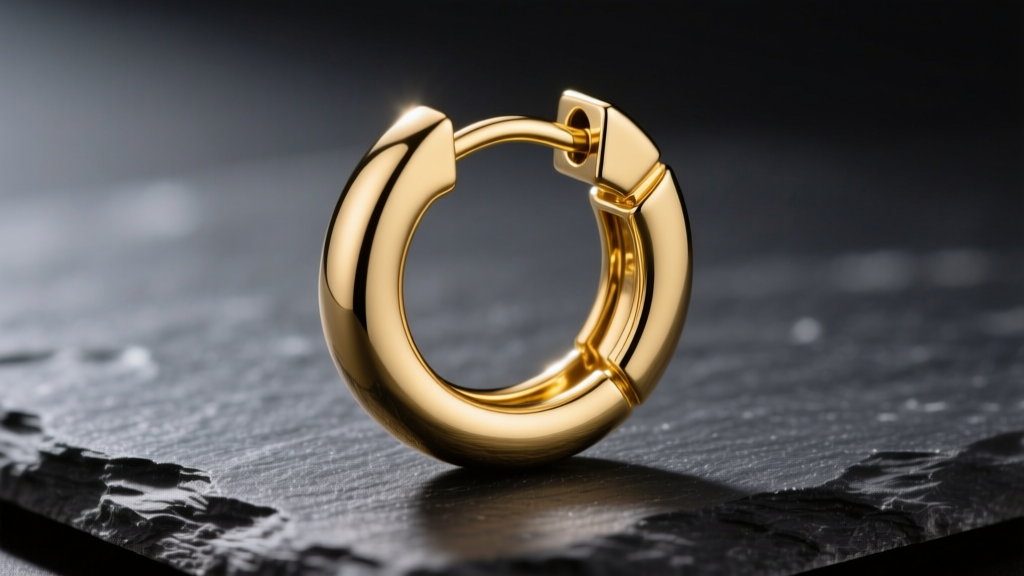
When shopping for fine jewelry, few pieces are as universally beloved—or as widely misunderstood in terms of pricing—as the classic gold hoop. In 2026, with precious metal markets experiencing significant volatility, evaluating the true cost of a solid gold hoop earring requires more than just a glance at the karat stamp. It demands a deep understanding of metallurgy, structural engineering, and retail markup dynamics.
Whether you are looking for a delicate 15mm huggie or a bold 50mm statement piece, this comprehensive value assessment guide will teach you how to separate genuine investments from overpriced costume jewelry masquerading as fine gold.
The Anatomy of Hoop Earring Pricing: Melt Value vs. Retail
To assess value, you must first understand the baseline: the melt value. Gold is priced per troy ounce (31.1 grams). In the 2026 market, with spot prices hovering around the $2,500 per ounce mark, pure 24k gold costs approximately $80.38 per gram. However, pure gold is too soft for jewelry.
Most high-quality hoops are crafted in 14k (58.3% pure gold) or 18k (75% pure gold). Here is the quick math for a standard 5-gram pair of 14k gold hoops:
- Pure gold content: 2.915 grams
- Raw melt value: ~$234.30
- Fair retail markup (2x - 3x): $468 - $702
- Luxury brand markup (5x - 10x): $1,170 - $2,340+
According to the Gemological Institute of America (GIA), the alloy metals mixed with gold (like copper, silver, and zinc) not only dictate the karat but also the color and tensile strength. When a retailer charges $1,500 for a lightweight 3-gram pair of 14k hoops, you are paying a massive premium for the brand name, not the intrinsic material value.
Karat Weight vs. Durability: The 14k vs 18k Debate
The choice between 14k and 18k gold drastically impacts both the price and the lifespan of your jewelry. 18k gold offers a richer, warmer yellow hue and is highly hypoallergenic, making it a favorite for sensitive ears. However, its higher purity makes it softer.
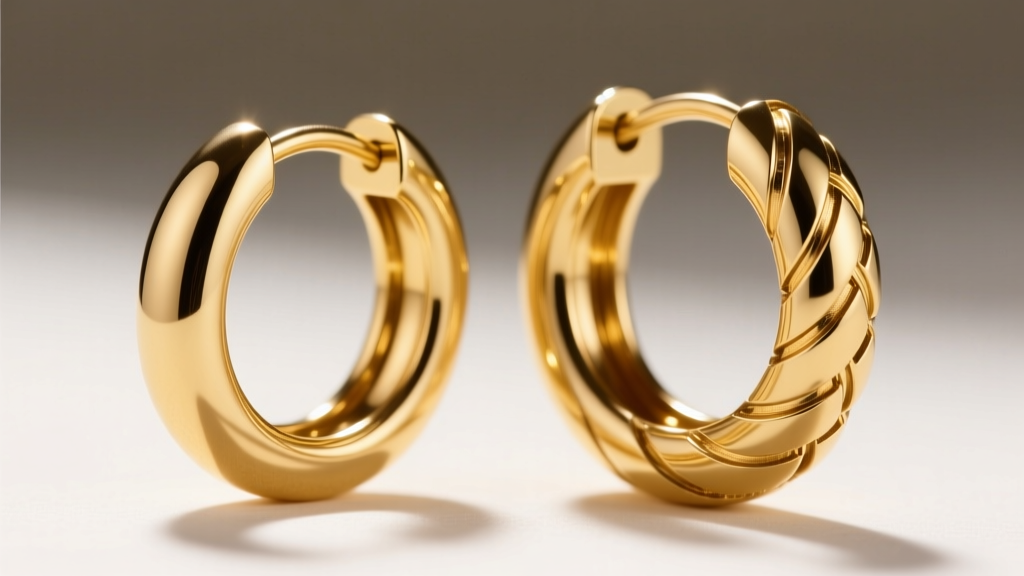
For a continuous (endless) hoop earring with no moving parts, 18k is an excellent choice. But for hoops with complex hinged snap closures or clicker mechanisms, 14k gold is vastly superior. The added alloy metals in 14k provide the necessary tensile strength to prevent the tiny hinge pins and clasps from bending or wearing down over years of daily use. The American Gem Society frequently notes that 14k gold strikes the optimal balance between purity and structural integrity for mechanical jewelry components.
2026 Market Pricing Tiers for Gold Hoops
Understanding where a specific piece falls in the market hierarchy helps you determine if the asking price is justified. Below is a breakdown of current market tiers for solid gold hoops.
| Market Tier | Typical Material | Avg. Weight (Pair) | Price Range (2026) | Value Assessment |
|---|---|---|---|---|
| Fast Fashion / Mall | 10k Gold or Heavy Plating | 1.5g - 3g | $80 - $250 | Poor long-term value; high risk of tarnishing or plating loss. |
| Mid-Tier Direct-to-Consumer | Solid 14k Gold | 3g - 6g | $350 - $750 | Excellent value; closely tracks melt value + reasonable labor costs. |
| Established Fine Jeweler | Solid 14k or 18k Gold | 5g - 12g | $800 - $1,800 | Good value; includes premium craftsmanship, warranties, and precise finishing. |
| High-End Luxury Designer | 18k Gold + Diamonds | 8g - 20g+ | $3,000 - $15,000+ | Low intrinsic value ratio; you are paying for design heritage and brand prestige. |
Hardware & Closure Mechanisms: Where Value Hides
The most common point of failure on any hoop earring is the closure. A beautifully crafted hoop is worthless if the clasp breaks after three months. When assessing value, inspect the hardware closely.
Continuous (Endless) Hoops
These feature a thin wire that threads through the piercing and snaps into a hollow tube on the other end. They are elegant and minimalist. However, if the wire is thinner than 20-gauge (0.81mm), it will warp and lose its circular shape when you try to bend it open. For true value, seek out continuous hoops made from 18-gauge or 16-gauge wire, which offer the rigidity needed to maintain their geometry over time.
Hinged Snap Closures
The standard for medium-to-large hoops. The value here lies in the hinge pin and the snap tension. Many mass-produced hoops use a steel pin that is barely 0.5mm thick to save on gold weight. This pin will eventually bend, causing the hoop to dangle unevenly. A high-value hinged hoop will feature a reinforced, squared-off snap joint that produces an audible, secure 'click' when closed, usually machined from a single piece of gold alloy.
Clicker Rings (For Cartilage)
Originally designed for septums, clickers are now popular for helix and daith piercings. A high-quality clicker requires precision CNC machining to ensure the hinged segment sits perfectly flush with the rest of the ring. If you can feel a sharp ridge where the segment meets the hoop with your fingernail, it is poorly manufactured and will irritate your piercing channel.
Weight vs. Dimensions: The Hollow Tubing Trap
One of the most deceptive practices in the jewelry industry is selling large-diameter hoops at a premium by using hollow tubing. A 50mm hoop made of solid wire would be incredibly heavy and expensive. To solve this, manufacturers use drawn gold tubing.
While hollow tubing isn't inherently bad—it makes large hoops wearable—there is a massive difference in quality. Cheap hollow hoops are formed by wrapping a thin sheet of gold around a steel mandrel and soldering the seam. Over time, the pressure of being taken on and off will cause this longitudinal seam to split.
How to spot the difference:
- Seamless Drawn Tubing: High-value hoops use tubing that is extruded and drawn without a visible longitudinal solder seam. They are significantly more durable.
- The Squeeze Test: Gently pinch the hoop. Solid wire or high-quality thick-walled tubing will feel completely rigid. If the metal feels like it has even a microscopic amount of 'give' or flex, it is thin-walled hollow tubing and should be priced accordingly.
Red Flags: Spotting Overpriced or Poorly Made Hoops
Protect your wallet by walking away from any hoop earring that exhibits the following warning signs:
- Mismatched Karat Stamps: If the hoop is stamped 14k but the hinged clasp or the earring post is a noticeably different color, the hardware may be made of a cheaper base metal or lower karat gold to save costs.
- Visible Solder Blobs: Look closely at where the clasp meets the hoop body. High-end laser welding leaves a clean, nearly invisible joint. Traditional torch soldering often leaves a visible, discolored blob of solder that is prone to cracking.
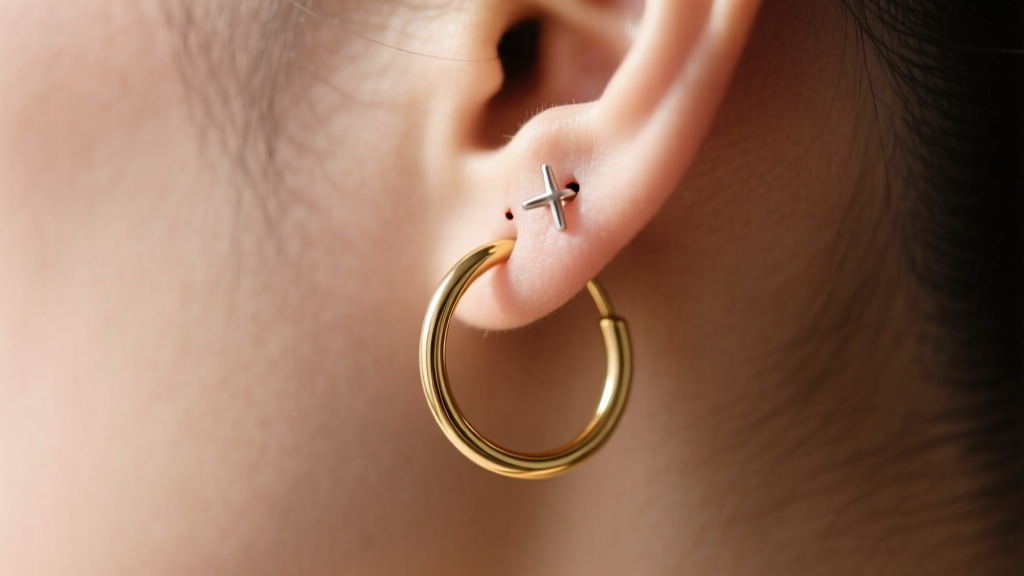
- The 'Cheese Cutter' Effect in Cartilage: If you are buying a hoop for a cartilage piercing, never buy anything thinner than 16-gauge (1.2mm). Thin 20-gauge hoops placed under the tension of cartilage will slowly migrate through the tissue like a cheese wire, causing permanent scarring and piercing rejection.
Final Verdict: Maximizing Your Investment
Assessing the value of a solid gold hoop earring in 2026 requires looking past the sparkle and focusing on the structural reality of the piece. The best value lies in the mid-tier direct-to-consumer and established fine jeweler categories, where you pay for precise CNC-machined closures, seamless tubing or solid wire construction, and fair markups over the daily gold spot price.
Expert Tip: Always ask the jeweler for the exact gram weight of the pair before purchasing. A retailer who is transparent about the gold weight is usually confident in their pricing structure. If they only sell by 'dimensions' and refuse to provide the weight, they are likely hiding a massive markup on hollow, lightweight metal.
By prioritizing 14k gold for mechanical closures, insisting on 16-gauge thickness for cartilage, and understanding the math behind melt values, you can build a collection of gold hoops that will literally last a lifetime without overpaying for the privilege.


