Bow Hoop Earrings: A Material Comparison Guide for Sensitive Ears
Discover the best metals for bow hoop earrings. Compare solid gold, titanium, and vermeil for durability, weight distribution, and sensitive ears.

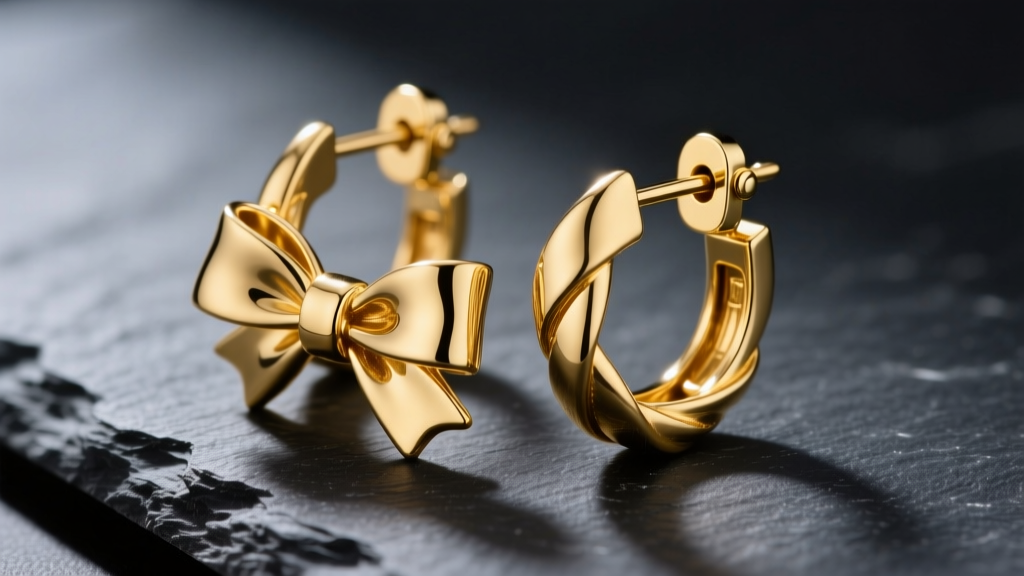
The resurgence of whimsical yet structured jewelry has firmly planted bow hoop earrings into the modern style lexicon. By 2026, this silhouette has evolved from a fleeting trend into a staple accessory, bridging the gap between playful coquette aesthetics and minimalist elegance. However, the integration of a three-dimensional bow motif onto a circular hoop introduces unique structural challenges. Unlike standard seamless hoops, the added mass of a bow creates asymmetric weight distribution, placing disproportionate stress on the earlobe and the earring's hinge mechanism.
For consumers and collectors, understanding the metallurgical properties of these earrings is not merely an academic exercise; it is essential for preventing tissue damage, avoiding contact dermatitis, and ensuring the longevity of the piece. This comprehensive guide dissects the material science behind bow hoop earrings, offering actionable insights into gauge requirements, alloy compositions, and long-term wearability.
The Physics of Bow Hoops: Weight Distribution and Gauge Sizing
The primary engineering flaw in poorly designed bow hoops is the "cheese-cutter effect." This phenomenon occurs when a heavy decorative element (the bow) pulls a thin wire through the earlobe piercing, leading to tissue migration and eventual tearing. The specific gravity of the chosen metal directly dictates the overall mass of the earring.
Standard lobe piercings are typically performed at 20-gauge (0.81mm) or 18-gauge (1.02mm). However, a solid cast bow adds significant downward momentum. To counteract this, expert jewelers recommend a minimum wire thickness of 16-gauge (1.29mm) for the hoop portion, and ideally 14-gauge (1.63mm) if the bow is cast in a dense metal like 18k gold. Thicker wire increases the surface area resting inside the fistula (the piercing channel), distributing the kinetic force of the bow's movement and preventing the wire from slicing through the tissue.
Metal-by-Metal Breakdown for Bow Hoop Earrings
Solid 14k and 18k Gold: The Durability Benchmark
Solid gold remains the premier choice for fine jewelry, but the karat weight drastically alters the physical properties of the bow hoop. According to the Gemological Institute of America (GIA), pure 24k gold is too malleable for structural jewelry. Therefore, it is alloyed with metals like copper, silver, and zinc.
- 14k Gold (58.5% Pure): The optimal choice for intricate bow details. The higher alloy content increases the Vickers hardness, allowing the prongs or cast ribbon folds to resist scratching and deformation. It is highly recommended for daily-wear bow hoops.
- 18k Gold (75% Pure): Offers a richer, warmer hue and superior hypoallergenic properties, but is noticeably softer. An 18k gold bow hoop is more susceptible to micro-scratches on the high-polish ribbon edges and will feel substantially heavier on the ear due to gold's high density (approx. 15.6 g/cm³ for 18k yellow).
Sterling Silver and Rhodium Plating: The Budget Alternative
Sterling silver (92.5% silver, 7.5% copper) is a popular entry point for bow hoops, but it presents specific maintenance hurdles. The copper alloy makes the metal prone to oxidation, particularly in the deep crevices of the bow's ribbon folds where skin oils and moisture accumulate. Furthermore, the inherent softness of silver means the hoop wire can easily warp out of its perfect circular shape if the heavy bow catches on clothing or hair.
To combat tarnish, manufacturers often apply a flash rhodium plating. While this provides a bright, white-metal finish, it is a surface treatment that will eventually wear away at the friction points of the clasp, revealing the oxidizable silver beneath.
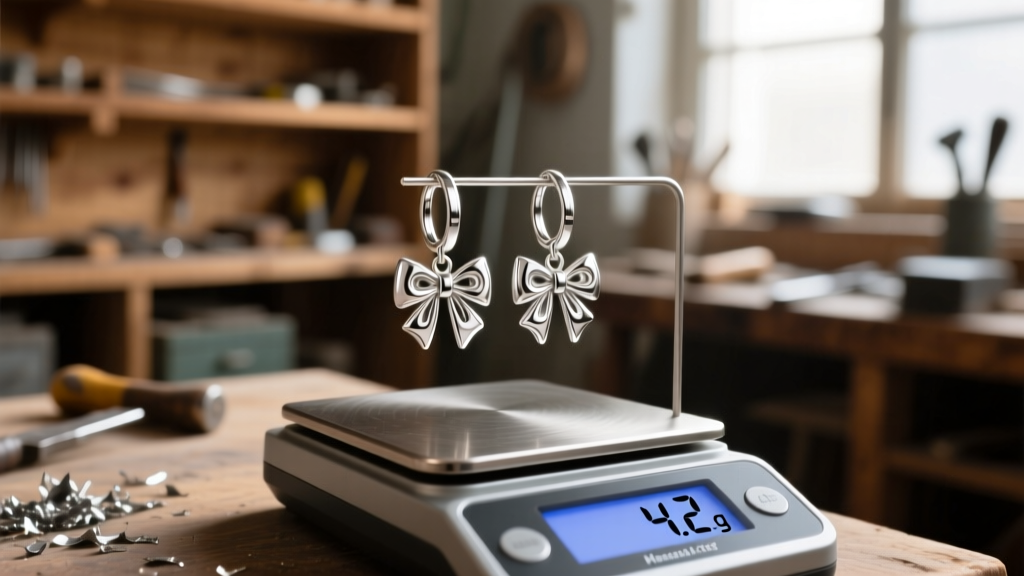
Gold Vermeil vs. Gold-Plated Brass: Navigating the Durability Trap
The market is saturated with gold-toned bow hoops, but the base metal dictates the lifespan and biological safety of the earring. It is crucial to distinguish between vermeil and standard plating.
Expert Note: True gold vermeil requires a base of sterling silver coated with a minimum of 2.5 microns of 10k, 14k, or 18k gold. Standard gold-plated brass often features a microscopic gold layer (under 0.5 microns) over a copper-zinc alloy that frequently contains nickel.
Brass-based bow hoops are a primary culprit for allergic contact dermatitis. As the thin gold plating wears off at the hinge and the post, the underlying nickel and copper are exposed to the skin's moisture, triggering severe localized reactions. For sensitive ears, brass is an absolute contraindication, regardless of the aesthetic appeal of the bow design.
Implant-Grade Titanium: The Hypoallergenic Hero
For individuals with severe metal sensitivities, implant-grade titanium (specifically ASTM F136) is the gold standard. The Association of Professional Piercers strongly advocates for ASTM F136 titanium due to its complete lack of nickel and its biocompatibility. Titanium's specific gravity (4.5 g/cm³) is roughly one-third that of gold, making it exceptionally lightweight.
However, titanium's extreme hardness and high melting point make traditional lost-wax casting difficult. Consequently, titanium bow hoops in 2026 are frequently CNC-machined or assembled from multiple laser-welded components rather than cast as a single piece. This results in a slightly more geometric, modern interpretation of the bow motif, prioritizing structural integrity and hypoallergenic safety over fluid, organic curves.
Comparative Data: Bow Hoop Material Matrix
When selecting your pair, use this matrix to balance your budget, lifestyle, and biological sensitivities.
| Material | Density / Weight | Allergy Risk | Avg. Price Range | Best Use Case |
|---|---|---|---|---|
| Solid 14k Gold | Medium-Heavy | Very Low | $180 - $450 | Daily wear, heirloom quality |
| Solid 18k Gold | Heavy | Extremely Low | $300 - $800+ | Special occasions, luxury collectors |
| Sterling Silver | Medium | Low (Copper risk) | $60 - $150 | Occasional wear, budget-conscious |
| Gold Vermeil | Medium | Low-Medium | $80 - $180 | Trend-driven wear, careful maintenance |
| Plated Brass | Heavy | High (Nickel risk) | $20 - $60 | Strictly short-term, non-sensitive ears |
| ASTM F136 Titanium | Very Light | Zero | $90 - $220 | Sensitive ears, 24/7 wear, active lifestyles |
Hardware and Clasp Mechanics in Bow Hoops
The placement of the bow fundamentally alters the physics of the earring's closure. If the bow is fixed at the bottom of the hoop, it acts as a pendulum, pulling the front of the hoop downward and creating a gap at the top of the earlobe. This exposes the hinge mechanism to hair, lint, and cosmetic products.
To mitigate this, high-end jewelers utilize saddle clasps or hinged clickers with internal tension springs. A standard friction post and butterfly backing is entirely unsuitable for heavy bow hoops, as the downward leverage will easily dislodge the backing, leading to lost earrings. When inspecting a bow hoop, always test the clicker mechanism; it should engage with a crisp, audible snap, and the seam where the post meets the tube should be virtually flush to prevent snagging on delicate fabrics.
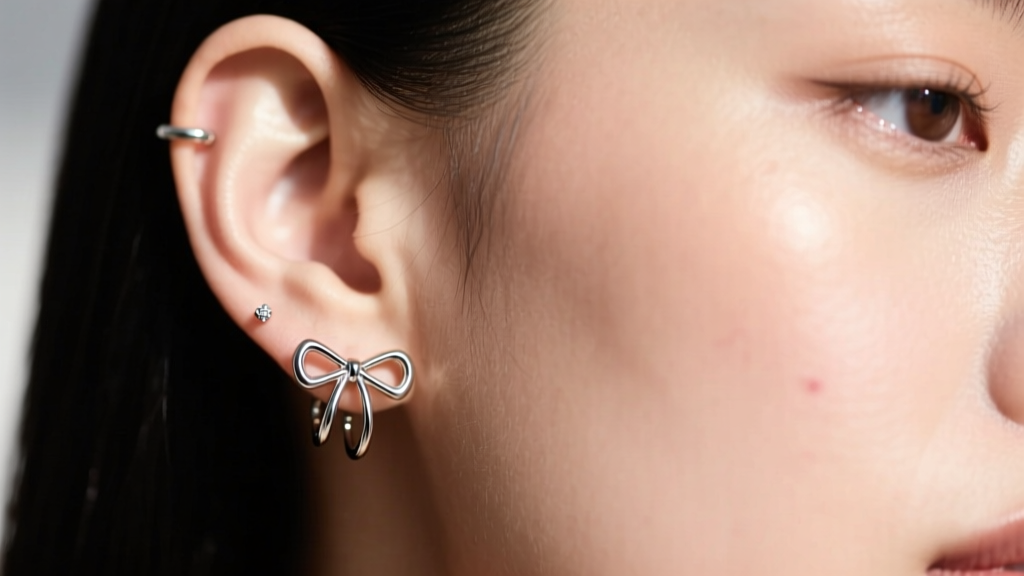
Expert Care and Maintenance Protocols
Maintaining the intricate details of a bow motif requires specific cleaning protocols based on the underlying metallurgy:
- For Solid Gold and Titanium: Ultrasonic cleaners are highly effective at vibrating dirt and sebum out of the deep crevices of the ribbon folds. Use a mild, ammonia-free jewelry solution for three minutes, followed by a distilled water rinse.
- For Sterling Silver: Avoid harsh chemical dips, which can strip rhodium plating. Instead, use a microfiber polishing cloth and a soft-bristled baby toothbrush with mild dish soap to gently agitate the bow's textured areas.
- For Gold Vermeil: Never use ultrasonic cleaners or abrasive polishes, as these will strip the 2.5-micron gold layer. Wipe gently with a damp, lint-free cloth and dry immediately to prevent water spots on the gold surface.
Ultimately, the structural integrity of bow hoop earrings relies on a harmonious marriage between design and material science. By prioritizing appropriate gauge thicknesses and biocompatible alloys, you can enjoy the whimsical elegance of the bow silhouette without compromising the health of your piercings. For further reading on metal sensitivities and skin reactions, consult the comprehensive guides provided by the Mayo Clinic regarding nickel allergies and contact dermatitis.


