How to Choose the Perfect Diamond Heart Earring Studs
Discover how to choose the perfect diamond heart earring studs. Learn about carat weights, metal settings, and pricing in our beginner-friendly guide.

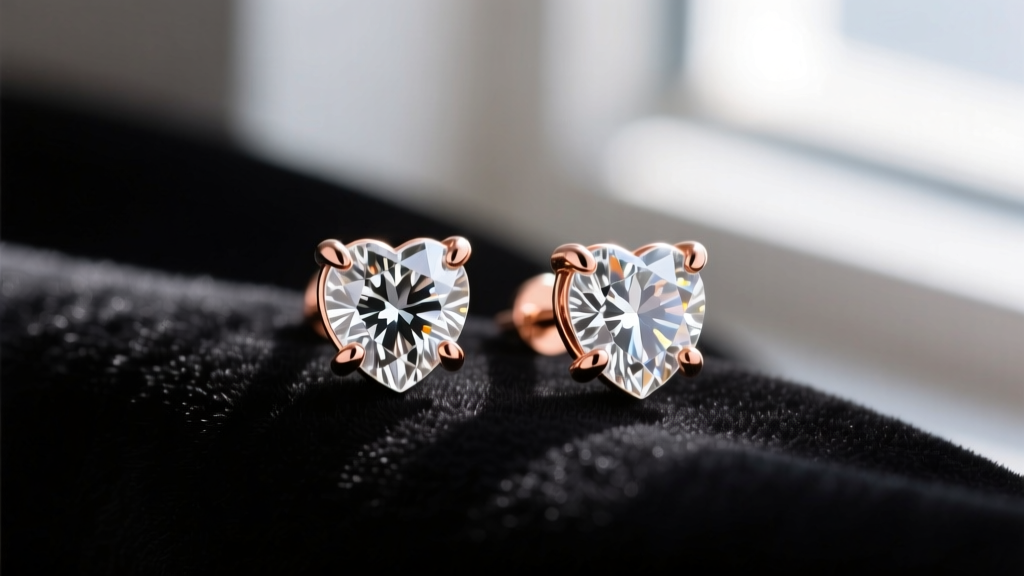
Why Choose Diamond Heart Earring Studs?
When it comes to timeless jewelry, round brilliant cuts often dominate the conversation. However, diamond heart earring studs offer a uniquely romantic, deeply personal, and visually striking alternative. As a modified brilliant cut, the heart shape requires exceptional precision to achieve perfect symmetry and optimal light return. For beginners navigating the fine jewelry market in 2026, understanding the nuances of this specific shape is crucial to making a smart, lasting investment.
Unlike standard round studs, heart-shaped diamonds possess a complex anatomy: the cleft (the dip at the top), the lobes (the two rounded tops), the wings, the belly, and the point. This structural complexity means that buying diamond heart earring studs requires a different set of rules than buying traditional shapes. In this comprehensive guide, we will break down everything you need to know about cut quality, prong security, metal choices, and current pricing.
The 4Cs: Adjusted for Heart-Shaped Diamonds
The standard 4Cs (Cut, Color, Clarity, Carat) still apply, but their hierarchy shifts dramatically when evaluating a heart shape. According to the Gemological Institute of America (GIA), the heart shape is one of the most difficult to cut, requiring a master cutter to balance the shape's natural rough crystal against the need for perfect symmetry.
Cut and Symmetry: The Non-Negotiable Factor
For diamond heart earring studs, symmetry is the single most important metric. If the lobes are uneven or the cleft is off-center, the diamond will look distorted, especially when viewed face-up on the ear. Always look for a "Very Good" or "Excellent" symmetry grade on the GIA or IGI grading report. A poorly cut heart will suffer from the "bow-tie effect"—a dark shadow stretching across the center of the stone that blocks light return.
Color Grading: Hiding the Tint
Heart-shaped diamonds tend to retain more color than round brilliants because their facet pattern does not scatter light as aggressively. If you are setting your studs in white gold or platinum, aim for a color grade of G or H to ensure the diamonds appear completely colorless to the naked eye. If you prefer the warm aesthetic of 14k yellow or rose gold, you can safely drop down to an I or J color grade, as the metal's hue will mask the diamond's natural warmth.
Clarity: Protecting the Point
While an SI1 (Slightly Included) clarity grade is generally eye-clean, you must scrutinize the diamond's inclusion plot. The absolute weakest point of a heart-shaped diamond is the sharp bottom tip. If a grading report notes a "feather" (a small internal crack) near the point, avoid that stone. During the setting process, or from a simple bump against a hard surface, a feather near the point can cause the diamond to cleave or chip entirely.
Prong Settings and Security
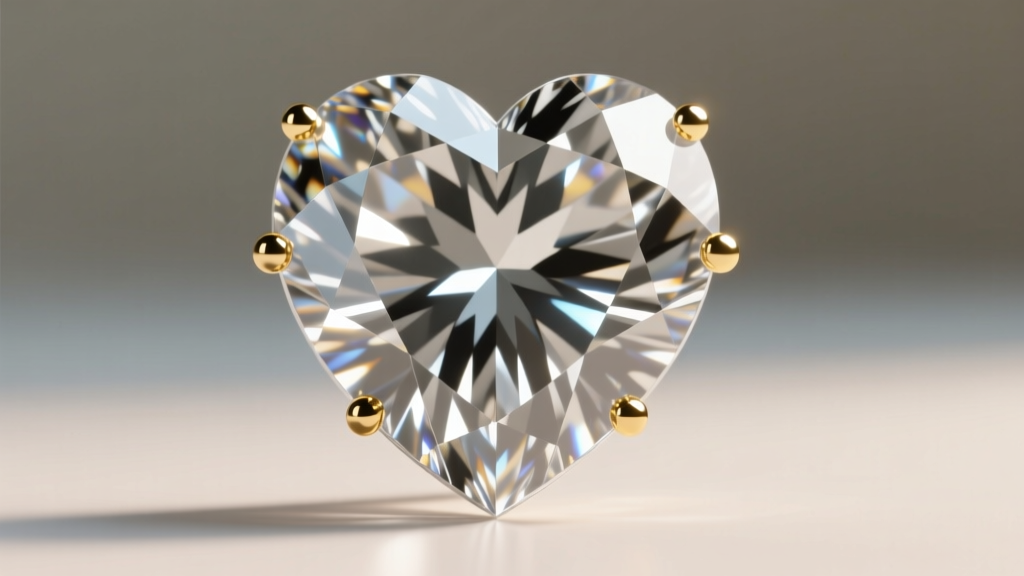
You cannot set a heart-shaped diamond in a standard four-prong basket. The unique geometry demands a specialized five-prong setting to ensure both security and aesthetic balance.
- The Cleft Prong: A single, delicate prong sits in the top cleft to hold the lobes in place.
- The Lobe Prongs: Two prongs secure the rounded tops, ensuring the stone doesn't pivot.
- The Point Protection: This is where expertise matters. The bottom point must be protected by either two distinct prongs wrapping around the tip or a specialized "V-prong" that cups the sharp edge. Leaving the point exposed is a recipe for chipping.
When browsing diamond heart earring studs, zoom in on the product images to verify the prong configuration. If the point is exposed, keep shopping.
Metal Choices for Heart Studs
The metal you choose impacts both the durability of the setting and the visual contrast of the diamond.
"For fancy shapes with sharp points, like hearts, pears, and marquises, I always recommend platinum or 18k white gold. The prongs need to be incredibly strong to protect the tips, and platinum's tensile strength and resistance to wear make it the superior choice for long-term security." — Master Bench Jeweler
- Platinum: The most secure and durable option. It develops a patina over time but will never wear away, keeping the delicate prongs intact for decades.
- 14k White Gold: A highly popular, budget-friendly alternative. It requires rhodium plating every 1-2 years to maintain its bright white finish.
- 14k Rose Gold: Offers a beautiful vintage contrast that complements lower color grades (I-K) beautifully, giving the studs a warm, romantic glow.
Certification and Ideal Proportions
Never purchase diamond heart earring studs without an independent grading report from a top-tier laboratory like the GIA (Gemological Institute of America) or IGI (International Gemological Institute). These reports provide the exact measurements and symmetry grades necessary to verify the stone's quality. According to the GIA Diamond Buying Guide, relying solely on a jeweler's in-house appraisal is a common beginner mistake that can lead to overpaying for poorly cut stones.
For ideal proportions, look for a length-to-width ratio between 0.90 and 1.10. A ratio of 1.00 creates a perfectly balanced, classic heart shape. Ratios below 0.90 will make the heart look wide and stubby, while ratios above 1.10 will stretch the heart, making it look elongated and potentially fragile at the point. Furthermore, ensure the total depth percentage falls between 58% and 65%, and the table percentage sits between 55% and 62%. These parameters guarantee that light will reflect properly through the complex facet structure of the heart cut.
2026 Pricing Guide: Natural vs. Lab-Grown
The market for diamond heart earring studs has evolved significantly. Lab-grown diamonds now offer identical chemical and optical properties at a fraction of the cost, allowing buyers to prioritize larger carat weights or higher color grades. Note that stud earrings are priced by CTW (Carat Total Weight), meaning a 1.00 CTW pair contains two 0.50-carat diamonds.
| Total Carat Weight (CTW) | Natural Diamond Price Range | Lab-Grown Diamond Price Range | Approximate MM Size (Per Ear) |
|---|---|---|---|
| 0.50 CTW | $900 - $1,600 | $250 - $450 | 4.0mm - 4.3mm |
| 0.75 CTW | $1,800 - $3,200 | $400 - $700 | 4.8mm - 5.1mm |
| 1.00 CTW | $3,500 - $6,000+ | $650 - $1,100 | 5.5mm - 5.8mm |
| 1.50 CTW | $7,000 - $12,000+ | $1,200 - $2,000 | 6.5mm - 6.8mm |
For everyday wear, the 0.50 to 0.75 CTW range provides excellent visibility without feeling overly heavy on the earlobe. If you are purchasing for a milestone anniversary, the 1.00 CTW lab-grown option offers incredible visual impact and financial value.
Maintenance and Cleaning the Cleft
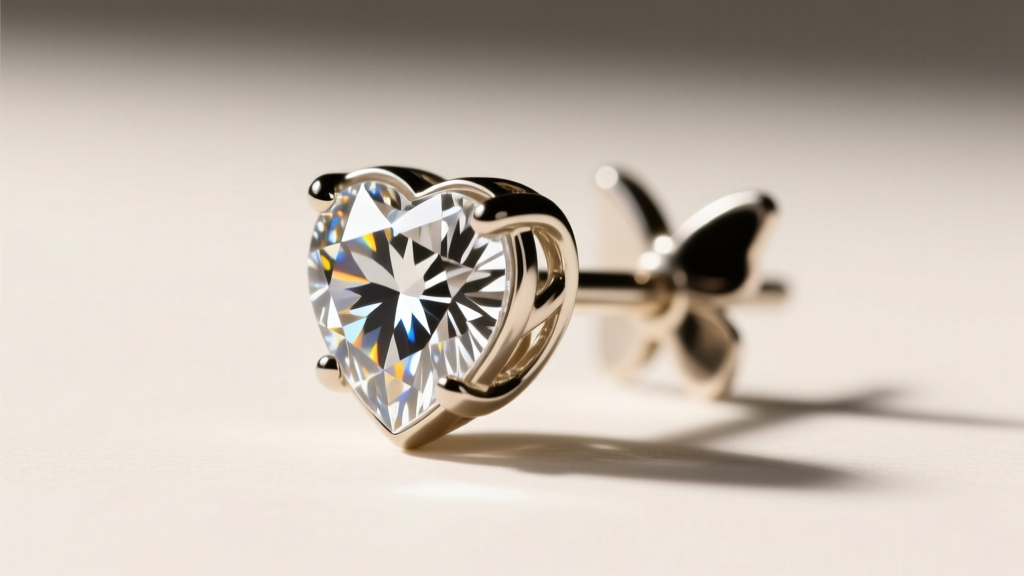
The anatomy of a heart-shaped diamond presents a unique maintenance challenge: the cleft. The sharp inward dip at the top of the heart acts as a magnet for lotion, hairspray, and natural skin oils. When dirt accumulates in the cleft, it blocks light from entering the top of the stone, making the entire diamond look dull and lifeless.
How to Clean Your Heart Studs at Home
- Fill a small bowl with warm water and a few drops of mild, ammonia-free dish soap.
- Let the diamond heart earring studs soak for 15 to 20 minutes to loosen debris.
- Use a baby-sized, extra-soft toothbrush to gently agitate the cleft and the underside of the basket setting.
- Rinse thoroughly under lukewarm running water (always use a strainer over the drain!).
- Pat dry with a lint-free microfiber cloth.
Avoid ultrasonic cleaners if your diamonds have been fracture-filled or if they have inclusions near the girdle, as the high-frequency vibrations can exacerbate existing internal weaknesses. For routine upkeep, simply wiping the tops with a clean jewelry cloth after wearing them will prevent heavy buildup.
Final Thoughts on Selecting Your Pair
Choosing diamond heart earring studs is an exercise in balancing romance with structural pragmatism. By prioritizing perfect symmetry, insisting on a five-prong setting with point protection, and selecting a metal that guarantees long-term prong security, you ensure your earrings will remain brilliant and intact for a lifetime. Whether you opt for the earth-mined tradition of a natural diamond or the modern brilliance of a lab-grown stone, the heart shape remains a powerful, enduring symbol of love and individuality.


