The Ultimate Care Guide for Every Circle Earring in Your Box
Learn expert techniques to clean, polish, and maintain your circle earring collection. Discover safe solutions for gold, silver, and hinged clasps.

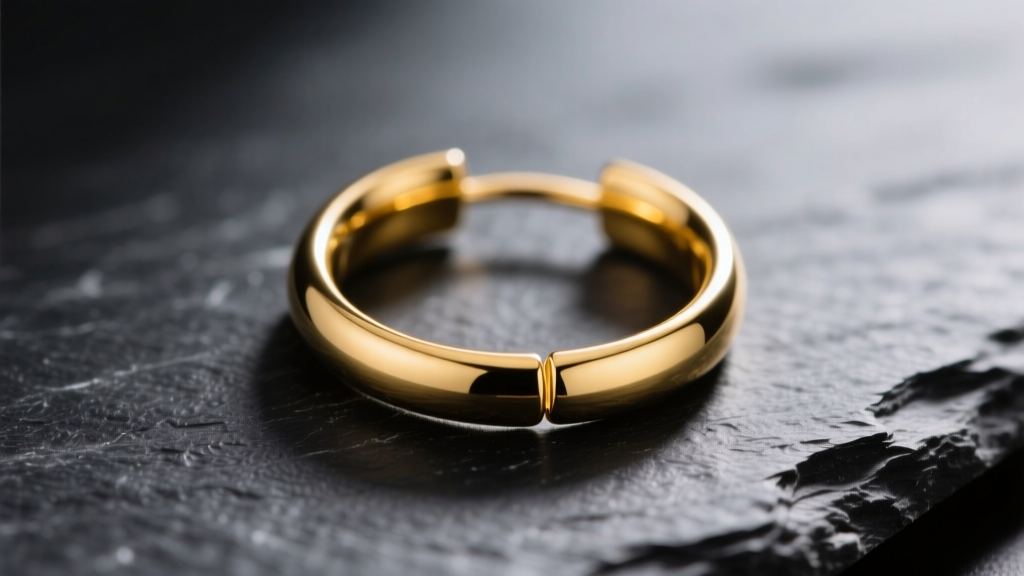
Whether you prefer a minimalist 14k gold huggie, an oversized 925 sterling silver hoop, or an ASTM F136 titanium continuous ring, the structural integrity and brilliance of your jewelry depend entirely on your maintenance routine. A circle earring is uniquely vulnerable to mechanical stress and environmental tarnishing due to its continuous geometry and moving parts. In this comprehensive guide, we break down the exact protocols for cleaning, sanitizing, and preserving your circular ear adornments, moving beyond generic advice into the metallurgical and mechanical realities of jewelry care.
The Anatomy of a Circle Earring: Where Dirt and Bacteria Hide
Unlike a simple stud, a circle earring features complex topography that traps sebum, dead skin cells, and environmental pollutants. Understanding where debris accumulates is the first step in effective maintenance.
- The Hinge Barrel: On hinged hoops and clickers, the tiny cylindrical barrel housing the pin is a magnet for biological buildup. Over time, this causes the hinge to stiffen or emit a faint, unpleasant odor.
- The Tension Gap: Continuous (seamless) hoops rely on a microscopic gap where the post meets the tube. Lotion and soap scum easily lodge inside the hollow tubing of the receiving end.
- The Inner Curve: The interior diameter of the circle rests against the neck and jawline, constantly collecting makeup transfer, perfume residue, and natural body oils.
Material-Specific Cleaning Protocols
Not all metals react the same way to cleaning agents. Using the wrong chemical compound can strip plating, induce micro-pitting, or permanently dull a high-polish finish.
Solid Gold (14k and 18k) and Gold Vermeil
Solid gold is highly resistant to corrosion but easily scratched. For routine cleaning, a solution of warm distilled water and a few drops of phosphate-free dish soap (like Dawn) is ideal. Never use toothpaste or baking soda paste on gold; these are abrasive and will create micro-scratches that dull the mirror finish over time. For gold vermeil (a thick layer of gold over sterling silver), avoid ultrasonic cleaners entirely, as the high-frequency vibrations can delaminate the gold layer from the silver core.
Sterling Silver and Oxidation Management
925 sterling silver contains 7.5% copper, which reacts with sulfur in the air and on the skin to form silver sulfide (tarnish). While commercial liquid silver dips contain thiourea—a chemical that instantly strips tarnish—it also strips the protective outer layer of the metal and can cause irreversible micro-pitting if left for more than a few seconds. According to the Jewelers of America, the safest method for silver maintenance is using a treated jeweler's polishing cloth impregnated with fine rouge, which mechanically lifts tarnish without chemical damage.
Implant-Grade Titanium (ASTM F136)
Titanium is highly biocompatible and virtually immune to tarnish, making it the gold standard for fresh piercings and sensitive ears. However, it can still accumulate biofilm. Titanium can withstand harsher sanitization methods, including brief submersion in 70% isopropyl alcohol, though a simple saline soak is usually sufficient for daily maintenance.
Step-by-Step Deep Cleaning Routine
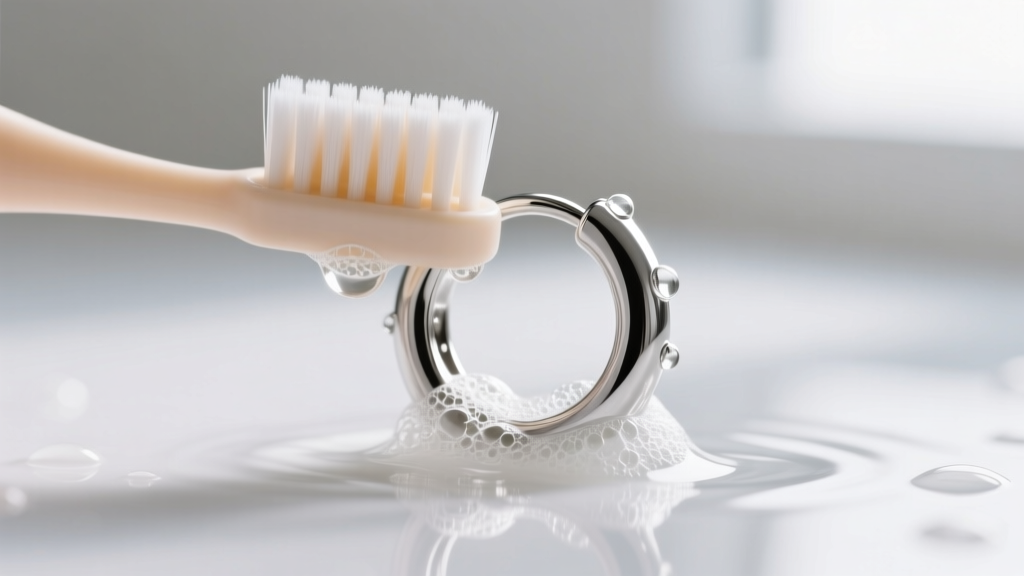
For a thorough monthly deep clean of your metal-only circle earrings, follow this professional-grade protocol:
- Preparation: Mix one cup of warm distilled water with three drops of mild, ammonia-free dish soap in a glass bowl.
- Soaking: Submerge the earrings for exactly 5 to 7 minutes. This softens hardened sebum and cosmetic residue without risking metal fatigue.
- Agitation: Using a soft-bristled baby toothbrush or a specialized jewelry brush, gently scrub the interior curve and the hinge mechanisms. Do not apply heavy pressure to the post.
- Rinsing: Rinse thoroughly under lukewarm running water. Ensure the drain is plugged!
- Drying: Pat dry with a lint-free microfiber cloth. Use a hairdryer on the 'cool' setting to blast water out of hollow tubes and hinge barrels.
Cleaning Agents vs. Metal Types
| Metal / Material | Safe Cleaners | Unsafe Cleaners | Ultrasonic Safe? |
|---|---|---|---|
| 14k / 18k Solid Gold | Mild dish soap, warm water | Chlorine bleach, abrasive pastes | Yes (if no soft gems) |
| 925 Sterling Silver | Polishing cloth, mild soap | Thiourea dips (prolonged), bleach | Yes (with caution) |
| Gold Vermeil / Plated | Damp microfiber cloth only | Ultrasonic, liquid dips, alcohol | No |
| ASTM F136 Titanium | Saline, dish soap, 70% IPA | Hydrofluoric acid (industrial) | Yes |
Hinge and Clasp Maintenance: Preventing Mechanical Failure
The most common point of failure on a hinged circle earring is the clasp mechanism. If a clicker stops 'clicking' or feels loose, it is rarely a structural defect; it is almost always debris blocking the latch.
The Interdental Brush Trick: To clean a hinge barrel, do not use a toothpick, as wood splinters can break off inside the mechanism. Instead, use a 0.5mm or 0.6mm soft interdental brush (the kind used for braces or retainers). Dip the brush in isopropyl alcohol, insert it gently into the hinge gap, and rotate. This clears out compacted dead skin and lotion that prevent the pin from seating fully into the catch.
Expert Warning: Never apply household lubricants like WD-40 or sewing machine oil to a jewelry hinge. These petroleum-based oils will attract microscopic dust particles, eventually creating a gritty paste that will permanently jam the micro-mechanism and irritate your piercing.
The Continuous Hoop Dilemma: Twisting vs. Bending
Proper handling is just as critical as cleaning when it comes to maintaining the perfect circular geometry of a seamless hoop. When opening a continuous circle earring to clean it or change it out, never pull the ends apart laterally (up and down). Bending the metal laterally causes work hardening and metal fatigue, eventually leading to a microscopic fracture right at the base of the post. Furthermore, it warps the circle into an oval, making it impossible to close flush.
The Correct Technique: Grip the earring on either side of the gap and twist the ends longitudinally (left and right), as if you are turning a steering wheel. This utilizes the natural torsional flexibility of the metal wire, allowing the ends to separate without compromising the structural memory of the circle.
Proper Storage to Prevent Warping and Scratching
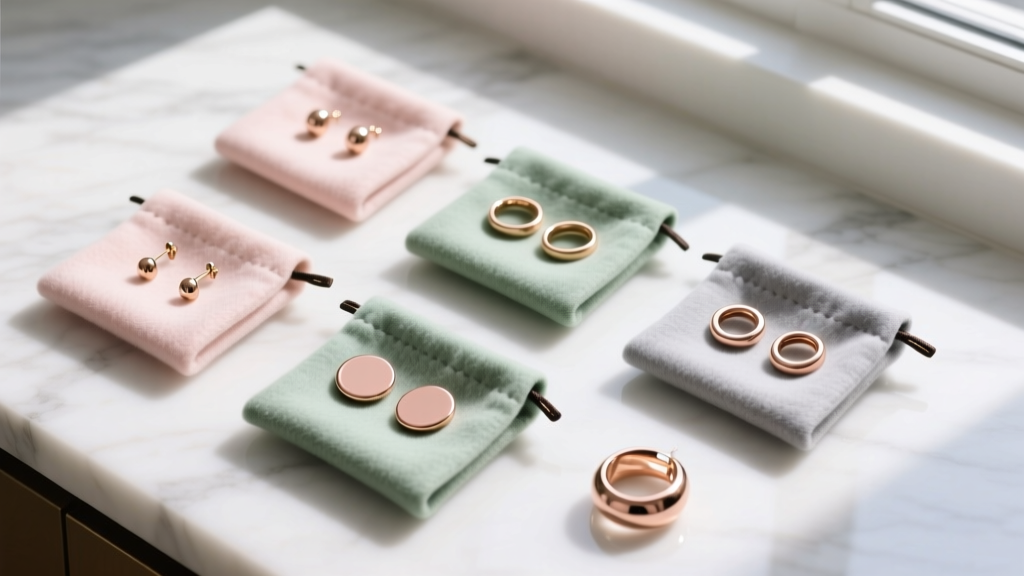
How you store your circle earrings between wears dictates their longevity. Tossing multiple hoops into a single jewelry box compartment guarantees a tangled mess and severe surface scratching. Gold and silver are relatively soft metals (gold sits at 2.5-3 on the Mohs hardness scale), meaning they can be easily scratched by harder materials or even by each other.
- Anti-Tarnish Pouches: Store sterling silver circle earrings in individual Pacific cloth or treated flannel pouches. These fabrics absorb sulfur compounds from the air, delaying the oxidation process by months.
- Compartmentalized Trays: Use a lined jewelry box with individual slots. Ensure the hoops are fully closed and laid flat. Hanging large, heavy hoops on thin hooks for extended periods can cause the metal to stretch and warp under its own weight, especially in higher karat golds like 22k or 24k.
- Climate Control: Avoid storing jewelry in the bathroom. The constant fluctuations in humidity and temperature from showers accelerate tarnishing and degrade the integrity of any epoxy resins or adhesives used in gemstone settings.
Gemstone Inlays: A Special Precaution
If your circle earring features inlaid gemstones, you must adjust your cleaning protocol. The Gemological Institute of America (GIA) explicitly warns against using ultrasonic cleaners (which operate at 40kHz frequencies) on porous or fractured stones. Opals, turquoise, pearls, and emeralds are highly susceptible to shattering or losing their luster when subjected to high-frequency acoustic cavitation. For gemstone-adorned hoops, stick strictly to a damp, lint-free cloth and avoid submerging the piece in any liquid.
Final Thoughts on Longevity
A high-quality circle earring is an investment in both craftsmanship and material. By understanding the metallurgical properties of your jewelry and adopting a disciplined, material-specific cleaning routine, you can ensure your hoops remain perfectly round, brilliantly polished, and mechanically sound for decades. Consistent maintenance not only preserves the aesthetic value of your collection but also safeguards the health of your piercings by eliminating bacterial harbors.


