Can You Wear Earrings Through TSA? The Ultimate Security Guide
Wondering if you can wear earrings through TSA? Learn how airport scanners react to different metals, piercings, and how to avoid security delays.
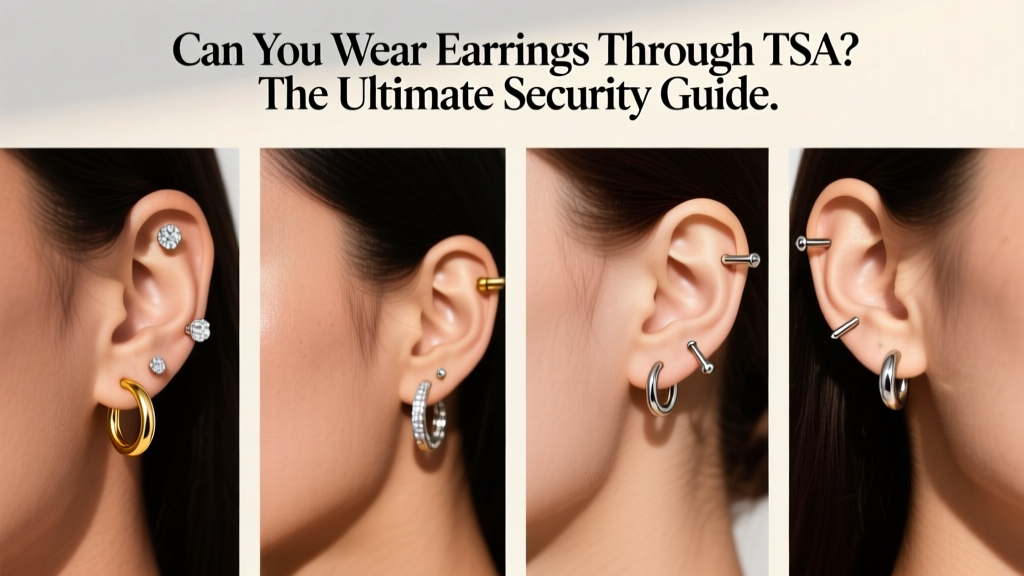

The Short Answer: Can You Wear Earrings Through TSA?
If you are standing in the security line and suddenly wondering, "can you wear earrings through TSA?" the short answer is yes. According to the Transportation Security Administration (TSA), passengers are not required to remove fine jewelry, small studs, or standard hoops before passing through security checkpoints. However, the reality of airport security is more nuanced than a simple yes or no. The likelihood of your earrings triggering an alarm depends entirely on their metal composition, physical mass, and the specific type of scanner deployed at your departure airport.
The primary goal of TSA screening is to identify concealed threats, not to police your fashion choices. Yet, bulky costume jewelry, heavy-gauge steel plugs, and magnetic clasps can easily disrupt the screening process, leading to secondary pat-downs and missed flights. To navigate airport security seamlessly, you must understand how your jewelry interacts with modern screening technology and which materials are virtually invisible to scanners.
How Airport Scanners React to Different Earring Metals
Not all metals are created equal when passing through a Walk-Through Metal Detector (WTMD). The WTMD operates on electromagnetic induction; it generates a magnetic field and detects disruptions caused by ferromagnetic materials. Here is a breakdown of how common earring materials interact with TSA equipment:
| Metal Type | Magnetic Properties | WTMD Alarm Risk | AIT Scanner Risk | Travel Recommendation |
|---|---|---|---|---|
| Implant-Grade Titanium (ASTM F136) | Non-magnetic | Extremely Low | Low (if small) | Highly Recommended |
| 14k / 18k Solid Gold | Non-magnetic | Very Low | Low (if small) | Highly Recommended |
| Surgical Steel (316L) | Slightly Magnetic | Moderate | Moderate | Proceed with Caution |
| Sterling Silver (925) | Non-magnetic | Low | Low | Recommended |
| Neodymium Magnetic Clasps | Highly Magnetic | Guaranteed Alarm | High | Avoid / Remove |
| Base Metal / Costume Alloy | Highly Magnetic | High | High | Avoid / Remove |
Many commercial "surgical steel" earrings are made from 316L stainless steel, which contains trace amounts of iron and nickel. While generally safe for healing piercings, 316L steel can trigger highly calibrated WTMDs, especially if you are wearing multiple cartilage piercings or heavy 8-gauge to 0-gauge plugs. For frequent flyers, upgrading to ASTM F136 implant-grade titanium is the ultimate travel hack, as it is entirely non-ferromagnetic and biocompatible.

Body Scanners vs. Metal Detectors: What Triggers the Alarm?
To troubleshoot security delays, you must differentiate between the two primary screening machines. The traditional Walk-Through Metal Detector (WTMD) only cares about magnetic mass. If you wear small titanium or gold studs, you will walk through without a beep.
However, most major airports now utilize Advanced Imaging Technology (AIT), commonly known as the millimeter-wave body scanner. This machine does not detect metal; instead, it bounces harmless millimeter waves off your body to create a 3D topographical map of your surface. The software looks for anomalies—anything that protrudes from the skin or disrupts the natural contour of your body.
The Cartilage, Ear Cuff, and Heavy Gauge Complication
While a flush 16-gauge flat-back labret stud might be invisible to an AIT scanner, large ear cuffs, protruding gemstone settings, and heavy steel plugs create a distinct topographical anomaly on the side of your head. When the AIT software detects this bulk, it highlights the ear area on the agent's monitor. This does not mean you are in trouble, but it guarantees a targeted secondary screening of your ear.
Pro-Tip: If you wear non-piercing ear cuffs that wrap around the helix, consider removing them and placing them in your carry-on before the scanner. Their irregular shape frequently registers as a surface anomaly, prompting the TSA agent to manually inspect your ear.
Troubleshooting: What to Do If Your Earrings Set Off the Alarm
If the WTMD alarms or the AIT scanner highlights your ear, do not panic, and do not immediately rip your earrings out. Removing jewelry in the security bowl area is a primary cause of lost items, as small studs easily fall through the grates of the divestment bins or get swept away with discarded boarding passes.

Instead, follow this troubleshooting protocol:
- Declare the Jewelry: Before stepping into the scanner, verbally inform the TSA officer, "I am wearing multiple cartilage piercings made of surgical steel." Transparency speeds up the process.
- The Handheld Wand: The officer will use a handheld metal detector wand. When it beeps near your ear, simply touch your earring to confirm the source of the metal.
- The ETD Swab: If the AIT scanner flagged an anomaly, the officer will perform an Explosive Trace Detection (ETD) swab. They will use a small fabric wand to swab the surface of your earring and your hands. This tests for nitrate-based explosives, not metal.
- Manual Pat-Down: In rare cases where the jewelry is too bulky to swab effectively, a same-sex officer will perform a light pat-down of the ear area to ensure nothing is concealed beneath the jewelry.
Best Travel-Friendly Earrings for Frequent Flyers
If you want to achieve "ghost status" at airport security—walking through scanners without a single beep—curating a travel-specific jewelry capsule is essential. Focus on low-profile designs and non-magnetic materials.
- Flat-Back Titanium Labrets: Brands like BVLA or Maria Tasha offer 14k gold and titanium flat-backs that sit completely flush against the earlobe or cartilage, eliminating AIT topographical anomalies.
- Small Huggie Hoops: Opt for 10mm to 12mm solid gold or platinum huggies. Their tight profile prevents them from catching on winter scarves or airline headphones, and their low mass bypasses WTMD thresholds.
- Threadless Push-Pin Ends: Avoid screw-on backs for travel. Threadless jewelry is secure enough to survive a long-haul flight but can be easily swapped out at your destination if you decide to wear heavier statement pieces.
Expert Tips for a Seamless Security Experience
Navigating TSA with body jewelry is largely about risk management. Keep these expert guidelines in mind for your next trip:
- Beware of Magnetic Therapy Earrings: Some wellness brands sell magnetic earrings for pain relief. These contain neodymium magnets and will instantly trigger the metal detector. Remove them before security.
- Check the AskTSA Portal: If you are traveling with a highly unusual piece of body jewelry (such as a large-gauge steel ear weight or a complex dermal anchor array), tweet a photo to @AskTSA before your flight for real-time, official guidance.
- Never Pack Fine Jewelry in Checked Luggage: If you do decide to remove your earrings at the checkpoint, place them in a secure, zipped compartment of your personal carry-on bag, never in the loose plastic bins.
- Consider the Headphones: Over-ear noise-canceling headphones are a travel staple, but thick hoops and large gemstone studs can be pushed painfully into your neck or cartilage when wearing them. Switch to studs for the flight duration.
Ultimately, you absolutely can wear earrings through TSA checkpoints provided you choose the right materials and profiles. By opting for implant-grade titanium, solid gold, and flush-fitting designs, you can keep your favorite piercings secure while gliding through airport security without interruption.