Petrified Wood Earrings: 2026 Value & Pricing Guide
Discover the true value of petrified wood earrings in 2026. We break down pricing tiers, color rarity, weight limits, and hardware quality for smart buyers.

The True Cost of Petrified Wood: Beyond the Price Tag
Petrified wood is a geological marvel, representing millions of years of organic material slowly being replaced by silica-rich groundwater. For jewelry collectors and everyday wearers alike, petrified wood earrings offer a unique blend of natural history and lapidary art. However, assessing the true value of these pieces in 2026 requires looking far beyond the sticker price. Because petrified wood is essentially a form of microcrystalline quartz (chalcedony and jasper), it carries specific physical properties—namely a Mohs hardness of 6.5 to 7 and a specific gravity of roughly 2.65—that directly impact how it must be cut, set, and worn as earrings.
Unlike lightweight resin or hollow metal jewelry, petrified wood is dense. This density introduces structural challenges regarding ear lobe fatigue, wire gauge requirements, and bezel construction. Furthermore, the market is flooded with mass-produced, heavily stabilized slices alongside museum-grade, hand-cut cabochons. According to the Gemological Institute of America (GIA), the value of any quartz-based gem material is heavily dictated by color saturation, translucency, and the quality of the polish. In this comprehensive budget and value assessment, we will dissect the pricing tiers, geographic premiums, and hardware realities you need to know before purchasing petrified wood earrings.
The 2026 Market Pricing Matrix: What Should You Actually Pay?
To accurately assess budget and value, we must segment the market into three distinct tiers. The price disparities between these tiers are rarely just about the stone itself; they are driven by lapidary labor, hardware integrity, and ethical sourcing.
| Value Tier | Price Range (Per Pair) | Stone Quality & Cut | Hardware Material | Lapidary & Finish |
|---|---|---|---|---|
| Budget / Entry | $15 - $45 | Flat slices, common brown/tan, heavily stabilized with epoxy. | Base metal, brass, or thin gold-plate over zinc alloy. | Machine-tumbled or low-grit polish (up to 1200 grit). |
| Mid-Range / Artisan | $50 - $140 | Hand-cut cabochons, vibrant reds/yellows, minimal natural fracturing. | 925 Sterling Silver or 14/20 Gold-Filled (heavy gauge). | Hand-sanded to 14,000 grit, high-dome or precision bevel. |
| Premium / Collector | $150 - $400+ | Rare blue/purple (cobalt/chromium), translucent agate bands, unstabilized. | Solid 14k/18k Gold, custom-fabricated bezels. | Mirror polish, master lapidary symmetry, matched pairs. |
When shopping in the mid-range tier, you are paying for the artisan's time. Cutting matched pairs of petrified wood is notoriously difficult; the internal cellular structure (often visible as annual rings or bark patterns) must be aligned perfectly so the left and right earrings mirror each other. If a seller is offering perfectly matched, high-dome cabochons in sterling silver for under $30, the stones are likely dyed or made from reconstituted dust.
The Weight Problem: Density and Lobe Fatigue
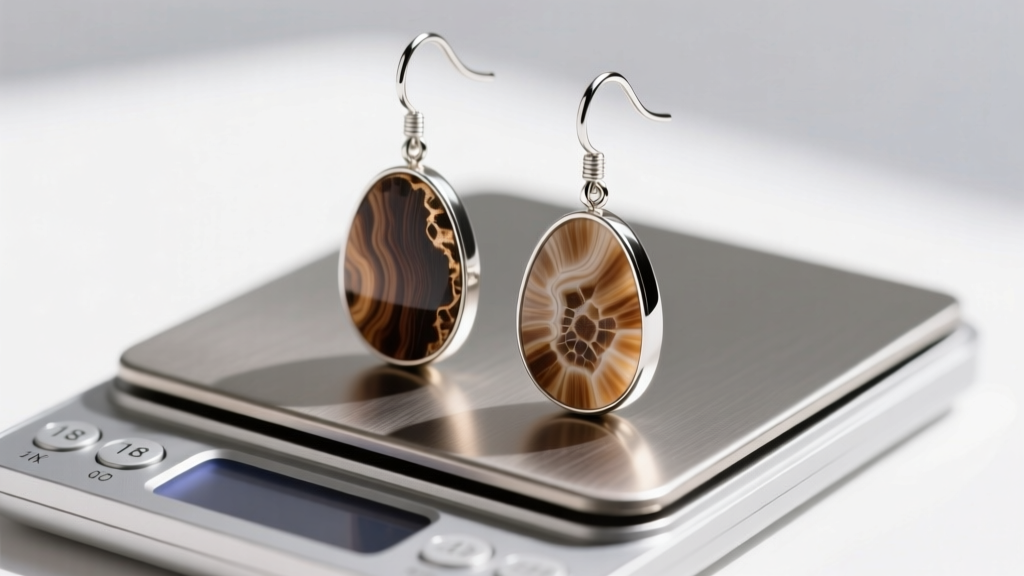
The most overlooked factor in the value assessment of petrified wood earrings is weight distribution. As noted by mineralogical data on Mindat.org, the quartz replacement process results in a dense, heavy stone. A standard 20mm round cabochon that is 6mm thick will weigh approximately 5 to 6 grams. Add a sterling silver bezel and ear wire, and a single earring can easily exceed 7 grams.
Wire Gauge and Structural Integrity
Standard ear wires are typically 20-gauge or 22-gauge. While 22-gauge is fine for lightweight gems, it will physically bend under the pendulum swing of a heavy petrified wood drop earring. For any dangle or drop earring exceeding 4 grams per side, you must look for 18-gauge or even 16-gauge ear wires. If the hardware is too thin, the earring will constantly tilt forward, placing uneven stress on the piercing channel and eventually causing the lobe to stretch or tear.
Stud Backings and Support Discs
For petrified wood studs, the issue is not the wire, but the backing. A heavy 12mm cabochon stud will droop downward on the earlobe, making the stone point toward the floor rather than facing forward. High-value listings will often include silicone support discs (often called 'lobe patches' or 'earring lifters') that sit behind the earlobe to distribute the weight across a wider surface area. If a premium seller does not include or recommend these, they are ignoring the practical wearability of their product.
Lapidary Value: Cabs, Slices, and Stabilization
The way the rough fossil is processed dictates both its aesthetic value and its durability. Petrified wood is frequently riddled with micro-fractures and quartz vugs (small hollow cavities) formed during the fossilization process.
The Reality of Stabilization Treatments
In the budget and lower-mid tiers, lapidaries use vacuum chambers to force epoxy resins (such as Opticon 311) into these micro-fractures before cutting the stone. This stabilization prevents the stone from shattering on the lapidary wheel and increases durability. Stabilization is not inherently bad, and it is an accepted practice for highly fractured material. However, it must be disclosed. You should not pay premium, natural-stone prices for a heavily stabilized slice. True collector-grade value is reserved for 'solid' or unstabilized pieces where the silica replacement was 100% complete and structurally sound without chemical assistance.
Flat Slices vs. High-Dome Cabochons
Flat slices with glued-on bail findings are the cheapest to produce. They require minimal lapidary skill—simply slabbing the rock, sanding the face, and sealing the edges. High-dome cabochons, however, require hours of grinding and sanding through progressive diamond grits (from 80 grit up to 14,000 grit diamond paste) to achieve a glass-like, mirror finish. When assessing value, run your fingernail over the dome of the stone. A premium cabochon will have no flat spots, no 'orange peel' texturing, and a perfectly symmetrical curve that catches the light uniformly.
Color Rarity and Geographic Premiums
Not all petrified wood is created equal. The colors are derived from trace minerals present in the groundwater during the permineralization process. Understanding these geographic and chemical premiums is vital for accurate budget allocation.
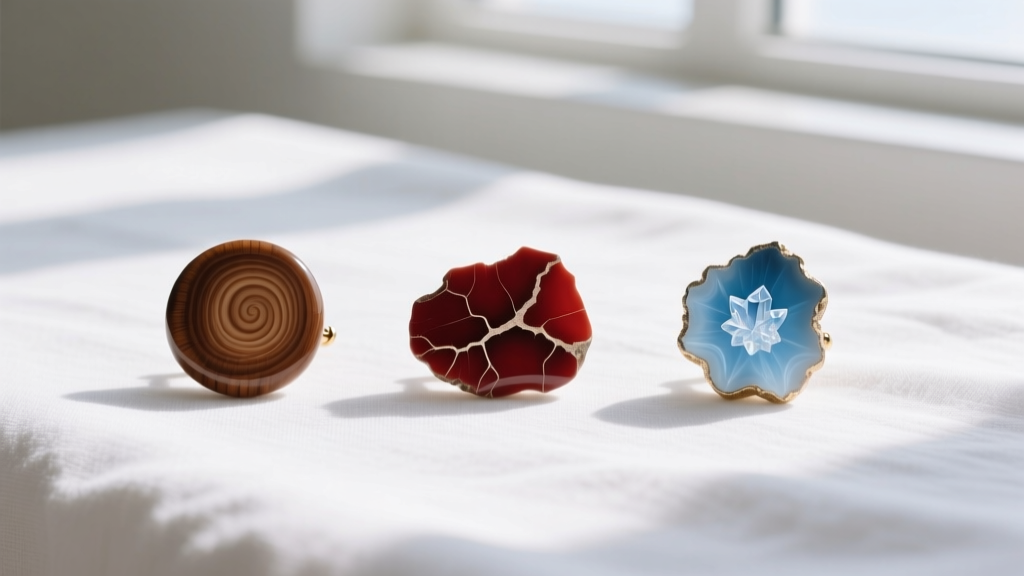
- Indonesian (Sumatra/Java): Typically features rich, opaque browns, tans, and dark wood-grain patterns. This material is abundant, hard, and takes a good polish, but it commands the lowest market premium. Expect to pay $15–$35 for well-set studs.
- Arizona (USA): Famous for its vibrant reds, oranges, and yellows, driven by iron oxide (hematite) inclusions. The Petrified Forest National Park region produces some of the most sought-after material. High-quality Arizona reds in 14k gold-filled settings usually range from $60 to $120.
- Madagascar & Utah (Rare Blues/Purples): True blue and purple petrified wood is exceptionally rare, often colored by trace amounts of cobalt, manganese, or chromium. This material is highly translucent, resembling fine agate or chalcedony. Authentic, unstabilized blue specimens are collector-grade and easily command $200+ per pair, especially when set in solid gold.
Final Assessment Checklist for Buyers
To ensure you are getting genuine value for your budget in 2026, run any potential purchase through this expert checklist:
- Verify the Hardware: Look for '925 Sterling Silver' or '14/20 Gold-Filled'. Avoid 'Tibetan Silver' or unlisted 'alloy' metals, which will degrade quickly under the heavy friction of dense stones.
- Check the Ear Wire Gauge: For drops and dangles, ensure the wire is at least 18-gauge to prevent bending and lobe tearing.
- Ask About Stabilization: Reputable artisan lapidaries will gladly disclose if a stone has been treated with Opticon or epoxy to ensure structural integrity.
- Evaluate the Polish: Inspect high-resolution photos for a mirror finish. Dull or matte finishes on quartz-based materials are often a sign of rushed, low-grit machine tumbling.
- Consider the Weight: If the product listing does not provide the weight in grams, message the seller. Anything over 8 grams per earring requires specialized backing or stretched lobes for comfortable all-day wear.
By prioritizing lapidary precision, appropriate hardware, and transparent sourcing over sheer size, you can build a collection of petrified wood earrings that is both geologically fascinating and structurally enduring.


