2026 Guide: 925 Sterling Silver Earrings Price & True Value
Discover the real 925 sterling silver earrings price in 2026. Learn how to assess value, spot fakes, and understand plating, weight, and brand markups.

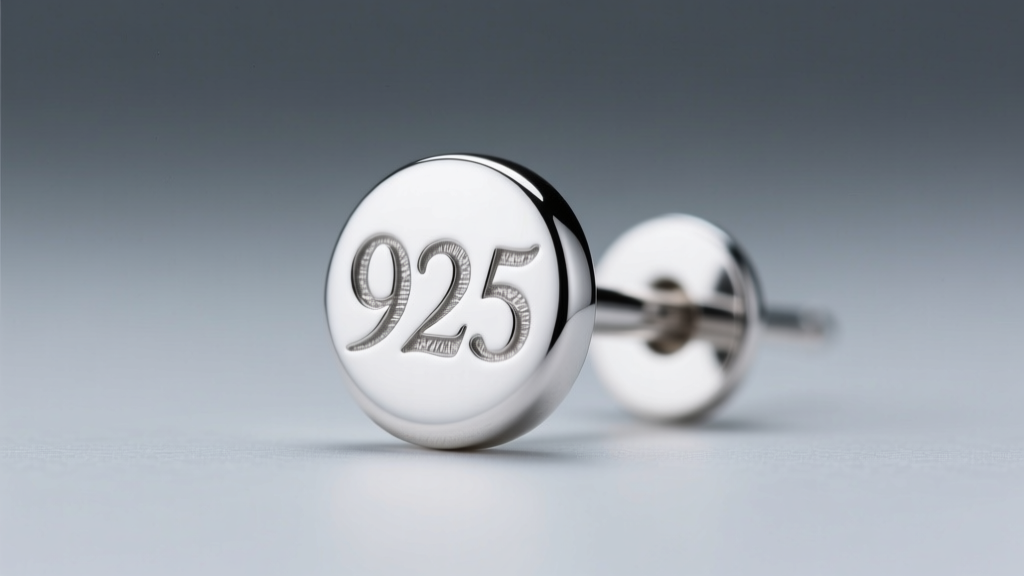
When shopping for everyday jewelry, the 925 sterling silver earrings price is often the primary deciding factor for buyers. But in 2026, with fluctuating precious metal markets and an influx of overseas mass-manufacturers, how do you know if you are paying for genuine quality or merely a brand markup? As a foundational staple in any jewelry collection, sterling silver offers an excellent balance of durability and luxury. However, not all silver earrings are created equal, and the retail price tag rarely tells the whole story.
In this comprehensive value assessment, we will deconstruct the actual cost of silver, analyze manufacturing variables, and provide a concrete framework to help you determine if the 925 sterling silver earrings price you are being quoted is genuinely justified.
The Anatomy of the 925 Sterling Silver Earrings Price
To understand retail pricing, we must first look at the raw material cost. Precious metals are traded in troy ounces (31.103 grams). As of early 2026, the spot price of silver hovers around $28.00 to $32.00 per troy ounce. This breaks down to roughly $0.90 to $1.03 per gram of pure silver.
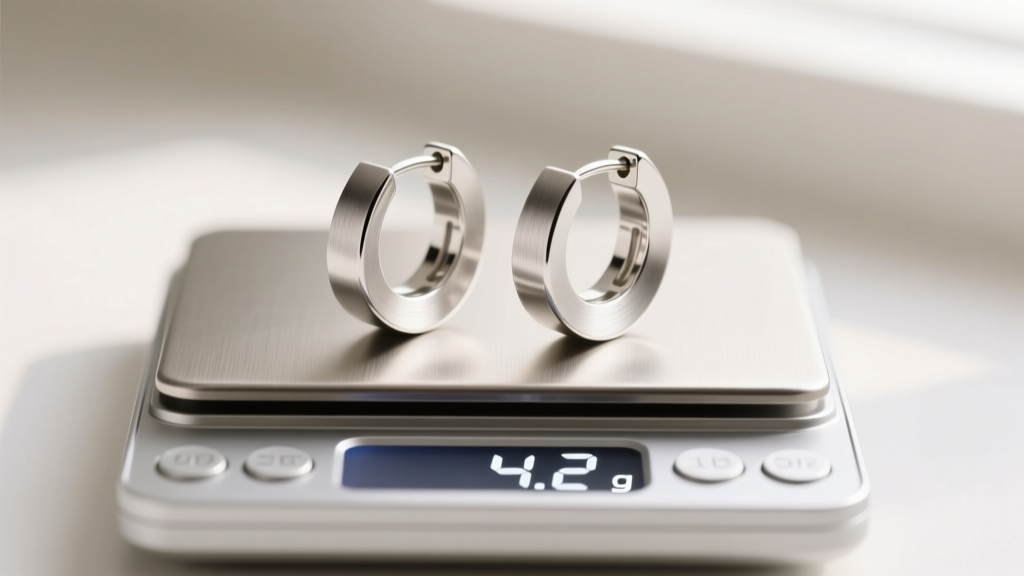
A standard pair of medium-sized sterling silver hoop earrings weighs approximately 4 to 6 grams. Because sterling silver is 92.5% pure silver, the intrinsic melt value of the metal in that pair is barely $4.00. Therefore, when you see a 925 sterling silver earrings price tag of $85.00, you are not paying for the raw metal; you are paying for labor, overhead, design, plating, and retail margin. Understanding this multiplier effect is the first step in becoming an informed buyer.
Metallurgy & Manufacturing: What Dictates the Cost?
The journey from raw grain to finished earring involves several processes that drastically alter the final price. According to the Gemological Institute of America (GIA), the alloy composition and finishing techniques are the primary drivers of quality and cost in silver jewelry.
.925 Sterling vs. .999 Fine Silver
Pure .999 fine silver is too soft for functional earring components. An earring post made of fine silver will bend under the slight pressure of inserting it through a piercing, and butterfly clutches will quickly lose their tension. The 7.5% alloy in .925 sterling silver—traditionally copper, but increasingly zinc or platinum in premium anti-tarnish blends—provides the necessary structural integrity. Earrings utilizing advanced de-oxidized alloys (like Argentium silver) will command a 15% to 20% premium over standard copper-alloyed sterling due to their superior resistance to firescale and environmental tarnishing.
The Rhodium Plating Premium
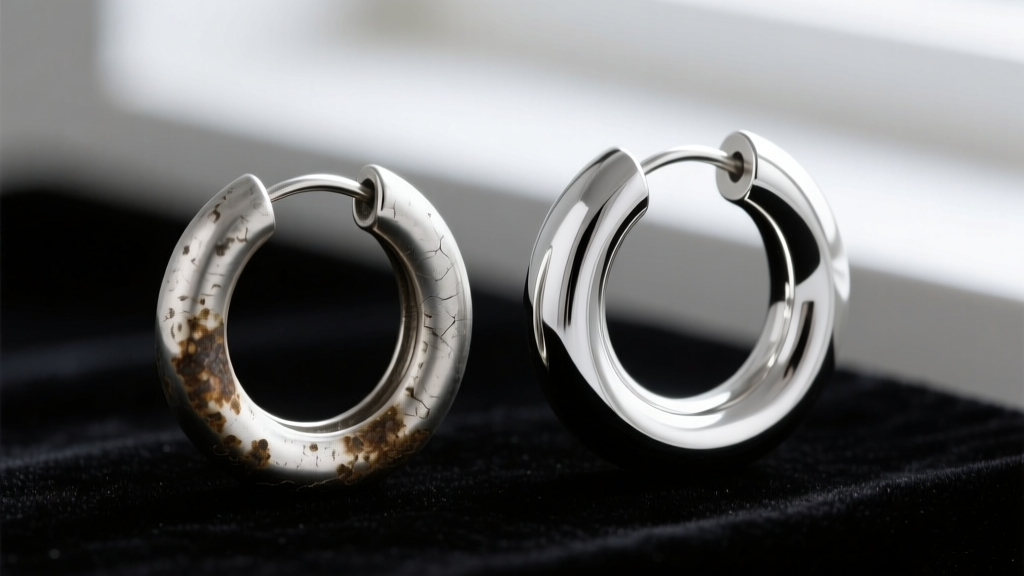
Unplated sterling silver will naturally oxidize when exposed to sulfur and moisture in the air. To combat this, high-quality manufacturers electroplate their earrings with rhodium, a rare platinum-group metal. A thick, high-quality rhodium flash (measured in microns) adds significant wholesale cost but ensures the earrings remain bright and hypoallergenic for years. If a vendor is offering a suspiciously low 925 sterling silver earrings price, they have likely skipped this crucial step or used a microscopically thin flash that will wear off in weeks.
2026 Market Pricing Matrix: Style vs. Actual Value
Not all earring styles require the same level of labor or material. Below is a benchmark matrix to help you evaluate if the 925 sterling silver earrings price aligns with current 2026 market standards across different retail channels.
| Earring Style | Avg. Weight | Raw Silver Value | Fair DTC Retail Price | Mall / Legacy Brand Price |
|---|---|---|---|---|
| Minimalist Studs (3mm) | 0.8g | $0.75 | $18 - $28 | $45 - $70 |
| Classic Hoops (20mm) | 4.5g | $4.15 | $45 - $65 | $95 - $150 |
| Huggies w/ Pave CZ | 3.2g | $2.95 | $55 - $85 | $120 - $200 |
| Complex Dangles | 8.0g+ | $7.40+ | $80 - $130 | $180 - $300+ |
Direct-to-Consumer (DTC) vs. Legacy Brands: DTC brands typically apply a 4x to 8x markup on raw material and manufacturing costs, covering digital marketing and shipping. Legacy mall brands and luxury houses often apply a 15x to 30x markup to cover physical real estate, commissioned sales staff, and brand prestige. Neither is inherently a "scam," but you must decide if the brand cachet is worth the premium.
Hidden Failure Modes: When "Budget" Becomes a Liability
Chasing the absolute lowest 925 sterling silver earrings price often leads to structural and dermatological failures. Cheap manufacturing shortcuts manifest in several specific ways:
- Casting Porosity: Mass-produced earrings made via cheap investment casting often suffer from microscopic air bubbles (porosity). This creates weak points where the earring post can snap off under minor stress, and the rough surface traps bacteria, leading to earlobe infections.
- Nickel Contamination: While true sterling silver is nickel-free, budget refiners sometimes use nickel in the master alloy to cut costs and increase whiteness. This causes severe contact dermatitis in sensitive wearers. Always look for explicit "nickel-free" guarantees backed by EU REACH compliance standards.
- Friction Back Failures: Cheap butterfly clutches are stamped from thin, low-grade brass and merely plated to look like silver. They lose tension rapidly, resulting in lost earrings. High-value pieces utilize solid sterling screw-backs or precision-machined friction clutches with deep grooves.
How to Verify Authenticity Before You Buy
The Federal Trade Commission (FTC) strictly regulates precious metal stamping in the United States, requiring that any item stamped ".925" or "Sterling" must meet the 92.5% purity threshold. However, enforcement on overseas e-commerce platforms is notoriously lax. Here is how you can verify your investment:
The Magnet Test: Silver is paramagnetic, meaning it exhibits no noticeable attraction to a standard neodymium magnet. If your "sterling" silver earring post snaps to a magnet, it is likely brass or steel with a microscopic silver wash.
For absolute certainty without damaging the jewelry, professional jewelers use X-Ray Fluorescence (XRF) analyzers. These handheld devices shoot X-rays into the metal and read the exact elemental breakdown in seconds, confirming not just the 92.5% silver content, but also identifying the exact alloying metals used. While you cannot buy an XRF machine for home use, most reputable local jewelers will perform a quick XRF scan on a piece you intend to purchase or return for free or a nominal fee.
Final Verdict: Is the Premium Justified?
Ultimately, the 925 sterling silver earrings price should be evaluated as a cost-per-wear metric rather than a raw material calculation. A $65 pair of solid, rhodium-plated sterling silver hoops with secure, machined clasps that you wear 300 days a year for five years costs you roughly four cents a day. Conversely, a $15 pair of porous, thinly plated silver-washed brass that turns your ears green and breaks in a month is a total loss. Demand transparency regarding plating thickness, alloy composition, and clasp mechanics, and you will easily separate the genuine value from the deceptive markup.


