Smallest Earring Gauge: 2026 Micro-Piercing Style Trends
Explore the smallest earring gauge trends for 2026. Discover styling tips, metal strength limits, and safe micro-stacking for 22G and 24G jewelry.

The Shift Toward Micro-Proportions in Body Jewelry
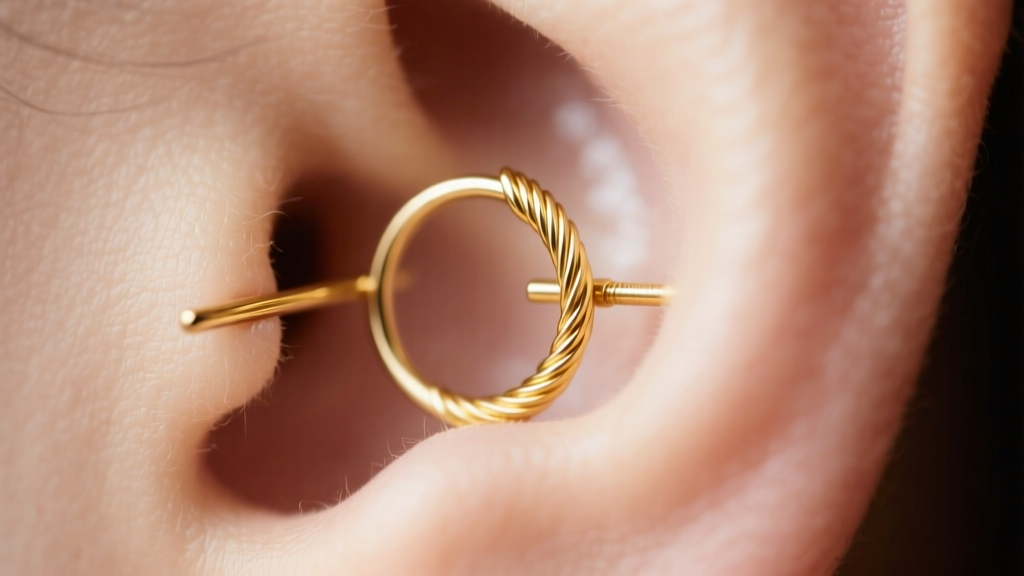
As we navigate the style landscape of 2026, the maximalist, heavy-gauge industrial trends of the previous decade have decisively given way to 'quiet luxury' and 'stealth wealth' aesthetics in body modification. Curated ear stacks are no longer about bold, chunky statements; instead, the focus has shifted to barely-there, precision-engineered micro-jewelry. At the heart of this movement is the quest for the smallest earring gauge that remains structurally viable and safe for long-term wear. While standard lobe piercings typically sit at 20-gauge (0.81mm) and cartilage at 16-gauge (1.29mm), high-end jewelry designers and master piercers are increasingly pushing the boundaries of the American Wire Gauge (AWG) system to create ultra-delicate 22-gauge and 24-gauge pieces.
This trend is driven by a desire for jewelry that mimics the natural sparkle of a diamond floating on the skin, completely obscuring the metal post. However, venturing into micro-gauges requires a deep understanding of metallurgy, tissue physics, and precise jewelry engineering. In this comprehensive guide, we analyze the limits of micro-gauge earrings, the inherent risks of ultra-thin wires, and how to safely curate an invisible ear stack.
Decoding the Wire: What is the Smallest Earring Gauge?
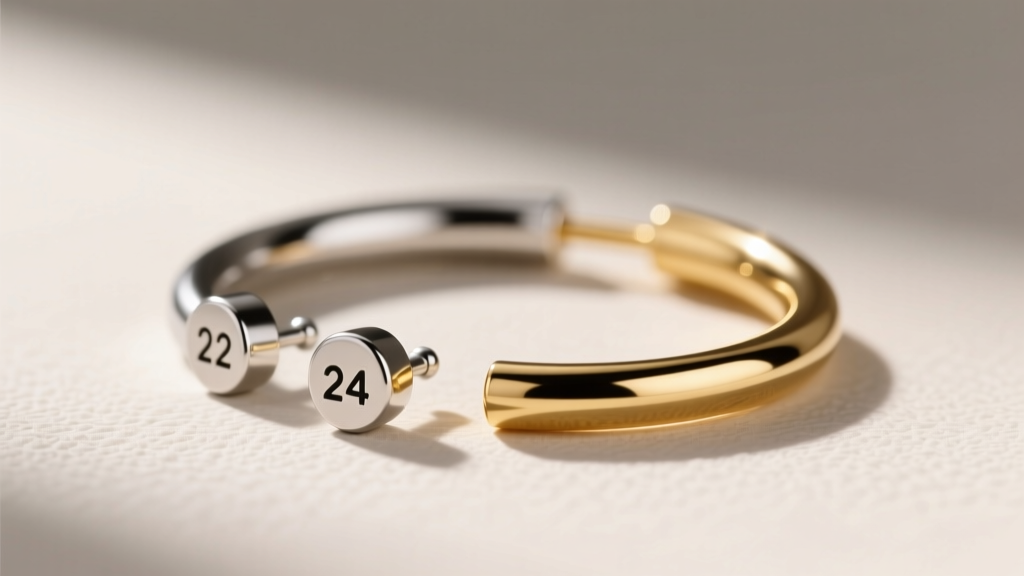
The AWG system is counter-intuitive: the higher the number, the thinner the wire. While you can technically manufacture a 30-gauge wire, it is entirely unsuitable for body jewelry due to a lack of tensile strength. In the professional piercing industry, the smallest earring gauge commercially available for fully healed piercings is generally considered to be 24-gauge (0.51mm), with 22-gauge (0.64mm) serving as the 'safe minimum' for most micro-stacking applications.
| Gauge Size | Millimeter (mm) | Primary Use Case | Structural Integrity & Risk |
|---|---|---|---|
| 20G | 0.81mm | Standard Lobe / Nostril | Low Risk: High stability, standard for most commercial fine jewelry. |
| 22G | 0.64mm | Micro Lobe / High Helix | Moderate Risk: Excellent for delicate aesthetics if using rigid metals. |
| 24G | 0.51mm | Pinna / Upper Cartilage | High Risk: Prone to bending, snagging, and migration if improperly weighted. |
| 26G+ | <0.40mm | Custom / Temporary | Extreme Risk: Severe cheese-cutter effect; not recommended for long-term wear. |
According to guidelines published by the Association of Professional Piercers (APP), any jewelry thinner than 22-gauge introduces a significant risk of the 'cheese cutter effect'—a phenomenon where the high pressure per square inch exerted by a thin wire causes the jewelry to slowly migrate through the tissue, eventually tearing through the skin.
Metallurgy and Safety: The Physics of Micro-Gauges
When you reduce the surface area of an earring post by half (from 20G to 24G), the pressure it exerts on the fistula (the piercing channel) doubles, assuming the weight of the decorative end remains constant. This makes material selection the most critical variable when wearing the smallest earring gauge available.
Tensile Strength and Metal Hardness
- Implant-Grade Titanium (ASTM F-136): This is the gold standard for 22-gauge micro-jewelry. Titanium offers an exceptional strength-to-weight ratio and high tensile yield, meaning a 22G titanium post will resist bending and snapping far better than gold of the same thickness.
- 18k Solid Gold: While highly biocompatible and prized for its rich color, 18k gold is relatively soft (especially in 'dead soft' annealed states). At 24-gauge, an 18k gold post can easily bend if snagged on a towel or hairbrush. For micro-gauges, jewelers must use 'half-hard' or work-hardened 18k gold to maintain structural integrity.
- 14k Solid Gold: Slightly harder than 18k due to higher alloy content, but still prone to warping at 24G. It is generally recommended to stick to 22G or thicker when utilizing 14k gold for cartilage stacks.
Never attempt to stretch or force a micro-gauge post into a fistula that has shrunk. If your piercing has closed down to 1.2mm, inserting a 0.51mm (24G) post will cause micro-tears and severe inflammation. Always use a professional taper.
Threadless Mechanics at Micro-Scales
Traditional threaded jewelry is virtually impossible to manufacture at 24-gauge; the threads would compromise the already minuscule structural core of the wire. Therefore, the micro-gauge trend is entirely reliant on threadless (press-fit) technology. Brands like BVLA have pioneered micro-threadless ends, but securing them requires precise technique.
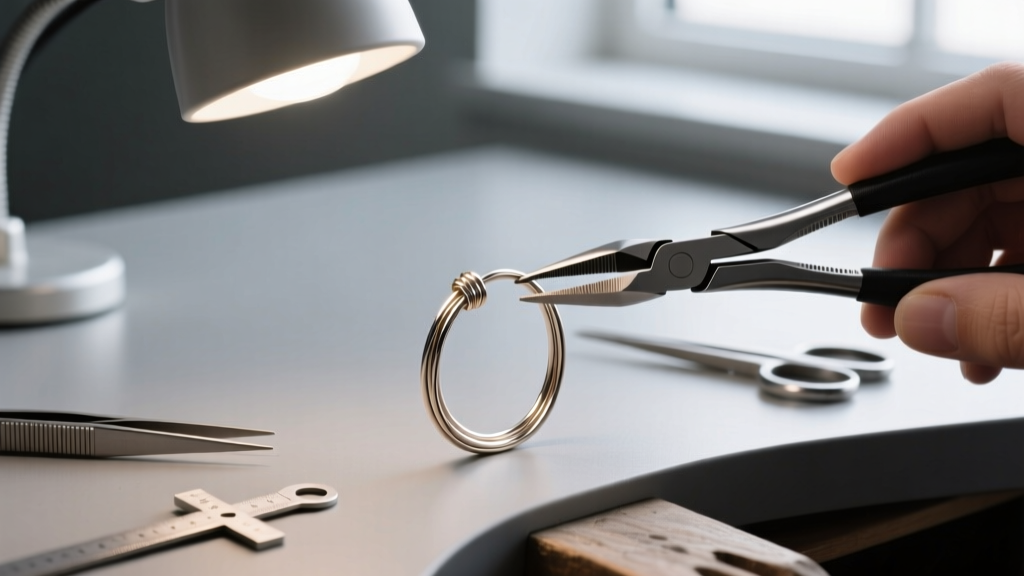
At 22G and 24G, the standard rule of bending the pin at the midpoint will result in a pin that snaps or permanently deforms. Instead, micro-threadless pins must be bent at the one-third mark (closer to the decorative end) to create just enough tension to lock into the receiving tube without overstressing the ultra-thin metal. Furthermore, the decorative ends must be kept exceptionally light—typically 2mm or 3mm gemstones maximum. A heavy 5mm gemstone on a 24G post will act as a pendulum, creating torque that guarantees tissue migration.
Curating the 'Invisible' Ear Stack
Styling with the smallest earring gauge is an exercise in negative space and precision mapping. Because the metal is virtually invisible, the gems appear to float directly on the anatomy of the ear. This minimalist approach flatters a variety of face shapes by providing subtle light refraction without overwhelming delicate facial features.
Placement Mapping for 22G and 24G
- The Constellation Lobe: Instead of three standard 20G studs, opt for a cluster of four 22G titanium threadless micro-diamonds (1.5mm to 2mm). The thinner posts allow for closer placement without crowding the tissue.
- The Faux Helix Cuff: For non-pierced or upper ear styling, 22G and 24G wires are ideal for crafting tension-fit ear cuffs that mimic the look of a healed helix piercing without the pressure points associated with thicker 18G cuffs.
- The Tragus Pinpoint: The tragus is a dense, highly mobile piece of cartilage. A 22G flat-back labret with a 2mm bezel-set sapphire provides a secure, snag-free profile that moves harmoniously with the ear.
Sourcing and Investment: The Cost of Micro-Engineering
Do not expect to find authentic, safe 22G or 24G body jewelry in standard mall kiosks or fast-fashion retailers. The smallest earring gauge pieces require CNC micro-machining and hand-polishing under high magnification. Consequently, the price point reflects the specialized labor involved.
Expect to pay between $80 and $150 for a plain 22-gauge implant-grade titanium threadless post and backing. When you add high-end decorative ends featuring VS-clarity diamonds or genuine Australian opals, a single micro-stud can easily range from $250 to $600. While the initial investment is steep, the longevity of solid gold and titanium, combined with the timeless appeal of the 2026 quiet luxury aesthetic, makes micro-gauge jewelry a permanent fixture in modern fine jewelry collections.
Final Verdict
The pursuit of the smallest earring gauge is a thrilling intersection of aesthetic minimalism and material science. By respecting the physical limits of 22G and 24G wires, prioritizing high-tensile metals like ASTM F-136 titanium, and adhering to strict weight limits for decorative ends, you can safely achieve the coveted 'floating gem' look. As micro-piercing trends continue to evolve, the key to a successful invisible stack lies not in how thin you can go, but in how intelligently you balance proportion, metal hardness, and tissue health.


