How Attractive Guys With Diamond Earrings Avoid Costly Style Mistakes
Discover how attractive guys with diamond earrings avoid cloudy stones, lost jewelry, and stretched lobes with this expert troubleshooting guide.

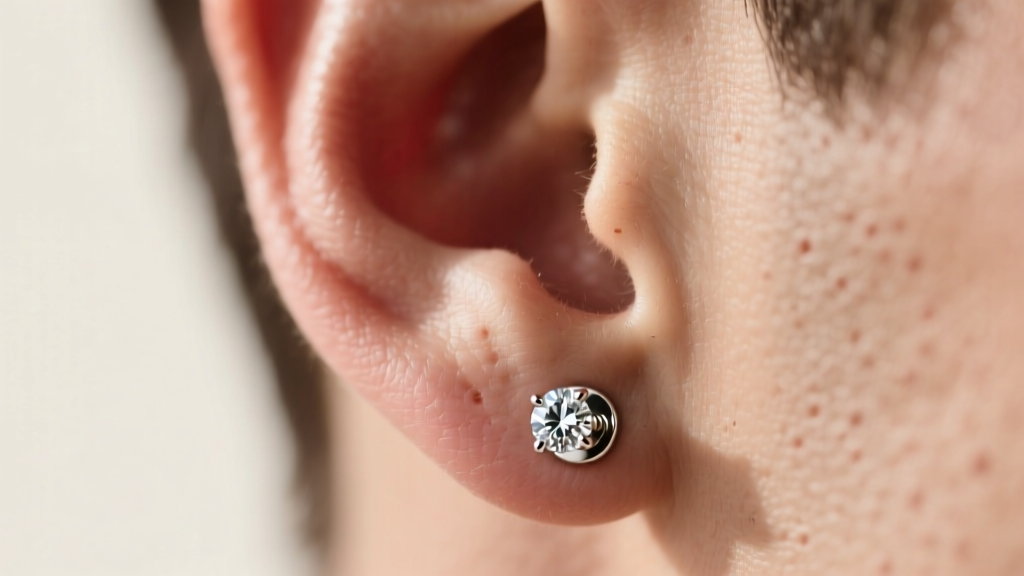
When analyzing the style habits of attractive guys with diamond earrings, a distinct pattern emerges: the most successful, high-status looks rely on precision, proportion, and hardware integrity, not just sheer size. The difference between a refined, masculine aesthetic and a flashy, poorly executed mistake usually comes down to a few technical details that most buyers overlook. Men often fall into the trap of prioritizing carat weight over cut quality, or they ignore the structural realities of earlobe anatomy, leading to lost stones and stretched piercings.
This troubleshooting guide is designed to solve the most common problems men face when buying and wearing diamond earrings. By addressing optical failures, hardware weaknesses, and aesthetic missteps, you can ensure your jewelry elevates your style rather than detracting from it.
Troubleshooting Dullness: Why Your Diamonds Lack Fire
The most frequent complaint from men upgrading their earrings is that the diamonds look 'cloudy' or 'dead' in dim lighting, such as at a restaurant or a bar. This is almost always a failure of cut grade and clarity, driven by the misconception that a larger carat weight automatically equals a better look.
The Cut Grade Compromise
According to the Gemological Institute of America (GIA), the cut of a diamond determines how effectively it returns light to the eye. Many commercial jewelers sell men's studs in the 1.00-carat range with 'Good' or 'Fair' cut grades to keep prices accessible. A poorly cut 1-carat diamond will leak light out the bottom, appearing flat and glassy. Furthermore, larger diamonds with lower clarity (I1 or I2) have visible carbon inclusions that actively block light refraction.
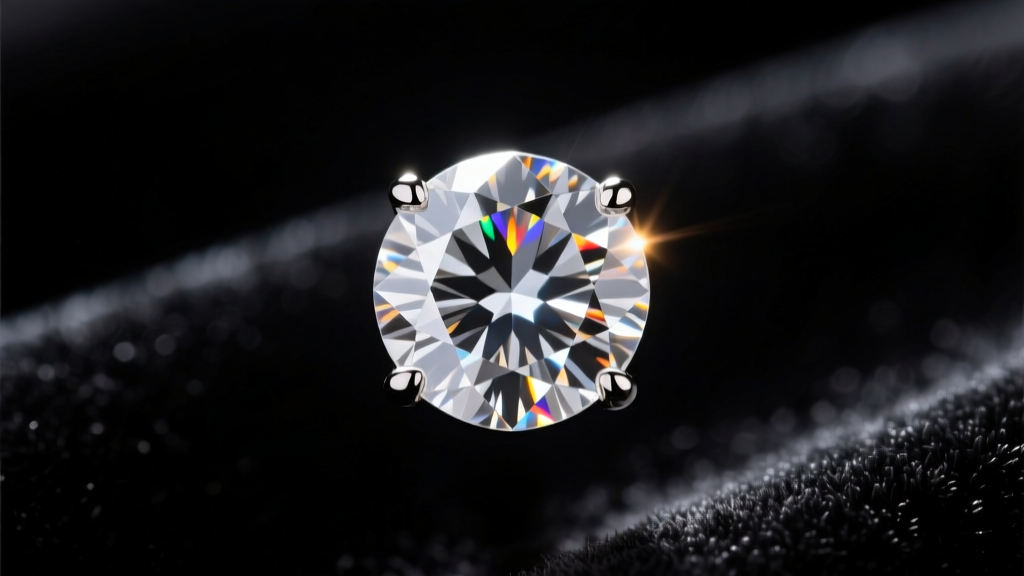
The Expert Fix: Downsize the Carat, Upgrade the Optics
To achieve maximum brilliance, shift your budget away from carat weight and toward cut and color. The ideal specification for a men's diamond stud that catches the light from across the room is:
- Carat: 0.50ct to 0.75ct (measuring roughly 5.0mm to 5.8mm in diameter, the perfect masculine proportion).
- Cut: GIA Excellent or Ideal (non-negotiable for light return).
- Clarity: VS2 or higher (ensures no light-blocking inclusions).
- Color: G or H (faces up completely colorless when set in white metal).
A 0.75-carat Excellent cut diamond will visually outperform and out-sparkle a 1.25-carat Fair cut diamond in every lighting environment.
Hardware Failures: Stretched Lobes and Lost Stones
There is nothing less attractive than an empty, stretched earlobe or the constant anxiety of losing a $3,000 diamond. The root cause of these issues lies in ignoring post gauge and backing mechanics.
The Cheese-Cutter Effect
Most standard diamond earrings are manufactured with 20-gauge (0.81mm) or 18-gauge (1.02mm) posts. When a heavy diamond (anything over 0.50ct) is set on a thin 20-gauge wire, the weight of the stone combined with the friction of putting on headphones or sleeping creates a downward slicing force. Over time, this 'cheese-cutter effect' permanently stretches the piercing channel, causing the earring to droop forward.
Solving the Backing Crisis
Friction backs (butterfly backs) rely on a small metal spring that eventually wears out. They are notorious for slipping off silently. To troubleshoot this, demand one of the following secure backing systems:
- Screw Backs: The post is threaded, and the backing screws on. This is highly secure but can be frustrating to align if you have limited dexterity.
- La Pousette Locking Backs: Originally designed in France, these feature a spring-loaded locking mechanism that clicks securely into a grooved post. They are the gold standard for high-value men's earrings.
Actionable Advice: If you are buying a stone larger than 0.50ct, ensure the setting is fitted with a 16-gauge (1.29mm) or 14-gauge (1.63mm) post to properly distribute the weight across the earlobe tissue.
Aesthetic Troubleshooting: Bezel vs. Prong Settings
The setting style drastically alters the gender presentation and durability of the earring. While the classic 4-prong 'martini' setting is popular, it often catches on hair, hats, and shirt collars, eventually bending the prongs and risking the stone.
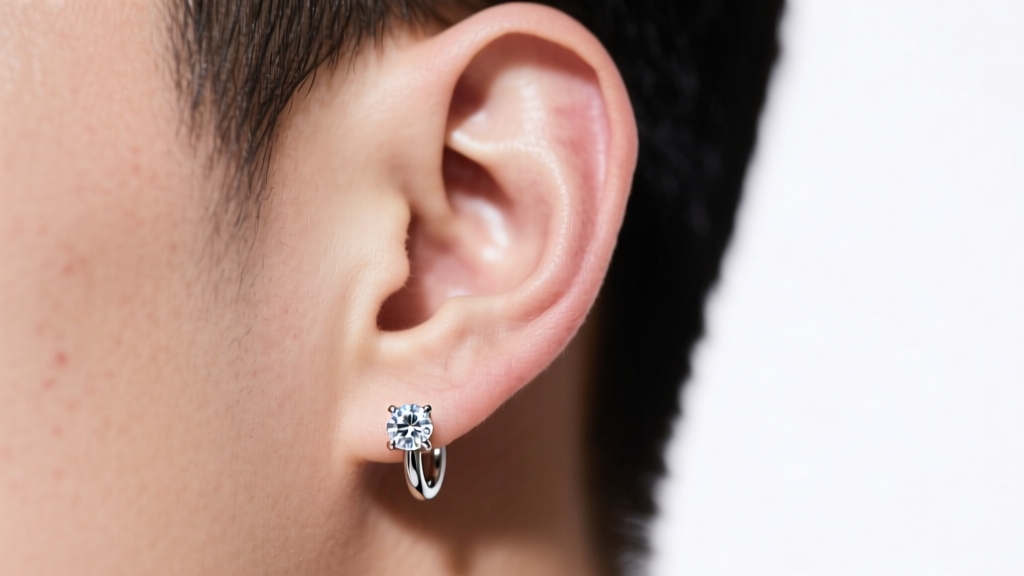
The Masculine Advantage of the Bezel Setting
For men, a bezel setting—where a thin rim of metal completely encircles the diamond's girdle—is often the superior choice. It offers several troubleshooting benefits:
- Snag-Free Profile: The smooth, flush edge eliminates the protruding prongs that catch on fabrics.
- Girdle Protection: The diamond's girdle (its thinnest, most vulnerable edge) is completely shielded from impact damage.
- Visual Weight: A bezel adds a subtle metallic border that gives the earring a more grounded, industrial, and masculine architectural feel compared to the delicate look of exposed prongs.
Skin Irritation and Contact Dermatitis
If you are experiencing itching, flaking, or a greenish tint around your earlobe, you are likely suffering from a nickel allergy. According to the American Academy of Dermatology, nickel allergy is one of the most common causes of allergic contact dermatitis. Many commercial 'white gold' alloys use nickel to bleach the yellow color out of the gold.
The Hypoallergenic Protocol
To permanently troubleshoot skin irritation, you must audit the metallurgy of your earrings. Avoid standard 14K white gold unless it is explicitly certified as nickel-free. Instead, opt for:
- Platinum: Naturally white, incredibly dense, and 95% pure, making it inherently hypoallergenic.
- Palladium-Alloyed White Gold: High-end jewelers use palladium instead of nickel to create 18K white gold. It is completely hypoallergenic and maintains a beautiful, cool tone.
- Implant-Grade Titanium: For cartilage piercings or highly sensitive lobes, ASTM F-136 titanium is the ultimate biocompatible metal.
The Men's Diamond Earring Troubleshooting Matrix
| Common Issue | Root Cause | Expert Fix | Est. Cost Impact |
|---|---|---|---|
| Dull, cloudy appearance | Poor cut grade (Fair/Good) and low clarity (I1) | Downsize to 0.75ct; demand GIA Excellent cut and VS2 clarity | Neutral (reallocate budget) |
| Earring droops forward | Post is too thin (20G) for the stone weight | Upgrade to a 16-gauge or 14-gauge custom post | +$50 - $150 |
| Earrings keep falling out | Worn-out butterfly friction backs | Switch to La Pousette locking backs or threaded screw backs | +$80 - $120 |
| Prongs snagging on clothes | High-profile 3-prong or 4-prong martini setting | Reset the stone in a low-profile bezel setting | +$200 - $400 |
| Itchy, red, or flaking skin | Nickel alloys in standard white gold | Switch to Platinum or Palladium-alloyed 18K white gold | +$300+ (metal upgrade) |
Final Thoughts on Proportions and Placement
The secret behind attractive guys with diamond earrings is restraint. The earring should complement your jawline and personal style, not dominate your face. Stick to the 0.50ct to 0.75ct range, prioritize optical brilliance over sheer mass, and never compromise on the hardware securing your investment. By troubleshooting these common pitfalls before you buy, you ensure your diamond earrings remain a sharp, sophisticated signature of your personal brand for decades to come.


