Authentic 1920 Earrings: The Ultimate Vintage Buying Guide
Discover how to authenticate and buy vintage 1920 earrings. Learn about Art Deco materials, screw-back clasps, and current market pricing.

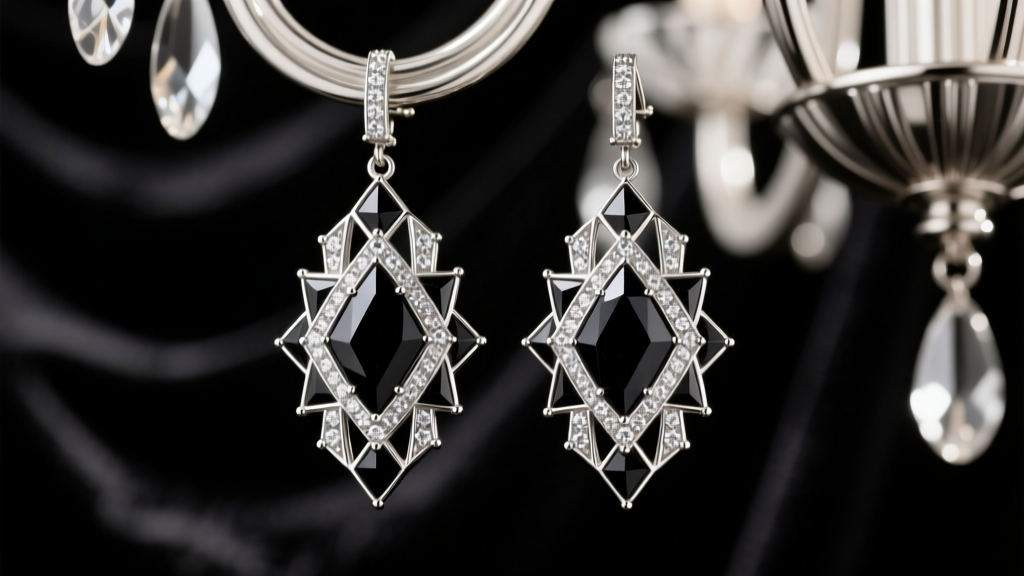
The Allure of 1920s Art Deco and Flapper Earrings
The 1920s marked a seismic shift in jewelry design, moving away from the delicate, floral garlands of the Edwardian era into the bold, geometric precision of Art Deco. When hunting for authentic 1920 earrings, you are not just buying jewelry; you are acquiring a piece of social history. The widespread adoption of the 'bob' haircut among women meant that ears were suddenly visible, creating an explosive demand for long, dramatic drop earrings, chandeliers, and fringe designs that accentuated the face and moved with the energetic rhythms of the Jazz Age.
According to the Victoria and Albert Museum, the 1920s also saw a distinct bifurcation in the earring market: ultra-luxurious fine jewelry crafted in platinum for the elite, and the birth of high-quality 'costume' jewelry utilizing early plastics and rhinestones for the burgeoning middle class. Understanding this duality is the first step in mastering the vintage earring market.
Key Materials: Platinum, White Gold, and Early Plastics
Yellow gold took a backseat during the Roaring Twenties. The prevailing aesthetic demanded 'white metals' that complemented the stark contrasts of black onyx and sparkling diamonds. Here is what you must look for when evaluating materials:
- Platinum and White Gold: Platinum was the undisputed king of high-end 1920s earrings due to its strength, allowing for the intricate, nearly invisible filigree settings that held calibrated baguette and single-cut diamonds. White gold (often alloyed with nickel or palladium and rhodium-plated) emerged as a more accessible alternative.
- Marcasite and Silver: Sterling silver set with marcasite (iron sulfide) was immensely popular for daytime wear. Genuine 1920s marcasite earrings feature hand-set, faceted stones with a distinct metallic luster, unlike the smooth, glued-in pyrite found in modern reproductions.
- Celluloid and Bakelite: The 1920s introduced early synthetic plastics to costume jewelry. Celluloid was frequently carved to mimic ivory or jade, while Bakelite offered rich, opaque colors. Lang Antiques University notes that authentic Bakelite from this era will emit a distinct formaldehyde scent when rubbed vigorously or exposed to hot water, a crucial test for buyers.
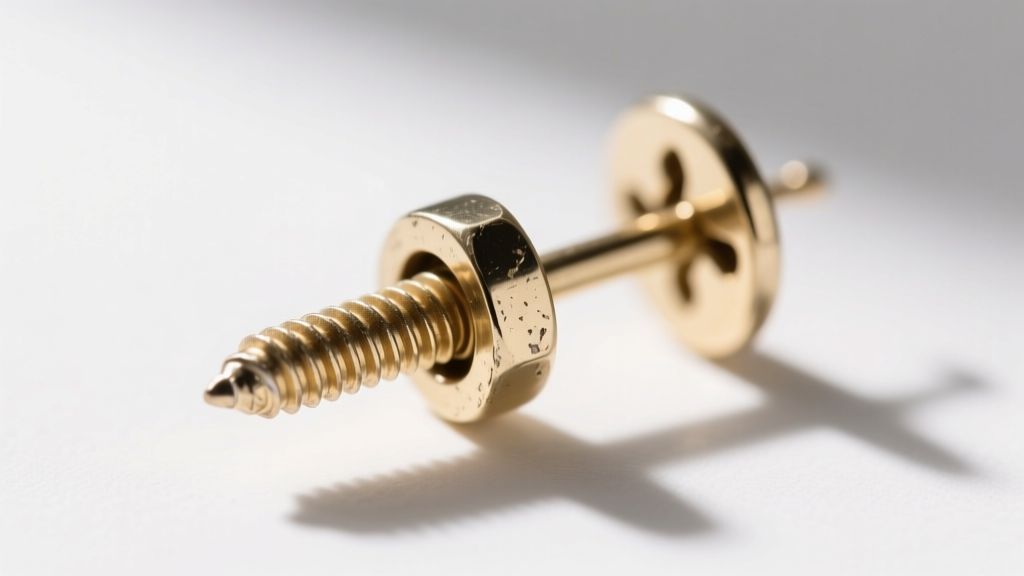
Decoding the Findings: Why Screw-Backs Rule the 1920s
The most reliable way to authenticate 1920 earrings is by examining the findings (the clasps and ear wires). In the 1920s, ear piercing was widely considered taboo in polite Western society, associated with marginalized groups or outdated Victorian practices. As a result, the vast majority of fine and costume earrings were designed for unpierced ears.
The Screw-Back Revolution
Invented in 1894 by James A. Moore, the screw-back earring reached its zenith in the 1920s. A genuine vintage piece will feature a threaded post with a small, adjustable nut that tightens against the earlobe. When inspecting screw-backs, look for wear patterns on the threads and a slight darkening of the metal in the crevices of the nut. If the earring has a modern post-and-butterfly friction back, it is either a later reproduction or a vintage piece that has been altered (which significantly diminishes its collector value).
Early Leverbacks and Shepherd Hooks
While less common for high-society flapper chandeliers, early leverbacks and simple shepherd hooks were used in bohemian or artisan circles, as well as in certain European markets where piercing remained acceptable. However, if you encounter a modern hinged snap-back closure on a purported 1920s Art Deco earring, proceed with extreme caution.
Authenticating Vintage 1920 Earrings vs. Retro Reproductions
The 1970s and 1980s saw a massive wave of Art Deco revival jewelry. Distinguishing a true 1920s original from a 1980s reproduction requires a keen eye for manufacturing techniques and gemstone cuts.
| Feature | Authentic 1920s Earrings | 1970s/80s Retro Reproductions |
|---|---|---|
| Diamond Cuts | Single-cut, rose-cut, or early transitional brilliant cuts. Baguettes are hand-calibrated. | Modern round brilliant cuts with laser-drilled clarity enhancements. |
| Filigree Work | Die-stamped from heavy gauge platinum/white gold, featuring hand-engraved milgrain edges. | Cast in molds, resulting in rounded, soft edges with 'porosity' (tiny bubbles) in the metal. |
| Blacklight Test | Celluloid and Bakelite will not fluoresce brightly; natural pearls glow softly. | Modern resins and epoxy glues often fluoresce stark white or bright blue under UV light. |
| Hallmarks | Often unmarked or stamped with obscure maker's marks; platinum marked 'PT' or 'IRID.PLAT'. | Frequently stamped '925', '14K', or feature modern brand trademarks. |
For definitive verification of gemstones and metal compositions, the Gemological Institute of America (GIA) recommends professional X-ray fluorescence (XRF) testing, which can identify the specific alloy mixtures used in early 20th-century white gold that differ from modern formulations.
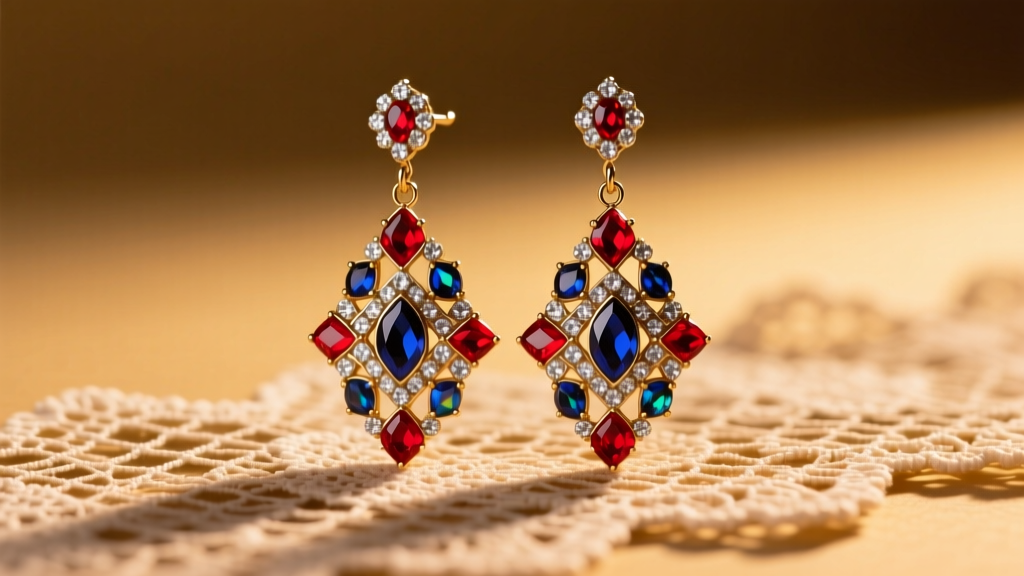
2026 Market Guide: Pricing Tiers for 1920 Earrings
As of 2026, the market for authentic Art Deco and flapper-era earrings remains highly competitive, driven by both vintage collectors and modern brides seeking unique, sustainable wedding jewelry. Prices vary wildly based on material, condition, and provenance.
- Tier 1: Costume & Plastics ($75 - $350)
Earrings featuring celluloid, early rhinestones, or base metals. Pieces by early makers like Miriam Haskell or Trifari command the higher end of this bracket, provided the plating is intact and stones are original. - Tier 2: Silver & Marcasite ($200 - $800)
Sterling silver drop earrings with hand-set marcasite or seed pearls. Condition is paramount here; missing marcasite stones are difficult to replace and severely impact value. - Tier 3: Gold, Onyx & Jade ($1,200 - $4,500)
14k or 18k white gold earrings featuring carved jade, coral, or black onyx. These represent the accessible luxury tier of the 1920s market. - Tier 4: Platinum & Diamonds ($5,000 - $25,000+)
Museum-quality platinum chandelier earrings featuring old European cut diamonds, calibre-cut sapphires, and pristine milgrain filigree. Signed pieces by Cartier, Boucheron, or Tiffany & Co. from this era routinely shatter auction estimates.
Preservation: Caring for Century-Old Ear Jewelry
Owning 1920 earrings comes with the responsibility of preserving fragile, century-old materials. The most critical rule for collectors is to never use ultrasonic cleaners. Ultrasonic waves will shatter fragile onyx, fracture emeralds, and vibrate the delicate glue holding marcasite and seed pearls out of their bezels.
Instead, clean your vintage earrings using a solution of lukewarm water and a few drops of pH-neutral dish soap. Use a baby-soft toothbrush to gently dislodge decades of accumulated skin oils and cosmetic residue from the filigree. For early plastics like Bakelite, avoid all chemical solvents, including alcohol and ammonia, which can strip the material's natural patina and cause irreversible crazing (micro-cracking on the surface). Store your 1920 earrings flat in acid-free tissue paper to prevent the heavy drops from bending the delicate ear wires under their own weight over time.


