Expert Guide To Authenticating Earrings From The 70s
Master the technical details of authenticating earrings from the 70s. Learn about vintage hallmarks, 14k gold alloys, and structural integrity tests.

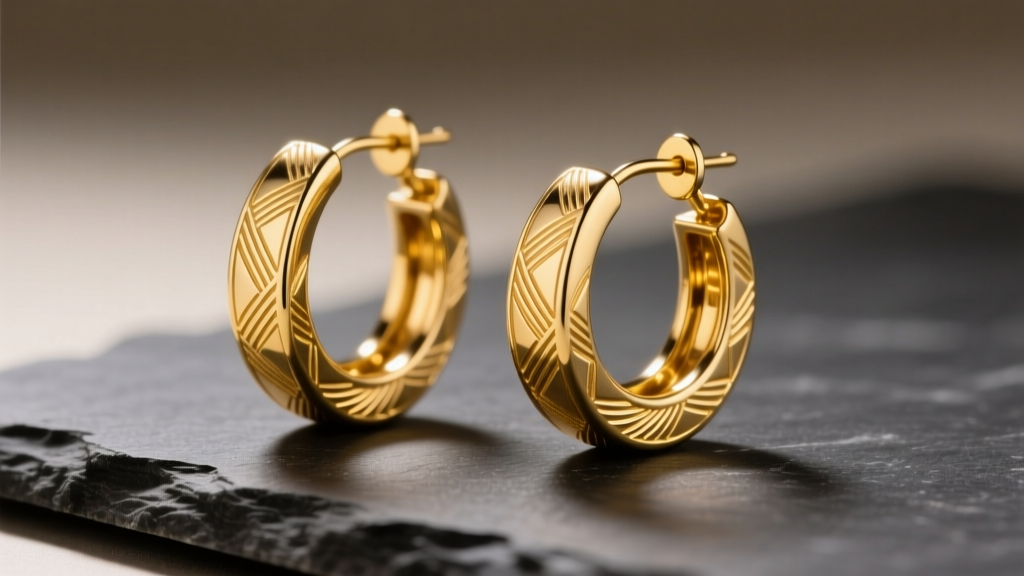
The 1970s represented a seismic shift in earring manufacturing, bridging the gap between mid-century formality and the bold, expressive aesthetics of the late 20th century. For collectors and jewelers in 2026, identifying genuine earrings from the 70s requires moving beyond superficial design cues and diving deep into metallurgical composition, structural engineering, and hallmarking practices. As the vintage market continues to surge, with premium 1970s pieces appreciating significantly over the last five years, the ability to authenticate these artifacts based on technical specifications is a critical skill. This expert guide deconstructs the precise material and mechanical signatures that define 1970s earring production.
The Metallurgical Shift: 1970s Gold Alloys and Base Metals
To authenticate fine jewelry from this decade, one must first understand the specific alloy compositions utilized during the era. The 1970s saw an overwhelming consumer preference for warm, yellow gold tones. While 14k gold (58.5% pure gold) was the standard in the United States, the alloying metals used to make up the remaining 41.5% differed from modern formulations. According to historical metallurgical data referenced by the Gemological Institute of America (GIA), 1970s 14k yellow gold was typically alloyed with a higher ratio of copper to silver compared to contemporary mixes, resulting in a distinct, slightly greenish-yellow warmth that is difficult to replicate with modern, nickel-free white-gold rhodium plating techniques.
In the realm of costume jewelry, the 1970s was the golden era of heavy electroplating. Brands like Trifari and Monet utilized specialized base metals. Monet, for instance, frequently employed a brass base coated with a micro-thin layer of rhodium or nickel to act as a barrier against tarnish before applying a heavy 20-micron layer of 14k or 18k gold plate. When examining vintage costume earrings, look for the specific type of wear: 1970s gold plate tends to wear away smoothly at high-friction points (like clip-on hinges), whereas modern, thinner flash-plating often flakes or pits due to inferior sub-layer adhesion.
Identifying 1970s Casting Porosity
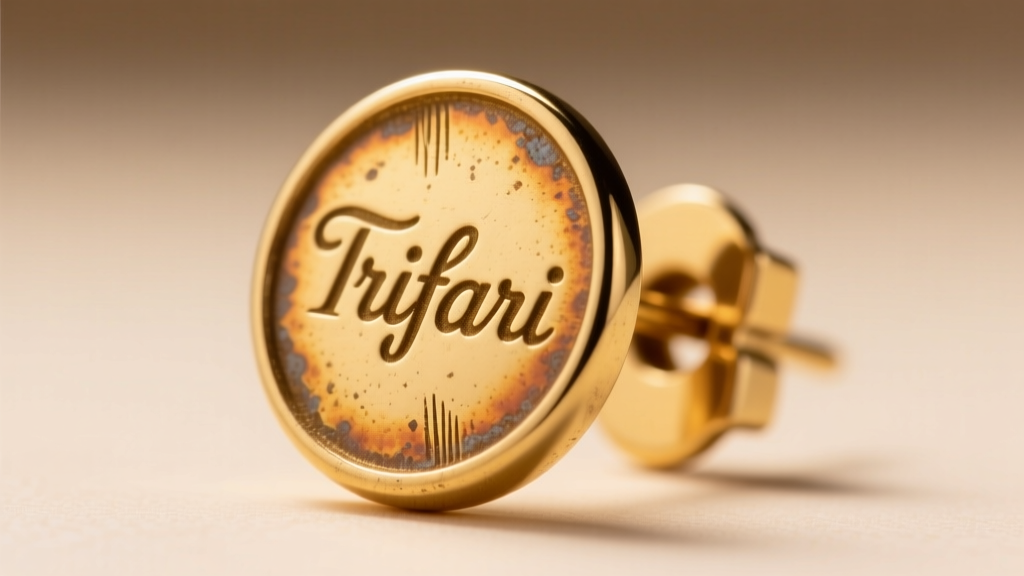
Lost-wax casting was the dominant manufacturing method for fine 14k gold earrings in the 1970s. However, vacuum casting technology was not as universally calibrated as it is today. Consequently, genuine 1970s cast gold hoops and drop earrings often exhibit micro-porosity—tiny, pinpoint surface voids visible under a 10x jeweler's loupe. While modern manufacturers view porosity as a defect to be polished out or filled with laser welding, in 1970s pieces, a slight, uniform micro-porosity in non-wearing areas (like the inside curve of a thick hoop) is actually a strong indicator of period-correct manufacturing.
Decoding 70s Earring Closures and Post Gauges
The mechanical construction of earring closures underwent a massive transition during the 1970s. The widespread cultural adoption of ear piercing meant that manufacturers were rapidly shifting away from screw-backs and clip-ons toward friction-post designs. However, the engineering standards for these early posts were vastly different from modern specifications.
- Post Thickness (Gauge): Modern standard pierced earrings typically use 20-gauge (0.81mm) or 22-gauge (0.64mm) wire. In contrast, earrings from the 70s frequently featured much thicker posts, often drawn to 18-gauge (1.02mm) or even 16-gauge (1.29mm). This was due to less standardized wire-drawing tolerances and a design philosophy that prioritized structural rigidity over lobe comfort.
- Friction Backs vs. Clutches: Early 70s pierced earrings often utilized simple friction nuts or early "clutch" backs made of stamped metal rather than the precision-machined, silicone-sleeved butterfly backs common today. If a vintage earring features a modern, perfectly symmetrical butterfly back with a silicone insert, it has likely been retrofitted.
- Screw-Back Tension: For high-end pieces that retained screw-back mechanisms, the threading was often hand-cut or stamped with a coarser pitch (fewer threads per millimeter) than the fine, machine-cut threads seen on contemporary screw-backs.
| Specification | Typical 1970s Standard | Modern Standard (2020s) |
|---|---|---|
| Post Gauge (Thickness) | 18g (1.02mm) to 16g (1.29mm) | 20g (0.81mm) to 22g (0.64mm) |
| Post Length | 10mm - 12mm (Shorter) | 11mm - 14mm (Longer) |
| Clutch/Back Material | Stamped brass, early plastic | Stamped steel, silicone sleeves |
| Solder Type (Fine Jewelry) | Lead-bearing or early cadmium | Cadmium-free, lead-free alloys |
Hallmarks, Maker's Marks, and Patent Numbers
Authenticating earrings from the 70s heavily relies on deciphering the microscopic stamps hidden on posts, clip-on paddles, and the interiors of hoops. The Lang Antiques' Antique Jewelry University emphasizes that hallmarking practices in the 1970s were governed by the National Stamping Act, but enforcement and stylistic execution varied wildly between fine and costume manufacturers.
For fine jewelry, look for the "14K" or "585" stamp. In the 1970s, it was common for the purity mark and the maker's mark to be stamped separately, often at slightly different angles or depths, indicating manual stamping presses rather than automated laser engraving. Furthermore, many 1970s pieces feature patent numbers (e.g., "PAT. PEND." or a specific 7-digit US patent number) stamped directly onto the clip-on mechanism or the hinge of a hoop earring. Cross-referencing these patent numbers with the United States Patent and Trademark Office (USPTO) database can definitively date the mechanical design to the 1970s.
The Costume Jewelry Signatures
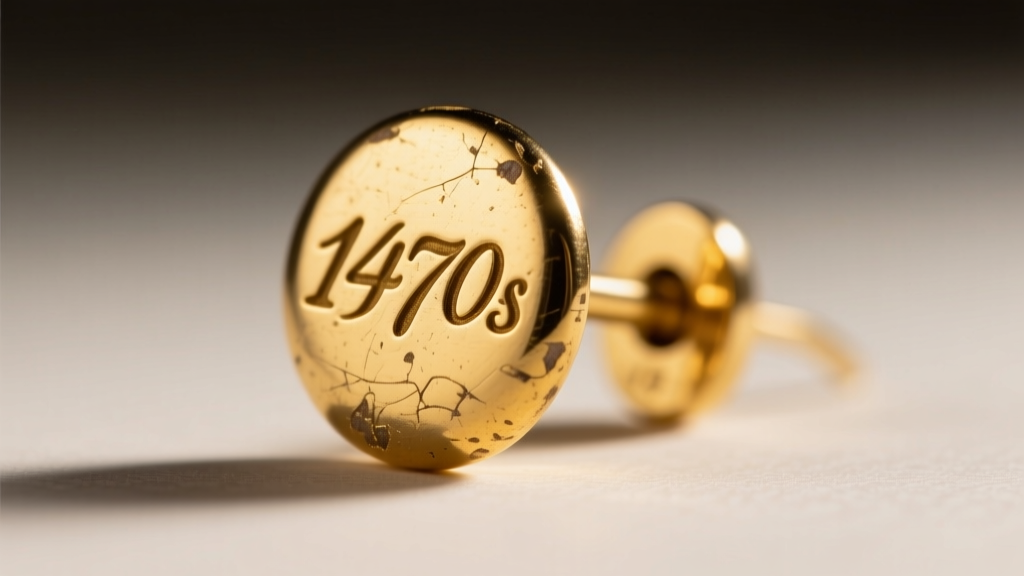
Costume jewelry giants had distinct hallmarking evolutions. Trifari, for example, transitioned from the crown-over-T mark to a simpler, block-letter "TRIFARI" stamp on an oval cartouche in the late 1960s and early 1970s. By the mid-to-late 70s, you will often find the copyright symbol (©) accompanying the maker's mark, a practice that became standardized following changes in US copyright law regarding jewelry designs. Monet pieces from the 1970s typically feature a clean, sans-serif "MONET" stamp, often accompanied by a double-underscore or a specific year code in their higher-end lines.
Structural Integrity and Failure Modes in Vintage 70s Pieces
When evaluating earrings from the 70s for purchase or restoration, understanding period-specific failure modes is essential for assessing value and wearability. The soldering techniques of the era dictate how these pieces age over half a century later.
Expert Inspection Tip: Always perform a gentle "flex test" on the joints of 1970s drop earrings and chandelier designs. Apply microscopic pressure to the jump rings connecting the drops. If you hear a faint clicking or see micro-movements, the original 1970s lead-bearing solder has likely crystallized and fractured internally, requiring immediate re-soldering with modern, low-temperature, cadmium-free jewelry solder to prevent catastrophic loss of the gemstone or drop element.
Another common failure mode in 1970s gold-plated costume earrings is "zinc pest" or base metal degradation. If the underlying brass or zinc alloy was exposed to high humidity over the decades, it can expand and crack the gold plating from the inside out. This presents as a web-like cracking pattern on the surface of the earring, which cannot be polished out and indicates terminal structural degradation of the base metal.
Sourcing and Valuation Framework for the 2026 Market
The valuation of 1970s earrings in today's market requires a nuanced approach that separates mass-produced department store pieces from artisan and high-end designer works. In 2026, the most sought-after 1970s earrings are those that feature intricate metalworking techniques that are cost-prohibitive today, such as hand-engraved Florentine finishes, woven gold wirework, and heavy, solid 14k gold tube hoops with precision-machined hinges.
When sourcing, prioritize pieces with intact original closures and unaltered posts. A 1970s earring that has had its thick 18-gauge post replaced with a modern 20-gauge post by a bench jeweler loses a significant portion of its collector value, as the original metallurgical integrity has been compromised. Always use a calibrated digital scale to weigh gold pieces; 1970s gold hoops were notably heavier, often weighing between 6 to 12 grams per pair, whereas modern hollow-cast equivalents rarely exceed 3 grams. By combining metallurgical analysis, mechanical inspection, and hallmark decoding, you can confidently navigate the vintage market and secure authentic, high-quality pieces from this transformative decade in jewelry design.


