Judge Judy Earrings: Engineering the Perfect Statement Drop
Discover the technical anatomy of Judge Judy earrings. Learn about carat weights, leverback mechanics, and lobe support for heavy statement drops.

The Anatomy of Authority: Defining the Judge Judy Earring
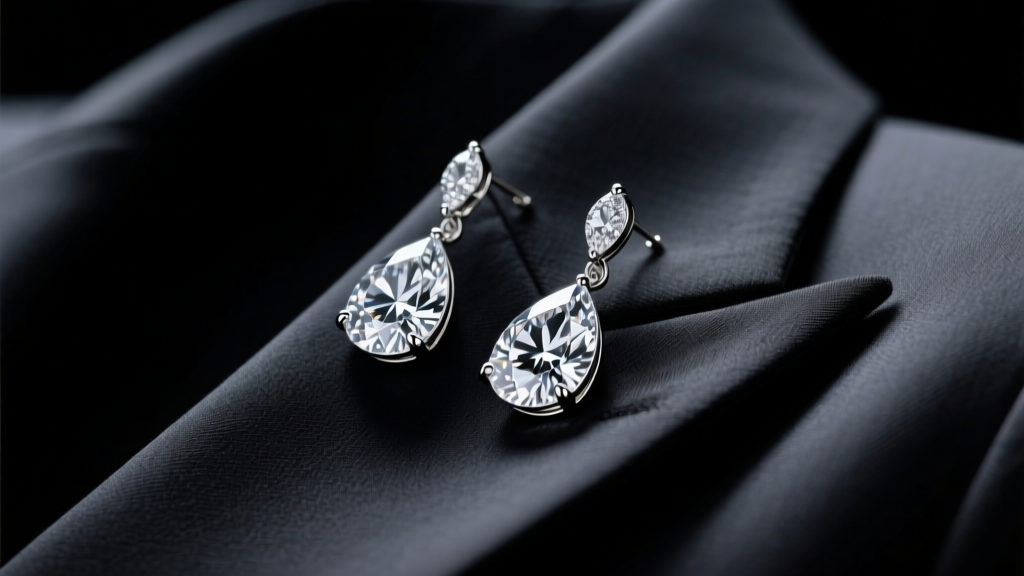
Judge Judy Sheindlin’s courtroom presence is legendary, but her sartorial armor—specifically her signature statement earrings—plays a crucial, often under-analyzed role in her authoritative aura. Colloquially known in the jewelry industry as "Judge Judy earrings," these pieces are not mere accessories; they are masterclasses in structural jewelry engineering. When you are projecting absolute authority, your jewelry cannot falter, droop, or distract. This expert deep dive explores the exact technical specifications, metallurgical choices, and mechanical engineering required to recreate this iconic, commanding aesthetic in 2026 and beyond.
The visual weight of these earrings is carefully calibrated. The drop length typically falls between 1.5 and 2.25 inches. This specific measurement is critical: it clears the collar of a judicial robe or a sharp blazer but stops well above the shoulder line, preventing the "tangle effect" when the wearer turns their head sharply to address a litigant. To achieve this silhouette, jewelers must balance immense carat weight with advanced kinetic isolation.
Metallurgical and Gemological Specifications
To support the sheer mass of a 4.0 to 6.0 Total Carat Weight (TCW) statement drop, the choice of precious metal is non-negotiable. While 14k gold is common in commercial jewelry, it lacks the tensile strength required for heavy, high-leverage drops. According to the Gemological Institute of America (GIA), the prongs holding large pear or marquise cuts must withstand significant lateral force without bending.
| Material Grade | Density (g/cm³) | Tensile Strength | Prong Durability | Best Use Case |
|---|---|---|---|---|
| Platinum 950 | 21.45 | Very High | Exceptional (malleable, won't snap) | Heavy 5+ TCW drops, heirloom pieces |
| 18k White Gold | 15.50 | High | Good (requires rhodium plating) | Medium 2-4 TCW drops, budget-conscious |
| 14k White Gold | 13.00 | Medium | Fair (prone to stress fracturing) | Lightweight studs, not recommended for heavy drops |
For the diamonds themselves, the "courtroom flash" relies on maximizing light return rather than flawless clarity. Because the observer (the camera or the litigant) is typically 4 to 10 feet away, minor inclusions are invisible. Expert gemologists recommend G-H color and VS2-SI1 clarity for the center stones. The larger table surface area of a pear or marquise cut maximizes brilliance, creating the intimidating sparkle synonymous with the Judge Judy aesthetic.
The Mechanics of the Drop: Bails, Hinges, and Torque
The most critical, yet hidden, component of Judge Judy earrings is the bail—the connector between the earring post and the swinging drop. When a 5-gram pear-cut diamond swings, it generates kinetic energy. If the bail is rigid, that energy transfers as torsional stress directly to the earring post. Over time, this causes metal fatigue, specifically at the solder joint where the post meets the backplate, eventually leading to catastrophic failure.
The Articulated Micro-Hinge
High-end statement drops utilize an articulated bail with a micro-riveted hinge. This hinge isolates the swing, allowing the stone to move independently of the post. Assembling these microscopic hinges often requires precision laser welding, a technique detailed in advanced jewelry fabrication manuals. When sourcing or appraising these earrings, always test the bail: it should swing freely with zero resistance. If it feels stiff, the torque will eventually snap the post.
The Tension Debate: Clip-On vs. Pierced Leverbacks
For decades, Judge Judy famously wore clip-on earrings, a necessity given the extreme weight of her vintage diamond drops and the risk of tearing a standard piercing. Modern jewelry engineering has bridged this gap, but the physics of tension remain vital.
- Traditional Omega Clip-Ons: Exert approximately 1.5 to 2.5 pounds of continuous pressure on the earlobe. While secure, this causes ischemic pain (restricted blood flow) after 2-3 hours of wear.
- Silicone-Padded Paddle Backs: The modern solution for heavy clip-ons. By increasing the surface area of the contact point and using high-friction medical-grade silicone, these backs can secure a 12-gram earring with only 0.8 pounds of pressure.
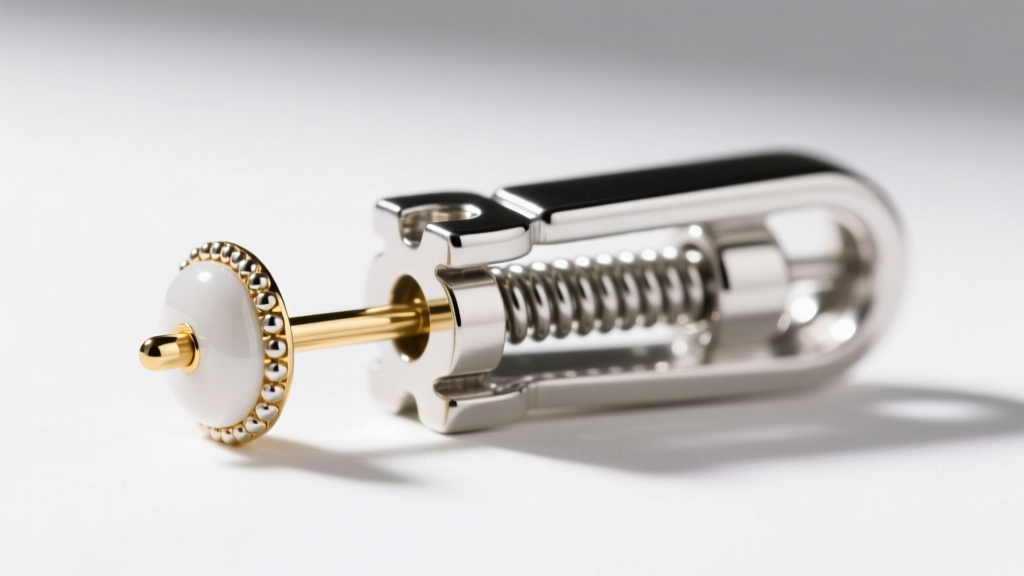
- Pierced Leverbacks with Hidden Springs: For pierced ears, a heavy-duty leverback featuring an internal tension spring and a locking latch is mandatory. The post itself must be upgraded from the standard 20-gauge (0.8mm) to a 16-gauge (1.2mm) or 14-gauge (1.6mm) to prevent the "cheese wire" effect, where a thin post slices through the earlobe under heavy load.
The Federal Trade Commission (FTC) Jewelry Guides mandate strict disclosures regarding metal content and weight, ensuring that consumers investing in heavy statement pieces are aware of the exact precious metal purity supporting their investment.
Lobe Support Systems: Preventing the Droop Effect
Nothing undermines the authoritative "Judge Judy" aesthetic faster than an earring that droops forward, pointing at the floor rather than framing the face. A 15-gram earring will easily overwhelm the natural elasticity of an aging or previously stretched earlobe. To maintain the perfect perpendicular angle, structural support is required.
Professional stylists rely on three primary support systems for heavy courtroom-ready drops:
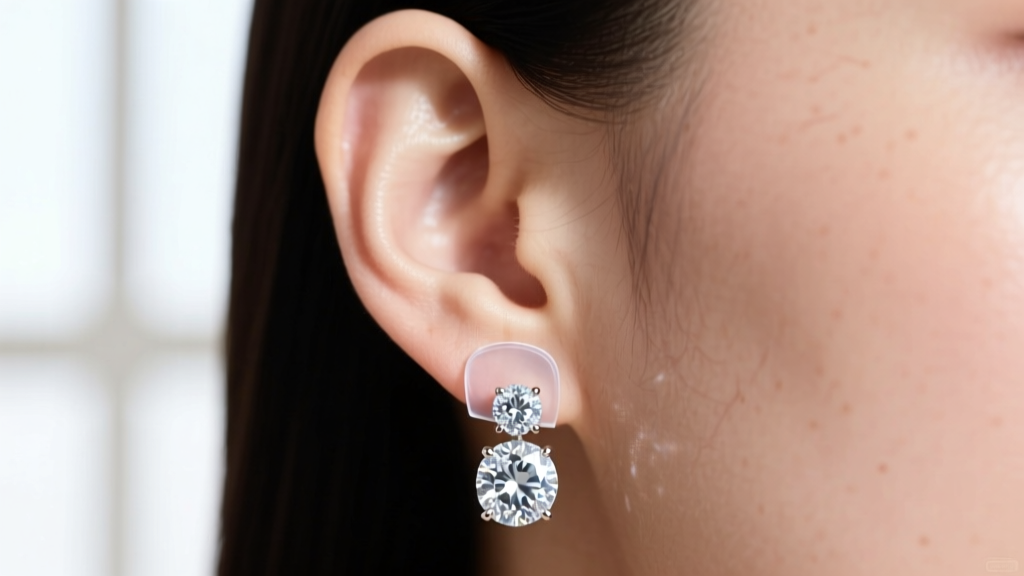
- Polymer Lobe Patches (e.g., Lobe Wonder): These adhesive, medical-grade polymer shields distribute the weight of the earring across a 15mm radius on the back of the earlobe, preventing the piercing hole from elongating.
- Silicone Earring Nuts (Jumbo Friction Backs): Standard butterfly backs fail under heavy loads. Jumbo silicone nuts with a wide, flat base provide a shelf that supports the earring post from underneath.
- Custom-Fitted Ear Wires: For leverbacks, a jeweler can bend the ear wire to match the exact curvature of the wearer's ear, creating a custom fulcrum that leverages the cartilage for support rather than relying solely on the soft tissue of the lobe.
Long-Term Maintenance and Ultrasonic Risks
Maintaining the structural integrity of heavy statement drops requires specialized care. Because articulated bails contain micro-hinges and laser-welded joints, placing these earrings in a standard ultrasonic cleaner is a critical error. The high-frequency vibrations can loosen the microscopic rivets or fracture the solder joints over time. Instead, professional jewelers recommend steam cleaning or manual brushing with a soft-bristled brush and a mild degreasing solution to maintain the diamond's light return without compromising the mechanical engineering. Furthermore, the rhodium plating on 18k white gold leverbacks will wear away at the friction points, requiring annual re-plating to maintain the bright white aesthetic that complements the diamonds.
Sourcing and Pricing: Building Your Courtroom-Ready Pair
Replicating the Judge Judy earring effect requires a strategic approach to sourcing. In 2026, the rise of high-quality lab-grown diamonds has made this authoritative look accessible without compromising on optical performance. A natural 4.0 TCW pear-drop pair in Platinum 950 will easily command $15,000 to $25,000 at retail, driven by the rarity of matched, high-carat natural stones. Conversely, an identical optical and structural specification using Type IIa lab-grown diamonds can be engineered for $2,500 to $4,500, allowing the budget to be reallocated toward superior platinum casting and articulated hinge mechanics.
When commissioning or purchasing these pieces, demand a CAD (Computer-Aided Design) rendering that explicitly shows the bail articulation and the post gauge thickness. True authority is never an accident; it is engineered, calibrated, and worn with absolute precision.


