Stud Earrings Meaning: A Buyer's Guide to Symbolism, Metals & Fit
Discover the stud earrings meaning, from historical symbolism to modern style. Our expert buying guide covers metal grades, gauge sizes, and secure backings.

Beyond the Basics: What is the Stud Earrings Meaning?
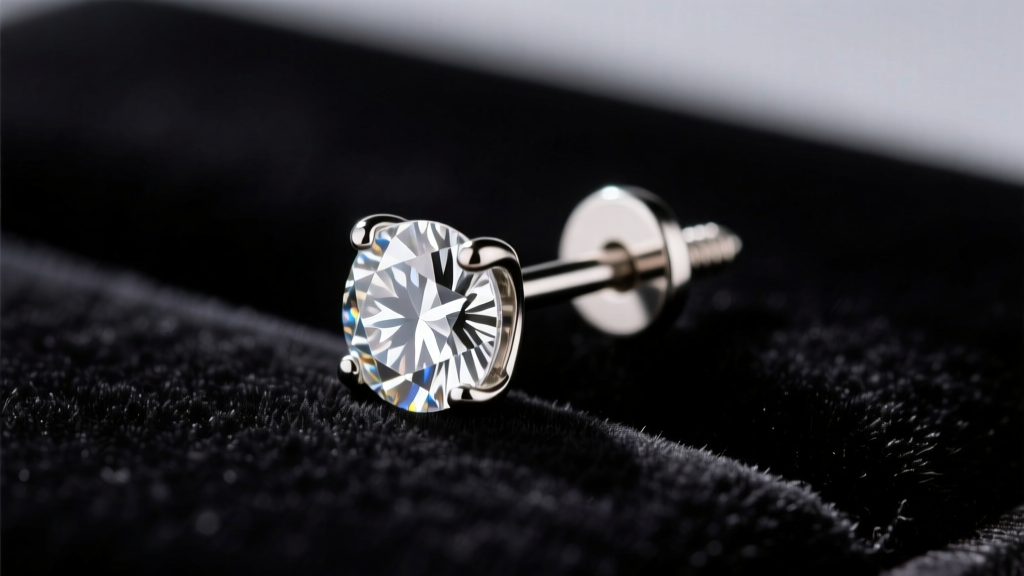
When we discuss the stud earrings meaning, we are looking at a fascinating intersection of historical symbolism, personal expression, and functional anatomy. Unlike dangles or hoops, which draw attention through movement, studs are anchored. Historically, they originated in ancient Egypt and Mesopotamia as talismans worn close to the body to ward off evil spirits. Today, the meaning has evolved. In modern style psychology, a stud earring communicates groundedness, professionalism, and foundational elegance. They are the "anchor" pieces of a jewelry wardrobe, meant to complement rather than compete.
However, understanding the meaning is only half the battle. When you are investing in fine jewelry, you must look past the symbolism and scrutinize the structural integrity of the piece. A poorly constructed stud will bend, irritate your piercing, or lose its backing. This guide breaks down exactly what to look for regarding metals, gauges, and backings to ensure your studs are as enduring as their meaning.
Decoding Gemstone and Metal Meanings in Studs
The materials you choose add a secondary layer to the stud earrings meaning. Gemstones have carried metaphysical weight for centuries, while your choice of metal dictates both the longevity of the piece and your skin's reaction to it.
| Material / Gemstone | Symbolic Meaning | Best Use Case | Average Price Range (Per Pair) |
|---|---|---|---|
| Round Brilliant Diamond | Invincibility, clarity, eternal commitment | Everyday wear, foundational lobe piercings | $300 - $5,000+ |
| Blue Sapphire | Wisdom, royalty, mental focus | Statement studs, anniversary gifts | $400 - $3,000 |
| Akoya Pearl | Purity, calming energy, classic femininity | Professional environments, formal events | $150 - $800 |
| 14k Solid Yellow Gold | Warmth, tradition, wealth | Hypoallergenic daily wear | $100 - $600 (metal only) |
| Implant-Grade Titanium | Modernity, healing, resilience | Fresh piercings, severe nickel allergies | $40 - $250 |
For a deeper understanding of gemstone grading and how it impacts the value of your diamond studs, consult the Gemological Institute of America (GIA) guidelines on the 4Cs.
The Anatomy of a Stud: Gauges and Backings
The most common failure point in stud earrings is not the gemstone falling out; it is the post bending or the backing slipping off. To avoid this, you must understand gauge sizes and backing mechanics.
Understanding Post Gauge Sizes
The "gauge" refers to the thickness of the metal post that passes through your ear. Buying the wrong gauge can lead to the "cheese-cutter effect," where a thin post slices through the earlobe under the weight of a heavy gemstone.
- 22-Gauge (0.64mm): Avoid for fine jewelry. Far too thin; will bend easily and slice through healed lobes if the stud is over 1 carat.
- 20-Gauge (0.81mm): The standard for lightweight, delicate commercial studs. Fine for small 2mm-3mm gems.
- 18-Gauge (1.02mm): The ideal sweet spot for standard diamond or gemstone studs (4mm-6mm). Offers excellent structural support without stretching the piercing.
- 16-Gauge (1.29mm): The standard for cartilage piercings (helix, tragus, conch). Do not use 18G or 20G in fresh cartilage, as it can cause migration and irritation bumps.
Securing the Investment: Backing Types
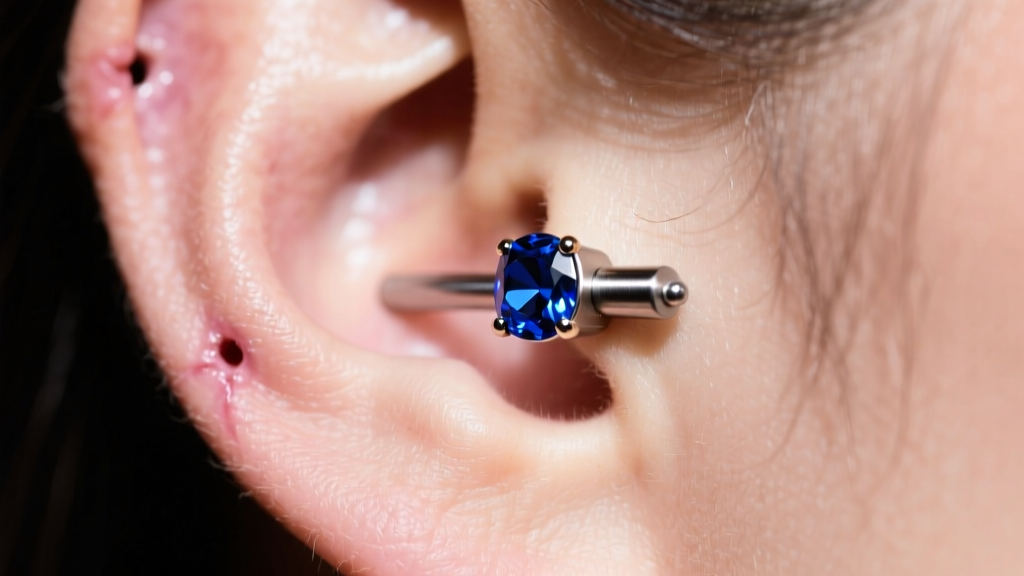
The backing is the unsung hero of the stud earring. Here is what you need to look for based on your lifestyle:
- Friction / Butterfly Backs: The most common and least secure. The metal loops lose tension over time, leading to lost earrings. Only acceptable for inexpensive fashion jewelry.
- Screw-Backs: The post is threaded, and the backing screws on. Highly secure, but the threads can strip if cross-threaded, and they can be frustrating to put on with poor eyesight or long nails.
- La Pousette (Locking) Backs: Utilizes a mechanical spring-loaded lock that clicks onto a notched post. This is the gold standard for high-value diamond studs over 1 carat.
- Flat-Back (Labret) Posts: Essential for cartilage or sleeping. The post is a single piece of metal with a flat disc at the back, eliminating the sharp poke of a traditional post and preventing hair from tangling around the backing.
Material Grades: Navigating Hypoallergenic Claims
The term "hypoallergenic" is largely unregulated in the jewelry industry. If you have sensitive ears, you must look for specific metallurgical standards rather than marketing buzzwords. According to the Association of Professional Piercers (APP), only specific grades of metal are safe for prolonged internal wear.
Expert Warning: Avoid the term "Surgical Steel." It is a marketing term, not a regulated alloy. Many items labeled surgical steel contain high levels of nickel, which is the number one cause of contact dermatitis in ear piercings.
What to buy instead:
- Implant-Grade Titanium (ASTM F136): Completely nickel-free, lightweight, and biocompatible. The absolute best choice for sensitive ears or fresh piercings.
- 14k or 18k Solid Gold: Ensure it is alloyed for jewelry (often with palladium or silver instead of nickel). Avoid gold-plated or gold-filled studs, as the base metal will eventually expose and cause reactions.
- Platinum: Naturally white, incredibly dense, and hypoallergenic. It is heavier and more expensive than gold but will never tarnish or wear away.
For more on how the government regulates precious metal claims, review the FTC Jewelry Guides.
Sizing and Proportions: Matching Studs to Ear Anatomy
The visual impact of a stud changes drastically depending on the millimeter (mm) size and the specific anatomy of your ear. A 5mm stud will look like a delicate accent on a larger lobe, but will completely overwhelm a petite tragus piercing.
The Millimeter Sizing Guide
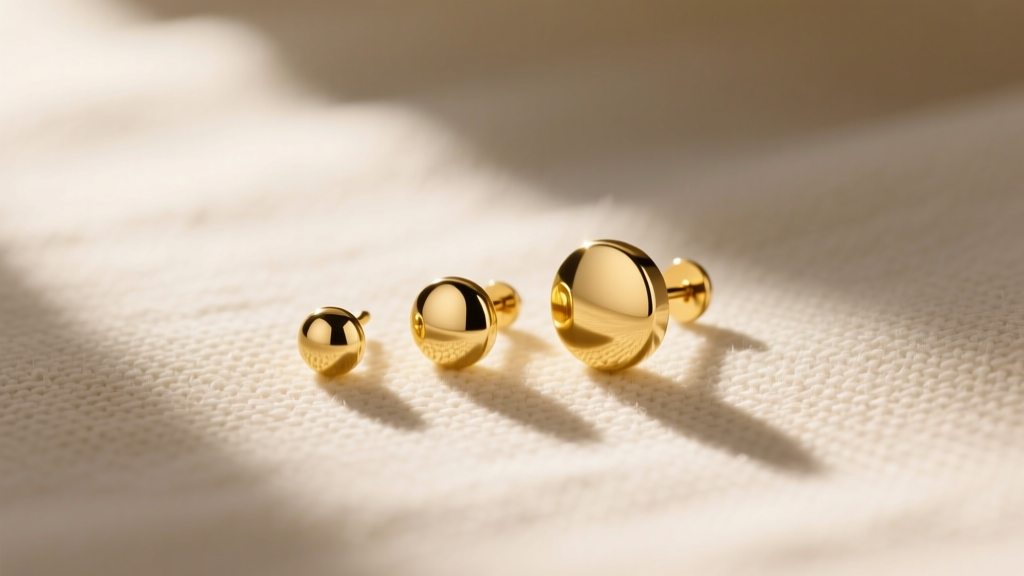
- 2mm - 3mm (Micro Studs): Perfect for second or third lobe piercings, tragus, and helix piercings. They provide a subtle sparkle without catching on hair or clothing.
- 4mm - 5mm (Standard Studs): The universal size for primary lobe piercings. A 4mm round brilliant diamond is roughly 0.25 carats; a 5mm is roughly 0.50 carats.
- 6mm - 8mm (Statement Studs): Ideal for a bold, single-stone look in the primary lobe. Anything larger than 8mm in a solid metal or heavy gemstone design requires an 18G or 16G post to prevent the earlobe from drooping or tearing.
Final Checklist for Your Stud Earring Purchase
Before you finalize your purchase, run the piece through this expert checklist to ensure you are getting a high-quality item that aligns with the true stud earrings meaning of longevity and personal significance:
- Verify the Metal Stamp: Look for "14k", "18k", "PT" (Platinum), or "Ti" (Titanium). Reject anything simply stamped "metal" or "surgical steel" if you have sensitivities.
- Check the Post Thickness: Ensure the gauge is appropriate for the weight of the earring (minimum 18G for heavy gems, 16G for cartilage).
- Inspect the Backing: Upgrade to screw-backs, La Pousette locks, or flat-backs. Never trust friction backs with expensive stones.
- Examine the Prongs or Bezels: If buying gemstone studs, ensure the prongs are flush and not snagging on a piece of silk fabric. Bezel settings are safer for active lifestyles.
- Confirm the Return Policy: Fine jewelry should come with a clear return or exchange policy, especially regarding the precise millimeter size, which is hard to judge from a screen.
By understanding the deep symbolism behind your jewelry and pairing it with rigorous structural standards, you ensure that your stud earrings remain a meaningful, secure, and beautiful part of your daily life for decades to come.


