Black Star Earrings: Sapphire vs Diopside Material Guide
Compare black star sapphire and diopside earrings. Explore gemstone properties, metal pairings, and setting engineering for lasting wear.

The Gemological Divide: Natural Asterism vs. Star Motifs
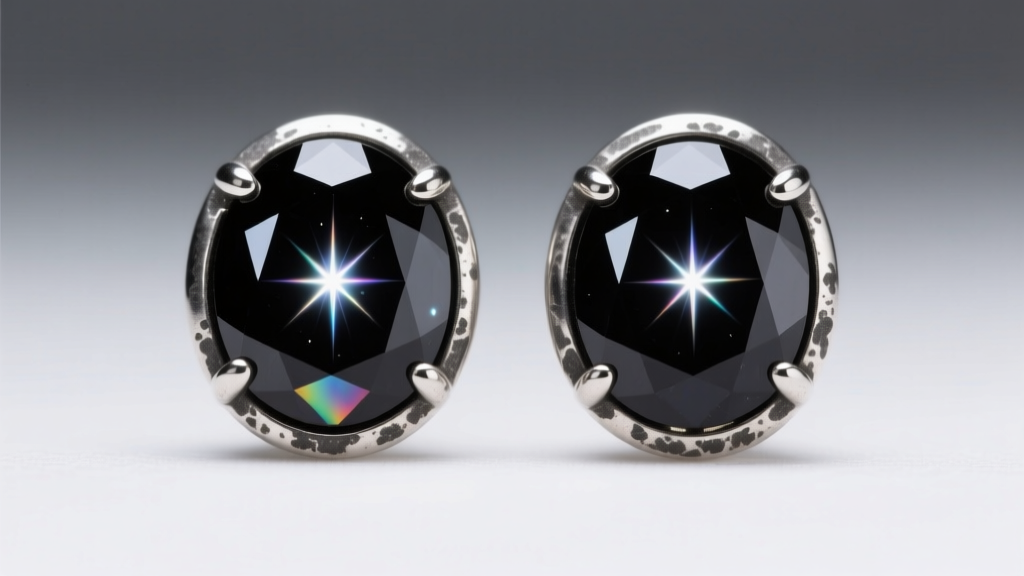
When navigating the 2026 fine jewelry market, the search for black star earrings typically leads to two distinct categories: natural gemstones exhibiting asterism (an optical phenomenon) and geometric star motifs crafted from dark metals or opaque stones. For collectors and everyday wearers alike, understanding the material science behind these pieces is critical for longevity, comfort, and value retention. Asterism is caused by light reflecting off microscopic, needle-like inclusions within a crystal lattice. The two most prominent natural stars in the earring market are Black Star Sapphire and Black Star Diopside. While they may look similar to the untrained eye in dim lighting, their crystallography, hardness, and required setting engineering are worlds apart.
Black Star Sapphire (Corundum)
Black star sapphire is a variety of corundum (Al₂O₃). Its signature six-ray star is caused by dense, intersecting needles of rutile (titanium dioxide) and hematite. According to the Gemological Institute of America (GIA), the orientation of these inclusions strictly follows the hexagonal crystal system of corundum, resulting in a sharp, six-legged star that moves across the domed cabochon as the light source shifts. With a Mohs hardness of 9, black star sapphire is exceptionally durable, making it highly suitable for exposed earring styles like dangles or large hoops where impact resistance is necessary. Furthermore, its high specific gravity (4.00) means these earrings carry a satisfying, premium weight, though designers must engineer robust earring posts to prevent drooping on the lobe.
Black Star Diopside (Pyroxene)
Black star diopside belongs to the pyroxene group and is chemically a calcium magnesium silicate. Unlike sapphire, its asterism is typically a four-ray star caused by microscopic inclusions of magnetite. Data from Mindat.org confirms that diopside possesses a Mohs hardness of only 5.5 to 6.5 and features two distinct planes of prismatic cleavage. This cleavage makes the stone highly vulnerable to chipping if struck at the wrong angle. Consequently, black star diopside earrings are almost exclusively cut into lower-profile cabochons and require highly protective settings. Despite its fragility, diopside is prized for its deep, velvety black body color and the distinct, sharp contrast of its four-ray star, often available at a fraction of the cost of sapphire.
Comparative Gemstone Data Matrix
| Property | Black Star Sapphire | Black Star Diopside | Black Spinel (Motif Alternative) |
|---|---|---|---|
| Mohs Hardness | 9.0 | 5.5 - 6.5 | 8.0 |
| Asterism Rays | 6-Ray (occasionally 12) | 4-Ray | N/A (Cut into star shapes) |
| Inclusion Type | Rutile / Hematite | Magnetite | N/A |
| Cleavage | None (Parting) | Distinct (2 Planes) | None |
| Avg. Price per Carat | $50 - $500+ | $10 - $50 | $20 - $100 |
Metallurgical Pairings: Best Metals for Dark Gemstones
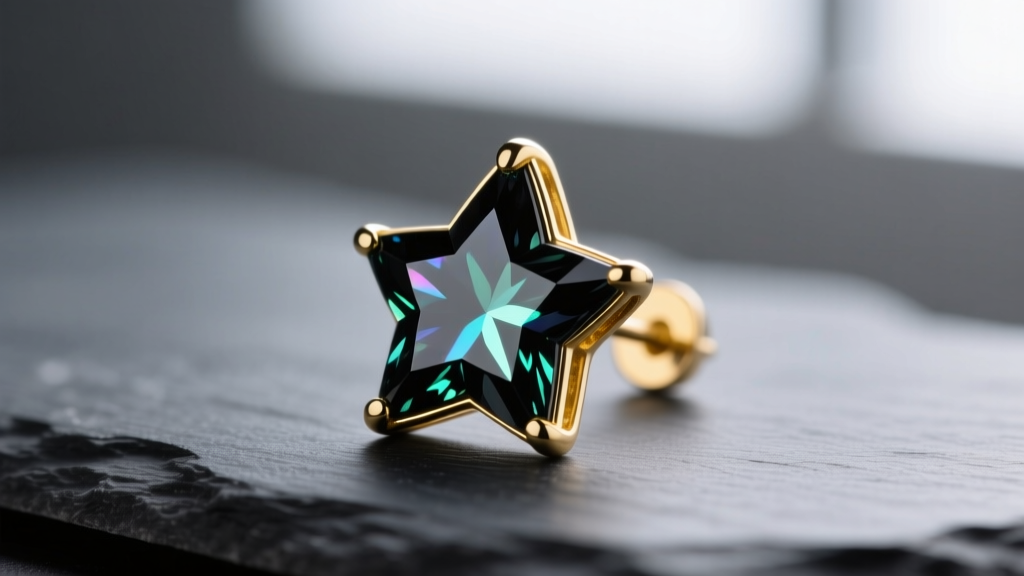
The visual impact of black star earrings relies heavily on the contrast and harmony between the gemstone and the mounting metal. In modern jewelry design, three primary materials dominate the dark aesthetic:
1. Oxidized Sterling Silver (925)
Oxidation is achieved by exposing sterling silver to sulfur compounds (like liver of sulfur), creating a dark silver sulfide patina. This gunmetal finish provides a seamless, moody transition into a black star sapphire or diopside. Pro Tip: For earrings, oxidation is relatively stable because earlobes experience less friction than rings or bracelets. However, the high-polish raised edges of the bezel will naturally wear clean over time, creating a beautiful antique contrast.
2. Black Rhodium over 14k/18k Gold
Black rhodium is a platinum-group metal plating that yields a deep, glossy, charcoal-black finish. It is highly reflective, which can enhance the perceived brightness of the star's rays. However, black rhodium plating is typically applied at a thickness of 0.5 to 1.0 microns. On earrings, this plating can last years, but friction from the earring back or hair snagging will eventually wear it down to the yellow or white gold beneath, requiring professional replating.
3. Anodized Grade 23 Titanium (Ti-6Al-4V ELI)
For sensitive ears or cartilage piercings, anodized titanium is the ultimate 2026 standard. By running a specific voltage through the titanium in an electrolytic bath, a permanent, hypoallergenic oxide layer is created that can achieve deep, dark purple-black hues. Unlike plating, anodizing alters the metal's surface at a molecular level and will never flake or wear off, making it ideal for lightweight, permanent-wear huggies or studs.
Setting Engineering & Gauge Specifications
Choosing the right setting is not merely an aesthetic choice; it is a structural necessity dictated by the gemstone's crystallography.
- Bezel Settings for Diopside: Because black star diopside has distinct prismatic cleavage, traditional prong settings are a liability. A single knock against a hard surface can cause the stone to split along its cleavage plane. A full or half-bezel setting in 14k gold or platinum distributes pressure evenly around the girdle, securing the stone and protecting its vulnerable edges.
- Prong vs. Bezel for Sapphire: Black star sapphire lacks true cleavage, meaning it can safely be set in prongs. However, a bezel is still preferred for cabochons because it frames the dome perfectly, ensuring the star remains centered and visible from a direct top-down angle.
- Identifying Synthetics: Be wary of synthetic star sapphires (often called Linde stars). They are created via the Verneuil process and exhibit an unnaturally perfect, overly sharp star with a flat bottom. Natural stones will have a slightly uneven star and a domed or ridged bottom to preserve carat weight.
Post Gauge and Weight Distribution
Black star cabochons are inherently dense. If you are purchasing black star sapphire dangles that exceed 4 grams per earring, ensure the post or wire is structurally sound.
- Standard Lobe Studs: 20-gauge (0.81mm) is standard, but for heavy star sapphire cabs, an 18-gauge (1.02mm) post prevents bending and lobe tearing.
- Cartilage / Helix Hoops: If incorporating small black star diopside charms into cartilage huggies, stick to 16-gauge (1.29mm) or 14-gauge (1.60mm) titanium rings to support the localized weight without warping the hoop's closure mechanism.
Care Protocols and Ultrasonic Warnings
"The greatest threat to an included gemstone is not a scratch, but high-frequency vibration. Asterism relies on the precise alignment of microscopic needles; shattering those needles destroys the star."
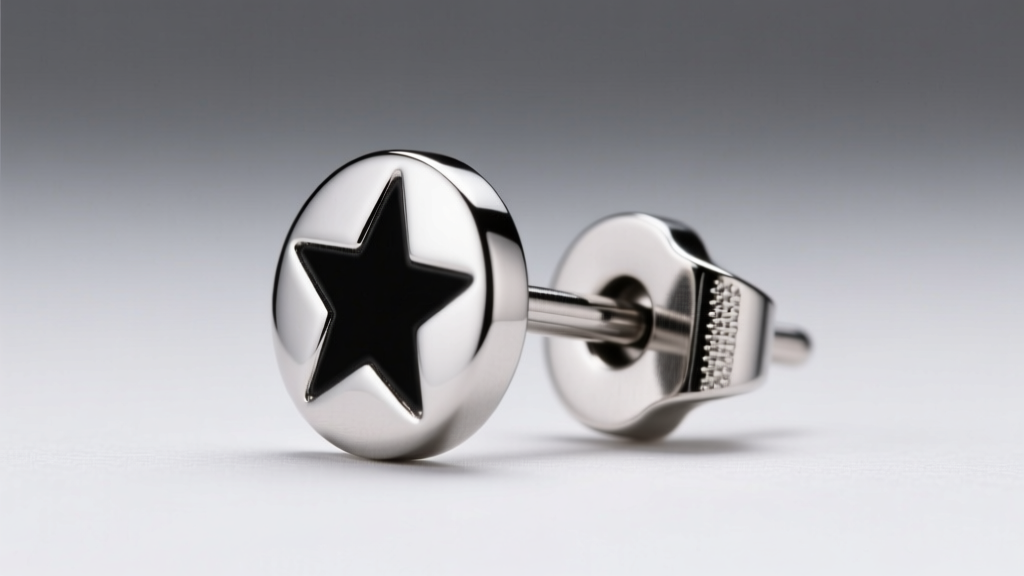
Maintaining black star earrings requires strict adherence to material-specific cleaning protocols. Never place black star diopside in an ultrasonic cleaner. The high-frequency vibrations can cause the magnetite inclusions to fracture internally, or worse, trigger the stone to split along its cleavage planes. Diopside should only be cleaned with a soft, damp microfiber cloth and mild dish soap.
Black star sapphire is generally safe for ultrasonic cleaning, but if the stone has been fracture-filled or treated with heavy oils to mask surface-reaching cracks, the ultrasonic waves will strip the filler, leaving the stone looking dull and heavily included. For both stones, avoid steam cleaners, as sudden thermal shock can cause internal stress fractures, particularly in stones with dense rutile silk. Store your black star earrings in individual soft pouches; while sapphire cannot be scratched by diamond or other sapphires, the metal settings can easily scratch the polish of softer accompanying stones or metal finishes like black rhodium.
Final Verdict: Which Black Star Earring Suits Your Lifestyle?
If you prioritize heirloom durability, daily wearability, and the classic six-ray optical phenomenon, black star sapphire set in oxidized sterling silver or white gold is the superior investment. It withstands the rigors of daily life and retains its structural integrity across decades. Conversely, if you are drawn to the unique four-ray star, a velvety black body color, and a more accessible price point, black star diopside is an exceptional choice—provided you commit to a protective bezel setting and reserve the earrings for low-impact, occasional wear. By matching the gemstone's physical properties to the correct metallurgical setting, your black star earrings will remain a captivating focal point for years to come.


