Flower Shaped Earrings: The Ultimate Budget & Value Guide
Discover how to assess the true value of flower shaped earrings. We break down material grades, manufacturing costs, and smart budget allocation.

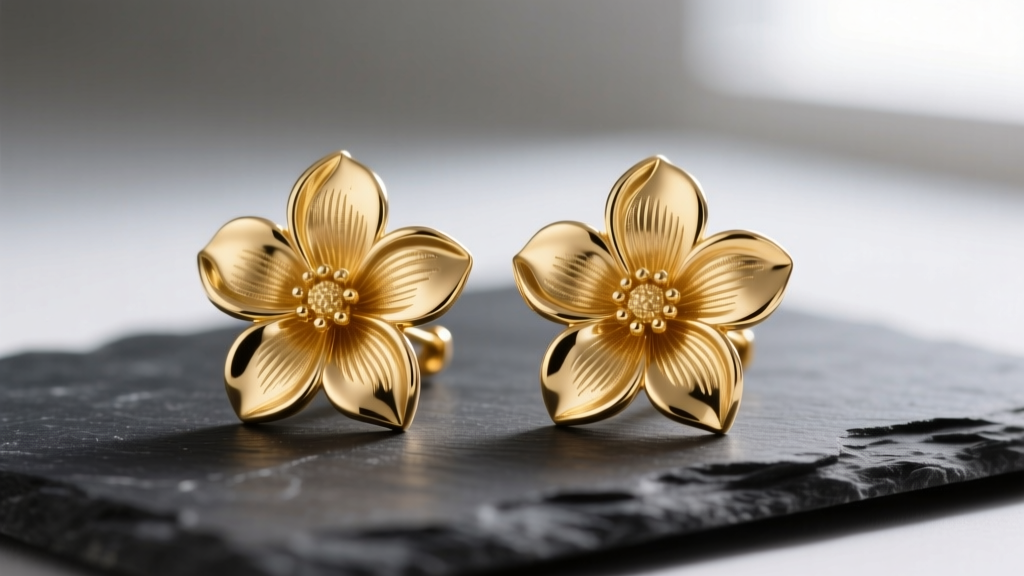
Floral jewelry is a perennial staple in the accessory world, but the market for flower shaped earrings is saturated with vast pricing disparities. You can find a pair of daisy studs for $12 at a fast-fashion retailer, or a pair of intricate orchid drops for $1,200 at a luxury boutique. For the discerning buyer, the challenge lies in distinguishing between superficial markup and genuine craftsmanship. As a jewelry value assessor, I look past the aesthetic appeal to evaluate the metallurgical integrity, manufacturing techniques, and structural longevity of floral designs. This guide will equip you with the technical knowledge to audit the true value of your next floral earring purchase.
The Manufacturing Divide: Casting vs. Die-Striking
The most significant cost driver in floral jewelry is the manufacturing method. The intricate, organic curves of nature are difficult to replicate in metal, and the technique used dictates both the price and the visual depth of the piece.
- Lost-Wax Casting: This is the hallmark of premium floral earrings. A 3D wax model is carved, encased in plaster, and burned out, leaving a mold into which molten metal is poured. This allows for domed petals, organic veining, and undercuts (where one petal naturally overlaps another). Because it requires skilled bench jewelers for finishing and polishing, cast floral earrings command higher prices, typically starting around $150 for sterling silver and $600+ for solid 14k gold.
- Die-Striking and Stamping: Budget-friendly flower shaped earrings are usually stamped from flat sheets of metal using high-pressure hydraulic presses. While this creates crisp, uniform 2D silhouettes (like a simple daisy or sunflower), it completely lacks depth. The metal is often work-hardened during stamping, making it durable but visually flat. These are highly cost-effective to mass-produce and should rarely exceed the $20–$40 price point unless adorned with genuine gemstones.
Material Value Matrix: What You Are Actually Paying For
When evaluating budget versus value, the base metal and plating thickness are paramount. Floral designs with deep crevices and overlapping petals trap moisture and skin oils, making them highly susceptible to tarnishing and corrosion if made from inferior alloys.
| Material Grade | Composition | Fair Price Range (Studs) | Corrosion Risk | Value Verdict |
|---|---|---|---|---|
| Brass/Copper Alloy | Copper & Zinc base | $10 - $25 | High (turns skin green) | Poor long-term value |
| 925 Sterling Silver | 92.5% Silver, 7.5% Copper | $45 - $120 | Moderate (tarnishes, but polishable) | Excellent everyday value |
| Gold Vermeil | Sterling base, 2.5µm+ Gold | $80 - $180 | Low (if cared for properly) | Good for trend-driven pieces |
| Solid 14k Gold | 58.5% Pure Gold alloy | $350 - $800+ | None (highly inert) | Superior heirloom investment |
Demystifying Plating: The FTC Standard for Floral Vermeil
Many brands market their flower shaped earrings as 'gold dipped' or 'plated,' but these terms are largely unregulated and often indicate a microscopic 'flash' plating of 0.1 to 0.5 microns. Flash plating will wear off within weeks, especially on the high-friction edges of floral petals, exposing the reactive brass underneath.
For genuine value, look for Gold Vermeil. According to the Federal Trade Commission (FTC) Jewelry Guides, vermeil must consist of a sterling silver base coated with gold of at least 10-karat fineness, and the plating must be a minimum of 2.5 microns thick. When assessing a $90 pair of vermeil rose earrings, verify the product specifications for the '2.5 micron' metric. If the brand cannot provide this data, you are likely overpaying for standard flash-plated brass.
Structural Integrity: Posts, Soldering, and Snagging
Floral motifs present unique structural challenges that cheaper manufacturers often ignore, leading to premature failure and lost earrings.
The Snag-and-Snap Failure Mode
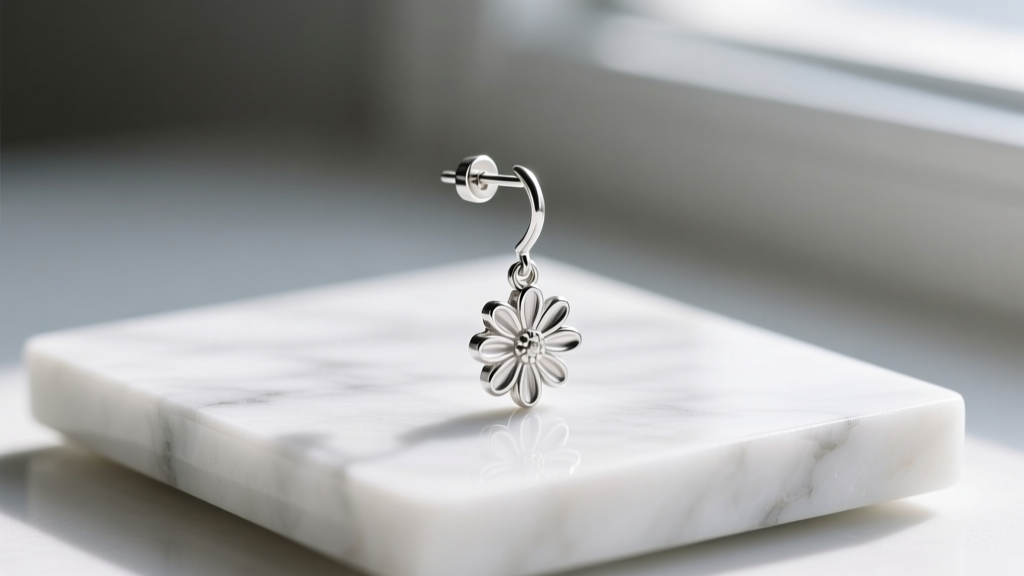
Flower petals naturally feature scalloped, pointed, or sweeping edges. In budget manufacturing, these edges are left razor-thin (under 0.6mm) to save on metal weight costs. Thin petal edges act as hooks, catching on knitwear, towels, and hair. When snagged, thin cast silver or gold petals will bend or snap entirely. A high-value floral earring will feature slightly rolled or domed petal edges (minimum 0.8mm to 1.0mm thickness at the perimeter) to deflect snags and maintain structural rigidity.
Post Sizing and the Cheese-Cutter Effect
Oversized floral drops (such as large hibiscus or peony dangles) can easily weigh 6 to 10 grams per earring. Budget brands frequently use standard 20-gauge (0.81mm) wire for the ear post to cut costs. Hanging heavy, intricate floral drops from a thin 20-gauge post creates a 'cheese-cutter effect,' where the thin wire slowly slices downward through the earlobe fistula, causing permanent stretching and discomfort. For any floral drop earring exceeding 4 grams, insist on an 18-gauge (1.02mm) or 16-gauge (1.29mm) post, or seek out hollow-cast electroformed designs that offer visual volume without the punishing weight.
Enamel and Gemstone Accents: Where Budgets Bleed
Floral designs frequently incorporate color through gemstones or enamel to mimic the vibrant hues of nature. Understanding the difference in these materials is crucial for budget allocation.
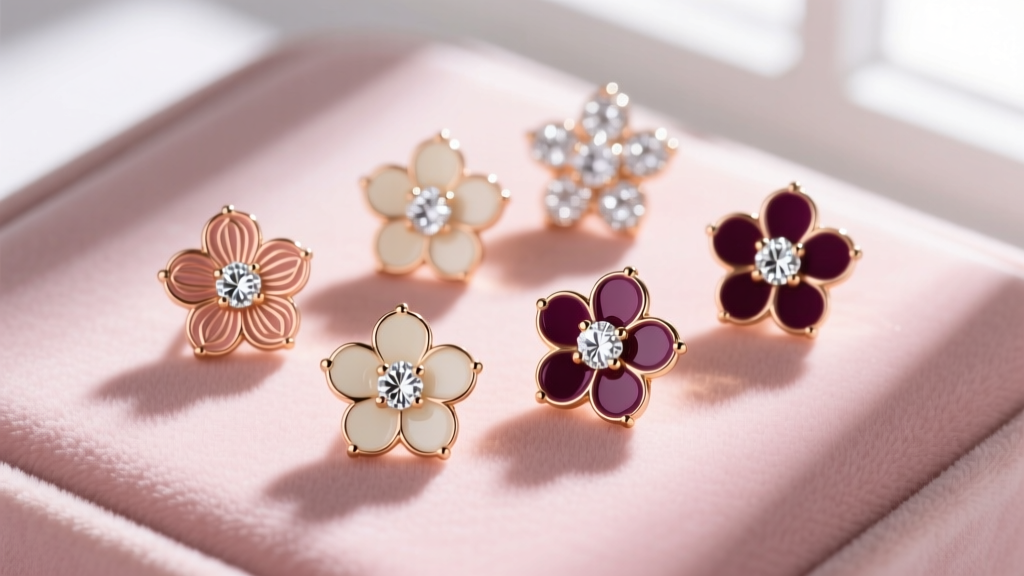
Cold Enamel (Epoxy Resin) vs. Vitreous Enamel: Budget floral earrings utilize cold enamel, essentially a tinted epoxy resin poured into metal recesses. While initially bright, epoxy is soft (around 2-3 on the Mohs scale) and will yellow, chip, and degrade under UV light and contact with perfumes. Premium floral pieces use vitreous (kiln-fired) enamel, which is essentially powdered glass fused to the metal at over 1,400°F. As noted in the Gemological Institute of America (GIA) educational resources, vitreous enamel offers superior color permanence and a glass-like luster that epoxy simply cannot replicate. If you are spending over $150 on enameled flower shaped earrings, vitreous enamel is a non-negotiable requirement for long-term value.
Pavé Settings in Floral Centers
The 'stamen' or center of a floral earring is often highlighted with pavé-set diamonds or cubic zirconia. In budget pieces, these stones are often glued or held by poorly pushed micro-prongs that catch on clothing. High-value floral jewelry will feature bright-cut pavé, where the jeweler uses a graver to carve the setting directly out of the solid metal, pushing the metal over the girdle of the stone without the need for glue. Always inspect the center of the flower under a loupe or macro lens; if you see cloudy residue (glue) or jagged, uneven metal beads holding the stones, the craftsmanship does not justify a premium price tag.
The Verdict: Allocating Your Floral Jewelry Budget
When shopping for flower shaped earrings, your budget should be allocated based on wear frequency and design complexity. If you are purchasing a simple, flat-stamped daisy or sunflower stud for occasional wear, sterling silver or high-quality vermeil in the $40–$80 range offers excellent value. Avoid paying luxury premiums for basic 2D stamped silhouettes.
However, if you desire intricate, 3D overlapping petals, organic veining, or heavy statement drops, you must invest in lost-wax cast solid gold or heavy vermeil, ensuring the piece features reinforced petal edges and appropriately thick ear posts (18g+). By scrutinizing the manufacturing method, verifying FTC plating standards, and inspecting the structural joins, you can confidently navigate the floral jewelry market and acquire pieces that offer enduring beauty and genuine metallurgical value.


