The Beginner's Guide to Buying Authentic Jade Dangle Earrings
Discover how to choose authentic jade dangle earrings. Learn about jadeite vs nephrite, ideal gauge sizes, and styling tips for every face shape.

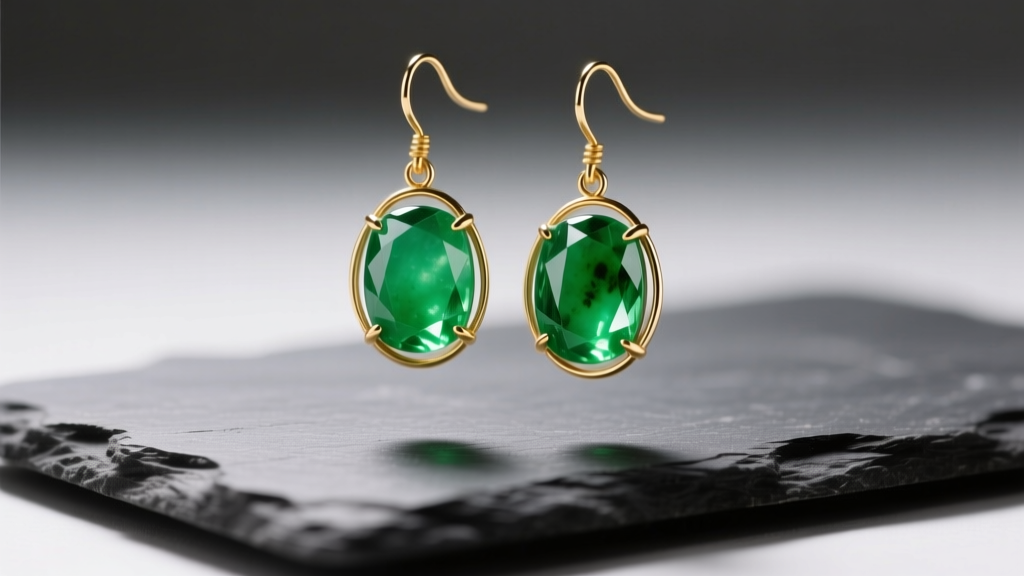
The Allure and Mechanics of Jade Dangle Earrings
When navigating the world of gemstone jewelry, few pieces carry the cultural weight and visual depth of jade. For beginners, jade dangle earrings represent a perfect intersection of heritage, elegance, and kinetic beauty. Unlike drop earrings, which hang just below the earlobe and remain relatively stationary, dangle earrings feature a pivot point that allows the jade to swing freely. This movement is not just a stylistic choice; it is a functional necessity for jade. As the stone catches the light from multiple angles, it reveals its internal texture, translucency, and color zoning—characteristics that define its true value.
However, buying jade is notoriously complex for newcomers. The market is flooded with misidentified minerals, synthetic imitations, and chemically treated stones. Furthermore, the physical mechanics of wearing heavy gemstone dangles require specific hardware considerations to protect your earlobes. This guide will demystify the gemological, structural, and stylistic elements you need to know before investing in your first pair of authentic jade dangles.
Jadeite vs. Nephrite: Know Your Mineral
The most common beginner mistake is assuming "jade" refers to a single mineral. In gemology, jade is an umbrella term for two distinct metamorphic rocks: Jadeite and Nephrite. According to the Gemological Institute of America (GIA), while both are tough and historically significant, their chemical compositions, visual properties, and market values differ drastically.
Jadeite (The Premium Standard)
Jadeite is a sodium- and aluminum-rich pyroxene. It is prized for its glassy luster, vibrant color palette (including the highly coveted "Imperial Green" and translucent lavender), and higher hardness (6.5 to 7 on the Mohs scale). Its specific gravity ranges from 3.30 to 3.38, making it noticeably heavier than nephrite.
Nephrite (The Historic Workhorse)
Nephrite is a calcium- and magnesium-rich amphibole. It exhibits a more muted, waxy, or oily luster and is typically found in deeper forest greens, creamy whites (mutton fat), and blacks. It is slightly softer (6 to 6.5 on the Mohs scale) but possesses incredible tensile strength due to its interlocking fibrous crystal structure. Its specific gravity is lower, ranging from 2.90 to 3.03.
| Feature | Jadeite | Nephrite |
|---|---|---|
| Mohs Hardness | 6.5 - 7.0 | 6.0 - 6.5 |
| Luster | Glassy to Sub-vitreous | Waxy to Oily |
| Translucency | High (Semi-transparent to opaque) | Low (Mostly opaque) |
| Price Range (Dangles) | $200 - $5,000+ | $40 - $300 |
The ABCs of Jade Treatments
Understanding treatments is critical. The GIA's Jade Quality Factors outline a universal grading system based on chemical and structural alterations. Never purchase high-end jade dangle earrings without knowing their treatment grade.
- Type A (Natural): 100% natural jadeite, untreated except for traditional plum wax polishing to enhance surface luster. This is the only grade that holds long-term investment value.
- Type B (Bleached & Polymer-Impregnated): Acid is used to dissolve brown or yellow impurities, which leaves the stone porous. It is then injected with polymer resin to restore structural integrity. Over time, the resin degrades, yellows, and becomes brittle.
- Type C (Dyed): The stone is chemically dyed to mimic Imperial Green or lavender. The color will inevitably fade when exposed to sunlight and heat.
- Type B+C: A combination of acid bleaching, resin impregnation, and artificial dyeing. Essentially worthless from a gemological standpoint.
Hardware Mechanics: Gauges, Weight, and Ear Health
Dangle earrings introduce kinetic stress to your piercings. The swinging motion of a heavy jade stone can cause severe lobe damage if the hardware is not properly engineered.
The "Cheese-Cutter" Effect and Wire Gauges
The thickness of the ear wire is measured in gauges. For jade dangles, the wire gauge is a matter of medical necessity, not just aesthetics.
- 22-Gauge (0.64mm): Too thin. If the jade carving weighs more than 3 grams, a 22g wire will act like a cheese cutter, slowly slicing through the bottom of your earlobe piercing over time.
- 20-Gauge (0.81mm): The optimal sweet spot. It provides enough structural rigidity to support stones up to 8 grams while fitting comfortably through standard, fully healed lobe piercings.
- 18-Gauge (1.02mm): Generally too thick for delicate jade carvings and may not fit standard piercings without causing friction or discomfort.
Weight Limits and Backing Security
For all-day wear, keep the total weight of each earring under 7 grams to prevent earlobe ptosis (sagging). Because dangles swing, traditional push-backs or friction posts are ineffective; they will slip out. Always opt for leverback closures or locking French wires (fishhooks with a secure latch mechanism) to ensure your valuable Type A jadeite doesn't end up on the floor.
Styling Dangles for Your Face Shape
The elongated nature of dangle earrings makes them a powerful tool for balancing facial proportions.
- Round Faces: Choose long, narrow, linear jade dangles. The vertical drop creates an optical illusion that elongates the jawline and slims the cheeks.
- Square Faces: Opt for teardrop or oval-shaped jade carvings that dangle below the jawline. The curved edges of the stone soften strong, angular jawbones.
- Heart-Shaped Faces: Look for chandelier-style dangles or stones that are wider at the bottom to add visual weight and balance a narrow chin.
- Oval Faces: You have the versatility to wear any style, from short, chunky nephrite bangles to long, sweeping jadeite leaves.

2026 Market Pricing Guide
Pricing for jade dangle earrings varies wildly based on the mineral type, color saturation, and translucency. Here is what you can expect to pay in the current market for a pair of well-crafted dangles set in 14k or 18k gold:
- Commercial Nephrite: $40 – $120 (Often opaque, darker greens, simple carvings).
- Fine Nephrite (Hetian): $150 – $400 (Creamy "mutton fat" white or highly polished spinach green).
- Commercial Jadeite (Type A): $250 – $800 (Opaque, pale green or mottled, minimal translucency).
- Fine Jadeite (Type A, Icy/Glassy): $1,500 – $10,000+ (Highly translucent, vivid Imperial Green or pure lavender).
Warning: If you see a pair of highly translucent, vivid green "jadeite" dangle earrings selling for $80, they are almost certainly Type B+C treated or made of dyed quartz/glass.
Care and Maintenance for Dangle Styles
Jade is tough, but it is not indestructible. The interlocking crystals can still chip if the dangle swings violently and strikes a hard surface like a marble countertop. Furthermore, never use an ultrasonic cleaner on jade. While Type A jade might survive, the high-frequency vibrations can expand microscopic internal fractures. More importantly, if you accidentally purchase Type B or C jade, the ultrasonic waves and heat will instantly shatter the polymer resin and strip the dye.
To clean your jade dangles, simply use lukewarm water, a drop of mild dish soap, and a soft-bristled baby toothbrush. Gently scrub the carving, rinse, and dry with a microfiber cloth. Store them in a soft pouch separate from your diamonds and sapphires, which rank higher on the Mohs scale and can scratch the jade's polished surface.
Final Thoughts
Investing in jade dangle earrings is a rewarding experience that connects you to centuries of lapidary art. By prioritizing Type A jadeite or high-quality nephrite, insisting on 20-gauge structural hardware, and matching the drop length to your unique facial geometry, you will secure a piece that is both botanically beautiful and structurally sound for decades to come.


