The Expert's Guide to Authentic Jade Earring Buying
Master the technical details of buying a jade earring. Learn to identify jadeite vs nephrite, understand ABC treatments, and choose safe settings.

The Mineralogy of Jade: Jadeite vs. Nephrite
When evaluating a jade earring, the first technical distinction a buyer must make is identifying the specific mineral species. The term 'jade' is a commercial umbrella that covers two entirely different silicate minerals: jadeite and nephrite. Understanding their distinct gemological properties is critical for assessing value, durability, and appropriate earring hardware.
Jadeite (sodium aluminum silicate) is the rarer and generally more valuable of the two, prized for its intense translucency and vivid color saturation, particularly the highly sought-after 'Imperial Green' and lavender varieties. Nephrite (calcium magnesium iron silicate) is more abundant, typically presenting in deeper, more muted greens, blacks, or creamy whites. According to the Gemological Institute of America (GIA), jadeite possesses a higher refractive index (1.66 to 1.68) compared to nephrite (1.60 to 1.63), which contributes to its superior vitreous luster when polished.
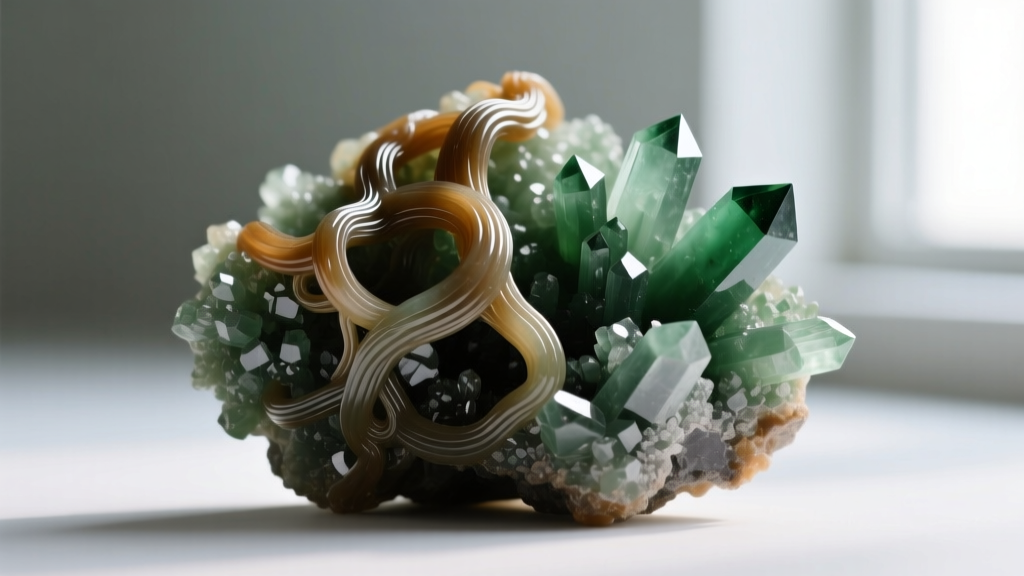
From a structural standpoint, nephrite is actually tougher than jadeite due to its dense, fibrous interlocking crystal structure, making it highly resistant to chipping. Jadeite, while harder on the Mohs scale (6.5 to 7 versus nephrite's 6 to 6.5), has a granular crystalline structure that makes it slightly more susceptible to cleavage upon sharp impact. This mineralogical difference directly dictates how the stones should be cut, set, and worn in earring formats.
The A, B, and C Treatment Spectrum
The most significant financial risk when purchasing jade jewelry is inadvertently buying treated material. The global gemological community classifies jade treatments into three primary categories. Any reputable vendor must disclose these treatments, as they drastically alter both the structural integrity and the market value of the earring.
Type A: Natural and Untreated
Type A jade is entirely natural, having undergone no chemical or structural alterations. The only acceptable post-polishing treatment for Type A is a light waxing (usually beeswax or paraffin) to fill microscopic surface pores and enhance the luster. Type A jadeite earrings represent investment-grade assets and will maintain their structural stability indefinitely.
Type B: Acid-Bleached and Polymer-Impregnated
Type B jade is subjected to a harsh acid bath (often hydrochloric or nitric acid) to dissolve brown or yellow iron oxide inclusions. This process leaves the stone highly porous and structurally compromised. To restore stability and translucency, the jade is vacuum-impregnated with a polymer resin. While Type B earrings may look visually similar to Type A initially, the polymer resin will degrade, yellow, and become brittle over time when exposed to UV light, heat, and natural skin oils.
Type C: Dyed Jade
Type C jade has been artificially colored using organic or inorganic dyes. This is most commonly done to pale, low-quality jadeite to mimic the appearance of Imperial Green or vibrant lavender. The dye concentrates in the microscopic fractures and grain boundaries of the stone. Under magnification, a gemologist can easily spot the 'spidery' network of dye concentrations. Type C earrings have virtually no resale value and the colors will fade significantly with prolonged exposure to sunlight and perspiration.
Hardware Engineering: Settings and Gauge Specifications
Because jade is rarely faceted and is instead cut into cabochons or carved pieces, the hardware engineering of a jade earring requires specialized considerations. The lack of true cleavage planes in jade makes it tough, but improper setting pressure can induce internal stress fractures.
Bezel vs. Prong Settings
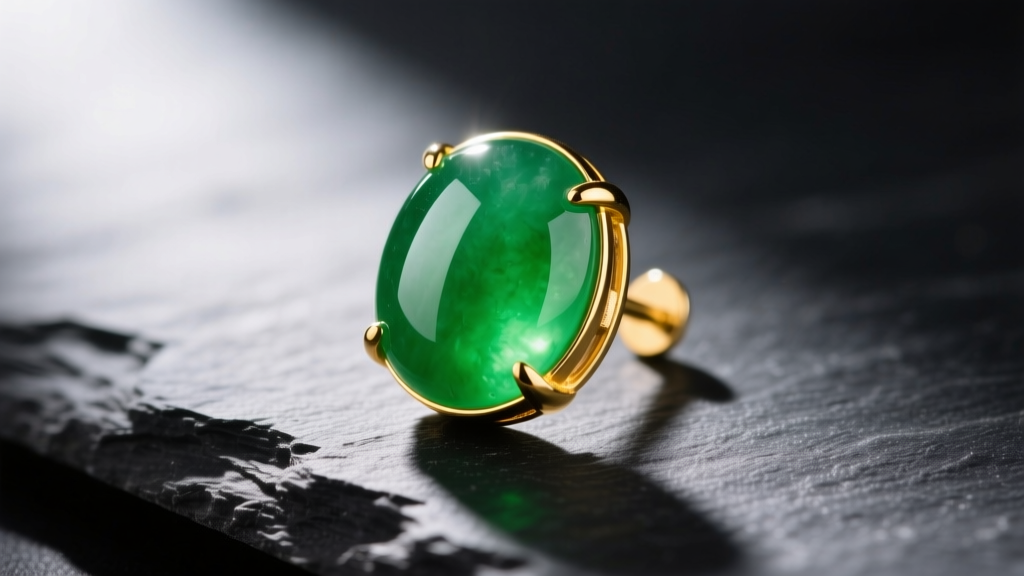
For jade cabochon studs, a full or partial bezel setting is the gold standard. A bezel distributes the compressive force of the metal evenly around the stone's girdle. Prong settings, while allowing more light entry, concentrate stress on four to six microscopic points. If a prong is tightened excessively during manufacturing or repair, it can cause the jadeite to fracture along its granular boundaries. If prongs must be used for aesthetic reasons, ensure they are V-prongs placed over the thickest part of the cabochon's dome, not the thin edges.
Post Gauge and Backing Mechanisms
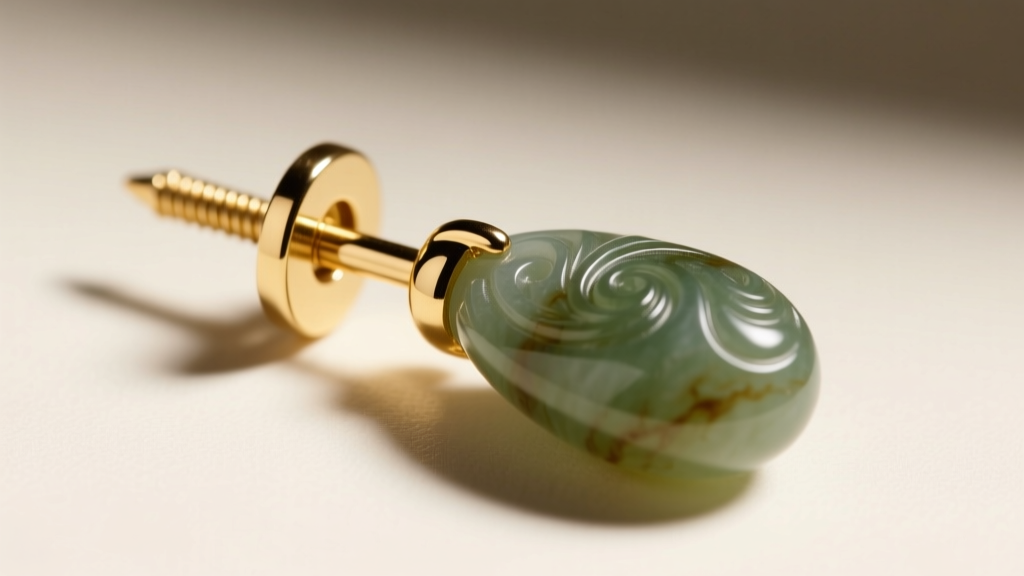
Jade is a dense material. The specific gravity of jadeite ranges from 3.30 to 3.38, meaning a 15mm carved jade drop earring can easily weigh between 8 and 12 grams. Standard 22-gauge (0.64mm) or 20-gauge (0.81mm) earring posts will bend under this weight, causing the earring to droop and stretch the earlobe piercing. For any jade earring exceeding 5 grams, an 18-gauge (1.02mm) or even 16-gauge (1.29mm) solid post is mandatory. Furthermore, standard friction backs (butterfly clutches) are insufficient for heavy drops. Opt for secure screw-backs, omega-clip backs, or leverback mechanisms to prevent catastrophic loss.
Data Table: Jade Specifications & Buying Matrix
Use the following technical matrix to verify the specifications of your jade earrings against gemological laboratory reports.
| Property | Jadeite (Type A) | Nephrite | Treated Jade (Type B/C) |
|---|---|---|---|
| Chemical Composition | NaAlSi2O6 | Ca2(Mg,Fe)5Si8O22(OH)2 | Varies (Polymer/Dye present) |
| Mohs Hardness | 6.5 - 7.0 | 6.0 - 6.5 | Surface hardness reduced (Resin) |
| Specific Gravity (SG) | 3.30 - 3.38 | 2.90 - 3.03 | Lowered SG (2.50 - 3.00) |
| Refractive Index (RI) | 1.66 - 1.68 (Spot) | 1.60 - 1.63 (Spot) | 1.55 - 1.66 (Resin dependent) |
| UV Fluorescence | Inert to weak white | Inert | Strong chalky blue/white (Resin) |
| Spectroscope | 437 nm line (diagnostic) | 509 nm line (diagnostic) | Organic dye bands in red/green |
Cabochon Proportions and Optical Performance
Unlike faceted diamonds where cut grades are mathematically standardized, the beauty of a jadeite cabochon relies on its translucency and the cutter's ability to maximize light return. When selecting jade studs, evaluate the depth-to-width ratio. The ideal proportion for a high-translucency jadeite cabochon is a depth that is roughly 60% to 75% of its width. If the cabochon is cut too shallow, light will leak out the bottom, making the stone appear flat and glassy. If it is cut too deep (over 80%), the stone will trap light, appearing dark, opaque, and overly heavy, which unnecessarily increases the carat weight and the physical burden on your earlobe.
Additionally, examine the symmetry of the dome. The highest point of the cabochon should be perfectly centered. An off-center dome indicates poor cutting, which not only diminishes the optical glow (the 'water' or 'zhong' in Chinese gemology) but also creates an uneven surface that is more prone to abrasion against hair and clothing.
Long-Term Care and Structural Preservation
Proper maintenance of a jade earring requires avoiding common jewelry cleaning pitfalls. While jade is tough, it is highly sensitive to sudden thermal shock and harsh chemicals. The GIA explicitly warns against using ultrasonic cleaners or steam cleaners on jade. Ultrasonic vibrations can easily shatter jade along microscopic internal fractures or parting planes, while steam heat can melt the traditional wax coatings or degrade the polymer resins in Type B jade.
For routine cleaning, use a soft, untreated microfiber cloth. For deeper cleaning, prepare a solution of lukewarm distilled water and a few drops of pH-neutral, phosphate-free dish soap. Gently agitate the earring in the solution for no more than two minutes, then rinse under a slow stream of room-temperature water. Dry immediately with a lint-free cloth. Never use ammonia-based cleaners, bleach, or alcohol, as these solvents will strip the surface wax and leave the jade looking dull and desiccated. By adhering to these strict gemological and structural guidelines, you ensure your jade earrings remain both a physical and financial asset for decades.


