Native American Beaded Hoop Earrings: Sourcing & Care
Explore the technical details of authentic Native American beaded hoop earrings, from seed bead grades and wire gauges to cultural sourcing and care.

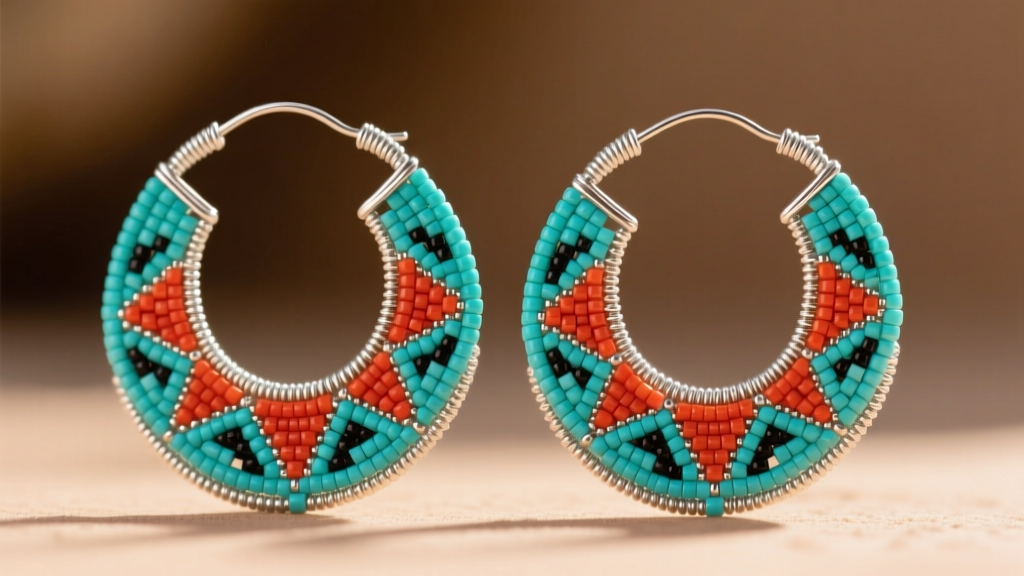
The Intersection of Indigenous Artistry and Structural Engineering
Native American beaded hoop earrings represent a masterclass in balancing cultural heritage with structural jewelry design. Unlike mass-produced stamped metals or cast alloys, authentic indigenous beadwork requires a deep understanding of tension, weight distribution, and material longevity. For jewelry collectors, stylists, and enthusiasts, evaluating these pieces goes far beyond aesthetic appreciation; it demands a technical understanding of the components that keep the beadwork intact and the earlobe comfortable. In this deep dive, we deconstruct the anatomy of authentic beaded hoops, examine the legal frameworks protecting indigenous artisans, and provide actionable maintenance protocols to preserve these wearable investments.
Anatomy of the Beaded Hoop: Core Materials and Tension
The foundation of any high-quality beaded hoop is its structural core. The beadwork itself provides negligible structural integrity; it is the internal wire armature that dictates the earring's lifespan, shape retention, and resistance to warping.
Wire Cores and Gauge Specifications
Authentic Native American silversmiths and beadworkers typically rely on half-hard sterling silver (.925) or jeweler's brass for the hoop core. The temper (hardness) and gauge (thickness) of the wire are critical variables:
- 22-Gauge (0.64mm): Generally avoided for beaded hoops. While easy to bend, 22-gauge wire lacks the structural memory to support heavy glass seed beads and will easily warp when removed from the ear or subjected to minor impacts.
- 20-Gauge (0.81mm): The industry standard for medium-sized hoops (1 to 2 inches in diameter). It offers an optimal balance of malleability for the artisan and rigidity for the wearer.
- 18-Gauge (1.02mm): Reserved for large, statement-sized hoops (over 2.5 inches) or designs incorporating heavy stone cabochons alongside beadwork. The thicker core prevents the 'teardrop sag' that plagues poorly constructed large hoops.
Artisans often use a brick stitch or modified peyote stitch to wrap the seed beads around the wire core. The tension must be meticulously calibrated; if pulled too tightly, the thread can compromise the wire's temper, while loose tension leads to bead migration and exposed wire gaps.
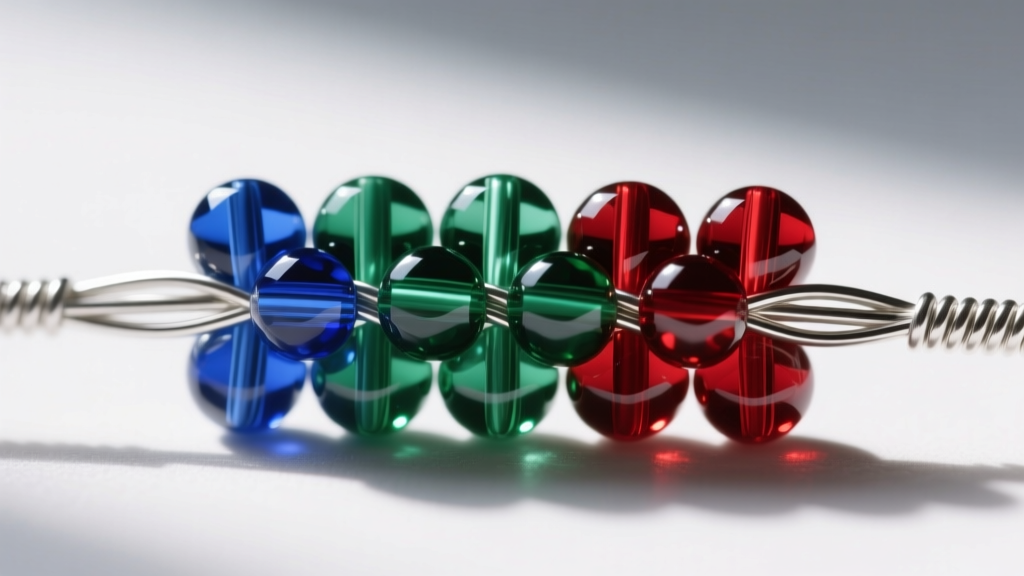
Seed Bead Grading: Czech vs. Japanese
The visual uniformity and colorfastness of the earrings depend entirely on the seed beads used. Authentic Native American beadworkers overwhelmingly prefer size 11/0 or 10/0 glass seed beads. While Japanese Miyuki Delica beads offer machine-perfect cylindrical uniformity, many traditional artisans favor Czech glass seed beads (such as those from Preciosa). Czech beads possess a slightly rounded, organic profile that mimics the historical bone and shell beads used prior to European trade routes, lending a softer, more traditional drape to the finished hoop.
Thread and Tension Mediums
The thread used to bind the beads is a common failure point in lower-quality pieces. Traditional Nymo (a flat nylon thread) is prized for its flexibility and historical accuracy, but it is susceptible to degradation from skin oils and UV exposure over a 5-to-10-year period. Modern master beadworkers frequently upgrade to Fireline, a fused braided polyethylene line (typically 6lb test). Fireline is impervious to sweat, resists UV degradation, and will not stretch, ensuring the beadwork remains taut against the metal core for decades.
Identifying Authentic Craftsmanship and Legal Protections
The market is unfortunately saturated with mass-produced imitations that appropriate Native American geometric and floral motifs without supporting indigenous communities. To protect consumers and artisans, the United States Congress passed the Indian Arts and Crafts Act (IACA) of 1990. This truth-in-advertising law prohibits misrepresentation in marketing of Indian arts and crafts products within the United States. According to the Indian Arts and Crafts Board, it is illegal to offer or display for sale any art or craftwork in a manner that falsely suggests it is Indian-produced, an Indian product, or the product of a particular Indian or Indian Tribe.
Authenticity is not just about the visual motif; it is verified by the maker's tribal enrollment, the sourcing of materials, and the adherence to traditional construction methods passed down through generations.
When sourcing Native American beaded hoop earrings, buyers should look for specific markers of authenticity and ethical production. The National Museum of the American Indian frequently highlights the importance of provenance in indigenous art, noting that true cultural artifacts carry the distinct hallmark of regional techniques, such as the specific color palettes favored by Ojibbe floral beadworkers versus the geometric precision of Navajo and Zuni artisans.
Material and Construction Comparison
| Feature | Authentic Native American Handmade | Mass-Produced Imitation |
|---|---|---|
| Core Wire | 18g-20g Half-Hard Sterling Silver or Brass | Thin aluminum or plated copper (often bends) |
| Beads | Size 11/0 or 10/0 Czech/Japanese Glass | Plastic, acrylic, or low-grade painted glass |
| Thread | Fireline (Polyethylene) or high-grade Nymo | Cotton or cheap monofilament (snaps easily) |
| Closure | Heavy-duty French wire or secure leverback | Flimsy butterfly backs or thin latch-backs |
| Pricing | $85 to $350+ depending on size and stones | $12 to $45 |
Weight Distribution and Earlobe Ergonomics
A critical, often overlooked aspect of beaded hoop earrings is their impact on earlobe health. Glass seed beads and sterling silver cores add up quickly. A standard 2-inch beaded hoop can weigh between 8 and 14 grams per earring. For context, a standard diamond stud weighs less than 1 gram. Prolonged wear of heavy hoops without proper support can lead to earlobe stretching, micro-tears, and permanent elongation of the piercing fistula.
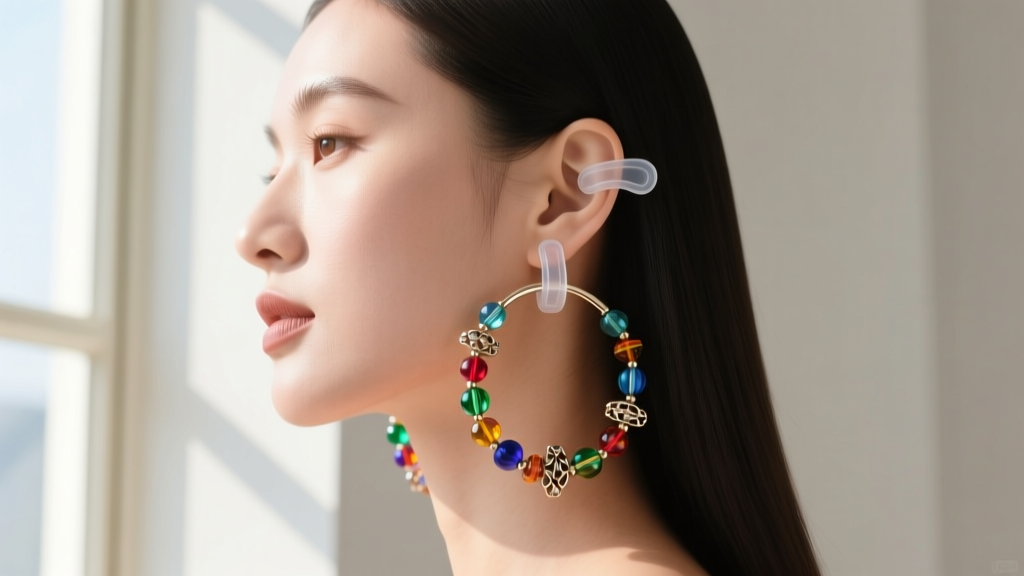
Choosing the Right Backings and Supports
To mitigate the downward drag of beaded hoops, experts recommend the following ergonomic solutions:
- Silicone Earlobe Stabilizers: These clear, disc-shaped backings slide onto the earring post or wire behind the earlobe. They distribute the weight of the hoop across a wider surface area of the ear, preventing the 'forward tilt' that causes the piercing hole to stretch.
- French Wire with Silicone Sleeves: If the hoops utilize a traditional French wire (fishhook) design, slipping a small medical-grade silicone sleeve over the wire before inserting it into the ear adds friction and prevents the heavy hoop from sliding out during movement.
- Omega or Clip-On Conversions: For non-pierced individuals or those with severely stretched lobes, having a jeweler solder an Omega clip backing to the hoop distributes the weight across the entire cartilage ridge rather than relying solely on the lobe puncture.
Preservation and Cleaning Protocols
Cleaning beaded hoop earrings requires a delicate touch. The primary rule of beadwork maintenance is to avoid harsh chemicals, ultrasonic cleaners, and prolonged moisture exposure, all of which can destroy the thread and dull the glass beads.
- Dust Removal: Use a clean, dry, soft-bristled makeup brush (like a blush brush) to gently sweep dust and skin cells out from between the tightly packed seed beads.
- Spot Cleaning the Metal: If the sterling silver core or end-caps tarnish, apply a tiny amount of silver polishing paste to a cotton swab. Carefully dab the metal, ensuring the paste does not transfer to the thread or beads, which can cause discoloration.
- Thread Inspection: Once a year, inspect the thread tension. If you notice the beads sliding freely or the thread appearing frayed near the closure clasp, take the piece to a professional beadworker for a restringing before the structural integrity fails.
- Storage: Store beaded hoops flat in a lined jewelry box or hung from a specialized earring rack. Never toss them loosely into a drawer, as the pressure from other jewelry can permanently warp the wire core or crush the seed beads.
Sourcing Ethically: Where to Buy
When investing in authentic Native American beaded hoop earrings, bypass generic online marketplaces that lack strict vetting processes. Instead, source directly from tribal art markets, such as the Santa Fe Indian Market, or through verified indigenous-owned galleries and cooperatives. Reputable vendors will provide a Certificate of Authenticity (COA) that includes the artist's name, their specific tribal affiliation, and the materials used. Expect to pay a premium for this level of craftsmanship; a well-constructed pair of 2-inch hoops utilizing sterling silver and high-grade Czech glass beads typically starts around $120, while intricate designs incorporating genuine turquoise, coral, or lapis lazuli cabochons alongside the beadwork can easily command prices upwards of $300. By prioritizing technical excellence and ethical sourcing, you ensure that your jewelry collection honors the profound legacy and enduring innovation of Native American artisans.


