How to Authenticate and Clean Rose Quartz Stud Earrings
Learn how to authenticate, properly clean, and safely store your rose quartz stud earrings with our expert step-by-step gemological guide.

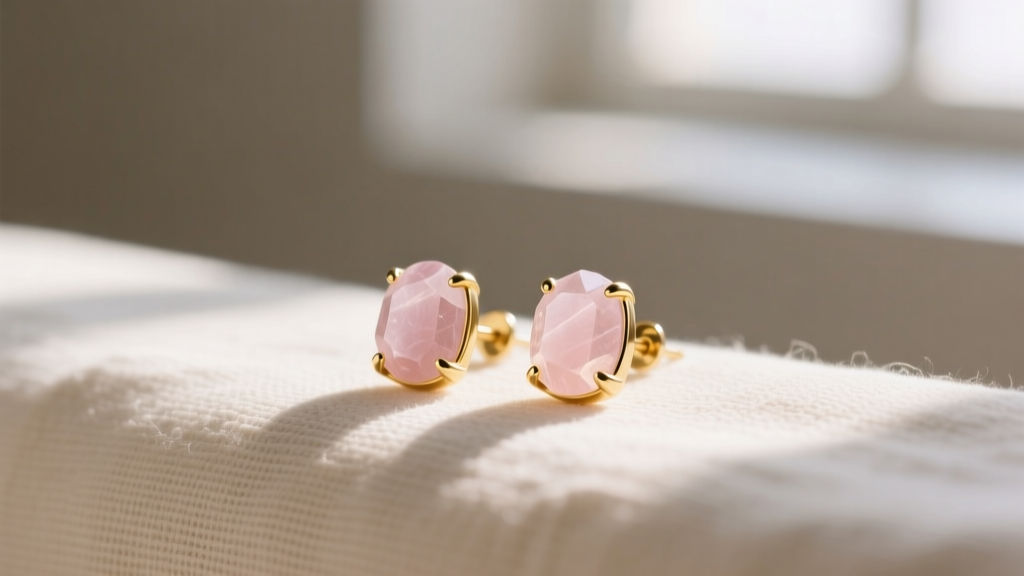
The Allure and Vulnerability of Rose Quartz
Rose quartz stud earrings have become a staple in modern jewelry boxes, prized for their soft pink hues and metaphysical associations with love and healing. However, as a gemstone, rose quartz presents unique vulnerabilities. With a Mohs hardness of 7, it is relatively durable but highly susceptible to fracturing along microscopic inclusion lines and fading under prolonged UV exposure. Whether you wear them in your standard earlobe piercings or as delicate cartilage accents, maintaining the structural integrity and visual clarity of your earrings requires specialized care. This step-by-step guide will walk you through authenticating your stones, selecting biocompatible settings, and executing a safe cleaning protocol to ensure your jewelry lasts a lifetime.
Step 1: Authenticating Your Rose Quartz Studs
The market is currently saturated with dyed glass, synthetic corundum, and heat-treated lower-grade quartz masquerading as genuine rose quartz. According to the Gemological Institute of America (GIA), natural rose quartz owes its color to trace amounts of titanium, iron, or manganese, and often contains microscopic rutile needles. Before you commit to a cleaning regimen, you must verify the material.
The Visual and Tactile Verification Test
Genuine rose quartz is rarely perfectly transparent. If your studs are flawlessly clear with a uniform, bubblegum-pink coloration, you are likely looking at glass or dyed agate. Real stones exhibit a cloudy translucency, subtle color zoning, and a distinctly cool thermal conductivity when first pressed against the skin. Glass imitations will warm to your body temperature almost instantly.
| Feature | Genuine Rose Quartz | Glass / Dyed Imitation |
|---|---|---|
| Thermal Conductivity | Feels noticeably cool to the touch initially | Warms to skin temperature rapidly |
| Internal Inclusions | Cloudy patches, subtle rutile needles, color zoning | Perfectly clear, or contains perfectly round air bubbles |
| Hardness (Mohs) | 7 (Will not scratch easily with a steel pin) | 5.5 to 6 (Can be scratched by hardened steel) |
| Price Range (14k Gold) | $60 to $150+ depending on cut and clarity | $15 to $35 |
Step 2: Selecting the Right Gauge and Metal Setting
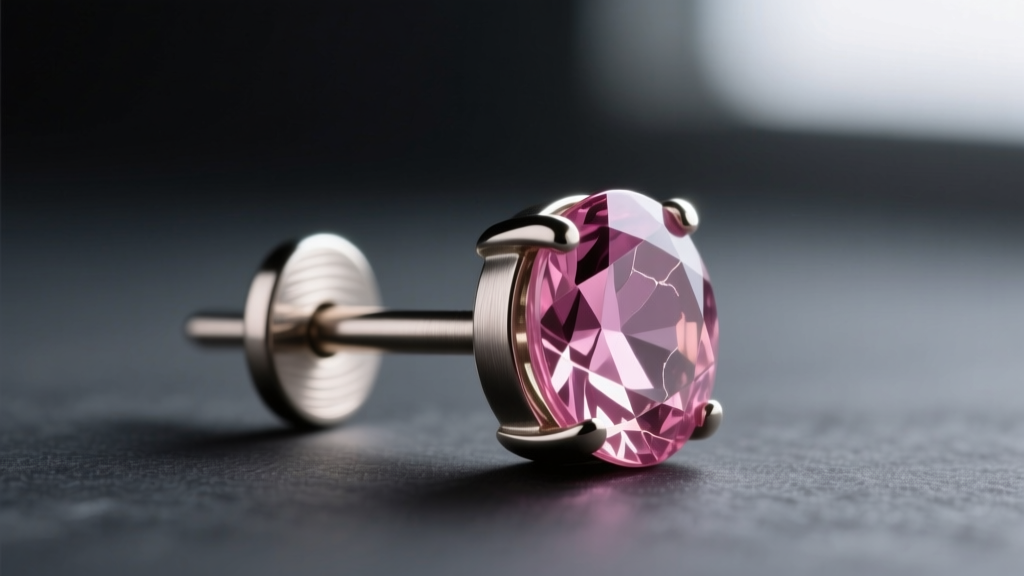
A beautiful stone is easily ruined by a reactive metal setting or an improperly sized post. Earlobe piercings typically heal best with 20-gauge (0.81mm) or 18-gauge (1.0mm) posts, while cartilage piercings (like the helix or tragus) generally require 16-gauge (1.2mm) or 18-gauge jewelry to prevent the 'cheese-cutter effect' and migration.
Why ASTM F136 Titanium is Non-Negotiable
Because rose quartz is a porous stone that can trap sweat and bacteria against the skin, the metal backing must be completely hypoallergenic. The Association of Professional Piercers (APP) strongly recommends implant-grade titanium (ASTM F136) for all body jewelry. Unlike commercial 'surgical steel,' which can contain up to 14% nickel, ASTM F136 titanium contains zero nickel, eliminating the risk of contact dermatitis. If you prefer gold, ensure the setting is solid 14k or 18k; gold-plated brass will eventually wear down, exposing your piercing to heavy metals and causing severe localized swelling.
Step 3: The Safe Cleaning Protocol (Step-by-Step)
Cleaning rose quartz requires a delicate balance. You must remove sebum, dead skin cells, and cosmetic buildup without introducing harsh chemicals or destructive vibrations.
Critical Warning: Never place rose quartz stud earrings in an ultrasonic jewelry cleaner. The high-frequency cavitation waves will expand the microscopic fluid inclusions naturally present in the stone, causing internal fracturing and permanent cloudiness.
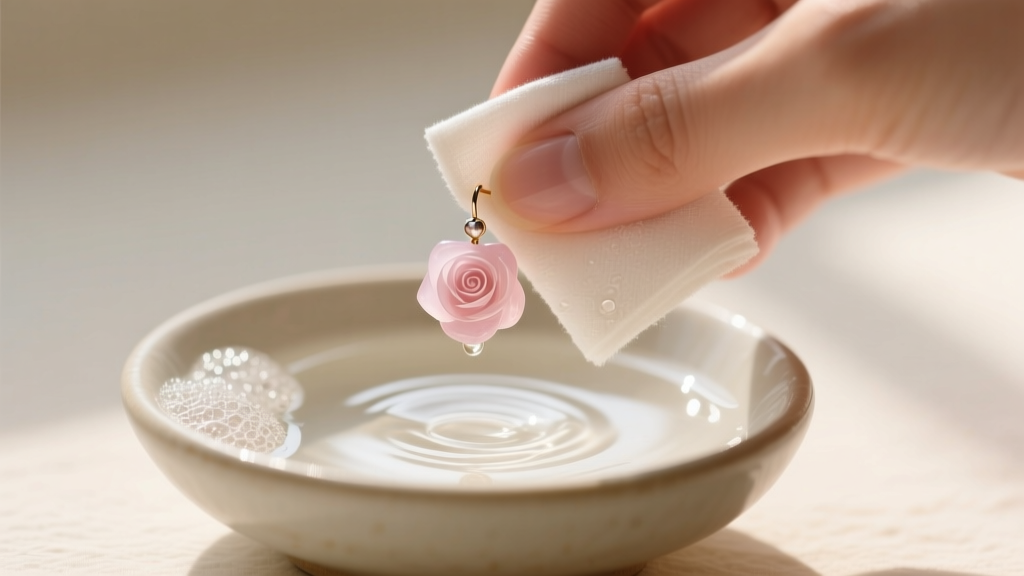
- Prepare the Solution: Mix three drops of mild, phosphate-free dish soap (such as original Dawn) into a small ceramic bowl of lukewarm distilled water. Avoid hot water, as sudden thermal shock can crack the quartz.
- Soak Briefly: Submerge the earrings for exactly 3 to 5 minutes. This softens the hardened sebum around the post and the stone's bezel without degrading the metal.
- Gentle Agitation: Using an extra-soft baby toothbrush, gently brush the back of the earring post, the butterfly backing or threaded end, and the underside of the stone where debris accumulates.
- Rinse and Dry: Rinse thoroughly under a gentle stream of lukewarm distilled water. Pat dry with a lint-free microfiber cloth. Do not use paper towels, as the wood fibers can micro-scratch the polished surface of the quartz.
Step 4: Storage and UV Protection
Prolonged exposure to direct ultraviolet light is the enemy of rose quartz. Over time, UV radiation alters the crystal lattice structure responsible for the stone's pink coloration, leading to a dull, whitish-gray fade. When you are not wearing your studs, store them in an opaque, anti-tarnish jewelry pouch or a lined wooden box. Furthermore, because quartz ranks at a 7 on the Mohs scale, it is harder than pearls, opals, and turquoise, but softer than diamonds and sapphires. Storing your rose quartz studs loose in a communal jewelry box will result in severe scratching from harder gemstones.
Troubleshooting Common Issues
Cloudiness and Dullness
If your genuine rose quartz studs have lost their luster despite regular cleaning, the issue is likely microscopic surface abrasions or a buildup of hard water minerals. To restore the shine, dampen a microfiber cloth with a 50/50 mix of distilled water and white vinegar, gently wipe the stone (avoiding the metal setting if it is not solid gold), and immediately buff dry. For deep scratches, the stone must be professionally repolished by a lapidary.
Snagged Prongs and Loose Stones
Rose quartz is often set in delicate prong settings to maximize light entry. If a prong snags on your clothing, do not attempt to bend it back into place with your fingers. The uneven pressure can easily crack the stone. Take the earrings to a professional jeweler who can use specialized pliers to tighten the bezel or prongs without applying torque to the gemstone itself. For active lifestyles, consider upgrading to a bezel-set rose quartz stud, which encases the stone's edges in metal, offering superior impact protection.
Final Thoughts on Ear Health
Maintaining your rose quartz stud earrings is intrinsically linked to maintaining your ear health. The American Academy of Dermatology notes that nickel allergies can develop at any point in life, making the transition to high-quality titanium or solid gold settings a proactive health measure. By combining biocompatible metals with meticulous, gem-safe cleaning routines, your rose quartz earrings will remain a vibrant, irritation-free fixture in your daily rotation for years to come.


